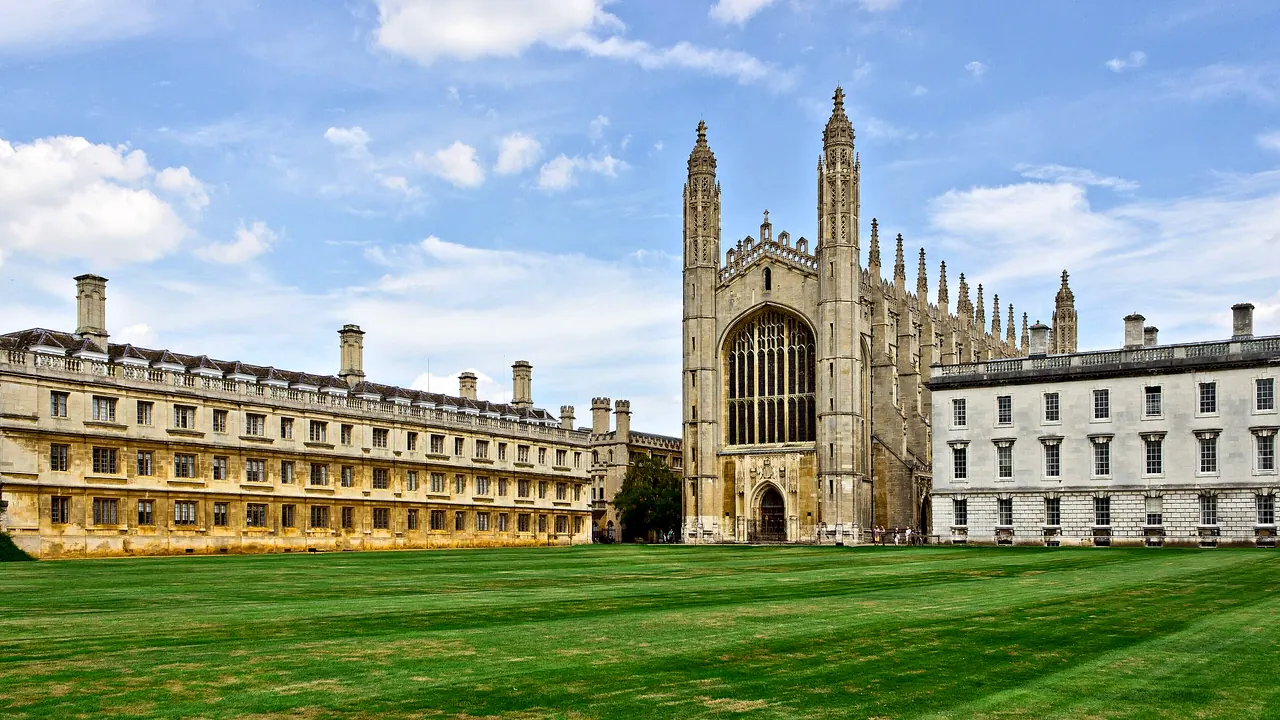
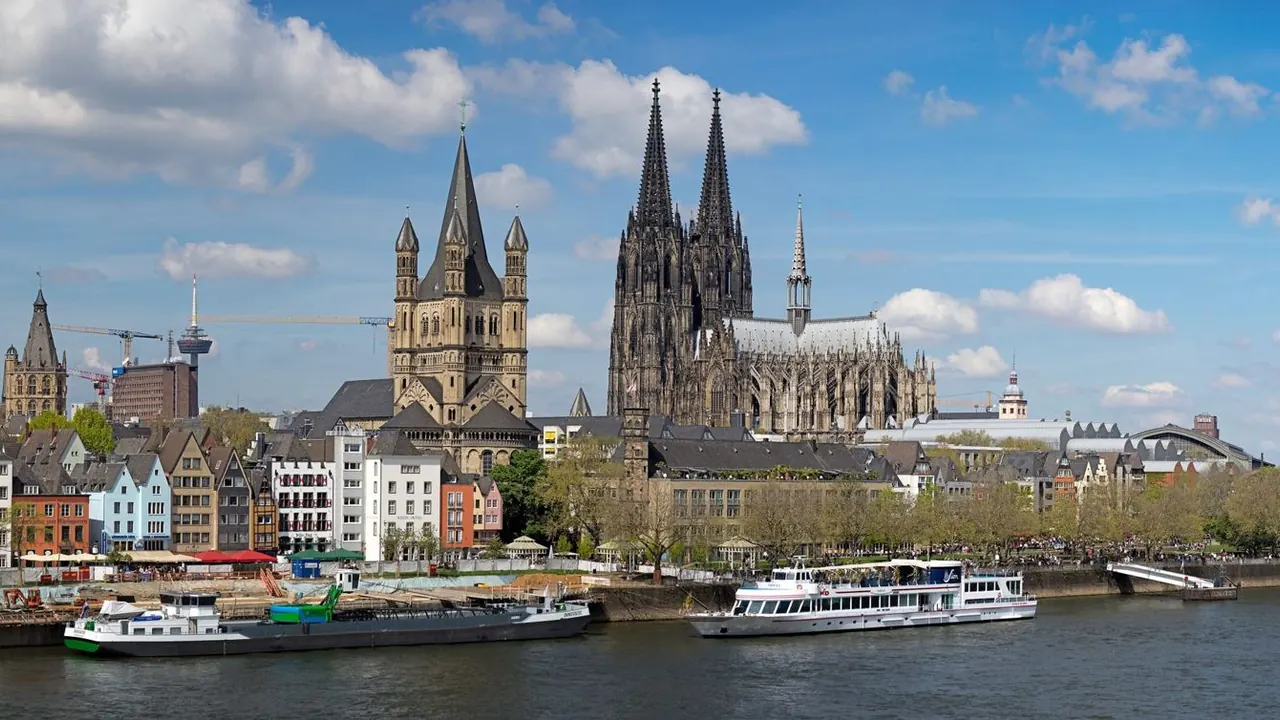
Photos: Cambridge by Dmitry Tonkonog, CC BY-SA 3.0, cropped; Cologne by Jörg Braukmann, CC BY-SA 4.0, cropped.
Cambridge or Cologne?
Our verdict in twelve categories, each scored against the same fixed benchmark cities, and the climate month by month, so you can choose for your trip.
Choose Cambridge for
- culture and sights
Cambridge suits a quiet, focused trip built around one remarkable historic core. The colleges, chapels and university museums sit close together in a flat centre you cross on foot or by bike, and choral evensong in a candlelit chapel is an evening found almost nowhere else. Choose it for a few days of architecture, books, punting and gentle meadow walks, and for its easy trains into London, accepting that it is expensive and goes to bed early.
Choose Cologne for
- nightlife
- nature and the outdoors
- prices
Cologne is the better all-rounder and the livelier, cheaper place to spend a week. Its cathedral and Romanesque churches stand beside a far stronger evening life of Kölsch brewhouses, Belgian Quarter bars and Ehrenfeld clubs, plus opera, a major concert hall and Carnival. Families get a zoo and a big theme park, and walkers get wooded hills within easy reach. Pick it if you want more variety, more going out and fast trains in every direction.
Scoreboard
Twelve categories on one fixed scale from 0 to 100. The shaded stretch is the gap between the two.
Your match
Pick a travel style or drag the sliders, and both match scores follow your weighting.
Wins on culture and sights with your weighting.
Wins on nightlife and nature and the outdoors with your weighting.
What matters to you?
Category by category
What the scores mean for a trip.
Beaches & swimming
Neither city has a beach, and the nearest coast is too far for a casual day in both cases, so swimming is a summer afternoon's sideline either way. In Cambridge it means the 1920s Jesus Green Lido or a dip in the Cam at Grantchester Meadows.
Cologne's version is the flooded gravel pits on the city's edge, such as Fühlinger See and Otto-Maigler-See, with grassy banks, patches of sand and lake water that warms to about 22°C. The Rhine itself is for sitting beside, not swimming in.
Food & drink
Cologne gives food more to work with, mainly because of the Brauhaus. The Kölsch ritual, with Köbes topping up small glasses until you cover yours with a beer mat, comes with Rhineland dishes like Himmel un Ääd and the Halve Hahn, and Venloer Strasse in Ehrenfeld adds good Turkish and Middle Eastern cooking.
Cambridge has nothing so particular. Its best moments are a beamed riverside pub with a Sunday roast, scones in a tea room and the stalls on Market Hill, with Mill Road for Asian and Mediterranean food. It is comfortable, but a couple of days covers it.
Culture & sights
The two are close in depth but differ in shape. Cambridge's strength is a whole historic townscape: eight centuries of courts and chapels along the Backs, with King's College Chapel, Trinity's Great Court and the Wren Library side by side, and the Fitzwilliam's collection on top. Some colleges charge and close around exams.
Cologne offers great single monuments in a largely rebuilt city. The cathedral and its Shrine of the Three Kings, the ring of Romanesque churches and the Roman remains carry real weight, and Museum Ludwig's twentieth-century art has no counterpart in Cambridge. You move between landmarks rather than wander through an unbroken old quarter.
Nightlife
This is where the two differ most. Cologne enjoys going out: brewhouse evenings lead on to Belgian Quarter bars, the packed Zülpicher Strasse student strip, factory clubs in Ehrenfeld and a large, open gay scene around Rudolfplatz. Carnival turns the entire city into a party for days.
Cambridge evenings are mostly about the pub, whether a historic inn or a riverside garden in summer, with livelier bars on Regent Street and Mill Road. Its small clubs follow the university terms and go quiet in the long summer break, and a big night out means London.
Nature & outdoors
Both cities are flat, but Cologne has much more within reach. The Siebengebirge's wooded volcanic hills and the Drachenfels are about forty minutes away, and the Eifel's national park, crater lakes and Ahr vineyards make proper day hikes. Closer in, the Grüngürtel and long Rhine cycle paths suit walks and runs.
Cambridge's outdoors is gentler and smaller in scale: punting through the Backs, the towpath to Grantchester over cattle-grazed meadows, and birdwatching at Wicken Fen. It is lovely for an afternoon, but the hills are missing.
Day trips
Both make excellent bases. What differs is the kind of trip. From Cambridge, London is under an hour by train, Ely Cathedral is a quarter of an hour away, and Suffolk's timber-framed wool towns, Norwich and grand National Trust estates fill out a very English list, some of it easier by car.
Cologne's fast trains reach several cities and even other countries. Bonn, Düsseldorf, Aachen and Brühl's palaces are all close, the castle-lined Rhine Gorge is an easy day, and Maastricht, Liège and Brussels are within range across the border.
Good for families
Cologne gives children more to do. Its old zoo with an elephant park, the Chocolate Museum's fountain, the cable car over the Rhine and, above all, Phantasialand at Brühl can fill a week. Brewhouses and cafés are relaxed about children, though Carnival is best avoided with little ones.
Cambridge is small, safe and green, and punting, the whale skeleton at the free Museum of Zoology and the aircraft at Duxford go down well. But the colleges are hushed and grown-up, and with no zoo or theme park a few days is enough.
Getting around
On foot, Cambridge is hard to beat. The colleges, market, museums and river are a short walk apart in a largely pedestrian centre, and for anything further, such as Grantchester, people hire a bike. The station is a walk or short bus ride from the middle, the buses are only adequate, and the country estates are easier with a car.
Cologne's arrival is easier, because the station sits right beside the cathedral. From there, trams, the partly underground Stadtbahn and S-Bahn trains reach Ehrenfeld, the Belgian Quarter, the zoo and the suburbs. The network map takes some learning and the trams can be crowded, but for most stays you can manage without a car.
Shopping & style
Cologne is the bigger shopping city. Schildergasse and Hohe Strasse are among Germany's busiest high streets, Ehrenstrasse and the Belgian Quarter have independent fashion and design, and the historic Eau de Cologne houses and Advent Christmas markets give it something distinctly local.
Cambridge is smaller but has a character of its own, mostly through books: academic booksellers, second-hand dealers in the lanes, plus Market Hill crafts and Mill Road vintage. It is a pleasant extra to sightseeing rather than a reason to go.
Affordability
Cologne is noticeably easier on the wallet. Hotel rooms are moderate in ordinary weeks, brewhouse meals cost less than in most capitals and the cathedral is free. The catch is trade-fair weeks and Carnival, when rooms become scarce, so check dates before booking.
Cambridge is expensive to sleep and eat in, with limited central hotels in steady demand. Free museums, free evensong and a centre that needs no transport help, and an out-of-term college room can be the best way to soften the cost.
Live music & performing arts
Cologne has the fuller stage life: an opera company and drama theatre on Offenbachplatz, the Philharmonie beside the cathedral with two major orchestras, plus jazz, electronic music, gigs in Ehrenfeld and the Südstadt, and the dialect songs of the Carnival sessions.
Cambridge has a narrower but special offer. Hearing the choirs of King's, St John's or Trinity sing evensong in term is a world-class experience at no cost. The Arts Theatre, student comedy in the Footlights tradition and the summer Folk Festival add more, but there is no opera house.
Wellness & relaxation
Cologne has a real bathing culture. Large German sauna complexes with steam rooms and cold plunges are an ordinary local habit, a thermal bath in the Rheinpark looks across to the cathedral, and Aachen's hot springs are close by. Carnival and the busy centre are the opposite of restful, though.
Cambridge offers rest of a quieter, open-air kind: a punt on the river, the Botanic Garden, or tea in an orchard at Grantchester. Beyond hotel spas and the lido there is little dedicated wellness, and King's Parade gets crowded in summer.
When should you go?
Pick your month. The climate figures are measured averages, not a forecast.
Cambridge in July
Cologne in July
Daytime high, °C
Rainfall in the month, mm
Where the figures come from
Cambridge's temperatures are measured 59 km from the centre, at Wattisham.
Cambridge has no rain gauge within 25 km of the centre, so its rainfall comes from a gridded climate dataset read at the city rather than from a gauge further away.
Temperature and rainfall are climate normals, averaged over the years shown. Cambridge: 1991-2020 normals, Wattisham (58.5 km from centre). Cologne: 1991-2020 (sunshine 1981-2010) normals, Köln-Stammheim (5.4 km from centre).
Neither city is ever warm enough for a beach vacation, so the real question is when the streets are good for walking. Both are cold and dim from November to February, warm up through spring and have a comfortable summer that is rarely too hot for sightseeing. Cambridge peaks at about 22°C in July and August. Cologne runs a few degrees warmer at about 25°C, which is good weather for sitting outside a brewhouse or by the lakes.
The rain falls at different times. Cambridge is fairly dry all year. Its driest spell runs from February to April, and its wettest months come in late summer and autumn, with October the wettest. That makes May its best month, mild, still fairly dry and the sunniest of the year. June to September are warmer but a little wetter. Cologne is wetter in every month, and wettest in high summer at about 81mm in July and August, although July is also its sunniest month. April and May are the driest of its warmer months, so late spring is the most reliable time for walking there, and September is a fair second choice.
Which traveller are you?
For a food and nightlife trip, Cologne is the clear pick. Evenings run from Kölsch rounds in the Altstadt brewhouses to cocktail bars in the Belgian Quarter and late clubs in Ehrenfeld, while Cambridge mostly offers a good pub and an early night.
On a trip on a tight budget, Cologne goes further. Brewhouse meals, fair public transport and a free cathedral keep costs moderate outside fair weeks and Carnival, whereas Cambridge hotels and restaurants are priced like the wealthy south-east of England.
For a short city break, Cambridge rewards two or three days best. Its colleges, the Fitzwilliam, the market and the river are packed into a walkable centre, with punting and evensong in between, and there is little need to plan around transport.
Before you go
| Measure | Cambridge | Cologne |
|---|---|---|
| Official language | English | German |
| Currency | Pound Sterling (GBP) | Euro (EUR) |
| Sockets | G230 V, 50 Hz | CF230 V, 50 Hz |
| Driving side | Left | Right |
| Time zone | UTC, UTC+1 in summer | UTC+1, UTC+2 in summer |
| Emergency number | 112 or 999 | 112 |
| Elevation | 6 m | 59 m |
| Main airport | London Stansted Airport (STN)37 km from centre197 non-stop destinations | Cologne Bonn Airport (CGN)15 km from centre115 non-stop destinations |
| Public holidays this year | 8 days | 11 days |
By the numbers
| Measure | Cambridge | Cologne |
|---|---|---|
| City population | 123,867 | 1,025,523 |
| People per km² | 3,043 | 2,532 |
| Museums within 10 km | 17 | 40 |
| UNESCO World Heritage sites within 50 km | 0 | 3 |
Where else could you go?
Every comparison below shares a destination with this one, so you can follow Cambridge or Cologne somewhere new.
- Dusseldorfvs Cologne
- Londonvs Cambridge
- Maastrichtvs Cologne
- Oxfordvs Cambridge
- Frankfurtvs Cologne
- Brightonvs Cambridge