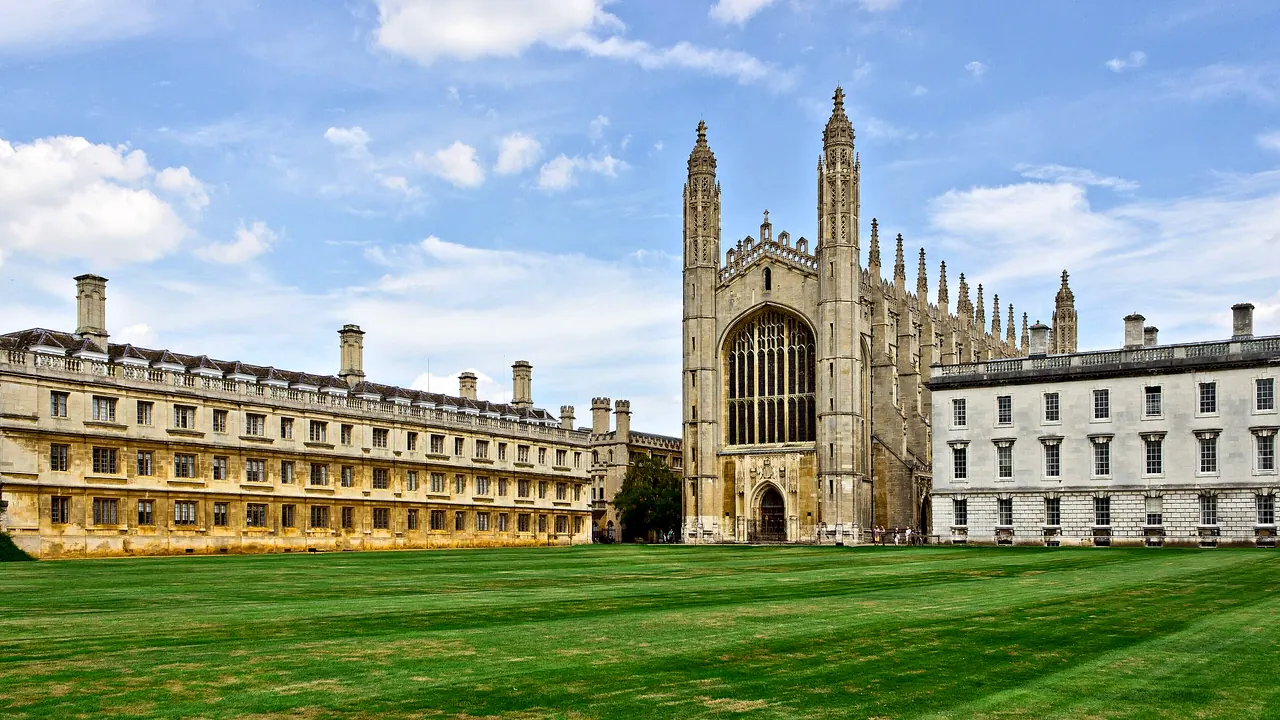
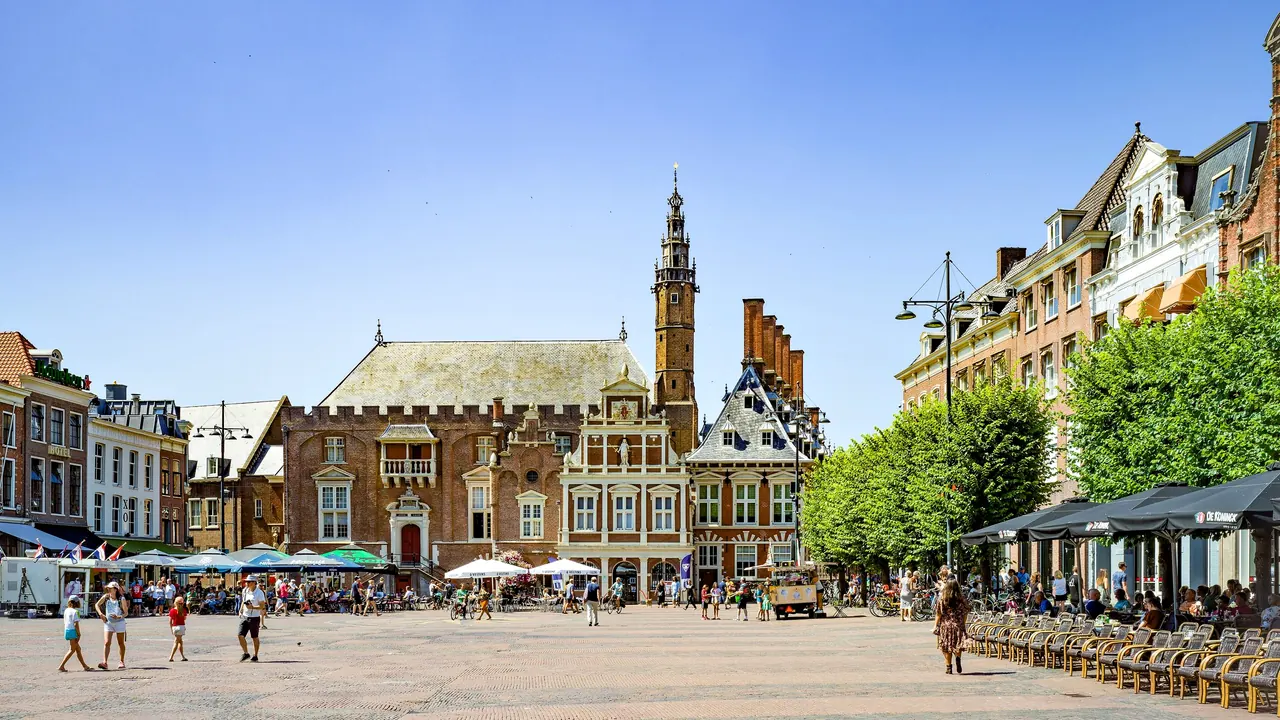
Photos: Cambridge by Dmitry Tonkonog, CC BY-SA 3.0, cropped; Haarlem by Moroder, CC BY-SA 4.0, cropped.
Cambridge or Haarlem?
Our verdict in twelve categories, each scored against the same fixed benchmark cities, and the climate month by month, so you can choose for your trip.
Choose Cambridge for
- culture and sights
- live music and the arts
- nightlife
Cambridge is the better pick for a trip built around old buildings, great collections and sacred music. The colleges along the Backs, King's College Chapel, the Fitzwilliam and choral evensong give it a historic and musical core that Haarlem doesn't match, and London is close enough for a day out. It suits travellers happy to spend their days indoors among stone courts and galleries, then finish the evening in a riverside pub.
Choose Haarlem for
- nature and the outdoors
- beaches
- shopping
Haarlem pays off once you step outside the old town. Dunes, woods and a long sandy beach start at the western edge, bulb fields colour the polders in spring, and the dense Dutch rail network puts Amsterdam, Leiden, The Hague and Delft within easy reach. Pick it for a cycling, browsing and day-tripping base with a canal-side centre to return to, rather than a deep dive into one city's heritage.
Scoreboard
Twelve categories on one fixed scale from 0 to 100. The shaded stretch is the gap between the two.
Your match
Pick a travel style or drag the sliders, and both match scores follow your weighting.
Wins on culture and sights and live music and the arts with your weighting.
Wins on nature and the outdoors and beaches with your weighting.
What matters to you?
Category by category
What the scores mean for a trip.
Beaches & swimming
Neither is a beach destination, but Haarlem at least has a beach nearby. Zandvoort's long sands are a short train ride away, and the dune-backed strand at Bloemendaal aan Zee is a bike ride through the national park. The cool, windy North Sea makes it a place for walks and quick dips rather than days of swimming.
From Cambridge the coast is a drive of around an hour and a half, so swimming means fresh water: the 1920s Jesus Green Lido or the Cam at Grantchester Meadows on a hot afternoon.
Food & drink
Both eat well without being memorable, and neither has a reason to come for the food. The difference is in the setting. Cambridge revolves around the old English pub, with ales, Sunday roasts and riverside tea rooms, plus a daily street-food market on Market Hill and a spread of Asian and Mediterranean places on Mill Road.
Haarlem is about terraces and brown cafés round the Grote Markt, raw herring and kibbeling at the Saturday market, and a strong craft-beer tap culture rooted in centuries of brewing. Cambridge has more street food and international choice, and Haarlem has better beer.
Culture & sights
Cambridge has the richer heritage. Its colleges along the Backs make an unusually dense historic core: King's College Chapel's fan vaulting, Trinity's Great Court and the Wren Library. The Fitzwilliam's art and antiquities are backed by a string of specialist university museums.
Haarlem has a smaller but very complete old town of gables, canals and the vast St Bavo church, with the Frans Hals Museum and the 18th-century oval room at Teylers. Its appeal is quieter, like coming across a hofje courtyard behind a plain door. Both take two or three days, but Cambridge's sights carry more weight.
Nightlife
Evenings are much the same in both: sociable, relaxed and over well before dawn. In Cambridge that means historic inns and pub gardens by the river, with a busier strip around Regent Street and Mill Road. Haarlem has brown cafés and packed terraces on the Grote Markt and Botermarkt.
Cambridge's small student club scene comes and goes with the university terms. Haarlem barely has clubs at all, but Amsterdam is far closer than London when you want a big night.
Nature & outdoors
Both sit in flat country, but Haarlem has far more of it within reach. Zuid-Kennemerland National Park begins at the town's edge, with dunes, pine and oak woods and small lakes. Highland cattle and ponies graze there, there are deer in the neighbouring dunes, and the coast is good for long walks and kitesurfing. Spring adds the bulb fields towards Leiden.
Cambridge's outdoors is gentler and more pastoral: punting through the Backs, water meadows on the way to Grantchester, big commons in town, and the birds and dragonflies of Wicken Fen a little further out.
Day trips
Both are excellent bases, and Haarlem has the edge. Amsterdam is barely a quarter of an hour away, and Leiden, The Hague, Delft, Utrecht and Rotterdam are all easy by train, with Alkmaar's cheese market, Zaanse Schans and Keukenhof close by. The rail network is dense enough that you rarely need to plan.
Cambridge has London within an hour, Ely's cathedral fifteen minutes away and Norwich further on. Several of its best outings, though, such as the Suffolk wool towns of Lavenham and Long Melford or the country estates, are easier with a car.
Good for families
With children the two are equally easy: both are small, flat, safe and green, and neither has a zoo or theme park of its own. They differ in what fills the days. Cambridge has punting, the whale skeleton at the free Museum of Zoology, the Sedgwick's dinosaurs, Wimpole's farm and, above all, Duxford's airfield of historic aircraft.
Haarlem offers the dunes and beach for running about, plus Teylers' fossils and a cycling culture that takes child seats for granted. Families tend to borrow Amsterdam's zoo and science museum for the big outings.
Getting around
Both centres are compact and flat, and best on foot or by bike. Haarlem is a little easier. Its station sits right at the edge of the old town, bike paths run all the way to the dunes and beach, and one contactless card covers trains and buses, so you never need a car.
In Cambridge the station is about a twenty-five-minute walk from the centre. The buses are ordinary, and the country estates really need a car, even though driving in town is restricted.
Shopping & style
Haarlem is the better place to browse. The lanes south and west of the Grote Markt are full of independent fashion, interiors and design shops, and market days bring flowers and cheese to the square.
Cambridge has a smaller mix of chains in the Grand Arcade and Lion Yard and a few independents on Green Street and Trinity Street. Books are its real strength, from academic booksellers to second-hand dealers. Neither has a luxury street.
Affordability
Both are expensive, with too few hotel rooms for the demand. In Cambridge that is driven by university visitors and graduations, and in Haarlem by tulip season and visitors using it as a calmer base for Amsterdam. Where you save differs.
In Cambridge, the Fitzwilliam, most university museums and evensong are free, and a college room out of term can be good value. In Haarlem, market stalls, bakeries and cheap lunches help, but museum entry and train fares for all those day trips add up.
Live music & performing arts
Cambridge stands out for choral music. Evensong sung by the choirs of King's, St John's and Trinity in candlelit chapels is something few places can offer. The Arts Theatre, the student ADC and Footlights comedy, the Corn Exchange and the long-running Folk Festival fill out the rest.
Haarlem's speciality is the organ. St Bavo's great instrument is played in regular concerts and hosts a long-standing international festival, and the Philharmonie adds classical concerts. Its theatre and cabaret are mostly in Dutch, which limits them for many visitors.
Wellness & relaxation
Neither has a bathing tradition, so rest in both comes from the slow pace rather than treatments. Cambridge's version is a punt on the river, the Botanic Garden or tea in the Grantchester orchards, though King's Parade gets crowded in summer.
Haarlem has quiet canals and courtyards after dark, cycling in the dunes and access to the large Dutch sauna complexes in the wider region. That gives you a proper spa day, which Cambridge's hotel spas and lido don't quite match.
When should you go?
Pick your month. The climate figures are measured averages, not a forecast.
Cambridge in July
Haarlem in July
Daytime high, °C
Rainfall in the month, mm
Where the figures come from
Cambridge's temperatures are measured 59 km from the centre, at Wattisham.
Cambridge has no rain gauge within 25 km of the centre, so its rainfall comes from a gridded climate dataset read at the city rather than from a gauge further away.
Haarlem has no rain gauge within 25 km of the centre, so its rainfall comes from a gridded climate dataset read at the city rather than from a gauge further away.
Haarlem's sunshine is measured 49 km from the centre, at De Bilt.
Temperature and rainfall are climate normals, averaged over the years shown. Cambridge: 1991-2020 normals, Wattisham (58.5 km from centre). Haarlem: 1991-2020 normals, Amsterdam Airport Schiphol (12.7 km from centre).
The two follow almost the same temperature curve. Winters are cold and grey in both, and daytime highs reach about 22°C in July and August, warm enough for long days on foot but never too hot for the streets. Late spring and early summer are the best time to visit either. Cambridge stays fairly dry all year. Haarlem is at its driest in April and May and gets a little more sunshine than Cambridge from spring into midsummer. April and May are also when the bulb fields between Haarlem and Leiden flower, so a spring trip gets you both the drier weather and the colour.
The big difference is rain from midsummer on. Cambridge's rainfall barely changes through the year, but Haarlem gets much wetter in late summer and autumn, with about 109mm in October against roughly 60mm in Cambridge. For the beach at Haarlem, go between July and September, when the North Sea is at its warmest, about 19°C in August, though still bracing. For an autumn trip, Cambridge is the drier choice.
Which traveller are you?
On a culture and arts trip, choose Cambridge. Its eight centuries of college courts and chapels, the Fitzwilliam's collection and evensong sung by world-famous choirs add up to more than Haarlem's Frans Hals and Teylers museums.
For an outdoors trip, Haarlem is the clear choice. Zuid-Kennemerland's dunes, woods and lakes, the deer in the water-supply dunes and spring cycling through the bulb fields beat Cambridge's gentle punting, towpaths and fen walks.
For a shopping trip, go to Haarlem. Gierstraat, Kleine Houtstraat and Schagchelstraat are lined with independent boutiques, design shops and delis. Cambridge is mainly worth it for books, while its other shopping is high-street chains and a few small shops.
Before you go
| Measure | Cambridge | Haarlem |
|---|---|---|
| Official language | English | Dutch |
| Currency | Pound Sterling (GBP) | Euro (EUR) |
| Sockets | G230 V, 50 Hz | CF230 V, 50 Hz |
| Driving side | Left | Right |
| Time zone | UTC, UTC+1 in summer | UTC+1, UTC+2 in summer |
| Emergency number | 112 or 999 | 112 |
| Elevation | 6 m | 2 m |
| Main airport | London Stansted Airport (STN)37 km from centre197 non-stop destinations | Amsterdam Airport Schiphol (AMS)12 km from centre287 non-stop destinations |
| Public holidays this year | 8 days | 11 days |
By the numbers
| Measure | Cambridge | Haarlem |
|---|---|---|
| City population | 123,867 | 162,543 |
| People per km² | 3,043 | 5,064 |
| Museums within 10 km | 17 | 28 |
| UNESCO World Heritage sites within 50 km | 0 | 5 |
| Swim season, months above 21 °C | - | None |
Where else could you go?
Every comparison below shares a destination with this one, so you can follow Cambridge or Haarlem somewhere new.
- Amsterdamvs Haarlem
- The Haguevs Haarlem
- Utrechtvs Haarlem
- Rotterdamvs Haarlem
- Londonvs Cambridge
- Oxfordvs Cambridge