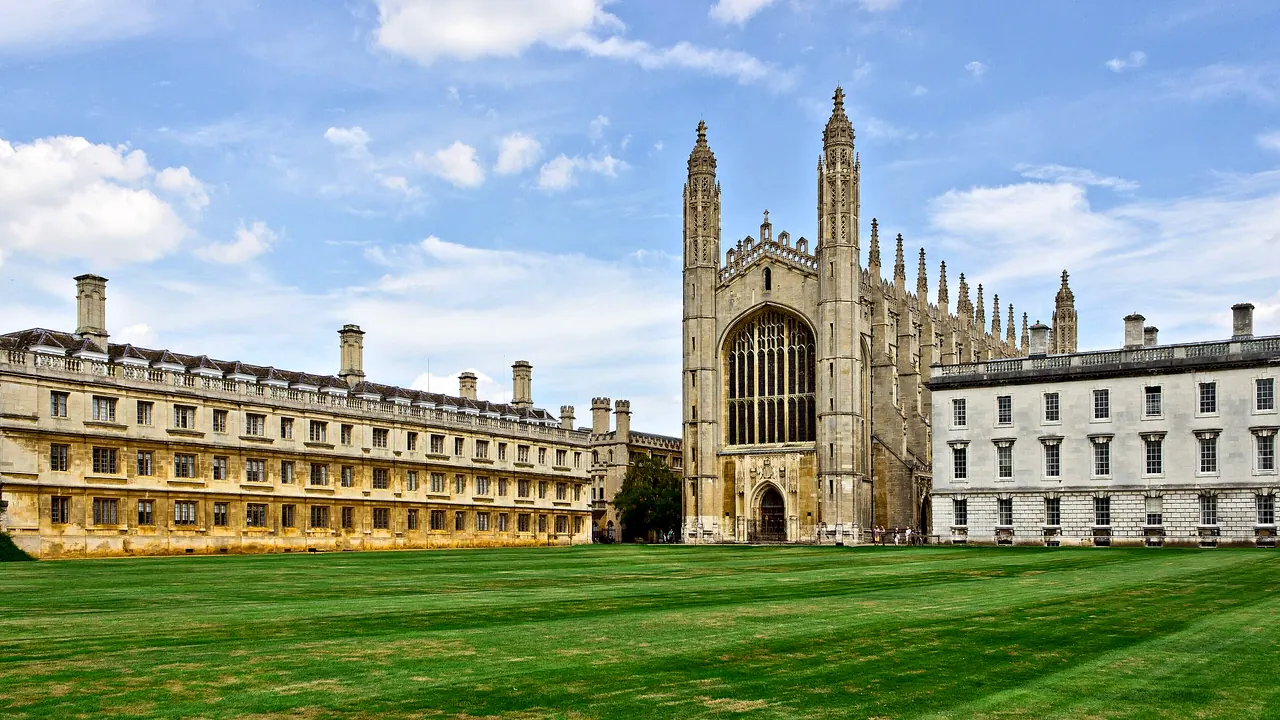
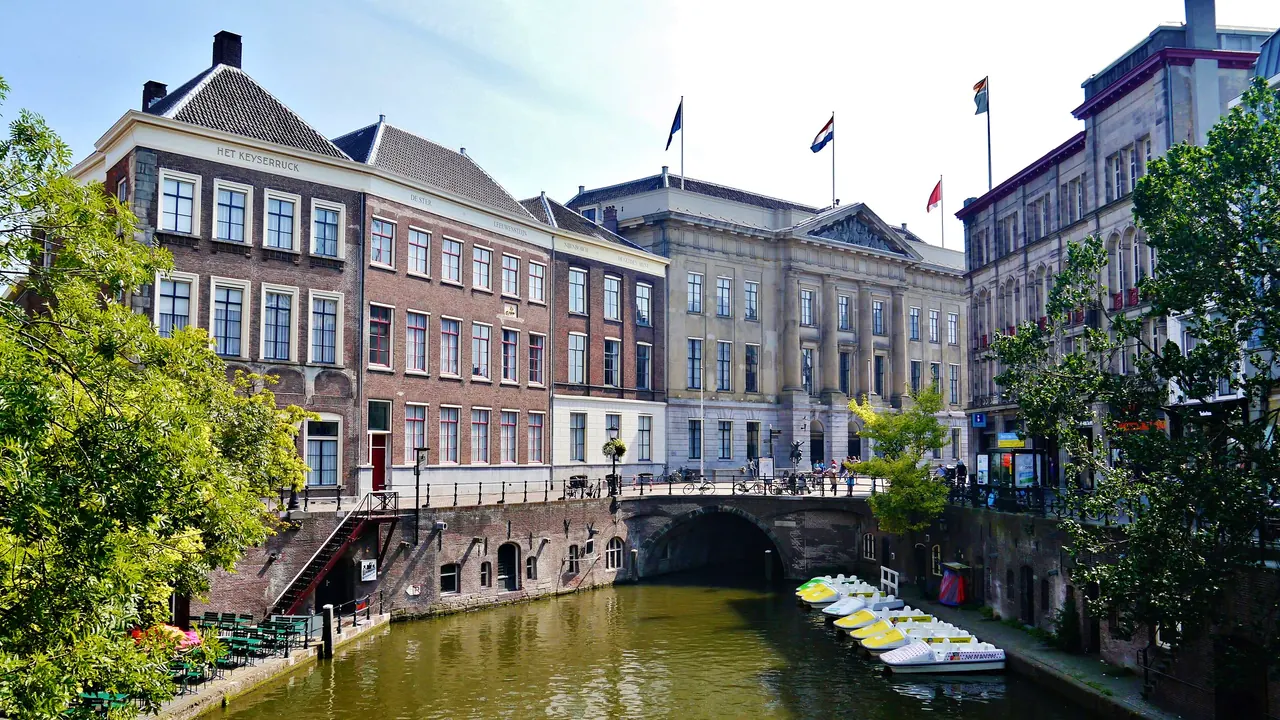
Photos: Cambridge by Dmitry Tonkonog, CC BY-SA 3.0, cropped; Utrecht by Zairon, CC BY-SA 4.0, cropped.
Cambridge or Utrecht?
Our verdict in twelve categories, each scored against the same fixed benchmark cities, and the climate month by month, so you can choose for your trip.
Choose Cambridge for
- culture and sights
Cambridge is the pick for a traveller who wants one concentrated dose of history and learning. The colleges along the Backs, King's College Chapel and the Fitzwilliam give it a denser and grander historic core than Utrecht, and evensong sung by a world-famous choir is something no Dutch city can offer. It suits a quiet, unhurried stay of pub lunches, punting and old libraries, as long as you accept that it costs more and that the evenings are modest.
Choose Utrecht for
- nature and the outdoors
- shopping
- getting around
Utrecht works better as a base for a wider trip. It sits at the hub of the Dutch railways, so Amsterdam, Rotterdam, Delft and Kinderdijk are all easy outings, and getting around town on foot, bike or tram is simpler still. Families, cyclists and anyone wanting livelier evenings on the canal wharves will find more to do here, and the shopping streets have more character too.
Scoreboard
Twelve categories on one fixed scale from 0 to 100. The shaded stretch is the gap between the two.
Your match
Pick a travel style or drag the sliders, and both match scores follow your weighting.
Wins on culture and sights with your weighting.
Wins on nature and the outdoors and shopping with your weighting.
What matters to you?
Category by category
What the scores mean for a trip.
Beaches & swimming
Neither city is for a beach vacation, though Utrecht copes slightly better. Its recreation lakes, such as the Maarsseveense Plassen, sit right on the edge of town, and the North Sea sand at Zandvoort or Scheveningen is a simple train ride away.
Cambridge's coast in Suffolk and Norfolk takes about an hour and a half by car. Swimming there means Jesus Green Lido or a dip in the Cam at Grantchester Meadows, both pleasant on a hot afternoon but small affairs.
Food & drink
Food is a sideshow in both, but the character differs. Cambridge leans on the English pub, with ales and Sunday roasts in low-beamed rooms, plus tea rooms by the river and the daily market on Market Hill.
Utrecht's appeal is the setting, eating on the old wharves of the Oudegracht at the water's edge, and its everyday food has a Dutch colonial thread of Indonesian and Surinamese kitchens. Neither has a cuisine worth a trip in itself.
Culture & sights
Cambridge has the deeper sightseeing. Its colleges form a near-continuous run of medieval and Renaissance courts, with King's College Chapel among the finest late Gothic buildings in Europe, and the Fitzwilliam is a museum far grander than anything in Utrecht.
Utrecht's highlights are fewer but distinctive: climbing the Dom Tower, the two-level Oudegracht canal and the Rietveld Schröder House for lovers of modern design. Its museums are good rather than great, so the city works more as a pleasant old centre than a sightseeing marathon.
Nightlife
Utrecht makes for the livelier evenings. Its student crowd fills the bars around the Neude and the Janskerkhof on weeknights as well as weekends, and drinking at the canal edge on a summer night is an event in itself.
Cambridge's evenings revolve around historic inns and riverside pub gardens, and its small club scene goes quiet when the students leave. In both cities a big night out means a train ride, to London or to Amsterdam.
Nature & outdoors
Both landscapes are flat, but Utrecht's surroundings give an active visitor more to do. Cycle routes lead past windmills and country estates along the Vecht, the Utrechtse Heuvelrug offers wooded ridges and heath for walking and mountain biking, and the Loosdrecht lakes are good for sailing.
Cambridge's outdoors is gentler and smaller in scale: punting through the Backs, the water meadows to Grantchester, the birds and wild ponies of Wicken Fen and a short woodland walk at Wandlebury.
Day trips
Both are fine bases, but Utrecht's position at the centre of the Dutch rail network is hard to beat. Amsterdam, Rotterdam, The Hague, Delft, Leiden and Gouda are all short train rides away, so you can cover much of a country without moving hotels.
Cambridge has London under an hour away and Ely's cathedral fifteen minutes off, but its other prizes, the wool towns of Lavenham and Long Melford or the big National Trust estates, are often easier with a car.
Good for families
Utrecht has more aimed squarely at children. The Railway Museum in an old station is one of the best children's museums in the country, toddlers have the Miffy museum, and Dutch culture takes children everywhere. The one hazard is the constant stream of bikes.
Cambridge is safe, green and easy, with the free Museum of Zoology and the aircraft at Duxford as highlights. But its main sights, the colleges, are hushed and grown-up, so younger children run out of things to do sooner.
Getting around
Both centres are flat and walkable, with the bike as the local way to travel. Utrecht is easier from the moment you arrive: Utrecht Centraal sits on the edge of the old town, and trams and buses use the same tap-in card as the trains.
In Cambridge the station is a walk of about twenty-five minutes from the colleges, local buses are unremarkable, and the country estates nearby really need a car.
Shopping & style
Utrecht offers the more rewarding browsing. Independent fashion, design and homeware shops line the Oudegracht wharves and lanes like the Zadelstraat and the Twijnstraat, and the flower market at the Janskerkhof and the textile market add colour.
Cambridge is smaller in scale, and its real speciality is books, from old academic booksellers to second-hand dealers in the lanes off Trinity Street. Neither city has a luxury street.
Affordability
Neither is cheap, but Cambridge is the dearer of the two. Its limited hotels are in steady demand from university visitors and conferences, and eating out is priced like the wealthy south-east of England.
Utrecht's beds are expensive too, but cheap student lunch cafés and snack bars help keep day-to-day costs down. Cambridge fights back with free entry to the Fitzwilliam and most university museums, and evensong costs nothing.
Live music & performing arts
Both have a solid music life of different kinds. In Cambridge it is choral: the choirs of King's, St John's and Trinity singing evensong in candlelit chapels, alongside the Footlights comedy tradition and the summer Folk Festival.
Utrecht is built around TivoliVredenburg, whose stacked halls run from the Radio Philharmonic to pop and jazz, and the Festival Oude Muziek draws early-music lovers from across Europe. Theatre there is mostly in Dutch, so English speakers get more from Cambridge's stages.
Wellness & relaxation
Neither city has a bathing culture, so rest takes different forms. Utrecht has the large Dutch sauna complexes in its green belt, with saunas, steam rooms and outdoor pools, plus quiet spots like the Pandhof cloister garden.
Cambridge relies on hotel spas and the lido, and its calm is found in a punt on the river, the Botanic Garden or tea in an orchard at Grantchester, best enjoyed early or late when the tour groups have gone.
When should you go?
Pick your month. The climate figures are measured averages, not a forecast.
Cambridge in July
Utrecht in July
Daytime high, °C
Rainfall in the month, mm
Where the figures come from
Cambridge's temperatures are measured 59 km from the centre, at Wattisham.
Cambridge has no rain gauge within 25 km of the centre, so its rainfall comes from a gridded climate dataset read at the city rather than from a gauge further away.
Temperature and rainfall are climate normals, averaged over the years shown. Cambridge: 1991-2020 normals, Wattisham (58.5 km from centre). Utrecht: 1991-2020 normals, De Bilt (4.3 km from centre).
The two cities share much the same mild north-west European climate. Summer highs reach about 22°C in Cambridge and 23°C in Utrecht, and from May to September both are pleasant for walking all day, with long, fairly sunny days. Neither is ever too hot for sightseeing. Winters are cold, grey and short on daylight in both, so December to February is for museums, chapels and cafés rather than the river or the bike paths.
Where they differ is rain. Cambridge is one of England's drier places, with fairly light rainfall all year, while Utrecht gets noticeably wetter from summer onwards, peaking at around 85mm in July. Late spring, April and May, is the driest and brightest spell in Utrecht. Its nearest North Sea beaches only warm to about 19°C in August, so a seaside day there is a mid-summer gamble at best.
Which traveller are you?
On a culture and arts trip, Cambridge gives more to fill the days. Beyond the famous chapel there are Trinity's Great Court, the Wren Library and the tiny Round Church, then Kettle's Yard, the Polar Museum and the Whipple's scientific instruments for slower afternoons.
For a food and nightlife trip, Utrecht is the livelier choice. You can graze on herring and Dutch cheese at the Vredenburg market, have dinner at a modern bistro in Lombok, then drink Belgian beers in a brown café or stay late at a venue run by a student or cultural society.
For a short city break, Utrecht fits a weekend more neatly. Two days covers the climb up the Dom Tower, the De Stijl rooms at the Centraal Museum, a walk past the Pandhof cloister and an evening on the wharves, and you never need a bus.
Before you go
| Measure | Cambridge | Utrecht |
|---|---|---|
| Official language | English | Dutch |
| Currency | Pound Sterling (GBP) | Euro (EUR) |
| Sockets | G230 V, 50 Hz | CF230 V, 50 Hz |
| Driving side | Left | Right |
| Time zone | UTC, UTC+1 in summer | UTC+1, UTC+2 in summer |
| Emergency number | 112 or 999 | 112 |
| Elevation | 6 m | 5 m |
| Main airport | London Stansted Airport (STN)37 km from centre197 non-stop destinations | Amsterdam Airport Schiphol (AMS)34 km from centre287 non-stop destinations |
| Public holidays this year | 8 days | 11 days |
By the numbers
| Measure | Cambridge | Utrecht |
|---|---|---|
| City population | 123,867 | 359,370 |
| People per km² | 3,043 | 3,619 |
| Museums within 10 km | 17 | 28 |
| UNESCO World Heritage sites within 50 km | 0 | 5 |
| Swim season, months above 21 °C | - | None |
Where else could you go?
Every comparison below shares a destination with this one, so you can follow Cambridge or Utrecht somewhere new.
- Amsterdamvs Utrecht
- Haarlemvs Utrecht
- Rotterdamvs Utrecht
- The Haguevs Utrecht
- Londonvs Cambridge
- Oxfordvs Cambridge