Canada
Quebec City
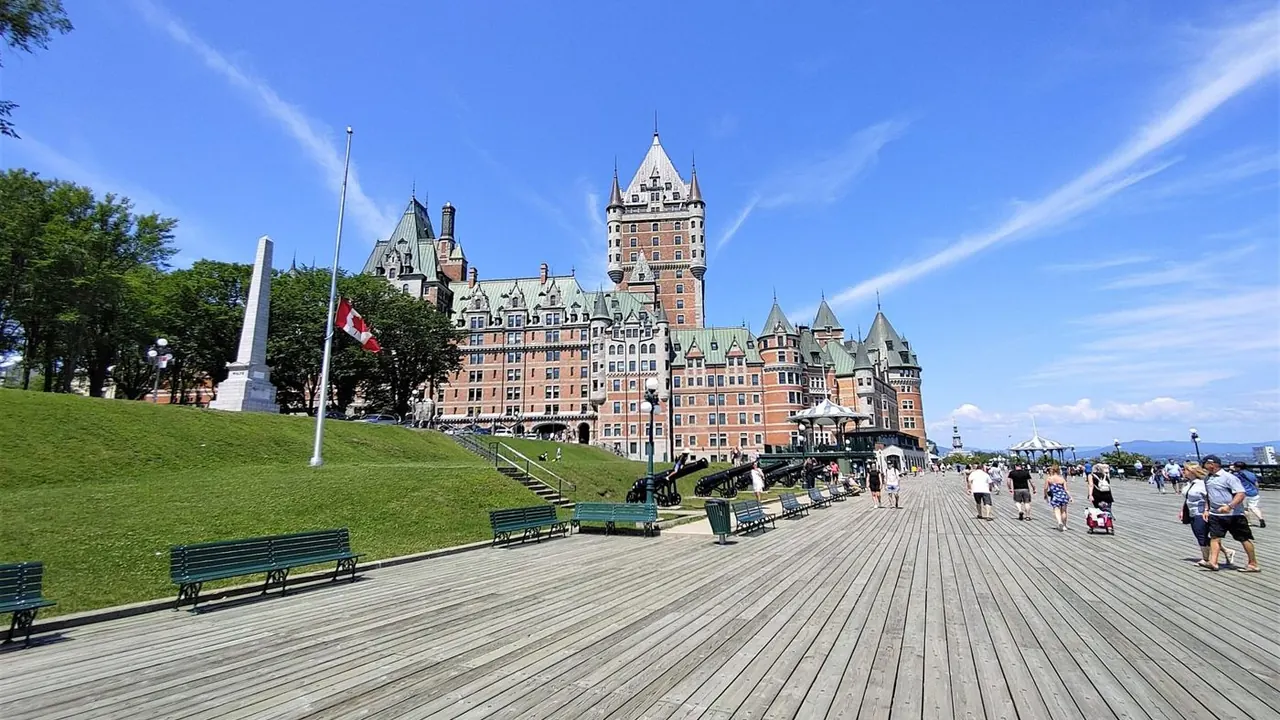
Château Frontenac from Dufferin Terrace
- Nature & outdoors79
- Culture & sights70
- Families64
Photo: Jeangagnon, CC BY-SA 4.0, cropped
Match
53
Every category weighted equally
- Beach & sun49
- Culture & arts55
- Food & nightlife50
- Family trip54
- Outdoors56
- Relax & unwind53
- Shopping & style52
- On a budget52
Quebec City in twelve categories
Our verdict on each, scored 0 to 100 against the same fixed benchmark cities, so a score means the same thing on every page.
Beaches & swimming. Scores 18 out of 100.
Food & drink. Scores 57 out of 100.
Culture & sights. Scores 70 out of 100.
Nightlife. Scores 42 out of 100.
Nature & outdoors. Scores 79 out of 100.
Day trips. Scores 58 out of 100.
Good for families. Scores 64 out of 100.
Getting around. Scores 50 out of 100.
Shopping & style. Scores 45 out of 100.
Affordability. Scores 45 out of 100.
Live music & performing arts. Scores 52 out of 100.
Wellness & relaxation. Scores 55 out of 100.
Quebec City category by category
Beaches & swimming
18Quebec City sits on the St Lawrence, but the river here is cold, tidal and fast, and it shapes the view rather than the day. There is a supervised river beach at the Baie de Beauport in summer, mostly used for sun, volleyball and paddling. Real swimming means driving to the lakes north of the city, such as Lac Saint-Joseph and Lac-Beauport, where the water reaches about 20°C to 22°C in July and August.
The season is short, from late June to the end of August, and beach time is something locals fit into a weekend rather than the reason anyone comes. Visitors who want the water should pack for a lake afternoon, not a beach vacation.
Food & drink
57The cooking here is French-Canadian, built on hearty winter food: tourtière meat pie, pea soup, baked beans, poutine at late counters, and maple in everything from taffy pulled on snow to sugar pie. In early spring the sugar shacks around the city serve long, heavy maple-season meals. The best eating is in the bistros of Saint-Roch and Saint-Jean-Baptiste, which work with produce from the Île d'Orléans and Charlevoix: cheeses, duck, cider, berries and game.
The Marché du Vieux-Port gathers farm stalls and local producers, and the region has a solid microbrewery and ice cider culture. Inside the walls many restaurants cater to visitors with set menus of uneven quality. The scene is good for its size, but range is narrow beyond French and Québécois cooking.
Culture & sights
70Old Québec is the only fortified city north of Mexico with its walls still standing, and its UNESCO-listed upper and lower towns are the core of any visit. The Château Frontenac crowns the cliff above the Dufferin Terrace, the star-shaped Citadelle still houses a regiment, and below, Place Royale and the narrow streets of Petit-Champlain keep the stone houses of the French colony. The Notre-Dame basilica, the Ursuline convent and the Séminaire add four centuries of religious heritage.
The Plains of Abraham, where the battle of 1759 decided the fate of New France, run along the clifftop to the Musée national des beaux-arts du Québec, and the Musée de la civilisation tells the history of the province and its First Nations. It is a compact, coherent set rather than a deep museum city.
Nightlife
42Going out centres on three areas. The Grande Allée, just outside the walls, is a strip of terraces and party bars that fill up on summer nights. Rue Saint-Jean and the Saint-Jean-Baptiste neighbourhood have pubs, microbrewery taprooms and student bars, and Saint-Roch below the cliff holds the cocktail bars and wine bars where locals go.
Bars stay open late, and the university brings a young crowd, but the club scene is small and most nights out are drinks rather than dancing. Summer and the winter carnival bring the crowds; on an ordinary weeknight in February the streets are quiet early.
Nature & outdoors
79Montmorency Falls, higher than Niagara, drop into the St Lawrence about 15 minutes from the centre, with stairways and a suspension bridge over the top. Within an hour lie the Jacques-Cartier national park, a deep glacial valley in the boreal forest good for canoeing, hiking and moose spotting, and the ski hills of Mont-Sainte-Anne, Stoneham and Le Massif, the last with runs that seem to fall into the river.
Winter is the long season and is taken seriously: cross-country skiing, snowshoeing, skating and ice canoeing on the river. In summer the Plains of Abraham and riverside paths suit walking and cycling, and the cycle route round the Île d'Orléans is a classic. Winters are very cold, and spring melt is muddy.
Day trips
58The Île d'Orléans, about twenty minutes away across a bridge, is the classic outing: six old parishes with stone churches, farmhouses, orchards, cideries and strawberry stands along a single road round the island. On the north shore, the shrine of Sainte-Anne-de-Beaupré is one of the great pilgrimage churches of North America, and Wendake, on the city's edge, is the Huron-Wendat community with its museum and longhouse.
Further out, Baie-Saint-Paul in Charlevoix, about an hour and a quarter by car, is an artists' village of galleries in a valley of rolling hills, and Trois-Rivières makes a quieter historic stop up the river. Most outings need a car, and the list thins quickly after these.
Good for families
64The city is safe, friendly and easy for children, and winter is a playground: tobogganing on the Dufferin Terrace slide, skating rinks, snow sculptures and the giant snowman mascot of the winter carnival. North of the city, a large water and snow park in the forest has slides in summer and tube runs in winter, and an ice hotel is built each year nearby for visitors to walk through.
The Aquarium du Québec, above the river bridges, has polar bears, walruses and seals, and the Musée de la civilisation runs hands-on exhibits for younger visitors. Montmorency Falls, with its cable car and zip lines, makes an easy half day. The old town's stairways and steep hills are hard with pushchairs, and deep cold needs proper clothing.
Getting around
50Most of what a visitor wants inside the city lies within walking distance: the upper and lower town, the Plains of Abraham, Saint-Jean-Baptiste and Saint-Roch. The catch is the cliff. Upper and lower town are joined by steep streets, long stairways such as the Breakneck Stairs, and the funicular from the Dufferin Terrace down to Petit-Champlain. In winter, ice makes the slopes hard going.
There is no metro or tram, only a bus network with express lines along the main axes, which serves the centre well enough. A ferry crosses to Lévis for the view back at the city. Beyond the centre, Montmorency Falls is reachable by bus, but the parks, ski hills and the Île d'Orléans are much easier with a car.
Shopping & style
45Shopping is small-scale. In Petit-Champlain the narrow lanes below the cliff hold craft workshops, jewellers, milliners and galleries, and Rue Saint-Paul in the old port is the antiques street. Rue Saint-Joseph in Saint-Roch is where locals shop, with independent fashion, design and book shops, and the big malls sit out in Sainte-Foy.
What visitors take home is local: maple products, ice cider, Québécois cheeses from the market, woollens, and Inuit and First Nations art from the galleries. Inside the walls much of what is sold is souvenirs, and there is no luxury fashion to speak of.
Affordability
45Quebec City is cheaper than Canada's largest cities but is not a budget destination. Hotels inside the walls are expensive in summer and during the winter carnival, and rooms in Saint-Roch or Sainte-Foy are better value. Restaurant bills carry sales tax and a customary tip on top of the menu price, which adds noticeably to every meal.
The main sights are inexpensive or free: walking the walls, the Plains of Abraham, the Dufferin Terrace and the basilica cost nothing, and the bus network is reasonable. Visiting in the shoulder seasons and eating set lunches keeps costs down.
Live music & performing arts
52The Grand Théâtre de Québec is home to the Orchestre symphonique de Québec, the oldest symphony orchestra in Canada, and to the city's opera company, with a season of concerts, dance and touring shows. Le Diamant, a theatre created by the director Robert Lepage, stages experimental work, and smaller French-language theatres fill out the season.
The highlight is the Festival d'été in July, when huge outdoor stages on the Plains of Abraham host international bands for a week and a half. In summer, street performers work the old town too. The rest of the year the programme is modest, and most theatre is in French.
Wellness & relaxation
55Quebec has its own bathing habit: the Nordic spa, a circuit of hot pools, saunas and cold plunges outdoors, often in the forest and best of all in deep winter, with steam rising off the water into the snow. Several sit within half an hour of the centre, around Lac-Beauport and along the river, and there is one in the old port itself.
The city itself sets a gentle pace. A slow walk along the Dufferin Terrace or the Plains of Abraham, and long café afternoons in Saint-Jean-Baptiste, suit an unhurried stay. Beyond the Nordic spas and hotel spas there are no historic baths or thermal springs.
When should you go?
Pick a month to see what it is like. The climate figures are measured averages, not a forecast.
Quebec City in July
Daytime high, °C
Rainfall in the month, mm
The whole year
Shaded against this city’s own year: the deepest cell is its best month for that figure and the palest its weakest.
Temperature and rainfall are climate normals, averaged over the years shown. Quebec City: 1991-2020 normals, Beauport (3.2 km from centre).
Before you go
| Measure | Quebec City |
|---|---|
| Official language | French, English |
| Currency | Canadian Dollar (CAD) |
| Sockets | AB120 V, 60 Hz |
| Driving side | Right |
| Time zone | UTC-5, UTC-4 in summer |
| Emergency number | 911 |
| Elevation | 98 m |
| Main airport | Quebec Jean Lesage International Airport (YQB)13 km from centre34 non-stop destinations |
| Public holidays this year | 10 days |
By the numbers
| Measure | Quebec City |
|---|---|
| City population | 574,482 |
| People per km² | 1,184 |
| Museums within 10 km | 16 |
| UNESCO World Heritage sites within 50 km | 1 |
Compare Quebec City with
Every comparison with a written verdict behind it.