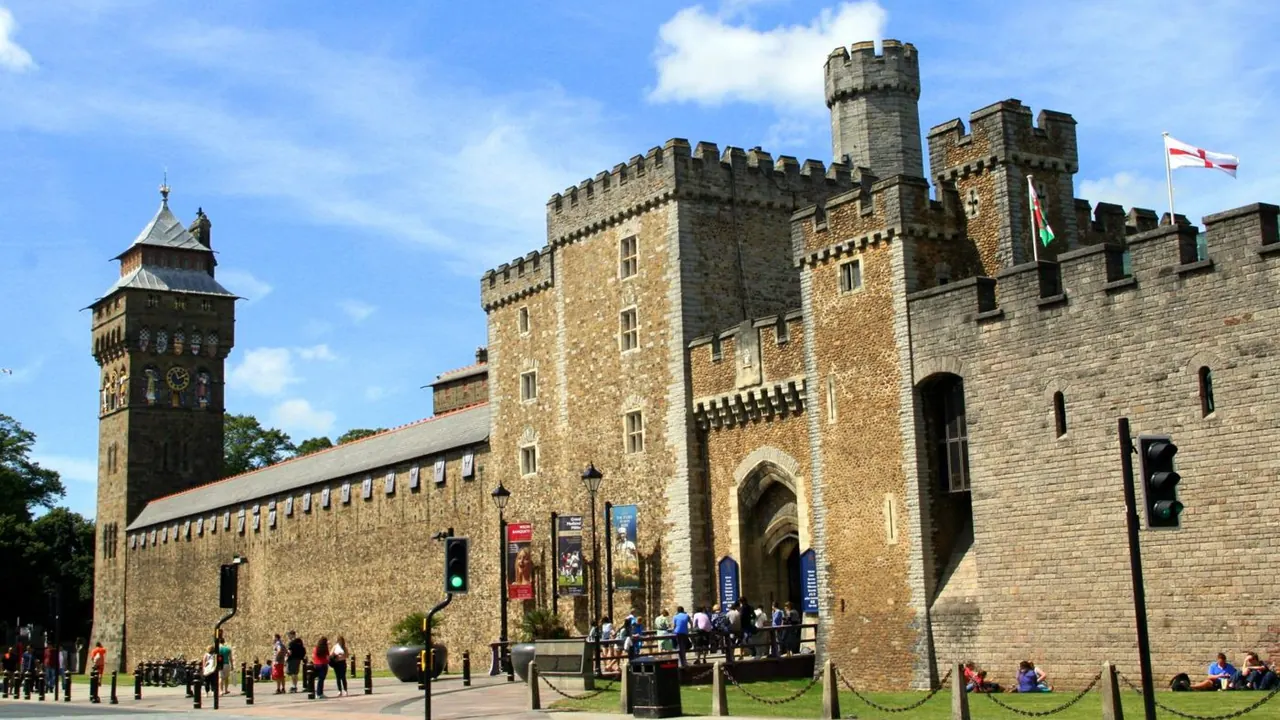
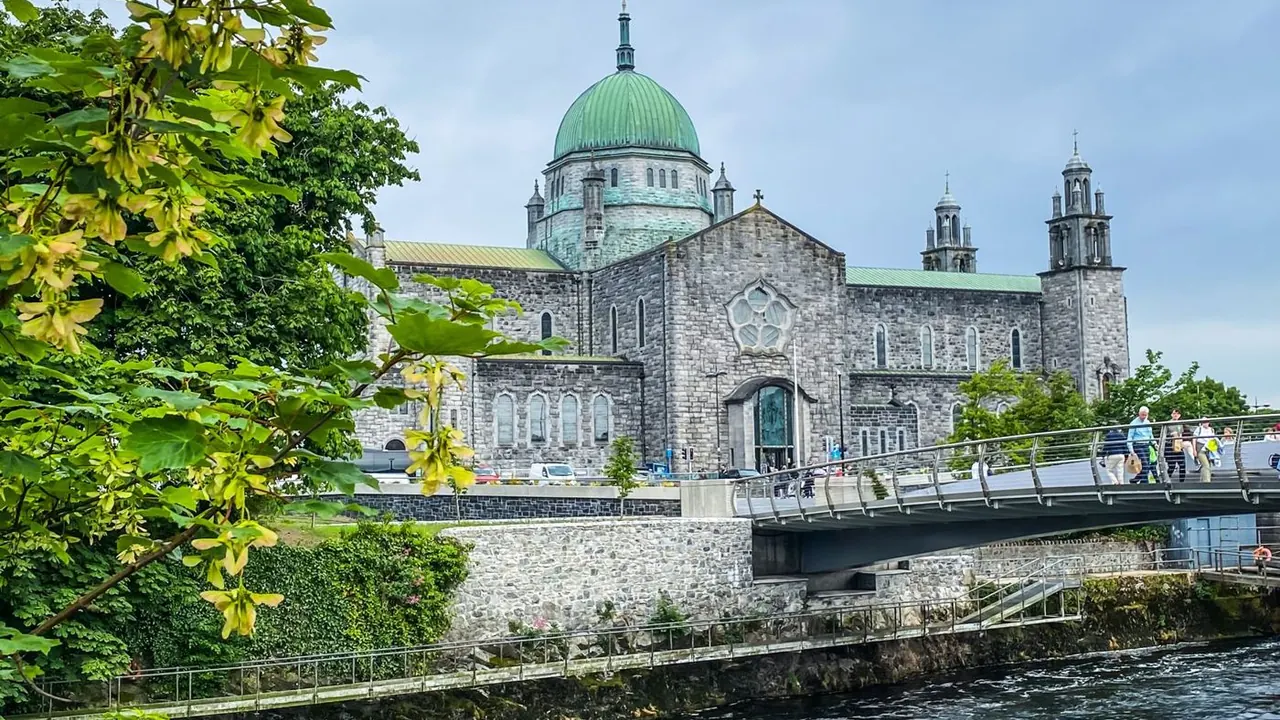
Photos: Cardiff by Tevfik Teker, CC BY 3.0, cropped; Galway by Dieglop, CC BY-SA 4.0, cropped.
Cardiff or Galway?
Our verdict in twelve categories, each scored against the same fixed benchmark cities, and the climate month by month, so you can choose for your trip.
Choose Cardiff for
- culture and sights
- prices
- day trips
Cardiff suits travellers who want plenty to see and do without a car. The castle, the national museums and St Fagans fill the days, and Caerphilly, Bath and the Wye Valley are short trips away, mostly by train. It is also the cheaper of the two and the easier one with children.
Choose Galway for
- nature and the outdoors
- wellness
For wild landscape and long evenings in the pub, Galway is the pick. Connemara, the Burren and the Aran Islands are all close by, traditional music plays in the Latin Quarter most nights and the oysters come from the bay. It costs more, though, and the west is best explored by car.
Scoreboard
Twelve categories on one fixed scale from 0 to 100. The shaded stretch is the gap between the two.
Your match
Pick a travel style or drag the sliders, and both match scores follow your weighting.
Wins on culture and sights and prices with your weighting.
Wins on nature and the outdoors and wellness with your weighting.
What matters to you?
Category by category
What the scores mean for a trip.
Beaches & swimming
Neither city is a beach destination. The difference is in how close the sea feels. Cardiff's tidal brown water at the Bay is for looking at, so a beach day means the train to the sand and funfair at Barry Island or the pebbles at Penarth.
Galway's shore is right there. The Salthill prom is a walk from the centre, and swimmers use the Blackrock diving tower all year. The Atlantic there is a little colder than the Bristol Channel, so it suits a quick, bracing dip rather than a lazy afternoon on the sand.
Food & drink
Both cities eat well rather than memorably, but the food comes from different places. In Cardiff, start at the Victorian market, with Welsh cakes from the griddle and cawl. Then try the neighbourhood bistros of Pontcanna and Canton, or the long run of Middle Eastern and South Asian cooking on City Road.
Galway eats from the sea: Galway Bay oysters, mussels and chowder, best found at the Saturday market by St Nicholas'. There is little beyond Irish and modern European cooking, so Cardiff has more range and Galway the stronger local speciality.
Culture & sights
Cardiff has far more to see. Its central castle has lavish Victorian Gothic rooms inside Roman and Norman walls. Add the National Museum's Impressionists in Cathays Park and the open-air St Fagans, and you have two or three full days.
Galway's heritage takes an afternoon on foot: the Spanish Arch, Lynch's Castle and St Nicholas' Collegiate Church, the surviving fragments of the medieval town of the Tribes. The pleasure there is the street life of the Latin Quarter rather than any museum, so anyone after serious collections will do better in Cardiff.
Nightlife
Cardiff saves its big nights for the weekend. On Saturdays, large groups fill St Mary Street and the lanes around it, and Womanby Street, facing the castle, has the alternative bars and late venues. Midweek is quiet. The clubbing is mainstream, but there is more of it than in Galway.
In Galway the pubs stay full even midweek during term, from old bars with snugs and open fires to louder places with DJs. When they close, a few late bars and small clubs take the overflow, and most nights are over by the early hours.
Nature & outdoors
Galway has the wilder setting. Connemara's bogs, lakes and the Twelve Bens are about an hour west. The bare limestone of the Burren and the Cliffs of Moher lie to the south, and the Aran Islands are a ferry ride away.
Cardiff's outdoors is gentler and closer. Bute Park and the Taff Trail start at the castle, the coast path runs past the Penarth cliffs, and Pen y Fan in the Brecon Beacons, about an hour's drive away, makes a fine half-day hike. Expect rain and wind in both.
Day trips
Cardiff has the richer list and the easier travel. Caerphilly's huge fortress is twenty minutes by train, and Castell Coch is just north of the city. Bath and Bristol are each about an hour away, and Tintern Abbey, Chepstow and the Blaenavon mining landscape are all within reach.
Galway's outings are memorable, but they are villages and single sites: Dún Aonghasa on Inis Mór, Kylemore Abbey, Cong and Clonmacnoise. Most of them need a coach tour or a hire car, while many of Cardiff's are a simple train ride.
Good for families
Cardiff is the easier choice with children. Techniquest at the Bay is made for them, St Fagans has farm animals and craft demonstrations, Roath Park has rowing boats, and the sand and funfair at Barry Island are a short train ride away.
Galway has the national aquarium and playgrounds on the Salthill prom, and buskers in the pedestrian streets, but little else in town is made for children. Most family days are out in Connemara or the Burren, and there are few indoor options on rainy days.
Getting around
Both centres are small, flat to walk and largely pedestrian, so the difference is in getting further out. From Cardiff, local trains run to Penarth, Barry Island, Caerphilly and the valleys. Shuttle trains, buses and a water taxi go to the Bay, and you only need a car for the national park and the remoter castles.
Galway's trains run only east to Dublin and south to Ennis and Limerick. For Connemara, the Burren and the Aran ferry port you need a coach, a day tour or a car on narrow, winding roads.
Shopping & style
Cardiff has more shopping and more character. Its glass-roofed Victorian and Edwardian arcades, such as the Royal, Morgan and Castle arcades, have independent record shops, bookshops and vintage clothing. Queen Street and a large mall cover the chains.
Galway's shopping runs along one pedestrian street from Eyre Square to Quay Street. It is good for books, Irish design, Aran knitwear and Claddagh rings made where the design began, but Quay Street leans towards souvenirs.
Affordability
Cardiff costs noticeably less. Hotels are moderately priced on ordinary weekdays, the national museums including St Fagans are free, and the train trips to castles and the coast are short and inexpensive. Watch out for rugby internationals and big stadium concerts, when hotel prices jump.
Galway has too few hotel rooms for its visitors, so prices climb in summer, at weekends and during the arts festival and race week. Eating and drinking cost the usual high Irish prices. The streets and the music in the pubs are free, but coach tours or a hire car for the west add up quickly.
Live music & performing arts
The two are equally strong, but in very different ways. Cardiff has the formal stages: Welsh National Opera at the Wales Millennium Centre and the BBC National Orchestra of Wales, plus a grassroots band scene around Womanby Street.
Galway's music is traditional and informal, with fiddles and bodhráns playing in Latin Quarter pubs most nights. Its theatre is strong too, led by Druid and the Irish-language An Taibhdhearc, but opera and classical concerts are rare.
Wellness & relaxation
Neither city is a place to come for spas, and both offer little beyond hotel spas. In Cardiff, slowing down means a lazy morning in a Pontcanna café or a walk along the Taff through Bute Park.
Galway's version is wilder: cold-water swimming at Blackrock, windy walks on the Salthill prom, and seaweed baths along the coast within a drive. The centre is loud at night, so for real quiet stay in Connemara or on the Aran Islands.
When should you go?
Pick your month. The climate figures are measured averages, not a forecast.
Cardiff in July
Galway in July
Daytime high, °C
Rainfall in the month, mm
Where the figures come from
Cardiff has no rain gauge within 25 km of the centre, so its rainfall comes from a gridded climate dataset read at the city rather than from a gauge further away.
Cardiff's sunshine is measured 83 km from the centre, at Lyneham.
Galway's temperatures are measured 64 km from the centre, at Shannon Airport.
Galway has no rain gauge within 25 km of the centre, so its rainfall comes from a gridded climate dataset read at the city rather than from a gauge further away.
Temperature and rainfall are climate normals, averaged over the years shown. Cardiff: 1991-2020 normals, Cardiff-Wales Airport (14.9 km from centre). Galway: 1991-2020 normals, Shannon Airport (64.2 km from centre).
The two have almost the same temperatures. Summer highs reach about 20°C in July and August and winters are cool and damp, so neither has a real beach season. Where they differ is rain and light. Galway is a little wetter, with more than 110mm a month from October to December. Its driest and sunniest weeks come in April and May, the best time for Connemara and the Burren.
Cardiff is drier all year, and its sunniest stretch runs from May to August, with July the brightest month. The Bristol Channel warms to about 18°C in August, a couple of degrees more than Galway Bay, but that is still weather for paddling rather than swimming. Both cities are pleasant to walk around from May to September, and in both the heavier rain arrives in October.
Which traveller are you?
For a culture and arts trip, Cardiff is the better base. It has national collections and formal stages, opera and orchestra included, enough for several full days. Galway's heritage takes an afternoon's walk, and its strengths are pub music and theatre.
On an outdoors trip, choose Galway. Wild country, with mountains, bog, limestone and islands, starts within an hour of town and is rougher and grander than anything around Cardiff. Plan on a hire car or day tours to reach it.
On a family trip with children, Cardiff is easier. More is built for children, much of it free, and short train rides keep the days simple. Rainy days are easier there too, because Galway has fewer indoor places for children.
Before you go
| Measure | Cardiff | Galway |
|---|---|---|
| Official language | English | English, Irish |
| Currency | Pound Sterling (GBP) | Euro (EUR) |
| Sockets | G230 V, 50 Hz | G230 V, 50 Hz |
| Driving side | Left | Left |
| Time zone | UTC, UTC+1 in summer | UTC, UTC+1 in summer |
| Emergency number | 112 or 999 | 112 |
| Elevation | 41 m | 25 m |
| Main airport | Cardiff International Airport (CWL)15 km from centre30 non-stop destinations | Shannon Airport (SNN)64 km from centre39 non-stop destinations |
| Public holidays this year | 8 days | 11 days |
By the numbers
| Measure | Cardiff | Galway |
|---|---|---|
| City population | 383,536 | 83,456 |
| People per km² | 2,734 | 1,563 |
| Museums within 10 km | 9 | 4 |
| UNESCO World Heritage sites within 50 km | 1 | 0 |
| Swim season, months above 21 °C | None | None |
Where else could you go?
Every comparison below shares a destination with this one, so you can follow Cardiff or Galway somewhere new.