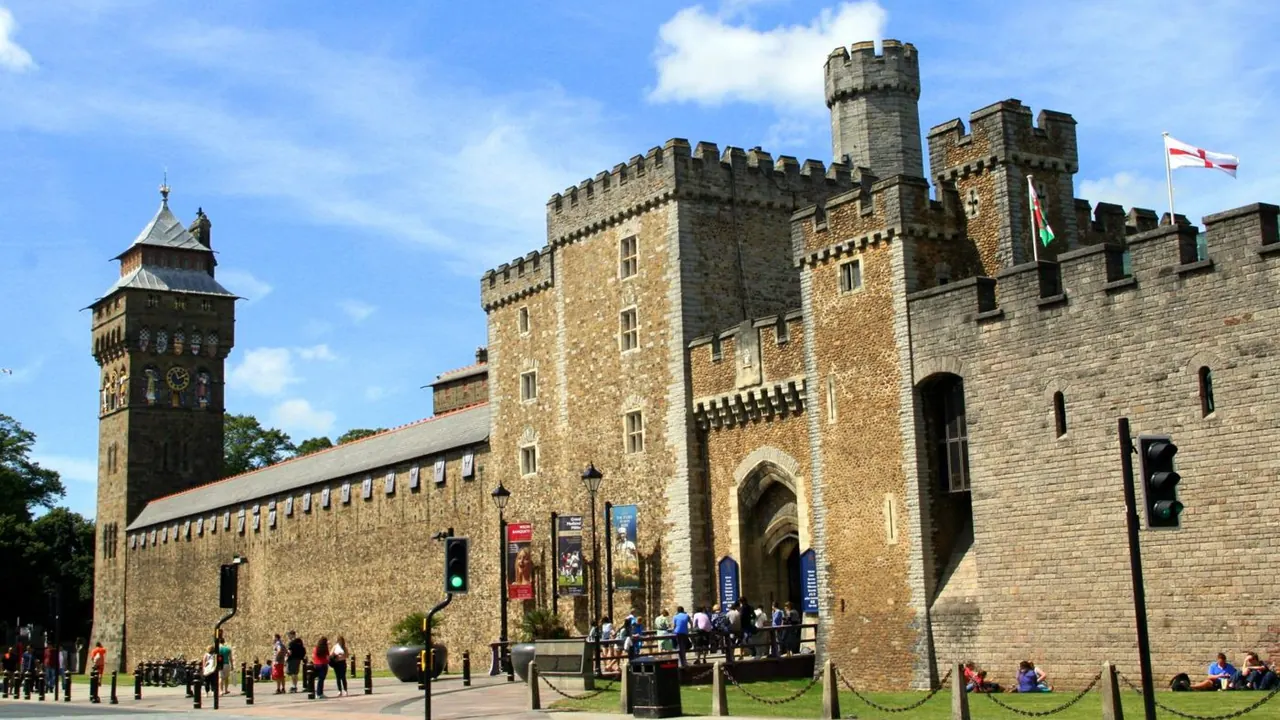
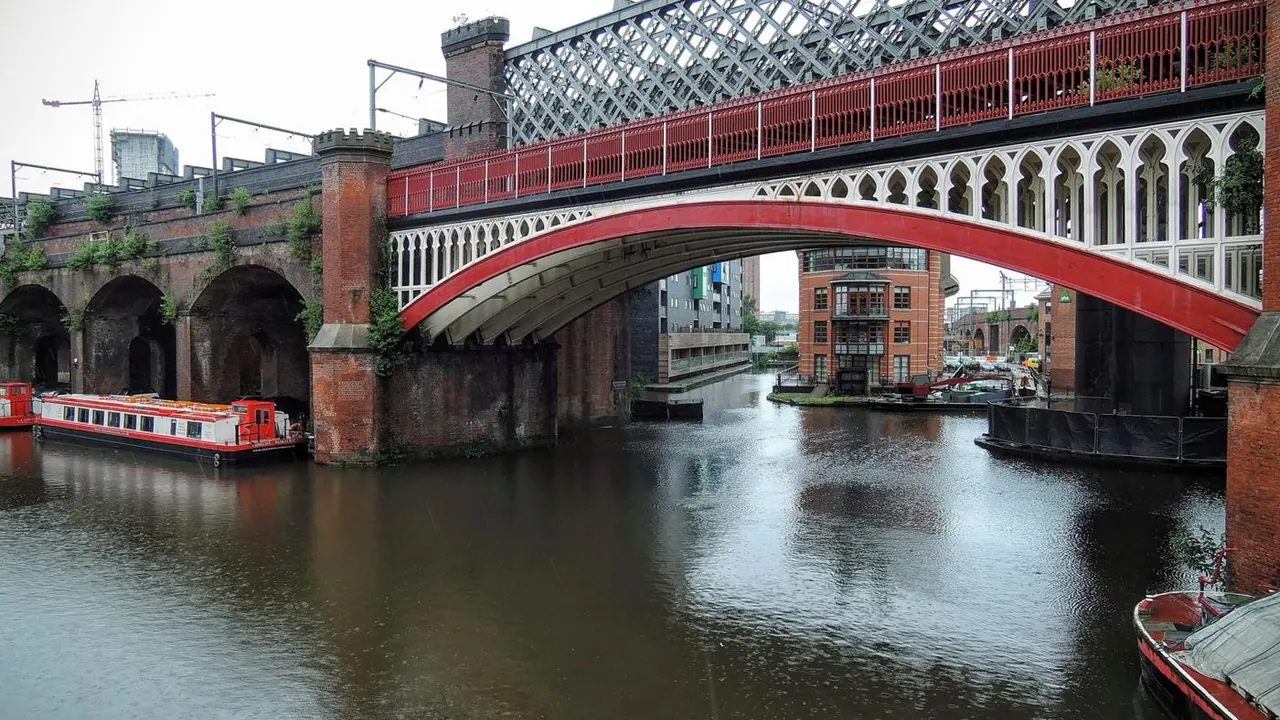
Photos: Cardiff by Tevfik Teker, CC BY 3.0, cropped; Manchester by IIya Kuzhekin, CC BY 3.0, cropped.
Cardiff or Manchester?
Our verdict in twelve categories, each scored against the same fixed benchmark cities, and the climate month by month, so you can choose for your trip.
Choose Cardiff for
- beaches
- wellness
- culture and sights
Cardiff suits a slower, more scenic trip. Its castle sits in the middle of town, St Fagans and the National Museum fill a day or two for free, and the Brecon Beacons and the Gower coast are close enough for proper walks and seaside afternoons. It is the better choice if you want sights, hills and sea air over late nights, and it is a little easier on the wallet.
Choose Manchester for
- nightlife
- live music and the arts
- shopping
If evenings matter more than mornings, go to Manchester. Its bars, clubs and gigs run deeper, the Hallé and the Royal Exchange give it a serious arts calendar, and Chinatown, Rusholme and the Northern Quarter food halls make eating out more varied. Add the best shopping in northern England and quick trains to Liverpool, York and the Peak District, and it makes a busier, more urban trip.
Scoreboard
Twelve categories on one fixed scale from 0 to 100. The shaded stretch is the gap between the two.
Your match
Pick a travel style or drag the sliders, and both match scores follow your weighting.
Too close to call, 2 points apart
Wins on beaches and wellness with your weighting.
Wins on nightlife and live music and the arts with your weighting.
What matters to you?
Category by category
What the scores mean for a trip.
Beaches & swimming
Neither city is a beach destination, but Cardiff at least has the sea on its doorstep. Barry Island's sandy bay and funfair are a short train ride away, and Penarth's pebble shore and pier are closer. Porthcawl's surf beaches and the Gower sands take about an hour by car.
Manchester is inland. Its nearest coast, the dunes at Formby or the promenade at Blackpool, is an hour or more away and makes a day out rather than a beach afternoon. In both places the water is cool enough that most people paddle and few swim.
Food & drink
Manchester has more range. Its large Chinatown, the cheap South Asian kitchens of Rusholme and the food halls in the old mills of Ancoats give you more choice over a few days. Its craft-beer scene and Northern Quarter coffee are a real strength.
Cardiff has more of a regional flavour. Welsh cakes from the griddle in the Victorian market, cawl, laverbread and Welsh lamb are worth seeking out, and Pontcanna and Canton have good neighbourhood bistros. Overall, though, the city offers fewer good places to eat.
Culture & sights
Cardiff has the stronger set of headline sights. The castle mixes Roman and Norman walls with extravagant Victorian Gothic interiors, the National Museum holds an unexpectedly fine collection of Impressionists, and St Fagans gathers buildings from all over Wales into one open-air museum.
Manchester tells one story very well, the rise of the first industrial city. You see it at the Science and Industry Museum, in the mills of Ancoats and in the neo-Gothic Town Hall, with the John Rylands Library and the Pre-Raphaelites at the art gallery as highlights. It is rewarding if industry and politics interest you, but no single sight matches Cardiff Castle.
Nightlife
Manchester is the clear choice for going out. Its dance-music history still shapes the Northern Quarter's basement bars and DJ rooms. Canal Street's Gay Village is one of Europe's oldest, and autumn warehouse raves bring in big-name DJs. There is also more going on midweek.
Cardiff goes out loudly on Saturdays along St Mary Street, and Womanby Street has a good alternative corner opposite the castle. Otherwise the clubbing is mainstream, and a couple of nights covers it.
Nature & outdoors
Both cities sit close to upland national parks, but Cardiff has more variety within reach. Bute Park runs straight from the castle into the Taff Trail. Pen y Fan in the Brecon Beacons is about an hour's drive, and the Wales Coast Path follows the cliffs at Penarth, so you get both coast and hills.
Manchester's strength is the Peak District by train. Edale is under an hour away for Kinder Scout and the Mam Tor ridge, with no car needed. Its city parks, especially Heaton Park, are large, but it has nothing like Cardiff's coastline. In both places, expect mud and low cloud on the tops.
Day trips
Both are excellent bases, and the difference lies in the type of outing. From Cardiff the theme is castles and Welsh history: Caerphilly, Castell Coch, Chepstow with Tintern Abbey, and the Big Pit mine at Blaenavon. Bath and Bristol are about an hour across the Severn.
From Manchester the attraction is England's northern cities and countryside, all by rail: Liverpool, Chester and York, plus Chatsworth and Buxton in the Peak District. The Lake District is also within reach. Manchester has the slightly longer list, while Cardiff's outings have a stronger single theme.
Good for families
Children are equally well served, in different ways. Cardiff is outdoors and small-scale: Techniquest and boat trips at the Bay, farm animals at St Fagans, rowing boats on Roath Park lake, and Barry Island's funfair in summer.
Manchester is better for rainy days, with indoor and bigger attractions. It has the Science and Industry Museum, dinosaurs at the Manchester Museum, and an aquarium, Lego attraction and indoor snow slope at the Trafford Centre. Chester Zoo and Alton Towers are within a day trip, where Cardiff has no zoo or theme park.
Getting around
Both have small, flat centres you can cover on foot, so getting about is easy in either. Manchester's Metrolink trams make Salford Quays, Old Trafford and the airport simple to reach.
Cardiff has no tram. The walk to the Bay takes about half an hour, or you can take a shuttle train, a bus or a water taxi along the Taff, and local trains reach Penarth and Caerphilly. You won't need a car in either city, only for the remoter hills.
Shopping & style
Manchester has much more to offer shoppers. Upmarket department stores and designer labels on King Street sit alongside the record and vintage shops of the Northern Quarter and the many stalls of Afflecks. The Trafford Centre adds a vast mall.
Cardiff's highlight is its glass-roofed Victorian and Edwardian arcades, full of independent bookshops, record shops and vintage stores. For Welsh lovespoons, blankets and slate, Cardiff has the better crafts. Beyond that it is high-street chains, and an afternoon is enough.
Affordability
Costs are similar, both typical of mid-priced Britain, and Cardiff works out slightly cheaper. In both, free national museums are the big saving, and hotel prices jump on big event days: rugby internationals in Cardiff, football matches and arena concerts in Manchester.
Cardiff also helps with its short, inexpensive train rides to castles and the coast. In Manchester, the curry houses, Chinatown and food halls make a cheap meal easy to find.
Live music & performing arts
Manchester has the deeper arts life. Its gig circuit runs from Northern Quarter back rooms to a huge arena. The Hallé and the BBC Philharmonic both play at the Bridgewater Hall, and the Royal Exchange stages theatre in the round inside the old cotton trading hall.
Cardiff's advantage is opera: the Wales Millennium Centre is home to Welsh National Opera, while Manchester has no resident company. Add the BBC National Orchestra of Wales, the grassroots bands on Womanby Street and the Welsh choral tradition, and there is plenty to see, just less of it.
Wellness & relaxation
Neither city has a bathing tradition, but Cardiff is easier to relax in. The pace is gentle for a capital, Bute Park follows the river from the castle, and the cafés of Pontcanna suit a slow morning. Hotel spas and the leisure pools at the Bay cover the rest.
Manchester is louder and busier. Victoria Baths is a heritage visit, not somewhere to swim. The best way to unwind there is to take the train to Buxton or the Peak District.
When should you go?
Pick your month. The climate figures are measured averages, not a forecast.
Cardiff in July
Manchester in July
Daytime high, °C
Rainfall in the month, mm
Where the figures come from
Cardiff has no rain gauge within 25 km of the centre, so its rainfall comes from a gridded climate dataset read at the city rather than from a gauge further away.
Cardiff's sunshine is measured 83 km from the centre, at Lyneham.
Temperature and rainfall are climate normals, averaged over the years shown. Cardiff: 1991-2020 normals, Cardiff-Wales Airport (14.9 km from centre). Manchester: 1991-2020 normals, Manchester Airport (14.8 km from centre).
The two cities have almost the same temperatures. Highs reach about 20°C in July and August and fall to single figures from December to February. Late spring to early autumn is the comfortable time for walking the streets in either, and neither city ever gets too hot. Winter is chilly, damp and dark rather than freezing. October and November are the wettest months in both, and Manchester is a little wetter through late summer and autumn, with about 95mm in October.
Cardiff gets noticeably more sun, about 200 hours a month in early summer, so its long days feel brighter. Its sea warms to about 18°C in August, which is fine for a paddle at Barry Island but cool for a long swim. The Irish Sea on Manchester's side is a degree or so colder. In both, the beach months are really July to September, and they suit walking the shore better than swimming.
Which traveller are you?
For a beach and sun trip, Cardiff is the better of two weak options. The sea is close enough to fit a seaside afternoon in between sights, and its summers are sunnier. From Manchester, the coast takes up a whole day under greyer skies.
On a food and nightlife trip, Manchester wins clearly. In term time it goes out through the week, not just on Saturdays, so a long weekend never feels repetitive. Its eating spans more cuisines and budgets, and its pubs and breweries are a draw of their own.
On a shopping trip, choose Manchester. As the shopping capital of northern England, it has enough for a full weekend, from designer labels and alternative style to one enormous mall. Cardiff is a pleasant browse among independent shops, but you will be done by teatime.
Before you go
| Measure | Cardiff | Manchester |
|---|---|---|
| Official language | English | English |
| Currency | Pound Sterling (GBP) | Pound Sterling (GBP) |
| Sockets | G230 V, 50 Hz | G230 V, 50 Hz |
| Driving side | Left | Left |
| Time zone | UTC, UTC+1 in summer | UTC, UTC+1 in summer |
| Emergency number | 112 or 999 | 112 or 999 |
| Elevation | 41 m | 38 m |
| Main airport | Cardiff International Airport (CWL)15 km from centre30 non-stop destinations | Manchester Airport (MAN)15 km from centre211 non-stop destinations |
| Public holidays this year | 8 days | 8 days |
By the numbers
| Measure | Cardiff | Manchester |
|---|---|---|
| City population | 383,536 | 547,627 |
| People per km² | 2,734 | 4,737 |
| Museums within 10 km | 9 | 28 |
| UNESCO World Heritage sites within 50 km | 1 | 2 |
| Swim season, months above 21 °C | None | None |
Where else could you go?
Every comparison below shares a destination with this one, so you can follow Cardiff or Manchester somewhere new.