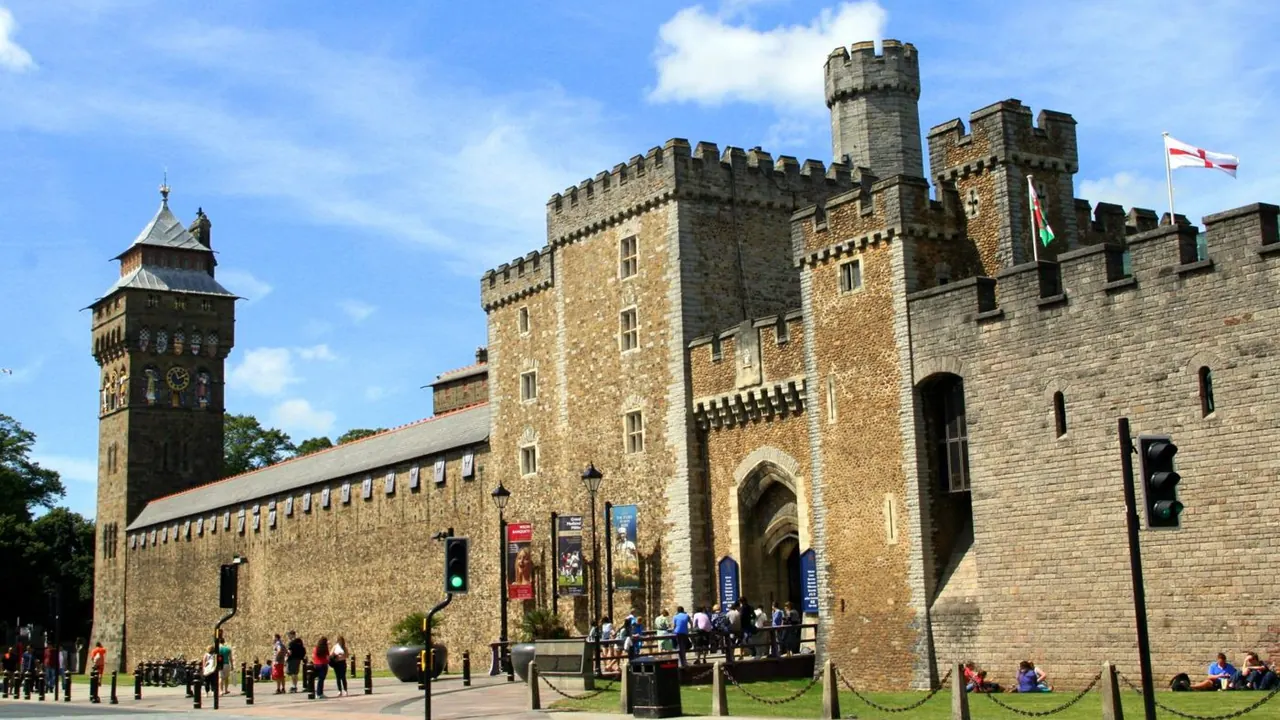
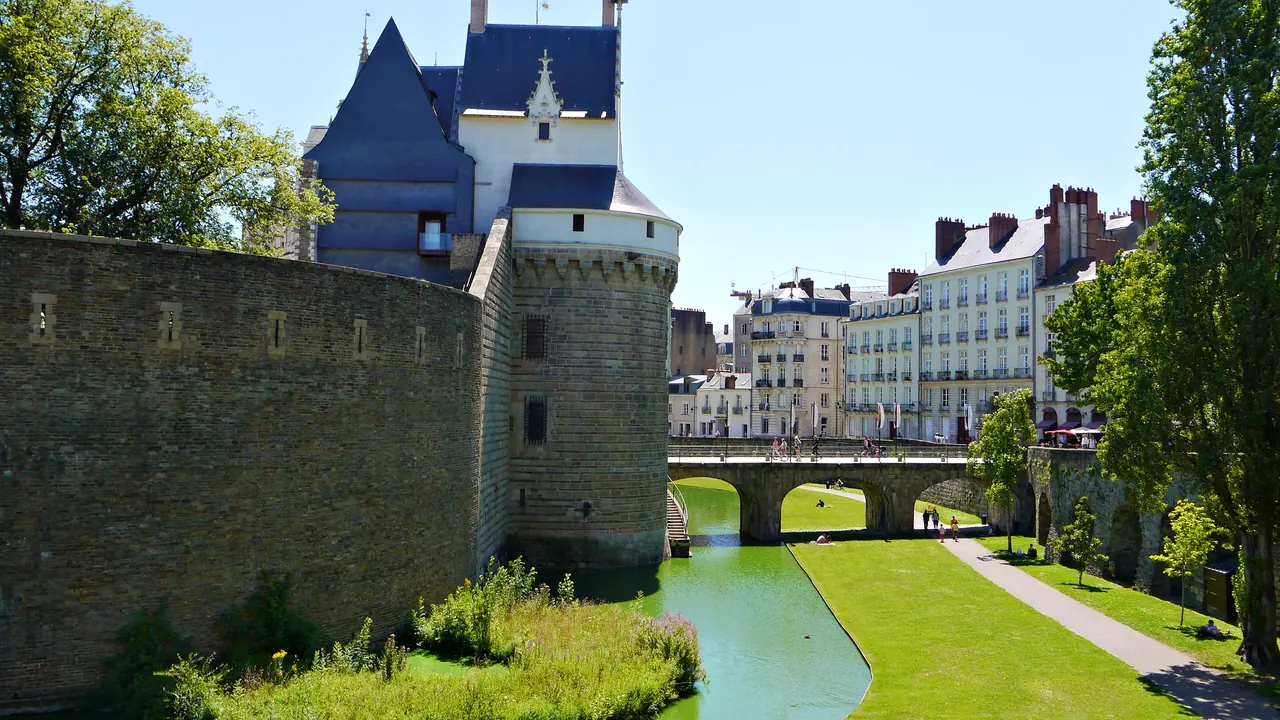
Photos: Cardiff by Tevfik Teker, CC BY 3.0, cropped; Nantes by Carole44, CC BY-SA 3.0, cropped.
Cardiff or Nantes?
Our verdict in twelve categories, each scored against the same fixed benchmark cities, and the climate month by month, so you can choose for your trip.
Choose Cardiff for
- nature and the outdoors
- nightlife
- shopping
Cardiff suits travellers who want hills, castles and a compact capital that comes alive on match weekends. The Brecon Beacons and Pen y Fan are about an hour away, the Taff Trail starts beside the castle, and the small venues around Womanby Street give evenings some edge. Pack walking boots and plan around rugby weekends. The cooking and the sea are not the reason to go.
Choose Nantes for
- food and drink
- beaches
- getting around
Nantes is the better pick for eating well, warmer summers and travelling with children. Beurre blanc, oysters from the nearby coast and Muscadet outclass anything on Cardiff's tables. The trams make the city simpler to get around, and the mechanical elephant and the sandy Atlantic bays make a family week easy.
Scoreboard
Twelve categories on one fixed scale from 0 to 100. The shaded stretch is the gap between the two.
Your match
Pick a travel style or drag the sliders, and both match scores follow your weighting.
Wins on nature and the outdoors and nightlife with your weighting.
Wins on food and drink and beaches with your weighting.
What matters to you?
Category by category
What the scores mean for a trip.
Beaches & swimming
Neither city has a beach of its own. In Cardiff the brown, tidal water of the Bay is for looking at. Barry Island's funfair sands are half an hour away by train and Penarth has pebbles and a pier, but you need a car for the better beaches at Porthcawl and Gower, and the sea stays cold enough that most people only paddle.
Nantes gets you to better sand. La Baule's long, sheltered bay and the coves at Pornic are about an hour away by train, and in late summer the Atlantic is warm enough for a proper swim on calm days.
Food & drink
Cardiff's best eating is in the bistros of Pontcanna and Canton, along the South Asian and Middle Eastern run of City Road, and in the Victorian market with its griddled Welsh cakes, cawl and laverbread. The local ales are good, but the Bay waterfront is mostly chains.
Nantes has a real regional kitchen. Beurre blanc was invented here and is served on pike-perch or sole, oysters come in from the nearby coast, galettes show the pull of Brittany, and Muscadet grows just outside town. The set lunches in the Bouffay lanes make eating well easy in a way Cardiff does not quite manage.
Culture & sights
Each city gives you two or three good days of sightseeing, and each is built around a castle in the centre. Cardiff's castle has Victorian Gothic rooms inside Roman and Norman walls, and the city adds the National Museum's Impressionists and the rebuilt Welsh farmhouses and miners' institute at St Fagans. Little of the city itself is older than Victorian.
Nantes has more of its past in the streets. There is the ducal château with its frank account of the slave trade, a Gothic cathedral, the leaning merchant houses of the Ile Feydeau and the Jules Verne museum. Cardiff is the place for Welsh folk and industrial heritage, Nantes for an old townscape to wander.
Nightlife
Both are student cities with a similar amount going on after dark, but the mood differs. Cardiff is about weekends, with big groups on St Mary Street, crowds in red on rugby days and Womanby Street's small alternative bars as the more interesting corner.
Nantes is more about terraces and wine bars. Evenings start in the medieval Bouffay lanes and move later to the old banana warehouses on the Ile de Nantes, where the clubs stay open until the early hours. Both are quiet midweek.
Nature & outdoors
Cardiff has real hills within reach. Pen y Fan and the open ridges of the Bannau Brycheiniog are about an hour's drive away, the Taff Trail climbs from Bute Park up the valley, and the coast path follows the cliffs around Penarth and the Vale of Glamorgan.
Nantes is flatter and gentler. You can take a boat up the Erdre, cycle the Loire à Vélo route through the vineyards, watch birds from a punt in the Brière marshes or walk the cliffs of the Côte Sauvage. It suits cyclists and walkers who like level ground, but there is no summit to aim for.
Day trips
Both make excellent bases, but the outings are different. From Cardiff the themes are castles and industry: Caerphilly is twenty minutes by train, Castell Coch stands in the woods, and you can pair Tintern Abbey with Chepstow or go down the Big Pit mine at Blaenavon. Bath and Bristol are just across the Severn.
From Nantes the trips are about old towns, wine and the coast. There is walled Guérande above its salt marshes, Angers with the Apocalypse Tapestry, Saumur and the Loire châteaux, Clisson among the Muscadet estates and Vannes on the Gulf of Morbihan.
Good for families
Cardiff is compact and flat, and most of what families do there is free. Children get hands-on science at Techniquest, farm animals at St Fagans and rowing boats on the lake in Roath Park, but there is no zoo or theme park.
Nantes has the bigger draws. Riding the giant mechanical elephant or the sea-creature carousel at the Machines de l'Ile is hard to beat, and the safari park at Port-Saint-Père and Puy du Fou are both within a drive. Its calmer, warmer beaches also make summer days by the sea easier.
Getting around
You can walk both small, flat centres. Cardiff has no metro or tram, so getting to the Bay means a half-hour walk, a shuttle train, a bus or a water taxi. Local trains take you to Penarth, Barry and the valleys.
Nantes is simpler. Three tram lines and a busway are easy to learn on the first day, small river shuttles cross the Loire and the riverside paths are easy to cycle. Paris is about two hours away by fast train. In both cities you only need a car for the countryside.
Shopping & style
Arcades are the highlight in both cities. Cardiff has a whole network of glass-roofed Victorian and Edwardian ones, lined with independent shops selling records, books and vintage clothing. For something to take home, look for a lovespoon, slate or a Welsh woollen blanket.
Nantes has a single grand arcade, the three-level Passage Pommeraye, with better boutiques around Graslin and independent shops near Bouffay and Decré. Its souvenirs are mostly edible: salted-butter biscuits, berlingot sweets, Guérande salt and Muscadet. Either city takes about an afternoon.
Affordability
A trip costs about the same in each, but you save in different places. In Cardiff, the free national museums, including St Fagans, and short, cheap train trips to the castles and coast make up for typical British restaurant prices. Hotel rates jump when the stadium hosts a rugby international or a big concert.
In Nantes, hotels are easy to find and the set lunch menus are the bargain. Dinners and drinks cost what they do anywhere in France, and the coast gets pricier in high summer.
Live music & performing arts
Both have more going on stage than you would expect for their size. Cardiff relies on national institutions: Welsh National Opera at the Wales Millennium Centre, the BBC National Orchestra of Wales, big concerts at the stadium and rising bands in the small rooms of Womanby Street.
Nantes has more festivals and experiment. La Folle Journée packs hundreds of short classical concerts into a few days each winter, the opera plays at the Théâtre Graslin, the Lieu Unique stages contemporary work, and giant street-theatre puppets fill public spaces.
Wellness & relaxation
The real difference is the sea cure. Nantes has France's thalassotherapy tradition within reach, while Cardiff has only hotel spas. In Cardiff, relaxing means a day spa, the leisure pool at one of the Bay hotels, a slow morning in a Pontcanna café or a stroll along the Taff.
From Nantes, the long-established seawater centres at La Baule and Pornic, about an hour away, make a restful day out. In town, the Jardin des Plantes and the banks of the Erdre are good for a slow afternoon.
When should you go?
Pick your month. The climate figures are measured averages, not a forecast.
Cardiff in July
Nantes in July
Daytime high, °C
Rainfall in the month, mm
Temperature and rainfall are climate normals, averaged over the years shown. Cardiff: 1991-2020 (sunshine 1981-2010, rainfall 1981-2010) normals, Cardiff-Wales Airport (14.9 km from centre). Nantes: 1991-2020 normals, Nantes (6.6 km from centre).
Cardiff is at its best from May to September, when highs peak at about 20°C. That is comfortable for walking the streets and the hills, but it is never beach weather, and the sea stays cool enough that most people only paddle. May to August brings the most sunshine, and spring is the driest stretch. From October the rain sets in, and October is the wettest month at 114mm.
In winter there is little to choose between the two. Nantes is only a degree or so milder, and both are grey and damp. The gap opens in summer, when Nantes reaches about 25°C in July and August. That is warm enough for the Atlantic beaches, where the sea touches 19°C. Summer is also its driest season, with July at 44mm, and it gets noticeably more sun than Cardiff. Spring and September are the best times for exploring on foot, before the rain returns in October.
Which traveller are you?
For an outdoors trip, Cardiff is the clear choice. A day can end on a real summit, with open moorland walking and valley cycling within easy reach. Flat Nantes offers riverbanks, vineyards and marsh, but nothing to climb. Bring waterproofs to either.
On a food and nightlife trip, Nantes gives you more to look forward to. Dinner draws on a real regional cuisine of seafood and crisp local white wine, and evenings move from terraces to late riverside clubs. Cardiff's nights are just as lively, but its food is only pleasant.
On a family trip with young children, Nantes keeps them entertained for longer. Its attractions are built around rides and spectacle, bigger theme-park days are within a drive, the summer sea is warmer and trams make outings easy. Cardiff's strength is that most of its sights are free.
Before you go
| Measure | Cardiff | Nantes |
|---|---|---|
| Official language | English | French |
| Currency | Pound Sterling (GBP) | Euro (EUR) |
| Sockets | G230 V, 50 Hz | CE230 V, 50 Hz |
| Driving side | Left | Right |
| Time zone | UTC, UTC+1 in summer | UTC+1, UTC+2 in summer |
| Emergency number | 112 or 999 | 112 |
| Elevation | 41 m | 2 m |
| Main airport | Cardiff International Airport (CWL)15 km from centre30 non-stop destinations | Nantes Atlantique Airport (NTE)8 km from centre97 non-stop destinations |
| Public holidays this year | 8 days | 11 days |
By the numbers
| Measure | Cardiff | Nantes |
|---|---|---|
| City population | 383,536 | 327,734 |
| People per km² | 2,734 | 5,027 |
| Museums within 10 km | 9 | 11 |
| UNESCO World Heritage sites within 50 km | 1 | 0 |
| Swim season, months above 21 °C | None | None |
Where else could you go?
Every comparison below shares a destination with this one, so you can follow Cardiff or Nantes somewhere new.
- Bristolvs Cardiff
- Bathvs Cardiff
- Oxfordvs Cardiff
- Londonvs Cardiff
- Liverpoolvs Cardiff
- Brightonvs Cardiff