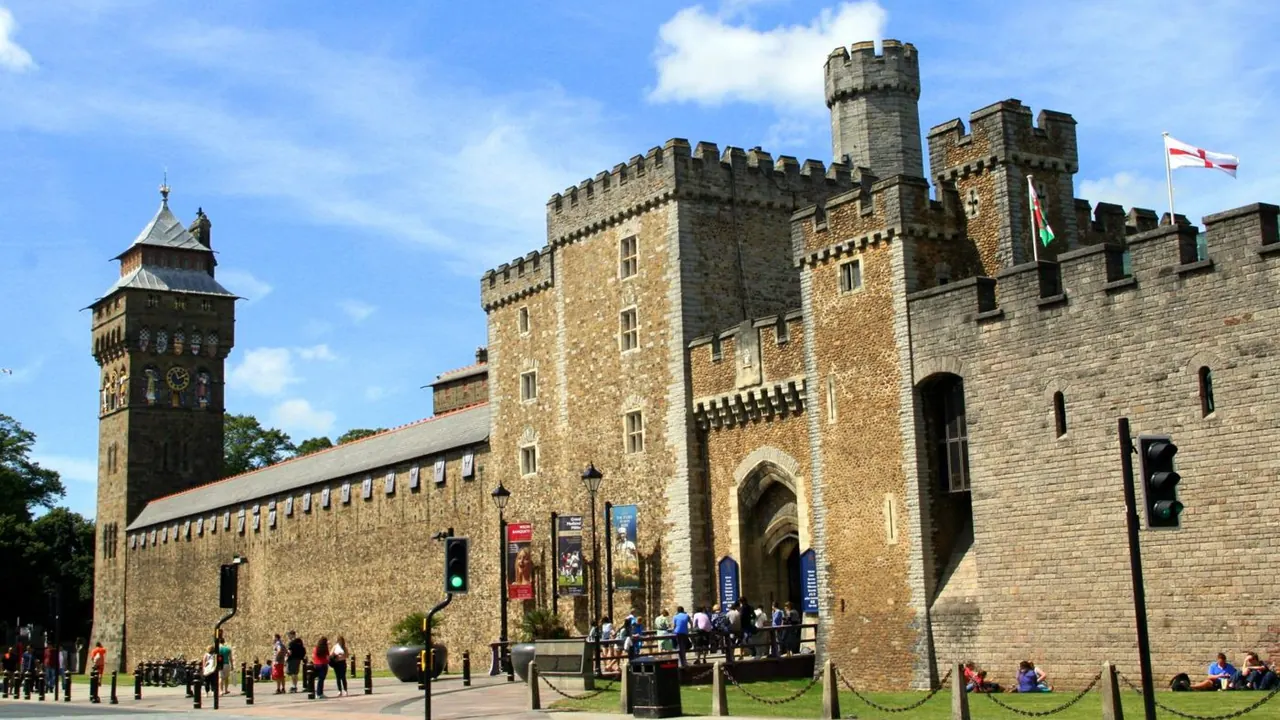
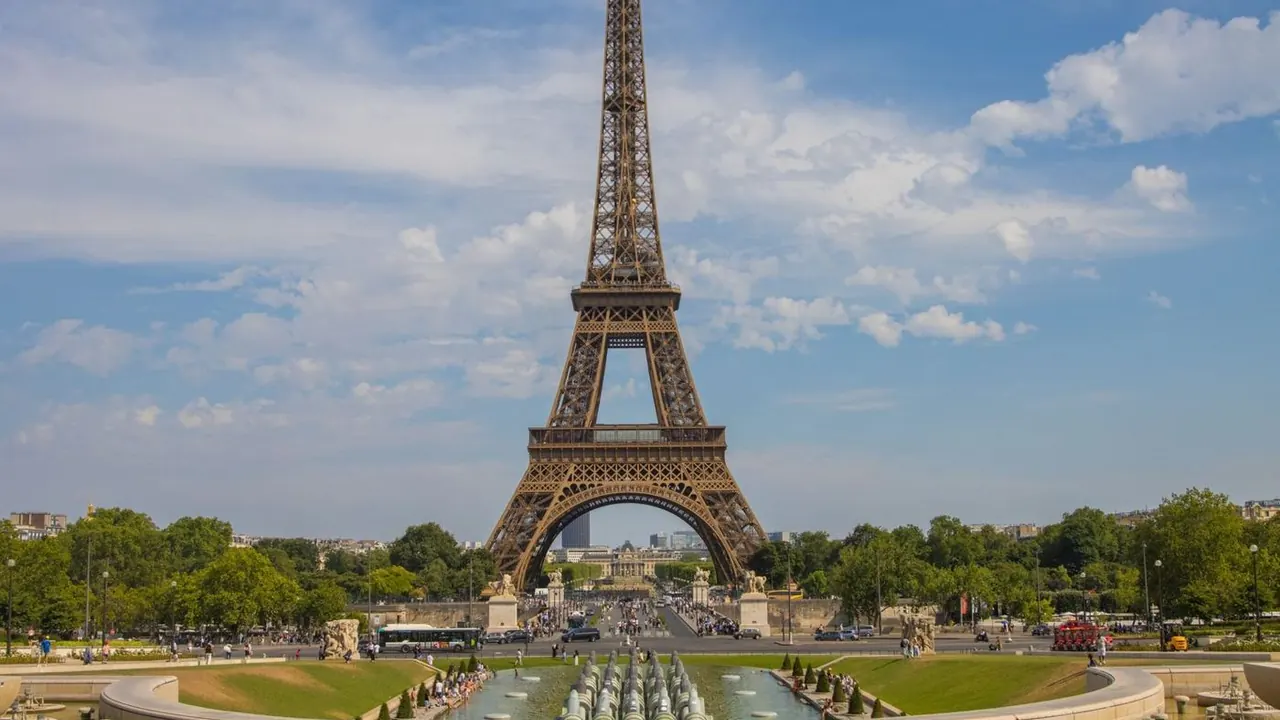
Photos: Cardiff by Tevfik Teker, CC BY 3.0, cropped; Paris by Efrem Efre, Pexels License.
Cardiff or Paris?
Our verdict in twelve categories, each scored against the same fixed benchmark cities, and the climate month by month, so you can choose for your trip.
Choose Cardiff for
- beaches
- prices
- nature and the outdoors
Cardiff suits a shorter, easier-going trip built around castles and the outdoors. Bute Park and the Taff Trail start in the centre, Pen y Fan is about an hour's drive away, and Caerphilly and Castell Coch are a short train ride out. The free national museums keep costs down. It works well for walkers, rugby fans and anyone happy with a small, flat capital they can get to know in a few days.
Choose Paris for
- food and drink
- shopping
- culture and sights
Paris is the choice when the city itself is the point. Its museums, food, shops and stages are in a different league from Cardiff's, the metro and the walkable centre make it easy to fill a week, and Versailles, Giverny or Reims can stretch the stay further. You will pay noticeably more and queue for the big sights.
Scoreboard
Twelve categories on one fixed scale from 0 to 100. The shaded stretch is the gap between the two.
Your match
Pick a travel style or drag the sliders, and both match scores follow your weighting.
Wins on beaches and prices with your weighting.
Wins on food and drink and shopping with your weighting.
What matters to you?
Category by category
What the scores mean for a trip.
Beaches & swimming
Neither is a beach destination, but Cardiff at least has sand within reach. Barry Island's bay and funfair are about half an hour away by train, Penarth has its pebbles and pier, and Porthcawl and the Gower are an hour or more by car. The sea stays cool, so expect to paddle rather than swim.
Paris is inland. Its summer river beaches and the swimming spots on the Bassin de la Villette are for cooling off, not a seaside. The Normandy coast at Deauville is about two hours away by train, so sea swimming means a separate trip.
Food & drink
Food is one of the widest gaps between the two. Cardiff's best eating starts at the Victorian market, with Welsh cakes off the griddle and laverbread with cockles. From there it moves out to the neighbourhood bistros of Pontcanna and Canton and the Middle Eastern and South Asian kitchens along City Road, with good local ale in the pubs.
In Paris, eating is the backbone of the day. Every quarter has its bakery and cheese shop, and the Marché d'Aligre and the covered Enfants Rouges fill the mornings. Zinc-counter bistros sit alongside natural wine bars and small, inventive neo-bistros in the east of the city, while pho in the Asian quarter to the south-east and couscous in Belleville widen the range further. Many people plan a whole trip around eating in Paris, which few would do in Cardiff.
Culture & sights
Both cities hold strong Impressionist paintings, which says something for Cardiff's National Museum, but the scale is very different. Cardiff has a castle with lavish Victorian Gothic rooms, the white stone civic centre, St Fagans and Llandaff Cathedral. That is a full two or three days, and little of it is older than the Victorian era.
In Paris, the Louvre, the Musée d'Orsay, the Sainte-Chapelle, the Marais townhouses and the Haussmann boulevards could each carry a trip on their own. The price is crowds: at the big sights you need to book ahead, which you rarely do in Cardiff.
Nightlife
Cardiff's nights are loud and concentrated in a few streets. Big groups fill St Mary Street on Saturdays, rugby days turn the whole centre into one crowd, and Womanby Street's small alternative bars are the more interesting option. Midweek is quiet, and a couple of nights covers it.
Paris goes on later and in more directions. Evenings move from wine bars and drinks on the canal banks in Oberkampf and Belleville to cocktails in South Pigalle, then house and techno clubs until dawn. The style is chic rather than rowdy, with pickier doors and dearer drinks.
Nature & outdoors
Cardiff has the real landscape. Bute Park leads straight onto the Taff Trail, the coast path runs past the Penarth cliffs, and the open moorland of the Bannau Brycheiniog and Pen y Fan is about an hour's drive away. Pack for rain, and for wind on the tops.
Paris has formal gardens, the cliffs and lake of the Buttes-Chaumont and the large woods of Boulogne and Vincennes. The forest of Fontainebleau, with its sandstone boulders, is forty minutes out by train. There are no mountains or open upland anywhere in the region, so expect gentle walking and cycling rather than a day on the heights.
Day trips
Both make good bases, but Paris has the longer list. Cardiff's trips are about castles and industry: Caerphilly by train, Castell Coch in the woods, Tintern Abbey with Chepstow and the Big Pit mine at Blaenavon. Bath and Bristol are across the Severn.
From Paris, Versailles, Chartres and Giverny are each about an hour away or less. Fast trains put Reims and its Champagne houses, Rouen and Tours, the gateway to the Loire, within easy reach. On a long stay you could spend as many days on outings as in the city.
Good for families
Cardiff is the easier place to manage with children, as it is flat, compact and mostly free. There is Techniquest at the Bay, the farm animals at St Fagans and rowing boats on the lake at Roath Park. What it lacks is a big draw: there is no zoo, aquarium or theme park.
Paris has the big draws: Disneyland and Parc Astérix, the Cité des Sciences, the zoo at Vincennes, and carousels and toy boats in the Luxembourg gardens. Daily life is harder, with metro stairs, small hotel rooms and long queues, but there is far more to fill the days.
Getting around
Cardiff's centre is small enough to cross on foot in minutes. The Bay is half an hour's walk or a short shuttle train away, and local trains run to Penarth and Caerphilly. There is no metro, and you need a car for the national park.
Paris has one of the great walking centres, plus a dense metro and the RER out to Versailles and the airports, so nowhere is hard to reach. Expect stairs and long corridors, packed rush hours and pickpockets on the tourist lines.
Shopping & style
Cardiff's shopping is mostly high-street chains, with one real asset: its glass-roofed Victorian and Edwardian arcades, full of record shops, vintage clothing and books. It fills an afternoon.
In Paris, shopping can be the whole trip, from the couture houses of Avenue Montaigne and the dome of Galeries Lafayette to the Marais designers, the Saint-Ouen flea market and the bouquinistes along the Seine. Even the chocolate, cheese and mustard shops give you more to take home than Cardiff's lovespoons and woollen blankets.
Affordability
Cardiff is the cheaper stay. Hotels are moderate on ordinary dates, the national museums, St Fagans included, are free, and the train rides to castles are short and inexpensive. The catch is a rugby international or a stadium concert, when room prices jump.
Paris costs more at almost every turn, from small, expensive hotel rooms to drinks on a terrace and full-price museum tickets. Bakeries, markets, lunchtime set menus and picnics by the river all help, and so does staying in the outer arrondissements.
Live music & performing arts
Cardiff has a solid stage of its own. Welsh National Opera is at the Wales Millennium Centre, the BBC National Orchestra of Wales is based in the city, and the small venues around Womanby Street put on young bands most nights. That grassroots scene is its strength.
Paris has two opera houses, with ballet at the Palais Garnier, as well as the Philharmonie and candlelit concerts in the Sainte-Chapelle, plus jazz cellars and cabaret in Pigalle. Much of the theatre is in French, but the music alone goes well beyond what Cardiff offers.
Wellness & relaxation
Neither city is a wellness destination. In Cardiff, the options are hotel spas, day spas and the pools of the Bay hotels, so rest mostly means slow mornings in Pontcanna cafés and walks along the Taff.
Paris has a little more, mainly the tiled steam rooms of the hammam at the Grande Mosquée and a few handsome historic pools. Its noise and pace work against a real rest, though.
When should you go?
Pick your month. The climate figures are measured averages, not a forecast.
Cardiff in July
Paris in July
Daytime high, °C
Rainfall in the month, mm
Where the figures come from
Cardiff has no rain gauge within 25 km of the centre, so its rainfall comes from a gridded climate dataset read at the city rather than from a gauge further away.
Cardiff's sunshine is measured 83 km from the centre, at Lyneham.
Temperature and rainfall are climate normals, averaged over the years shown. Cardiff: 1991-2020 normals, Cardiff-Wales Airport (14.9 km from centre). Paris: 1991-2020 normals, Paris-Montsouris (4.6 km from centre).
Cardiff is at its best from May to September, when daytime highs reach about 20°C in July and August and the days are at their sunniest, though rain can fall in any month. The sea peaks at about 18°C in August, cool enough that most people paddle rather than swim. From October the rain sets in, peaking at 118mm, and winters are grey and chilly.
Paris runs warmer. Summer highs of around 26°C are comfortable for long walks between sights rather than too hot. For most of the year it is drier than Cardiff, with May the wettest month at 75mm, and spring and early autumn are the pleasantest times for walking the streets. Winters are cold in both cities.
Which traveller are you?
For an outdoors trip, Cardiff is the clear pick. A morning in town can turn into an afternoon on open moorland, as long as you have a car and waterproofs. Escapes from Paris mean woods and riverside cycling, which are pleasant but never wild.
On a trip on a tight budget, Cardiff lets you see most of what it has for very little. In Paris you can eat cheaply from bakeries and markets, but the rooms and the big museums soon stretch a small budget.
For a food and nightlife trip, Paris is in another class. Each day can bring a different neighbourhood to eat and drink your way through, with clubs open until dawn. Cardiff gives you a loud Saturday and decent pubs, but plainer cooking and quiet weeknights.
Before you go
| Measure | Cardiff | Paris |
|---|---|---|
| Official language | English | French |
| Currency | Pound Sterling (GBP) | Euro (EUR) |
| Sockets | G230 V, 50 Hz | CE230 V, 50 Hz |
| Driving side | Left | Right |
| Time zone | UTC, UTC+1 in summer | UTC+1, UTC+2 in summer |
| Emergency number | 112 or 999 | 112 |
| Elevation | 41 m | 27 m |
| Main airport | Cardiff International Airport (CWL)15 km from centre30 non-stop destinations | Charles de Gaulle International Airport (CDG)22 km from centre277 non-stop destinations |
| Public holidays this year | 8 days | 11 days |
By the numbers
| Measure | Cardiff | Paris |
|---|---|---|
| City population | 383,536 | 2,103,778 |
| People per km² | 2,734 | 19,960 |
| Museums within 10 km | 9 | 251 |
| UNESCO World Heritage sites within 50 km | 1 | 4 |
| Swim season, months above 21 °C | None | - |
Where else could you go?
Every comparison below shares a destination with this one, so you can follow Cardiff or Paris somewhere new.