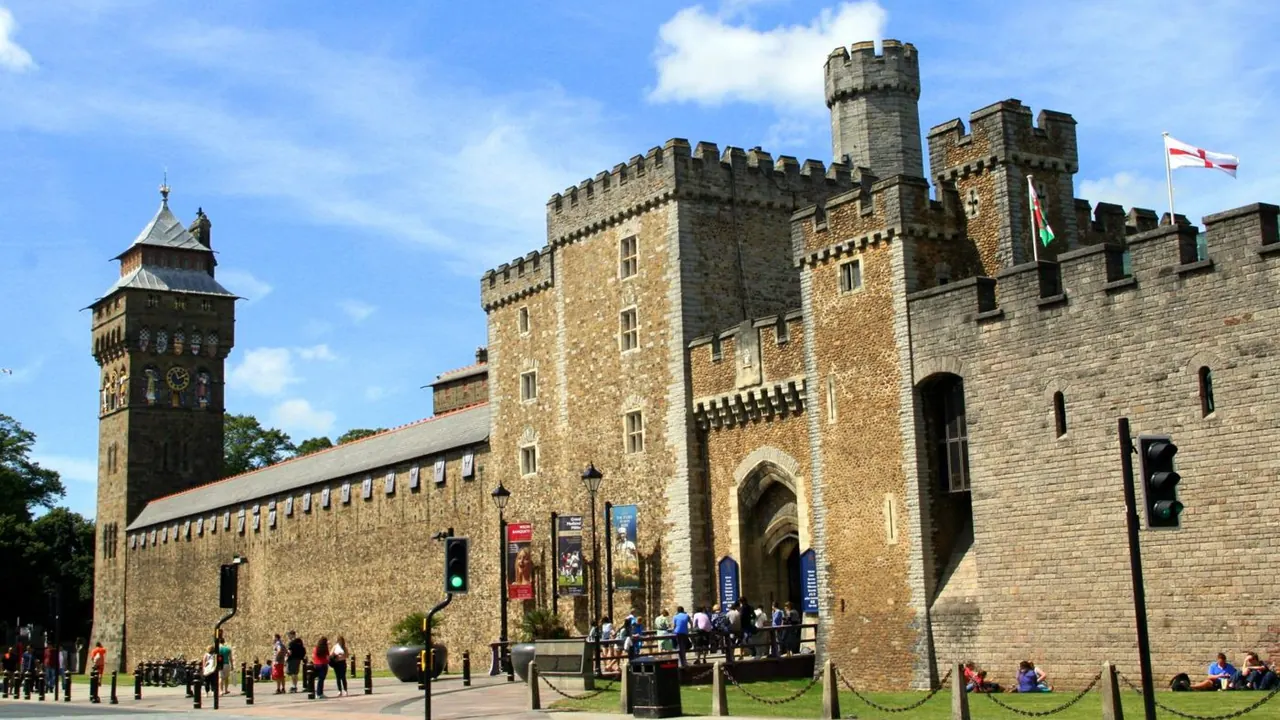
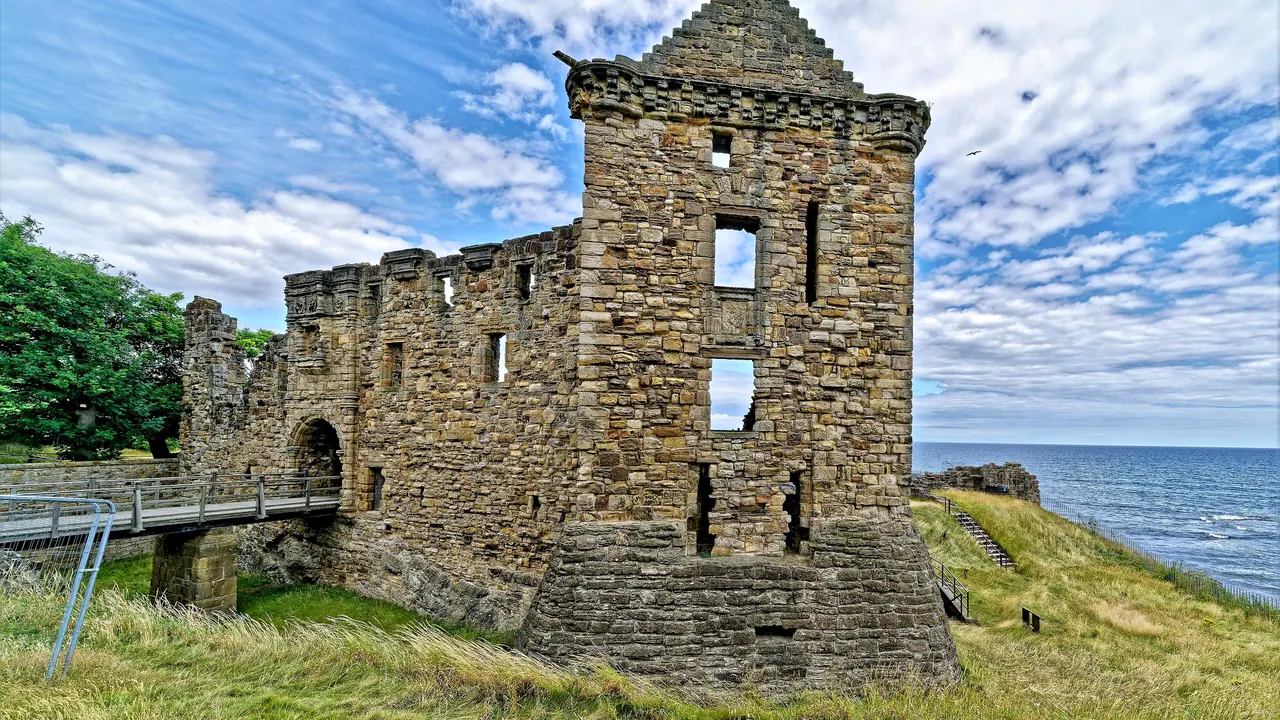
Photos: Cardiff by Tevfik Teker, CC BY 3.0, cropped; St Andrews by Holger Uwe Schmitt, CC BY-SA 4.0, cropped.
Cardiff or St Andrews?
Our verdict in twelve categories, each scored against the same fixed benchmark cities, and the climate month by month, so you can choose for your trip.
Choose Cardiff for
- live music and the arts
- nightlife
- shopping
Cardiff suits travellers who want a proper small capital: a castle in the middle of town, free national museums, opera and gigs in the evening, and a real Saturday night out. It is also the easier choice with children and on a tighter budget. Trains run out from the centre to Caerphilly, Barry Island and Bath, so you can see a lot without a car.
Choose St Andrews for
- wellness
St Andrews is for a slower, quieter few days by the sea. You can walk from medieval ruins to West Sands in minutes, and golfers come to play where the game began. Evenings are calm and rooms cost more. Choose it for fresh air, coastal walks and a good night's sleep, not for entertainment.
Scoreboard
Twelve categories on one fixed scale from 0 to 100. The shaded stretch is the gap between the two.
Your match
Pick a travel style or drag the sliders, and both match scores follow your weighting.
Wins on live music and the arts and nightlife with your weighting.
Wins on wellness with your weighting.
What matters to you?
Category by category
What the scores mean for a trip.
Beaches & swimming
Neither is a place to swim, but they let you down in different ways. Cardiff has no beach of its own. For sand you take the train to Barry Island, a traditional bay with a funfair feel, or go to Penarth for pebbles and a pier. The Gower and Porthcawl's surf beaches are an hour's drive or more.
St Andrews has the opposite problem. West Sands, East Sands and Castle Sands are all a short walk from the centre and lovely for walking, but the North Sea stays several degrees colder than the water off Wales.
Food & drink
Cardiff has more to explore. The Victorian market sells Welsh cakes, cawl and laverbread, the western districts of Pontcanna and Canton have neighbourhood bistros, and City Road has a long run of Middle Eastern and South Asian cooking.
St Andrews has a narrower range: cafés, bakeries, a few serious restaurants serving East Neuk crab and Fife lamb, and the town's well-loved ice cream. Its best simple pleasure is fish and chips eaten by the harbour in a nearby fishing village.
Culture & sights
The difference is age against breadth, and breadth gives Cardiff the longer list of things to see. The castle has lavish Victorian Gothic rooms inside Roman and Norman walls, the National Museum in the white stone civic centre has a strong collection of French Impressionists, and St Fagans, the open-air museum of buildings rebuilt from all over Wales, can easily fill half a day. Most of the city dates from the Victorian coal boom.
St Andrews is smaller but much older. There is the ruined cathedral with St Rule's Tower to climb, the clifftop castle with its siege tunnels, and the quadrangles and chapel of a university founded in 1413. You will see it in a day or two, against two or three days for Cardiff.
Nightlife
These two are far apart after dark. Cardiff fills up on Saturday nights around St Mary Street, and on rugby international days the whole centre turns red. Womanby Street has small alternative bars and late venues, and Pontcanna's wine bars are there for a gentler night.
St Andrews is a pub town, kept lively only by students during term. In summer, when most visitors come, it is very quiet, and a real night out means going to Dundee or Edinburgh.
Nature & outdoors
Cardiff has the bigger outdoors. Bute Park and the Taff Trail start right by the castle, and the Brecon Beacons are about an hour's drive away, with the classic hike up Pen y Fan across open moorland.
St Andrews' landscape is gentler and coastal. The Fife Coastal Path passes sea stacks and caves, wading birds gather on the Eden estuary, and seals haul out at Tentsmuir. For real hill walking you need to drive inland.
Day trips
Both make excellent bases, with different themes. From Cardiff, castles are the draw: Caerphilly, Castell Coch, Chepstow with Tintern Abbey. Bath, Bristol and the mining heritage at Blaenavon add variety, and many of these trips are short and work by train.
From St Andrews, the outings are the East Neuk fishing villages, Falkland Palace, Dundee's V&A and the ship Discovery, with Edinburgh as a full day. Beyond the coast and Dundee, you will need a car or careful bus planning.
Good for families
Cardiff has more to keep children busy. Techniquest at Cardiff Bay is a hands-on science centre made for them, St Fagans has farm animals, old shops and craft demonstrations spread across its parkland, and Roath Park has a lake with rowing boats. On a fine summer day, Barry Island's sands and funfair are a short train ride away.
St Andrews is calmer and small enough for older children to roam a little on their own. Rock pools on East Sands, the small aquarium on the Scores, Craigtoun Park's miniature railway and the putting green beside the Old Course are each good for a morning. After those there is little else made for families, and a cold, windy day leaves you with few indoor fallbacks.
Getting around
Both are easy on foot, and neither has a metro. St Andrews is the smaller of the two, with beaches, castle, university and golf links all a short walk apart. Its catch is the lack of a station: trains go from Leuchars, a bus or taxi ride away.
Cardiff's centre is flat and pedestrianised around Cardiff Central, and local trains go straight from there to Penarth, Barry Island and Caerphilly. The Bay is the one longer walk, with a shuttle train, buses or a water taxi as alternatives.
Shopping & style
Queen Street's chains and department store cover the basics in Cardiff, but its glass-roofed Victorian and Edwardian arcades are the real reason to go shopping there. They are full of independent record, book and vintage shops, and Welsh crafts such as lovespoons, woollen blankets and slate make good things to take home. The Victorian market adds local produce.
St Andrews is a pleasant browse along three streets for golf gear, cashmere, tartan and bookshops. That is about all there is, and serious shoppers go to Edinburgh.
Affordability
Cardiff is the cheaper stay. Hotels are moderate on ordinary weekdays, the national museums including St Fagans are free, and train trips to castles and the coast cost little. Prices jump on rugby and stadium concert dates.
St Andrews has few rooms, priced for golfers and university families, and rates climb around tournaments and graduation. A round on the famous courses costs a lot. Staying in the East Neuk villages helps.
Live music & performing arts
On the stage, Cardiff is in a different league. The Wales Millennium Centre is home to Welsh National Opera and hosts touring musicals, the BBC National Orchestra of Wales is based in the city, and small venues around Womanby Street book bands most nights.
St Andrews has the Byre Theatre, choral evenings in the university chapel and folk sessions in some pubs. Most of it pauses in the summer break, and for opera or orchestras you go to Edinburgh or Dundee.
Wellness & relaxation
St Andrews is the better place to unwind. The town is unhurried and the golf resorts on its edge have full spas that non-residents can use. Long walks on West Sands or a cold dip off East Sands with the locals do the rest.
Cardiff offers hotel spas, a few day spas and leisure pools at the Bay, with slow mornings in Pontcanna or a stroll through Bute Park. It is an easy-going city, but not one people choose for rest.
When should you go?
Pick your month. The climate figures are measured averages, not a forecast.
Cardiff in July
St Andrews in July
Daytime high, °C
Rainfall in the month, mm
Temperature and rainfall are climate normals, averaged over the years shown. Cardiff: 1991-2020 (sunshine 1981-2010, rainfall 1981-2010) normals, Cardiff-Wales Airport (14.9 km from centre). St Andrews: 1991-2020 normals, Leuchars (6.5 km from centre).
Both have mild, cool summers with no real heat, so the streets are pleasant for walking from late spring to early autumn. Cardiff is a little warmer, reaching about 20°C in July and August, and gets clearly more sunshine through the summer. It is also the wetter of the two, and from October to January the rain is heavy, peaking at around 103mm in November. St Andrews, on Scotland's east coast, is clearly drier all year, and the gap is widest in autumn and winter. It is a degree or so cooler, and its sunniest month comes earlier, in May.
Neither is warm enough for a beach vacation of lying in the sun and swimming. Cardiff's sea reaches about 18°C in August, enough for a paddle. The North Sea at St Andrews tops out near 14°C, so swimming there is a brisk dip at best. Winters are cold and dark in both places, so the best months are May to September. Spring is a particularly good bet in St Andrews, when it is dry and the light is long.
Which traveller are you?
For a food and nightlife trip, choose Cardiff. It is a capital with two big universities, so there is a wider choice of places to eat and drink, and evenings range from a quiet pint to a loud Saturday night. In St Andrews a good dinner usually means an early night afterwards.
On a relaxing and wellness trip, St Andrews works better. Cardiff is easy-going, but it is still a city, with weekend crowds and rugby and concert days at the stadium. St Andrews is small and slow, with the sea and open sky always close by.
Golfers have only one real choice, and it is St Andrews, the home of the game. A round on the links where golf began and a walk to the course from your room are something Cardiff cannot offer.
Before you go
| Measure | Cardiff | St Andrews |
|---|---|---|
| Official language | English | English |
| Currency | Pound Sterling (GBP) | Pound Sterling (GBP) |
| Sockets | G230 V, 50 Hz | G230 V, 50 Hz |
| Driving side | Left | Left |
| Time zone | UTC, UTC+1 in summer | UTC, UTC+1 in summer |
| Emergency number | 112 or 999 | 112 or 999 |
| Elevation | 41 m | 24 m |
| Main airport | Cardiff International Airport (CWL)15 km from centre30 non-stop destinations | Edinburgh Airport (EDI)56 km from centre163 non-stop destinations |
| Public holidays this year | 8 days | 10 days |
By the numbers
| Measure | Cardiff | St Andrews |
|---|---|---|
| City population | 383,536 | 16,460 |
| People per km² | 2,734 | - |
| Museums within 10 km | 9 | 5 |
| UNESCO World Heritage sites within 50 km | 1 | 0 |
| Swim season, months above 21 °C | None | None |
Where else could you go?
Every comparison below shares a destination with this one, so you can follow Cardiff or St Andrews somewhere new.
- Bristolvs Cardiff
- Edinburghvs St Andrews
- Bathvs Cardiff
- Aberdeenvs St Andrews
- Glasgowvs St Andrews
- Oxfordvs Cardiff