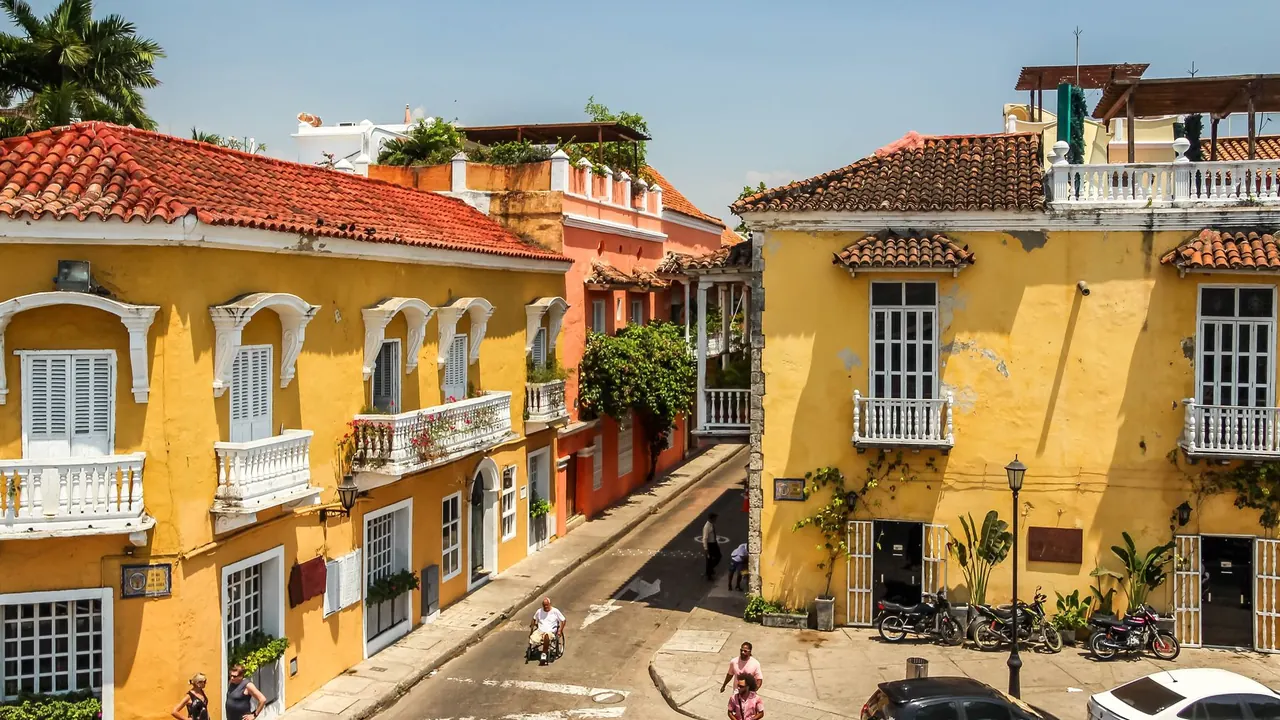
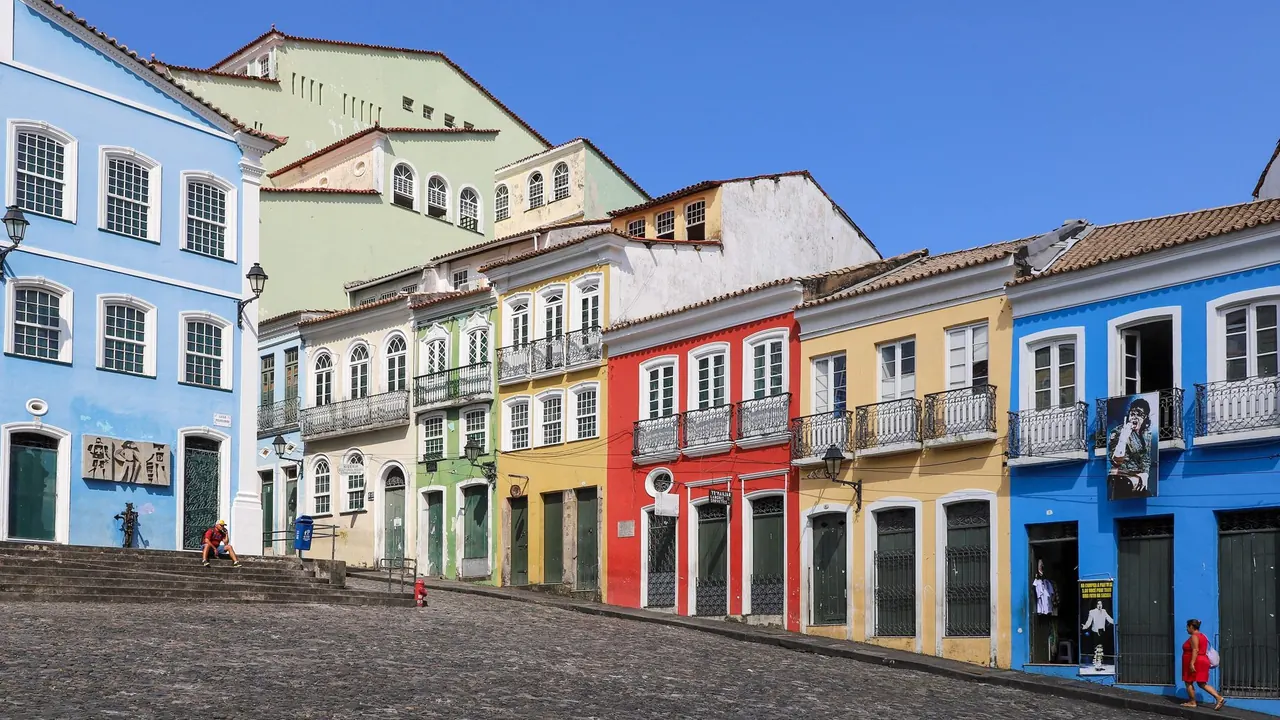
Photos: Cartagena by Dr. Thomas Liptak, CC BY-SA 4.0, cropped; Salvador by Paul R. Burley, CC BY-SA 4.0, cropped.
Cartagena or Salvador?
Our verdict in twelve categories, each scored against the same fixed benchmark cities, and the climate month by month, so you can choose for your trip.
Choose Cartagena for
- getting around
- wellness
- shopping
Cartagena suits a shorter, more contained trip. The walled city, San Diego and Getsemaní sit within a few minutes' walk of each other, so you can see the ramparts, the fortress and the painted streets without much planning. The good beaches are a boat ride away on the Rosario Islands and Baru. It also has the more polished side of the two, with rooftop bars, courtyard hotels with plunge pools and designer resortwear, and it is reliably dry through the northern winter.
Choose Salvador for
- day trips
- live music and the arts
- beaches
Salvador is for travellers who want the sea in everyday life and a culture with a strong rhythm of its own. You can swim from city beaches every day, the Pelourinho's baroque churches outdo Cartagena's sights, and the drum rehearsals and Afro-Brazilian dance are the reason many people come. It also costs less and has better day trips. The trade-off is a city that sprawls over two levels and along a long coast, so you will rely on taxis.
Scoreboard
Twelve categories on one fixed scale from 0 to 100. The shaded stretch is the gap between the two.
Your match
Pick a travel style or drag the sliders, and both match scores follow your weighting.
Wins on getting around and wellness with your weighting.
Wins on day trips and live music and the arts with your weighting.
What matters to you?
Category by category
What the scores mean for a trip.
Beaches & swimming
Salvador has the stronger beaches because you can reach them without a boat. Porto da Barra is a calm bay cove right in the city. The ocean beaches get cleaner and wilder as you go north to Stella Maris and Flamengo, and Praia do Forte's reef pools are about an hour away.
Cartagena's own beaches at Bocagrande are a different matter: darkish sand and cloudy water. To find clear turquoise water you need a day on the Rosario Islands or at Playa Blanca on Baru. Many visitors plan a day or two of their stay around that trip.
Food & drink
The two eat about equally well, but in different ways. Cartagena cooks like a Caribbean port, with fried fish, coconut rice, arepas de huevo and the coconut sweets of the Portal de los Dulces. It also has a smart tier of modern Colombian restaurants in restored colonial houses.
Salvador's Bahian cooking is the more distinctive cuisine, built on dendê oil, coconut milk and dried shrimp, with acarajé from baianas' stalls and moqueca stewed in clay pots. The eating there is mostly casual, and fine dining is harder to find than inside Cartagena's walls.
Culture & sights
Both are UNESCO-listed colonial towns, but Salvador gives you more to see. The Pelourinho has dozens of baroque churches, led by the gilded interior of São Francisco. The Afro-Brazilian Museum, the art museum at Solar do Unhão and the ribbon-hung Bonfim church add to the picture of Brazil's first capital.
Cartagena is the better place to wander. You can walk its ramparts at sunset and climb the huge Castillo San Felipe. Its museums, though, are small, and two or three days covers the main sights.
Nightlife
Nights out are about as good in both, but they feel different. Cartagena's is compact and aimed at visitors: salsa bars and drummers around Plaza de la Trinidad, rooftop cocktails inside the walls, reggaetón clubs, party boats and chivas, and touts to go with them.
Salvador's evenings are more local and mostly outdoors, with plastic tables across the pavements of Rio Vermelho and the Pelourinho squares busy at weekends. Clubs are few outside Carnival, and that one week of street parties is bigger than anything Cartagena puts on.
Nature & outdoors
Salvador has a little more to offer outdoors. There are humpback whales offshore from roughly July to October, sea turtles at Praia do Forte, surf breaks to the north, and the white dunes of Abaeté inside the city itself.
In Cartagena the best of the outdoors is underwater, snorkelling over the Corales del Rosario reefs, with canoe trips through the mangroves at La Boquilla. Inland the land is flat farmland, so a wallow in the Totumo mud volcano is about the only outing.
Day trips
Salvador has the better choice of outings. Cachoeira, a colonial river town about two hours inland, can be combined with Santo Amaro, the birthplace of samba de roda. Praia do Forte pairs a beach with castle ruins, and ferries cross the bay to Itaparica's old town.
From Cartagena, San Basilio de Palenque, with its own language and music, makes a worthwhile half day. Beyond that, most trips are really about the water. Mompox and Santa Marta are too far for a day and need an overnight stay.
Good for families
Neither city is set up for children, and the options are very similar. In Cartagena, the shaded plazas, horse carriages and the National Aviary on the way to Playa Blanca help fill the days, but the steady heat and long boat rides tire small children.
Salvador has the easier water for young swimmers in the shallows of Porto da Barra, plus the turtle centre and the capoeira in the squares. On the other hand, the old town's steep cobbles and the need to keep a close eye on belongings make it harder work.
Getting around
Cartagena is much easier to get around. The walled city, San Diego and Getsemaní are a few minutes' walk apart on streets with few cars, and plentiful taxis cover Bocagrande. The main problem is the midday heat on narrow, uneven pavements.
Salvador is spread over an upper and a lower town, linked by the Lacerda Elevator, and its districts stretch a long way north along the coast. The metro is mainly useful for the airport, and the buses are hard for visitors to follow, so most trips are by taxi or ride-hailing, especially after dark.
Shopping & style
Cartagena is slightly better for shopping, mainly because it has more design shops. Las Bóvedas, built into the city walls, sells Wayuu bags and sombreros vueltiaos. There are emerald jewellers around the Plaza de Bolívar, and boutiques of Colombian designers sell linen and straw resortwear.
Salvador's crafts are more musical and religious: berimbaus, drums, lacework and Bonfim ribbons in the Mercado Modelo. The São Joaquim market is more interesting to walk through than to shop in, and outside the old town shopping means malls full of Brazilian chains.
Affordability
Salvador is the cheaper of the two. Beach-shack meals, beer, ride-hailing and simple guesthouses in Barra all cost little, and many churches and museums charge little or nothing. Carnival week is the big exception.
Cartagena is Colombia's most expensive city. Boutique hotels and the better restaurants inside the walls charge close to European rates. You can still travel cheaply by staying in Getsemaní and eating street food, but expect to bargain with boat operators and hawkers.
Live music & performing arts
Salvador is much stronger for live performance. Its bloco drum groups hold open rehearsals in the Pelourinho and in Liberdade, the Balé Folclórico da Bahia dances most evenings, and the Teatro Castro Alves is home to the state symphony orchestra.
Cartagena has less to offer. There are concerts at the ornate Teatro Adolfo Mejía and a classical festival in January held in churches and courtyards. For the rest of the year you mostly hear cumbia dancers in the plazas and salsa bands in Getsemaní.
Wellness & relaxation
Cartagena is a little easier for a quiet break. Its colonial-house hotels have plunge pools and shaded courtyards in the middle of the old town, massages are cheap, and a few nights in a hammock on the islands slow everything down.
Salvador's best quality is its unhurried Bahian manner, not its facilities. The centre is noisy, so visitors who want rest usually choose a quiet guesthouse in Santo Antônio or a resort spa on the coast to the north.
When should you go?
Pick your month. The climate figures are measured averages, not a forecast.
Cartagena in July
Salvador in July
Daytime high, °C
Rainfall in the month, mm
Temperature and rainfall are climate normals, averaged over the years shown. Cartagena: 1991-2020 normals, Cartagena / Rafael Nunez (3.1 km from centre). Salvador: 1991-2020 normals, Salvador (4.5 km from centre).
Cartagena is hot all year, with daytime highs around 30°C in every month. The sea is warm enough to swim in any season, and walking the streets at midday is hard going whenever you come. What changes is the rain. December to April is the dry season, and January to March has almost no rain and plenty of sunshine. Showers start in May and build to a peak in October of about 241mm, with greyer skies through the autumn.
Salvador's wet season comes at a different time of year. Rain is heaviest in April and May, at close to 290mm a month, and stays high into July. December and January are its driest and sunniest months and the best time for beach days. From June to August highs ease to about 27°C, so the steep streets of the upper town are easier to walk. June and July are wetter and duller than in Cartagena, though, and by August the two cities are about level. The sea is at its coolest in these months but still fine for swimming. Both cities are dry and sunny around the turn of the year. Cartagena stays drier into the spring, while from September to November Salvador has the drier, sunnier weather of the two.
Which traveller are you?
On a beach and sun trip, Salvador is the better choice. Porto da Barra and the ocean beaches running north are part of daily life in the city. In Cartagena, the clear water and pale sand mean taking a boat out to the islands each time.
For a short city break, Cartagena works better. The walled city, Getsemaní and the Castillo San Felipe are all within walking distance of each other, so two or three days covers the main sights. Salvador's two-level layout and spread-out districts mean more time in taxis.
On a culture and arts trip, Salvador gives you more. It has gilded baroque churches, an Afro-Brazilian museum, open bloco drum rehearsals and folk dance staged most evenings. Cartagena's colonial streets are lovely to wander, but its museums and performances are thinner.
Before you go
| Measure | Cartagena | Salvador |
|---|---|---|
| Official language | Spanish | Portuguese |
| Currency | Colombian Peso (COP) | Brazilian Real (BRL) |
| Sockets | AB110 V, 60 Hz | CN60 Hz |
| Driving side | Right | Right |
| Time zone | UTC-5 | UTC-3 |
| Emergency number | 123 | Police 190, ambulance 192, fire 193 |
| Elevation | 2 m | 8 m |
| Main airport | Rafael Nuñez International Airport (CTG)2 km from centre26 non-stop destinations | Deputado Luiz Eduardo Magalhães International Airport (SSA)20 km from centre31 non-stop destinations |
| Public holidays this year | 19 days | 14 days |
By the numbers
| Measure | Cartagena | Salvador |
|---|---|---|
| City population | 914,552 | 2,417,678 |
| People per km² | 1,599 | 3,489 |
| Museums within 10 km | 2 | 49 |
| UNESCO World Heritage sites within 50 km | 1 | 1 |
| Swim season, months above 21 °C | 12 months | 12 months |
Where else could you go?
Every comparison below shares a destination with this one, so you can follow Cartagena or Salvador somewhere new.