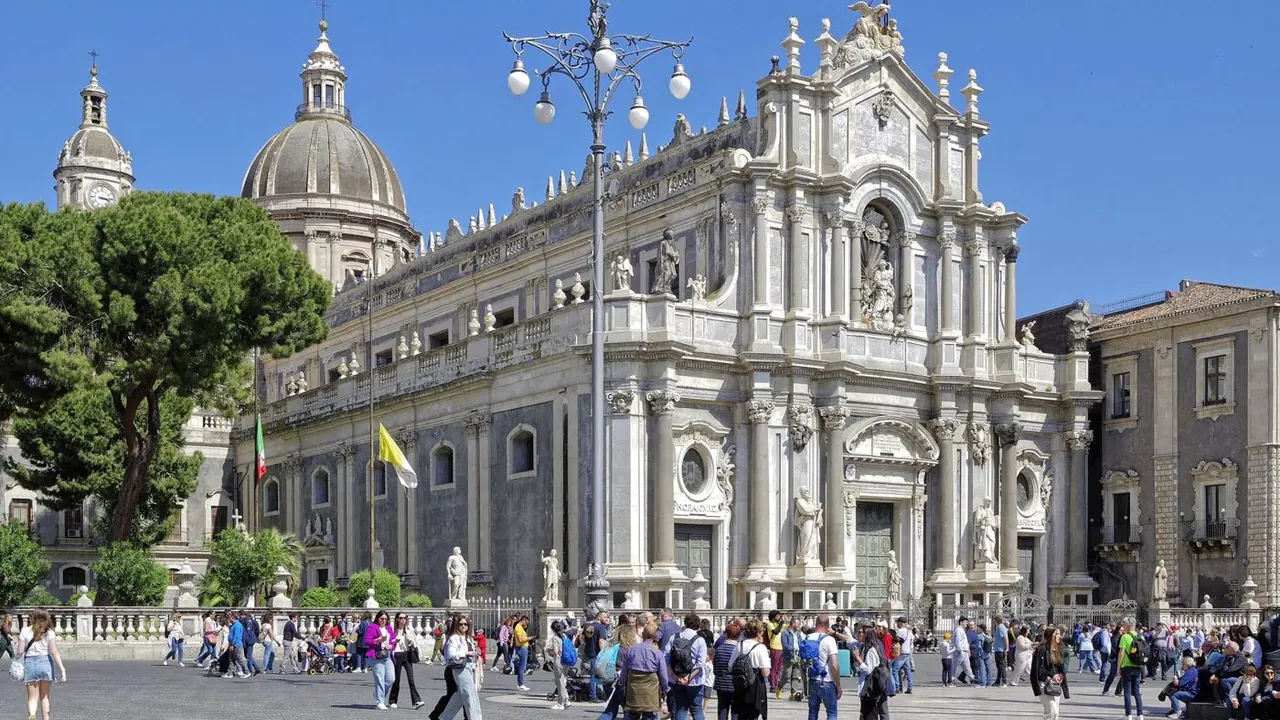
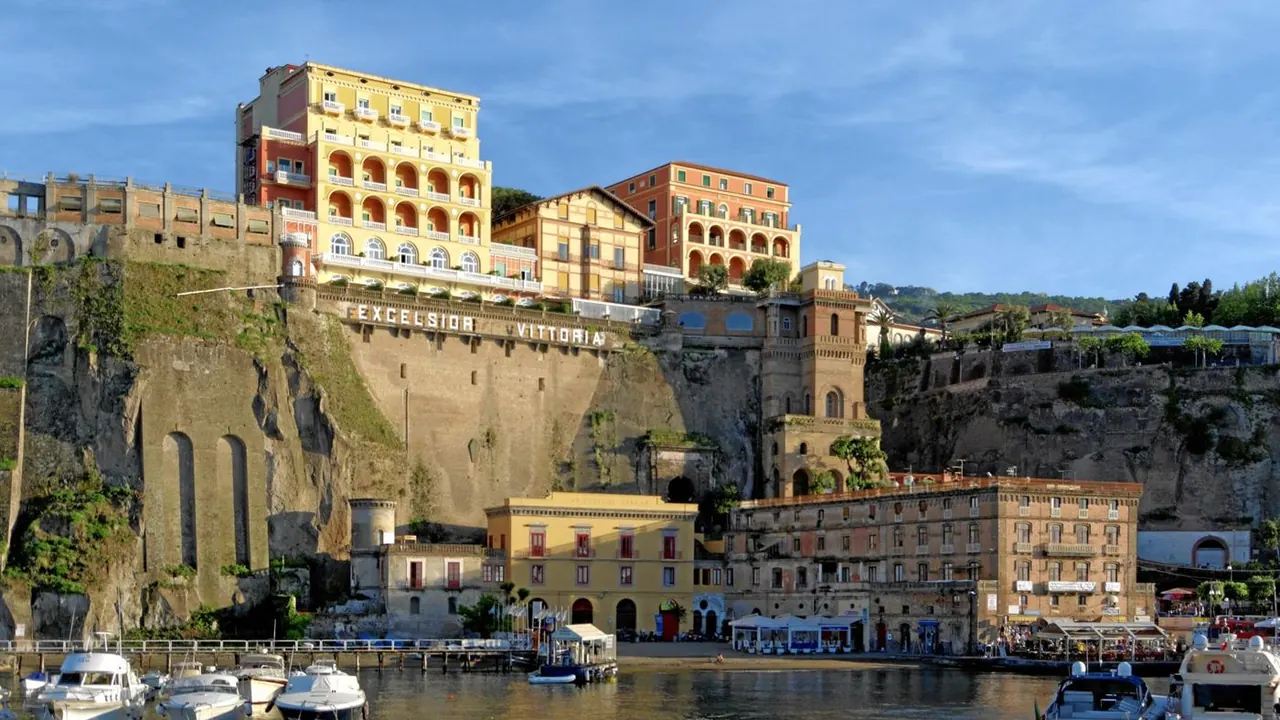
Photos: Catania by Berthold Werner, CC BY-SA 4.0, cropped; Sorrento by Berthold Werner, CC BY-SA 3.0, cropped.
Catania or Sorrento?
Our verdict in twelve categories, each scored against the same fixed benchmark cities, and the climate month by month, so you can choose for your trip.
Choose Catania for
- live music and the arts
- nightlife
- culture and sights
Catania suits travellers who want a real Sicilian city rather than a resort. You get baroque streets of black lava stone, a fish market that is half the city's social life, street food at every corner, opera at the Teatro Massimo Bellini and bars full of students until late. Etna smokes on the skyline. It costs less than Sorrento, and the price is heavy traffic, noise and a car for the best excursions.
Choose Sorrento for
- wellness
- day trips
- getting around
Sorrento is the better pick for a slower, prettier stay where the town is mostly a base. Pompeii, Capri, the Amalfi Coast and Naples are all a short train or boat ride away, with no car needed. Evenings are terraces over the bay rather than nights out, and the cliff hotels and lemon groves make resting easy. Expect to pay resort prices, especially in summer.
Scoreboard
Twelve categories on one fixed scale from 0 to 100. The shaded stretch is the gap between the two.
Your match
Pick a travel style or drag the sliders, and both match scores follow your weighting.
Wins on live music and the arts and nightlife with your weighting.
Wins on wellness and day trips with your weighting.
What matters to you?
Category by category
What the scores mean for a trip.
Beaches & swimming
Catania gives you two kinds of swimming. La Playa is a long, broad strip of sand with beach clubs, and the Riviera dei Ciclopi offers swimming off lava platforms into clear water beside the basalt sea stacks at Aci Trezza. Sorrento has no sand of its own at all.
In Sorrento you swim from wooden piers at Marina Piccola and Marina Grande, or off the rocks at the Bagni della Regina Giovanna. The water is deep and lovely, but space is tight and mostly paid. For a pebble beach you need a bus to Marina del Cantone or a boat to Capri.
Food & drink
Catania is the stronger eating city, built on street food: cone-shaped arancini, fried crispelle, scacciata, granita with brioche for breakfast and pistachios from Bronte. La Pescheria and its trattorias give the city a daily food ritual, and Etna's volcanic wines are a real discovery.
Sorrento's cooking is lovely but narrower. Its staples are gnocchi alla sorrentina, fish all'acqua pazza, local mozzarella and lemons in everything. The main squares are thick with tourist menus, so the good meals take some seeking out on the back lanes and at Marina Grande. Where Sorrento wins is high-end dining, as the hill villages of the peninsula hold restaurants of a level Catania's small fine-dining scene does not match.
Culture & sights
Catania is a sightseeing city in its own right. Its late-baroque centre, rebuilt in lava stone after 1693, is UNESCO-listed, with Via dei Crociferi, the vast San Nicolò l'Arena monastery, a Roman theatre and the amphitheatre sunk below Piazza Stesicoro. Visit in early February and you can see the huge Feast of Sant'Agata.
Sorrento's own sights fill a gentle day: the cloister of San Francesco, the Museo Correale, the Sedile Dominova and the strange ravine of the Vallone dei Mulini. Its real cultural weight lies in the excursions beyond the town.
Nightlife
Catania has a genuine night out, powered by its university. On warm nights the lanes around Piazza Bellini and Via Gemmellaro fill with drinkers well past midnight, and in summer the La Playa beach clubs turn into open-air dance floors.
Sorrento's evenings are a passeggiata on Corso Italia, a cocktail on a terrace over the bay, or a piano bar playing Neapolitan songs. It is pleasant but over early. Because the last trains and ferries leave in the evening, a late night in Naples or on Capri means staying over.
Nature & outdoors
Both are superb for the outdoors, but in different ways. Catania's draw is an active volcano. You can ride the cable car from the Rifugio Sapienza towards Etna's summit craters at about 3,300m, walk across recent lava flows, wade the Alcantara Gorge and even ski with a sea view in winter.
Sorrento's strength is coastal walking along a limestone ridge of olive and lemon terraces. The paths run to Punta Campanella and the protected bay of Ieranto, and the Path of the Gods and Monte Faito are close by. Vesuvius is a dormant crater rim to look into rather than a smoking summit, and boat trips round Capri's grottoes take the place of Catania's kayaking among the sea stacks.
Day trips
Sorrento is hard to beat as a base. Pompeii is about half an hour away by train, and Herculaneum and Vesuvius fit into the same trip. Capri is under an hour by ferry, summer boats run to Positano and Amalfi, and Naples and its archaeological museum are about an hour off. All of it works without a car.
Catania's list is also long: Siracusa and Ortigia, Taormina's theatre, the baroque towns of Noto, Modica and Ragusa Ibla, and the mosaics at Piazza Armerina. The distances are greater, though, and the baroque circuit really calls for a hire car.
Good for families
Catania is a little better for children, mainly because of La Playa's gently shelving sand. Etnaland's water park fills a hot day, and older children love walking on old craters. The city itself is tiring, with heavy traffic, narrow pavements and little shade.
Sorrento's flat, largely pedestrian centre is easier with a pushchair, and boat trips and Pompeii go down well. But swimming is off piers into deep water, and many hotels sit on steep lanes with no pavements, so families often end up relying on the hotel pool.
Getting around
Sorrento is the easier place to manage without a car. The centre is flat, lifts run down to the marinas, and the train, buses and ferries reach the main sights. The Circumvesuviana is crowded and the Amalfi buses are slow, but ferries usually make up for it.
Catania's compact core around Via Etnea and Piazza del Duomo is fine on foot. Beyond it you have a single metro line, slow buses and drivers who ignore crossings. Many visitors hire a car for Etna and the baroque towns, then struggle to park in the centre.
Shopping & style
Neither city is a shopping destination, and the difference is in what you bring home. In Catania that means markets and food. La Fiera is a loud daily market, Via Etnea has the Italian chains, and the best buys are pistachio cream, Etna wine and Caltagirone ceramics.
Sorrento leans towards craft: intarsia boxes and trays, leather sandals made to measure while you wait, linen and cameos, alongside a great deal of lemon-themed souvenirs. For serious fashion, people go to Capri or Naples.
Affordability
Catania is clearly the cheaper stay. Street food and market lunches cost little, rooms in the old centre are fair for most of the year, and its biggest sights are free streets and churches. Costs do rise in July and August, and summit trips on Etna and car hire add up.
Sorrento charges full resort prices in summer for sea-view rooms, terrace restaurants, lido sunbeds and private boats. It becomes manageable if you stick to trains, buses and back-lane pizzerias, or travel in spring and late autumn.
Live music & performing arts
As Bellini's birthplace, Catania has a working opera house, the grand Teatro Massimo Bellini, with a season of opera and symphonic concerts that visitors can book. Its tradition of opera dei pupi marionette theatre still survives, and summer brings concerts to ancient theatres.
Sorrento offers Neapolitan song and tarantella shows staged for visitors, chamber concerts in the cloister of San Francesco and singers in hotel bars. For real opera, it means an evening trip to the San Carlo in Naples.
Wellness & relaxation
Sorrento is the more restful of the two. Its cliff hotels have spas, pools and terraces over the bay, and the villa gardens and lemon groves slow the day down. Ischia's hot-spring thermal gardens are a ferry ride away, though the centre is noisy in high summer.
Catania has no bathing tradition. Its spas are mostly in coastal and hillside resorts, and the centre is loud. Rest there comes from long lunches and slow breakfasts, or from staying in a quiet village on Etna's slopes.
When should you go?
Pick your month. The climate figures are measured averages, not a forecast.
Catania in July
Sorrento in July
Daytime high, °C
Rainfall in the month, mm
Where the figures come from
Catania's sunshine is measured 88 km from the centre, at Messina.
Sorrento has no rain gauge within 25 km of the centre, so its rainfall comes from a gridded climate dataset read at the city rather than from a gauge further away.
Sorrento's sunshine is measured 54 km from the centre, at Grazzanise.
Temperature and rainfall are climate normals, averaged over the years shown. Catania: 1991-2020 normals, Catania / Fontanarossa (5.2 km from centre). Sorrento: 2005-2025 (sunshine 1991-2020, rainfall 1991-2020) normals, Capri (17 km from centre).
Both cities are warm enough for the sea from June to October, and in each the water peaks at around 26°C in August. The summers differ, though. Catania gets much hotter, reaching about 32°C in August, which makes midday sightseeing and low-level hiking hard work. Sorrento tops out nearer 30°C, so walking its lanes in high summer is easier. Catania is also the drier of the two in every month of the year.
For walking and touring, May and late September into October are the best months in both. Winter is mild in both places but wetter in Sorrento, where November brings about 151mm of rain and the coastal paths get muddy. In Catania the rain comes on more lightly and builds towards December, and daytime highs stay around 15°C in January, a few degrees above Sorrento. Winter sunshine is about the same in both, so Catania's edge for a winter or early spring city break is drier days and slightly warmer afternoons, not more sun.
Which traveller are you?
For a food and nightlife trip, Catania is the clear choice. You can graze on arancini and horse-meat grills along Via Plebiscito, eat the morning's catch beside La Pescheria, then drink outside until past midnight around Piazza Bellini. Sorrento goes quiet early.
On a tight budget, Catania stretches your money further. Street food makes a full meal, guesthouses in the old centre are reasonable and the baroque churches are free to wander. Sorrento charges resort prices for rooms, lidos and boat trips, and is cheap mainly in spring and late autumn.
On a relaxing and wellness trip, Sorrento is the better fit. Cliff-top hotels have spas and pools over the bay, the lemon groves set a slow pace, and Ischia's thermal gardens are a ferry ride away. Catania's noise and traffic work against rest.
Before you go
| Measure | Catania | Sorrento |
|---|---|---|
| Official language | Italian | Italian |
| Currency | Euro (EUR) | Euro (EUR) |
| Sockets | CFL230 V, 50 Hz | CFL230 V, 50 Hz |
| Driving side | Right | Right |
| Time zone | UTC+1, UTC+2 in summer | UTC+1, UTC+2 in summer |
| Emergency number | 112 | 112 |
| Elevation | 7 m | 50 m |
| Main airport | Catania-Fontanarossa Airport (CTA)4 km from centre96 non-stop destinations | Naples International Airport (NAP)30 km from centre131 non-stop destinations |
| Public holidays this year | 13 days | 13 days |
By the numbers
| Measure | Catania | Sorrento |
|---|---|---|
| City population | 311,584 | 15,407 |
| People per km² | 1,704 | 1,541 |
| Museums within 10 km | 25 | 6 |
| UNESCO World Heritage sites within 50 km | 3 | 5 |
| Swim season, months above 21 °C | 5 months | 5 months |
Where else could you go?
Every comparison below shares a destination with this one, so you can follow Catania or Sorrento somewhere new.