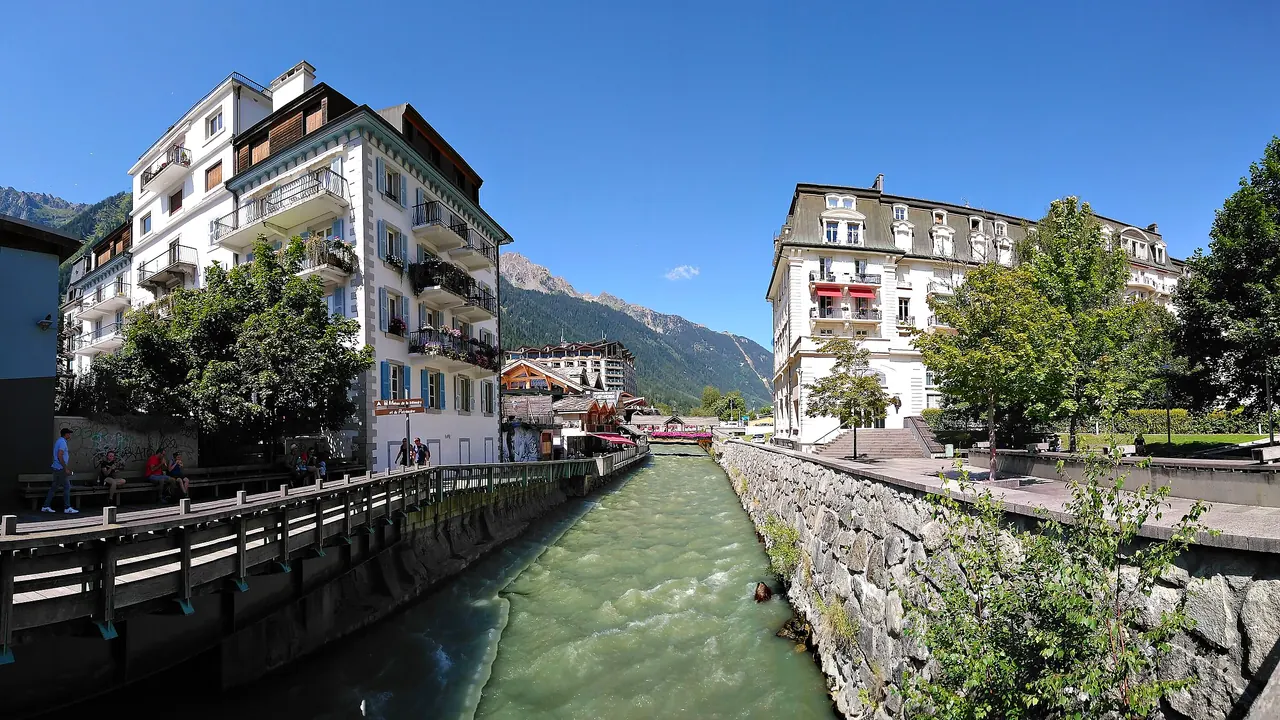
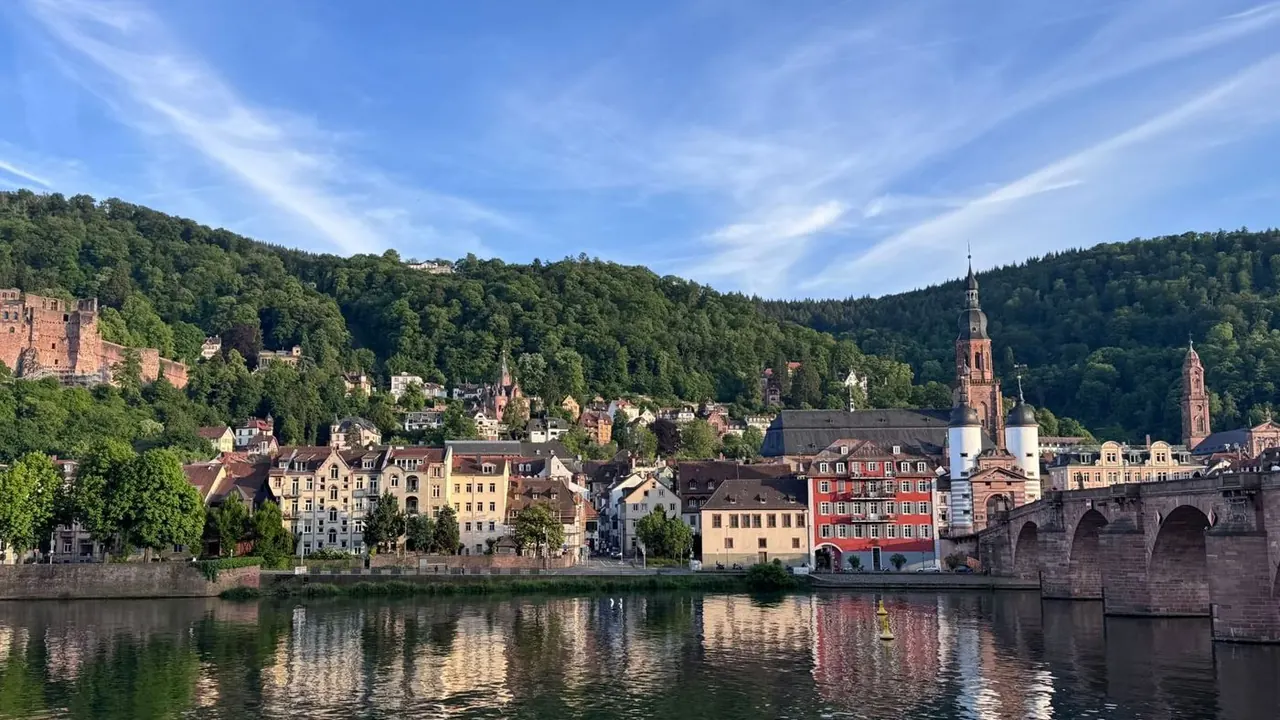
Photos: Chamonix by Tiia Monto, CC BY-SA 3.0, cropped; Heidelberg by Kuanling Chen, Pexels License.
Chamonix or Heidelberg?
Our verdict in twelve categories, each scored against the same fixed benchmark cities, and the climate month by month, so you can choose for your trip.
Choose Chamonix for
- nature and the outdoors
- wellness
- beaches
Chamonix is the pick when the mountains are the whole point. Cable cars take you from the town centre straight into glacier country, the trails to Lac Blanc and the Tour du Mont Blanc start on the valley floor, and winter brings steep skiing and the Vallée Blanche. It suits hikers, climbers, skiers and active families who will pay resort prices and don't mind that museums, theatre and evenings out come a long way second.
Choose Heidelberg for
- culture and sights
- live music and the arts
- prices
For a slower trip with more variety, Heidelberg is the better bet. The castle ruin, the baroque Altstadt and Germany's oldest university fill a day or two. The municipal theatre and the castle festival give your evenings something to do, and Speyer, Schwetzingen and Worms are short train rides away. It costs much less to stay, and the outdoors here means forest paths and riverside cycling rather than high peaks.
Scoreboard
Twelve categories on one fixed scale from 0 to 100. The shaded stretch is the gap between the two.
Your match
Pick a travel style or drag the sliders, and both match scores follow your weighting.
Wins on nature and the outdoors and wellness with your weighting.
Wins on culture and sights and live music and the arts with your weighting.
What matters to you?
Category by category
What the scores mean for a trip.
Beaches & swimming
Neither town is a place for a swimming vacation, but Chamonix gives you slightly better water. Lac de Passy, lower down the Arve valley, has a grassy shore and a short sandy strip facing Mont Blanc. Lake Annecy, a little over an hour away, has some of the clearest water in the Alps.
Heidelberg's river is for boats, not swimming. On hot days you're left with the outdoor pools or the gravel-pit lakes on the Rhine plain, about half an hour away.
Food & drink
Both are hearty regional kitchens of a similar standard, but built on different things. Chamonix is about Savoyard cheese: fondue, raclette and tartiflette. Its best moments come on mountain terraces facing the glaciers, or with a picnic from the town's cheese shops and charcuteries.
Heidelberg is about pork dishes, Maultaschen, spring asparagus and above all wine, with Bergstrasse and Palatinate Riesling poured everywhere. Its weak spot is the tourist strip on the Hauptstrasse. Chamonix's is the off-season, when many kitchens close.
Culture & sights
Heidelberg is far ahead. The red sandstone castle ruin, the Old Bridge, the Church of the Holy Spirit and the old university quarter make one of Germany's most complete historic townscapes. The Kurpfälzisches Museum and the Pharmacy Museum add more.
Chamonix's heritage is the story of alpinism, told well at the Musée Alpin and in the climbers' cemetery. Once you've walked past the Belle Époque hotels, though, the sightseeing is done.
Nightlife
Oddly, both towns do most of their drinking along one narrow old-town lane, and neither offers a big-city night out. The crowds differ. Chamonix runs on après-ski and seasonal workers, so it's loud in winter, gentler in summer and quiet in the shoulder months. Heidelberg's Untere Strasse fills with students in term time and goes quiet in the breaks. The one real advantage is in Heidelberg: Mannheim and Frankfurt are a short train ride away for proper clubs.
Nature & outdoors
This is Chamonix's great strength. The Mont Blanc massif rises almost 4km above the valley floor, and the Aiguille du Midi cable car and the Montenvers railway carry you up to glaciers and granite spires. Summer brings mountaineering, via ferrata and paragliding, and winter brings ski touring and the Vallée Blanche.
Heidelberg has woods right at the edge of town, the Philosophers' Walk view, forest trails over the Königstuhl and the Neckar cycle path. It is gentle, green country for an afternoon's walk or ride, not a reason to plan a trip around the outdoors.
Day trips
Heidelberg makes the richer base. Speyer's Romanesque cathedral, the palace gardens at Schwetzingen, Worms, Lorsch and Maulbronn are all easy outings by regional train. The castle villages up the Neckar and the Palatinate wine villages fill relaxed days.
Chamonix's draw is its location near three countries. Through the tunnel there's Courmayeur and Roman Aosta, Annecy and Geneva are a little over an hour away, and a rack railway climbs to Martigny in Switzerland. Beyond those, mountain roads mostly lead to other resorts.
Good for families
Both towns are small and safe with children, but the kind of fun differs. Chamonix is all about the outdoors: ski schools and sledging, the Merlet animal park, the little red train to the Mer de Glace and summer luge runs. However, the high cable cars are unsuitable for small children, and there is little to do in the rain.
Heidelberg relies more on rides and museums: the funicular, the fairy-tale park on the Königstuhl, the riverside zoo and the Technik Museum Speyer with its space shuttle. These give you more to fall back on when the weather turns, though the cobbles are hard work with a pushchair.
Getting around
Both have compact centres you can walk easily, so neither needs a car. In Chamonix, visitors in local accommodation ride the valley buses and the Mont Blanc Express free with a guest card. In winter, though, those ski buses get crowded.
Heidelberg's single regional fare covers trams, buses and the S-Bahn across the Rhine-Neckar area, which makes its day trips simple. The catches are a tram ride in from the station and a steep, cobbled climb to the castle unless you take the funicular.
Shopping & style
Heidelberg gives you the broader shopping. The long, pedestrianised Hauptstrasse has department stores and high-street chains at one end and souvenirs and beer steins at the other, with independent bookshops and boutiques in the side lanes.
Chamonix is narrower but excellent in its field. Its specialist climbing and ski shops are where serious mountain people come to buy their gear. Beyond that, the takeaways are cheese, génépi and rock crystals.
Affordability
Heidelberg is clearly the cheaper stay. Rooms are the main cost and get pricier during congresses, but student cafés, bakeries and modest museum entry fees keep each day cheap. Staying in Mannheim is a simple way to save.
In Chamonix, lift passes, the big cable cars, guides and paragliding pile on top of resort hotel prices. Self-catering, picnics and walking up from the valley floor help, as do the quieter months between seasons.
Live music & performing arts
Heidelberg has a real season. The municipal theatre stages opera, drama and dance, the town's philharmonic gives regular concerts, the Heidelberger Frühling festival brings chamber music in spring, and plays and musicals fill the castle courtyard in summer.
Chamonix has a summer jazz festival, with some sets played high in the mountains, and the occasional church concert. For anything more, you have to go to Geneva.
Wellness & relaxation
Chamonix comes out a little ahead because the spas are right on hand. Its large day spa has hot outdoor pools looking up at the glaciers, which is ideal after a day on the slopes. Many chalets have their own saunas, and the springs of Saint-Gervais are down the valley.
Heidelberg has no thermal baths of its own. You have to travel to the Kraichgau or Baden-Baden, but the town itself is calmer, with river meadows, forest paths and unhurried wine taverns rather than early starts and climbers in the streets.
When should you go?
Pick your month. The climate figures are measured averages, not a forecast.
Chamonix in July
Heidelberg in July
Daytime high, °C
Rainfall in the month, mm
Where the figures come from
Chamonix's temperatures are measured 35 km from the centre, at Bourg-St-Maurice.
Chamonix has no rain gauge within 25 km of the centre, so its rainfall comes from a gridded climate dataset read at the city rather than from a gauge further away.
Temperature and rainfall are climate normals, averaged over the years shown. Chamonix: 1999-2020 (rainfall 1991-2020) normals, Bourg-St-Maurice (34.9 km from centre). Heidelberg: 1991-2020 (sunshine 1971-2000) normals, Heidelberg (4.5 km from centre).
The two towns follow almost the same temperature curve. Both are about 5°C by day in January and reach the mid-20s in July and August, so summer is warm enough for long days outdoors in both without being too hot for walking. The real difference is rain. Chamonix is wet in every month, with the heaviest falls in November, December and May at up to 170mm. Heidelberg gets roughly half that or less, and even its wettest month, July, brings only about 80mm.
In Chamonix, June to September is the season for hiking and the high lifts. July and August are the only months when Lac de Passy is warm enough to swim. The cold winter months are for skiing, and the wet weeks of late spring and late autumn are the least rewarding. Heidelberg is at its best from May to September. From May to August it gets over 170 hours of sunshine a month, and the evenings on the Neckar meadows are long. From November to January the days are short, grey and cold, but the light rainfall still leaves the old town pleasant to walk.
Which traveller are you?
On an outdoors trip, Chamonix is in a league of its own. Lifts reach high glaciers in minutes, the long trails start from town, and there is guided mountaineering, climbing, paragliding and serious skiing. Heidelberg's wooded hills are pleasant walking, but they aren't mountains.
For a culture and arts trip, choose Heidelberg. It has the castle, the old university with its Student Prison, and a well-preserved baroque old town. Add a resident theatre with opera and an orchestra, and the cathedral towns nearby. Chamonix's mountaineering heritage can be seen in half a day.
On a trip on a tight budget, Heidelberg goes much further. Student cafés and taverns keep meals cheap, the regional ticket covers day trips, and Mannheim has cheaper rooms. Chamonix's free valley buses help, but lifts, guides and resort hotels quickly add up.
Before you go
| Measure | Chamonix | Heidelberg |
|---|---|---|
| Official language | French | German |
| Currency | Euro (EUR) | Euro (EUR) |
| Sockets | CE230 V, 50 Hz | CF230 V, 50 Hz |
| Driving side | Right | Right |
| Time zone | UTC+1, UTC+2 in summer | UTC+1, UTC+2 in summer |
| Emergency number | 112 | 112 |
| Elevation | 995 m | 114 m |
| Main airport | Geneva International Airport (GVA)68 km from centre150 non-stop destinations | Frankfurt Main Airport (FRA)69 km from centre281 non-stop destinations |
| Public holidays this year | 11 days | 12 days |
By the numbers
| Measure | Chamonix | Heidelberg |
|---|---|---|
| City population | 8,705 | 156,092 |
| People per km² | 75 | 1,433 |
| Museums within 10 km | 3 | 17 |
| UNESCO World Heritage sites within 50 km | 0 | 4 |
Where else could you go?
Every comparison below shares a destination with this one, so you can follow Chamonix or Heidelberg somewhere new.
- Annecyvs Chamonix
- Genevavs Chamonix
- Lausannevs Chamonix
- Frankfurtvs Heidelberg
- Stuttgartvs Heidelberg
- Baden-Badenvs Heidelberg