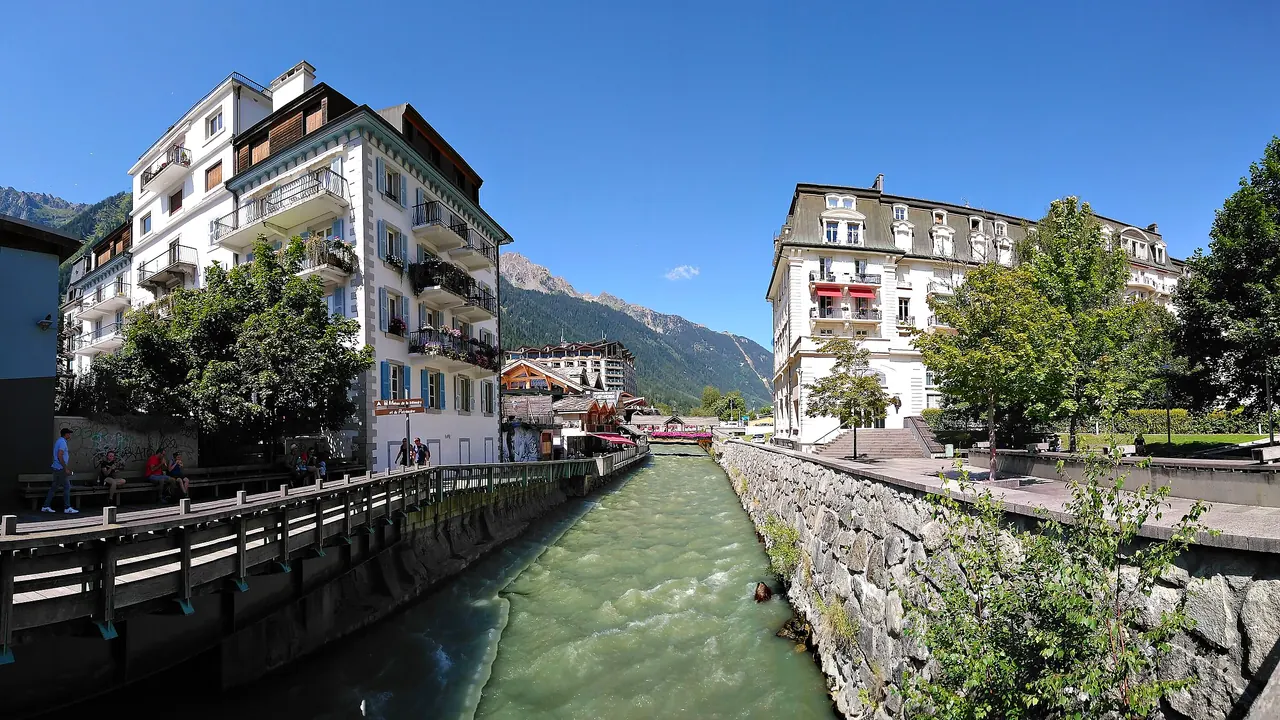
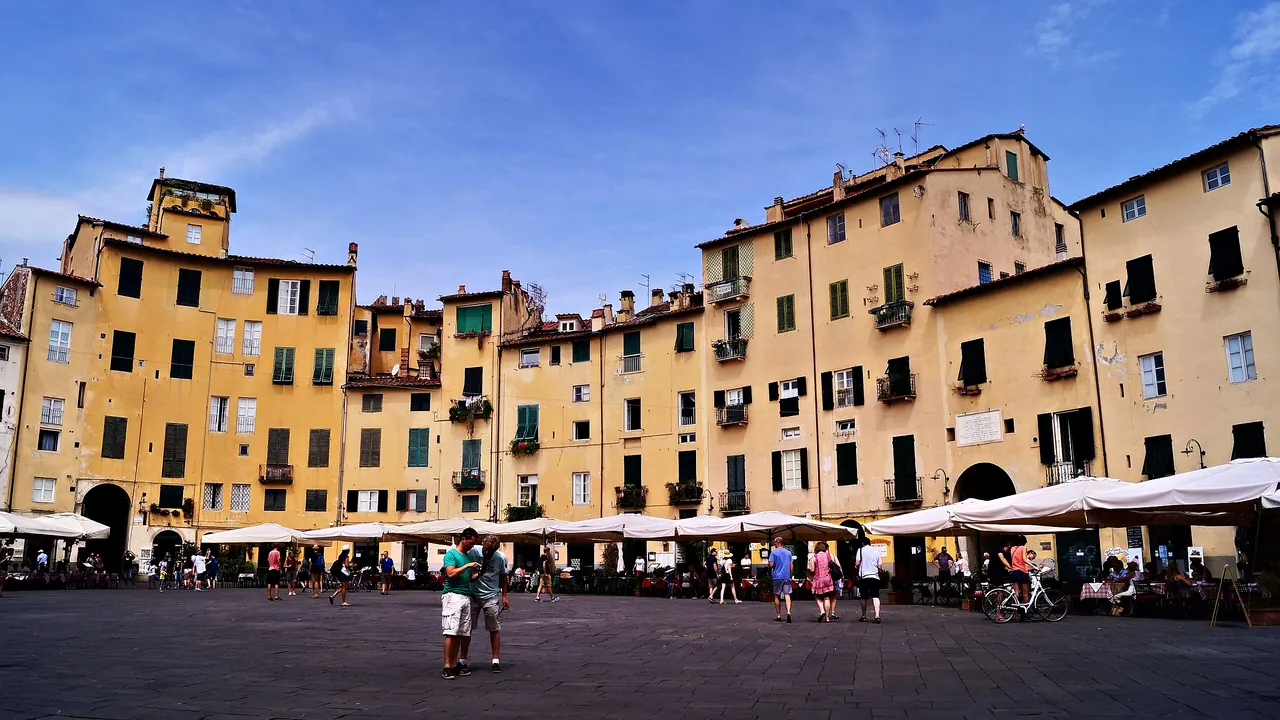
Photos: Chamonix by Tiia Monto, CC BY-SA 3.0, cropped; Lucca by Stefano Sansavini, CC BY-SA 4.0, cropped.
Chamonix or Lucca?
Our verdict in twelve categories, each scored against the same fixed benchmark cities, and the climate month by month, so you can choose for your trip.
Choose Chamonix for
- nature and the outdoors
- nightlife
- families
Chamonix is for travellers whose days revolve around the mountains. Cable cars lift you from the town straight into glaciers and granite peaks, the trails and ski runs start at the edge of the valley, and in the evening an English-speaking après-ski crowd fills a short lane of bars. Choose it if you want to ski, climb, hike or simply stand in front of Mont Blanc, and you are ready for resort prices and mountain weather.
Choose Lucca for
- culture and sights
- live music and the arts
- beaches
Lucca suits a slower trip built around old stones, good plain food and easy outings. The walled centre holds Romanesque churches and Puccini's music, Pisa and Florence are short train rides away, and the Versilia beaches are close enough for an afternoon swim. It also costs noticeably less to stay there. Pick Lucca if you would rather wander, eat and take day trips than spend your days climbing.
Scoreboard
Twelve categories on one fixed scale from 0 to 100. The shaded stretch is the gap between the two.
Your match
Pick a travel style or drag the sliders, and both match scores follow your weighting.
Wins on nature and the outdoors and nightlife with your weighting.
Wins on culture and sights and live music and the arts with your weighting.
What matters to you?
Category by category
What the scores mean for a trip.
Beaches & swimming
Lucca is far better for a swim. The sandy Versilia shore begins at Viareggio, about 25 minutes away by train, with orderly beach clubs running up to Forte dei Marmi and wilder dunes backed by pines at the Lecciona. A morning among the churches followed by an afternoon in the sea is easy to arrange.
In Chamonix, swimming is an occasional treat in summer: the outdoor town pool, the small lake at Passy facing the massif, or a day trip to Lake Annecy. It is a nice bonus, but no reason to come.
Food & drink
Both cities cook hearty regional food, but Lucca offers more. Its trattorias and osterie serve spelt soup, tordelli in ragù, chestnut dishes and cecina, with local olive oil and Montecarlo wines at fair Tuscan prices. The range is narrow, but the cooking is reliable.
Chamonix is all about melted cheese: fondue, raclette and tartiflette, best eaten on a mountain terrace or bought for a picnic from the cheese shops. Beyond that, menus repeat in the way they do at resorts, and many kitchens close between seasons.
Culture & sights
Lucca has much more to see. The whole walled city is the sight, with medieval streets, towers, the tiered arcades of San Michele in Foro, the mosaic of San Frediano, the tomb of Ilaria del Carretto and the oval piazza built over the Roman amphitheatre. Two unhurried days barely feel like enough.
Chamonix's heritage is the story of alpinism, from the first ascent of Mont Blanc to the 1924 Winter Olympics, told in the Musée Alpin and the guides' quarter. It is worth an afternoon, after which the mountains take over.
Nightlife
Chamonix has the livelier evenings, at least in winter. Après-ski starts at the foot of the slopes in late afternoon, then moves to a lane of pubs in the old town where guides, seasonal workers and visitors drink late, with a couple of small clubs after that. It is loud and young but small, and much quieter in summer.
In Lucca, the evening is an aperitivo in Piazza San Michele, a long dinner and a walk along the walls, and the centre is quiet by midnight. Anyone who wants to dance heads to the Versilia beach clubs in summer.
Nature & outdoors
Chamonix is on another scale. Mont Blanc rises almost 4km above the valley floor, cable cars lead straight to glaciers, the rack railway climbs to the Mer de Glace, and there is steep skiing, the Vallée Blanche, climbing, via ferrata and paragliding. Few places put high mountains this close to the hotel door.
Lucca's outdoors is gentler and more varied: cycling on the walls and along the Serchio, olive-covered hills, and the marble peaks of the Apuan Alps about an hour north. Wetland birdwatching at Massaciuccoli adds something Chamonix does not have.
Day trips
From Lucca, far more is within easy reach. Pisa is about half an hour by train, Florence a little over an hour, and Pistoia and the old spa town of Montecatini are on the same line. The great villas of the Lucca countryside and the hill village of Collodi are closer still. To the north are Viareggio, the sculptors' town of Pietrasanta and the marble quarries of Carrara, and with an early start even the Cinque Terre and San Gimignano are possible.
Chamonix's outings depend on crossing borders: Courmayeur and Roman Aosta through the tunnel, Annecy and Geneva by road, and Martigny in Switzerland by train. These are good days out, but slow mountain roads and the ring of other resorts around the valley soon limit what else you can reach.
Good for families
Both work well with children, in different ways. Chamonix suits active families, with nursery slopes and sledging in winter, and the summer luge, treetop courses, the red train to the Mer de Glace and the marmots of the Merlet park in summer. The high cable cars do not suit toddlers, though, and wet days are hard to fill.
Lucca is gentler. Riding the walls on a family quadricycle, climbing the tree-topped Torre Guinigi, the Pinocchio Park at Collodi and the nearby beaches fill the days, while the many churches and palaces will interest children less.
Getting around
Both are easy to manage without a car. Lucca's walled centre is flat and mostly closed to traffic, so you walk or cycle, and the station just outside the walls has trains along the coast and to Florence. Only the countryside villas and villages really call for a car.
Chamonix's small centre is also walkable, and buses and the Mont Blanc Express along the valley are free with the guest card. In winter, though, crowded ski buses and thin evening services are part of daily life.
Shopping & style
Lucca has the broader shopping, if still small-town. Via Fillungo has fashion and jewellery behind Liberty-style shopfronts, the side lanes sell oil, wine and buccellato, and once a month one of Italy's oldest antiques markets fills the streets around the cathedral.
Chamonix's strength is narrow but deep: generations-old climbing and ski shops with technical expertise that serious mountaineers plan their purchases around. Beyond that, there are cheeses, génépi and crystals.
Affordability
Chamonix costs far more for the same length of stay. Its chalets and hotel rooms are priced like any famous resort's, while Lucca's B&Bs and small hotels cost a good deal less, especially just outside the walls, where they are easier to find than the few rooms inside. Meals follow the same pattern: resort restaurant bills in Chamonix against fairly priced trattoria dinners in Lucca.
The bigger gap is in what a day costs. In Chamonix the mountains are the point, and lift passes, the high cable cars, guides and paragliding flights all have to be paid for, so self-catering, picnics and trails that start from the valley floor are how people save. In Lucca the main sight costs nothing. Walking or cycling the walls and visiting many of the churches are free, the paid museums are modest, and regional trains to Pisa or the coast are inexpensive.
Live music & performing arts
Lucca is far richer here, thanks to Puccini. His arias are sung in a central church for most of the year, the Teatro del Giglio has a season of opera and concerts, and summer brings star concerts in Piazza Napoleone and open-air opera by the lake at Torre del Lago.
Chamonix offers a summer jazz festival with some sets played high in the mountains, a few church concerts and mountain film evenings. For opera, you would have to go to Geneva.
Wellness & relaxation
Each city offers about the same chance to unwind, but in different ways. In Chamonix, relaxing comes after the effort: hot outdoor pools and saunas at the large day spa facing the glaciers, chalet saunas, and the thermal springs of Saint-Gervais down the valley. The town itself starts early and gets crowded.
Lucca has no baths of its own, but the place itself is calm, with car-free streets and slow lunches. For a soak, take a day out to Montecatini's belle époque spas, the cave pools at Monsummano or the steam grottoes of Bagni di Lucca.
When should you go?
Pick your month. The climate figures are measured averages, not a forecast.
Chamonix in July
Lucca in July
Daytime high, °C
Rainfall in the month, mm
Where the figures come from
Chamonix's temperatures are measured 35 km from the centre, at Bourg-St-Maurice.
Chamonix has no rain gauge within 25 km of the centre, so its rainfall comes from a gridded climate dataset read at the city rather than from a gauge further away.
Temperature and rainfall are climate normals, averaged over the years shown. Chamonix: 1999-2020 (rainfall 1991-2020) normals, Bourg-St-Maurice (34.9 km from centre). Lucca: 1991-2020 normals, Pisa / S. Giusto (21.4 km from centre).
Chamonix has two seasons. Winter in the valley is cold, around 5°C at midday in January, and it belongs to skiing. From late June to early September afternoons reach about 27°C, which makes summer the time for hiking, climbing and long days on the high trails. Rain is spread across the whole year. It is heaviest in May and again from November to December, so no month is reliably dry and the shoulder months tend to be cool and damp.
Lucca is warmer than Chamonix in every month, and its summer works differently. July and August reach about 30°C. That is too hot for long afternoons in the streets but right for the beach, with the sea around 25°C, and June to August is the sunniest and driest stretch. For walking the walls, May, June and September are more comfortable. Rain sets in from September and peaks in November at about 132mm, and the winter is mild but grey. Summer suits both cities, for the mountains in Chamonix and the sea in Lucca. Spring and early autumn favour Lucca, while winter is Chamonix's other high point, on the slopes.
Which traveller are you?
On an outdoors trip, Chamonix wins easily. Cable cars rise to the Aiguille du Midi, and the Tour du Mont Blanc and the Lac Blanc trails start from town. There is skiing all winter and climbing all summer, far beyond Lucca's walls and Apuan hikes.
For a culture and arts trip, Lucca is the clear choice. It has complete Renaissance walls, the carved façades of San Michele and San Martino, and Puccini recitals and opera at the Teatro del Giglio. Florence and Pisa are close by train, while Chamonix's museums take half a day.
On a trip on a tight budget, Lucca stretches money much further. Trattorias are fairly priced, the walls and many churches are free and regional trains are cheap. In Chamonix, lift passes, guides and high-season rooms cost a lot, even with free valley buses.
Before you go
| Measure | Chamonix | Lucca |
|---|---|---|
| Official language | French | Italian |
| Currency | Euro (EUR) | Euro (EUR) |
| Sockets | CE230 V, 50 Hz | CFL230 V, 50 Hz |
| Driving side | Right | Right |
| Time zone | UTC+1, UTC+2 in summer | UTC+1, UTC+2 in summer |
| Emergency number | 112 | 112 |
| Elevation | 995 m | 19 m |
| Main airport | Geneva International Airport (GVA)68 km from centre150 non-stop destinations | Pisa International Airport (PSA)21 km from centre82 non-stop destinations |
| Public holidays this year | 11 days | 13 days |
By the numbers
| Measure | Chamonix | Lucca |
|---|---|---|
| City population | 8,705 | 88,798 |
| People per km² | 75 | 478 |
| Museums within 10 km | 3 | 20 |
| UNESCO World Heritage sites within 50 km | 0 | 4 |
| Swim season, months above 21 °C | - | 4 months |
Where else could you go?
Every comparison below shares a destination with this one, so you can follow Chamonix or Lucca somewhere new.