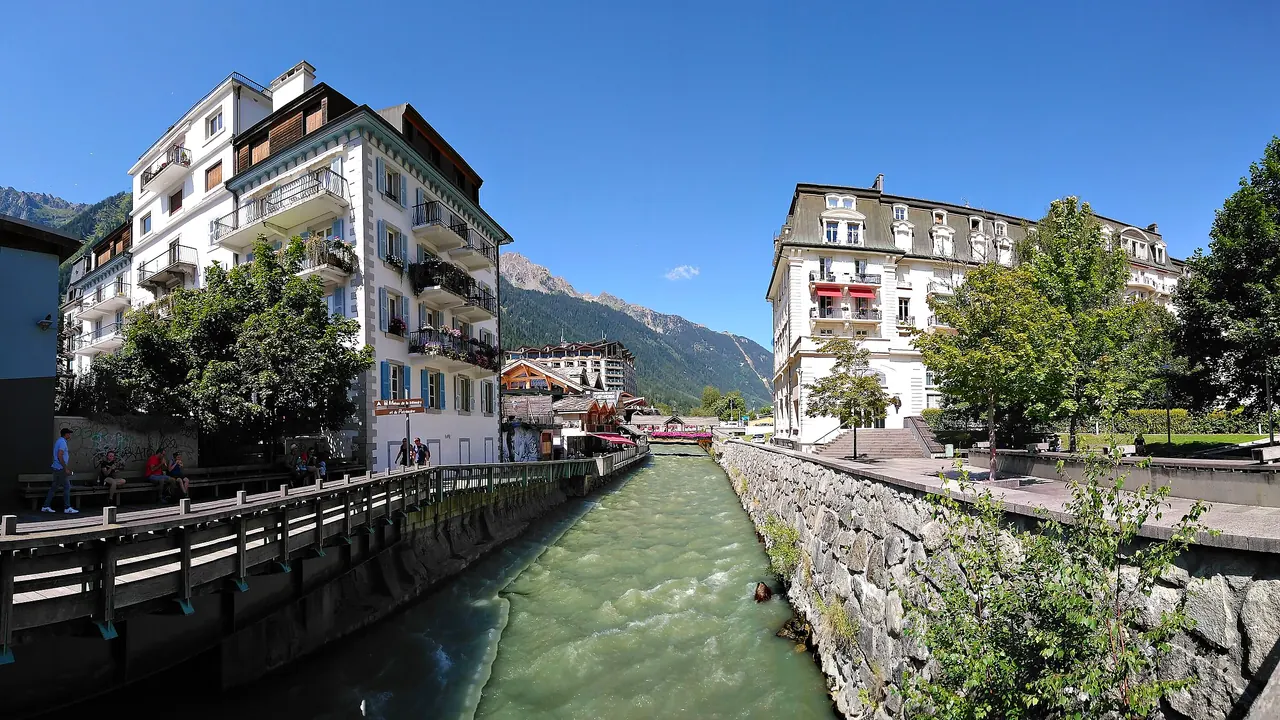
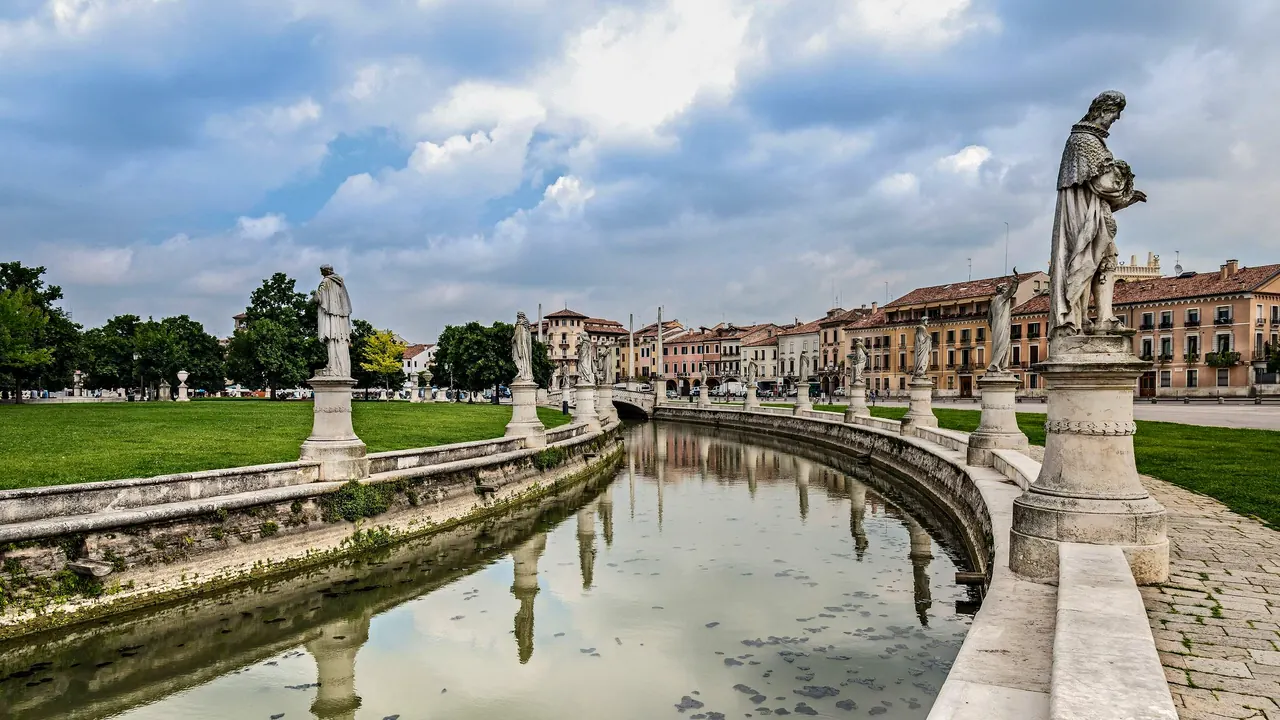
Photos: Chamonix by Tiia Monto, CC BY-SA 3.0, cropped; Padua by Didier Descouens, CC BY-SA 4.0, cropped.
Chamonix or Padua?
Our verdict in twelve categories, each scored against the same fixed benchmark cities, and the climate month by month, so you can choose for your trip.
Choose Chamonix for
- nature and the outdoors
- families
Chamonix is for travellers who want the mountains to be the whole trip. Cable cars lift you from the town straight onto glaciers, trails to the lakes and balconies start in the town itself, and winter adds steep skiing and the Vallée Blanche. Families who like the outdoors do well here too. In return you pay resort prices and get little in the way of museums, theatre or city evenings.
Choose Padua for
- culture and sights
- day trips
- prices
Padua makes more sense for a trip built around art, food and easy rail travel. Giotto's Scrovegni Chapel and the Basilica of Saint Anthony are in a flat, walkable centre, the market squares set the rhythm of the day, and Venice, Vicenza and Verona are short train rides away. It costs a good deal less, and the thermal spas of Abano are on the doorstep, but the countryside around it is gentle hills rather than high peaks.
Scoreboard
Twelve categories on one fixed scale from 0 to 100. The shaded stretch is the gap between the two.
Your match
Pick a travel style or drag the sliders, and both match scores follow your weighting.
Wins on nature and the outdoors and families with your weighting.
Wins on culture and sights and day trips with your weighting.
What matters to you?
Category by category
What the scores mean for a trip.
Beaches & swimming
Neither is a place for swimming, but Padua gets you to the sea more easily. Sottomarina and the Lido of Venice are about an hour away, and the shallow, calm Adriatic is fine for children, even if the beaches are flat rows of umbrellas.
Chamonix has only mountain lakes. Lac de Passy is small but has Mont Blanc as its backdrop, and Lake Annecy is a longer summer outing. Both are swims to fit around the hiking, nothing more.
Food & drink
Chamonix eats like a ski resort. There is plenty of melted Reblochon in fondue, raclette and tartiflette, the terraces of the mountain refuges face the glaciers, and there are cheese shops for picnic supplies. Away from that, menus repeat each other and many places close between seasons.
Padua has more variety and more character. You get Venetian home cooking such as bigoli with duck and baccalà, morning markets in Piazza delle Erbe and Piazza della Frutta, Euganean wines, and the standing spritz that marks the early evening. Caffè Pedrocchi adds a sense of occasion, though high-end dining is limited.
Culture & sights
These two are far apart. Chamonix's heritage is the history of climbing: the Musée Alpin, the statues of the first Mont Blanc climbers and the climbers' cemetery. It is interesting, but half a day covers it.
Padua's centre is a serious stop for anyone who cares about painting. Giotto's Scrovegni Chapel changed European art, and the fourteenth-century fresco cycles around it are listed by UNESCO. The Basilica of Saint Anthony, the frescoed hall of the Palazzo della Ragione, the university's anatomical theatre and the 1545 botanical garden complete a dense, compact centre.
Nightlife
Padua has slightly more going on, and it feels different. Evenings centre on the aperitivo, with students and locals filling Piazza delle Erbe and Piazza dei Signori with spritz glasses, followed by wine bars around the old ghetto during term.
Chamonix is louder and more seasonal. Winter après-ski spills into a short lane of pubs and a couple of small clubs with a young, English-speaking crowd. Summer nights are mostly terrace drinks after a day on the hills, and both places go quiet out of season.
Nature & outdoors
Chamonix is one of the world's great mountain landscapes. Glaciers and granite needles rise almost 4km above the valley floor, cable cars reach high-mountain terrain within minutes, and the choice runs from Lac Blanc walks to the Vallée Blanche, via ferrata and paragliding.
Padua's outdoors is gentler and a short trip out of town. The volcanic Euganean Hills have vineyards, chestnut woods and quiet cycling roads, and the Brenta towpaths make level bike rides. Real mountain walking means driving to Monte Grappa or the Asiago plateau.
Day trips
Padua is one of the best bases in northern Italy. Venice is under half an hour by train, Vicenza closer still, and Verona, Treviso, Bologna and Ferrara are easy rail trips. The Brenta villas and the walled towns of Este, Monselice and Montagnana fill any remaining days.
Chamonix's outings depend on crossing borders. Courmayeur and Roman Aosta are through the Mont Blanc Tunnel, Martigny is over the pass by rack train, and Annecy and Geneva are a little over an hour away. After those, mountain roads mostly lead to other resorts.
Good for families
Chamonix gives children more to do, as long as they like being outdoors. There are nursery slopes and sledging in winter, and in summer the luge, treetop courses, the red train to the Mer de Glace and the marmots at Merlet. The highest cable cars are unsuitable for small children, and wet days are hard to fill.
Padua is easy to manage, with a flat, safe centre and trattorias that welcome children, but the frescoes and churches mean little to them. Prato della Valle and the botanical glasshouses help, and Gardaland or the Adriatic beaches make the best outings.
Getting around
Both have small, flat centres that are easy to walk, but they work in different ways. Chamonix runs along a valley: free buses and the Mont Blanc Express link the hamlets and ski areas, though winter ski buses are crowded and evening services thin out.
Padua has the edge because of its station. A tram connects it with the arcaded centre, and main lines make trips to Venice, Verona and Bologna simple without a car. A car is only worth having for the hills.
Shopping & style
Chamonix is very good at one thing. Its long-established climbing, ski and outdoor shops carry technical gear and expertise that serious mountaineers plan purchases around, and the rest is cheese, génépi, crystals and souvenirs.
Padua has a wider everyday range. The arcades have Italian fashion and shoe shops, independent boutiques and university bookshops, the market delicatessens are good for food to take home, and a large antiques market comes to Prato della Valle once a month.
Affordability
Padua is clearly the cheaper stay. Hotels are priced like any mid-sized northern Italian city, trattoria meals are fair, and walking keeps transport costs close to nothing. Prices rise only around trade fairs and graduations.
Chamonix is expensive, especially at Christmas, in February and in midsummer, and lift passes, cable cars and guides add a lot on top. The guest card, self-catering and trails that need no lift help to keep costs down.
Live music & performing arts
Padua has a small but real year-round programme. There is theatre and some opera at the horseshoe-shaped Teatro Verdi, a chamber orchestra season in the Sala dei Giganti and the Basilica, and the Fenice and the Verona Arena are within reach.
Chamonix has little beyond a summer jazz festival, where some sets are played high in the mountains, plus occasional church concerts and mountain film evenings. For an orchestra you have to go to Geneva.
Wellness & relaxation
Padua has the stronger spa offer. Abano and Montegrotto, about 12km away, form one of Europe's largest thermal districts, with Roman-era mud treatments and dozens of hotel pools open to day visitors. The city itself also moves at an unhurried pace.
In Chamonix, relaxing comes after the effort. A large day spa with hot outdoor pools faces the glaciers, which is ideal after skiing, and Saint-Gervais has its own thermal springs, but the town itself starts early and fills up in high season.
When should you go?
Pick your month. The climate figures are measured averages, not a forecast.
Chamonix in July
Padua in July
Daytime high, °C
Rainfall in the month, mm
Where the figures come from
Chamonix's temperatures are measured 35 km from the centre, at Bourg-St-Maurice.
Chamonix has no rain gauge within 25 km of the centre, so its rainfall comes from a gridded climate dataset read at the city rather than from a gauge further away.
Padua's temperatures are measured 35 km from the centre, at Treviso / Istrana.
Padua has no rain gauge within 25 km of the centre, so its rainfall comes from a gridded climate dataset read at the city rather than from a gauge further away.
Padua's sunshine is measured 36 km from the centre, at Treviso / S. Angelo.
Temperature and rainfall are climate normals, averaged over the years shown. Chamonix: 1999-2020 (rainfall 1991-2020) normals, Bourg-St-Maurice (34.9 km from centre). Padua: 1991-2020 normals, Treviso / Istrana (35.4 km from centre).
Chamonix has two main seasons. From December to March the valley is cold, with January highs of around 5°C, and that is the skiing season. From late June to early September it is warm enough for hiking, climbing and the occasional swim in Lac de Passy. July reaches about 27°C, and midsummer is also the driest part of the year. Rain or snow falls in every month, most heavily from November to January and again in May. April, May, October and November fall between the two seasons. The weather is changeable then, and some lifts and businesses close, so these months suit a quiet stay better than a full programme in the mountains.
Padua is warmer all year and gets far less rain. Spring and early autumn are the best time for walking the streets and arcades. July and August reach about 31°C and feel humid, which makes sightseeing hard going but suits a day at the Adriatic, where the sea is close to 26°C and July has the most sunshine. Winters are mild but grey, and November is the wettest month. So the two cities are at their best at different times: Chamonix in high summer and deep winter, Padua in spring and autumn.
Which traveller are you?
On an outdoors trip, Chamonix is the clear choice. The Aiguille du Midi, the Mer de Glace railway, the Tour du Mont Blanc and guided mountaineering all start from the town, while Padua's Euganean Hills and canal towpaths are pleasant but mild.
For a culture and arts trip, Padua is far richer. Giotto's frescoes, a UNESCO-listed group of fresco cycles, Donatello's work at the Basilica, the old anatomical theatre and concerts in the Sala dei Giganti easily fill several days. Chamonix's alpine museums take half a day.
On a trip on a tight budget, Padua goes much further. Its rooms are moderately priced, a spritz and market food cost little, and trains make it a cheap base for Venice. In Chamonix, lift passes, cable cars and guides quickly add up.
Before you go
| Measure | Chamonix | Padua |
|---|---|---|
| Official language | French | Italian |
| Currency | Euro (EUR) | Euro (EUR) |
| Sockets | CE230 V, 50 Hz | CFL230 V, 50 Hz |
| Driving side | Right | Right |
| Time zone | UTC+1, UTC+2 in summer | UTC+1, UTC+2 in summer |
| Emergency number | 112 | 112 |
| Elevation | 995 m | 12 m |
| Main airport | Geneva International Airport (GVA)68 km from centre150 non-stop destinations | Venice Marco Polo Airport (VCE)39 km from centre103 non-stop destinations |
| Public holidays this year | 11 days | 13 days |
By the numbers
| Measure | Chamonix | Padua |
|---|---|---|
| City population | 8,705 | 206,496 |
| People per km² | 75 | 2,220 |
| Museums within 10 km | 3 | 29 |
| UNESCO World Heritage sites within 50 km | 0 | 5 |
| Swim season, months above 21 °C | - | 4 months |
Where else could you go?
Every comparison below shares a destination with this one, so you can follow Chamonix or Padua somewhere new.