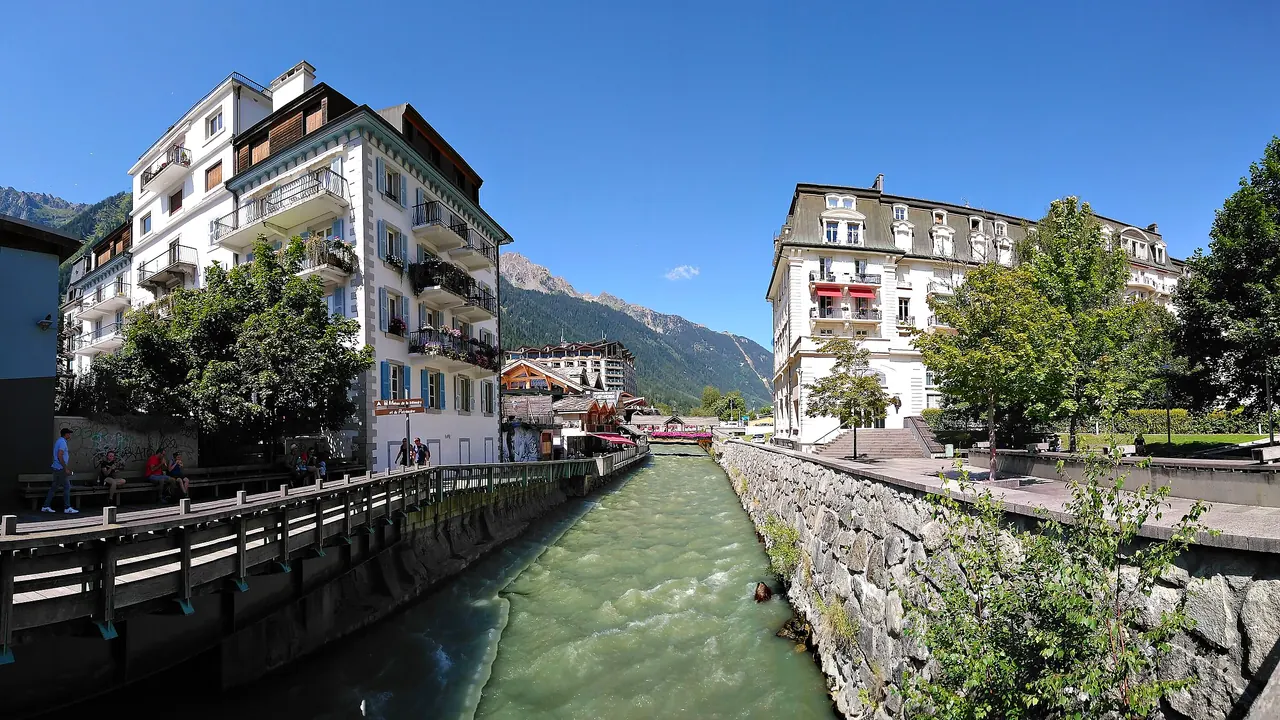
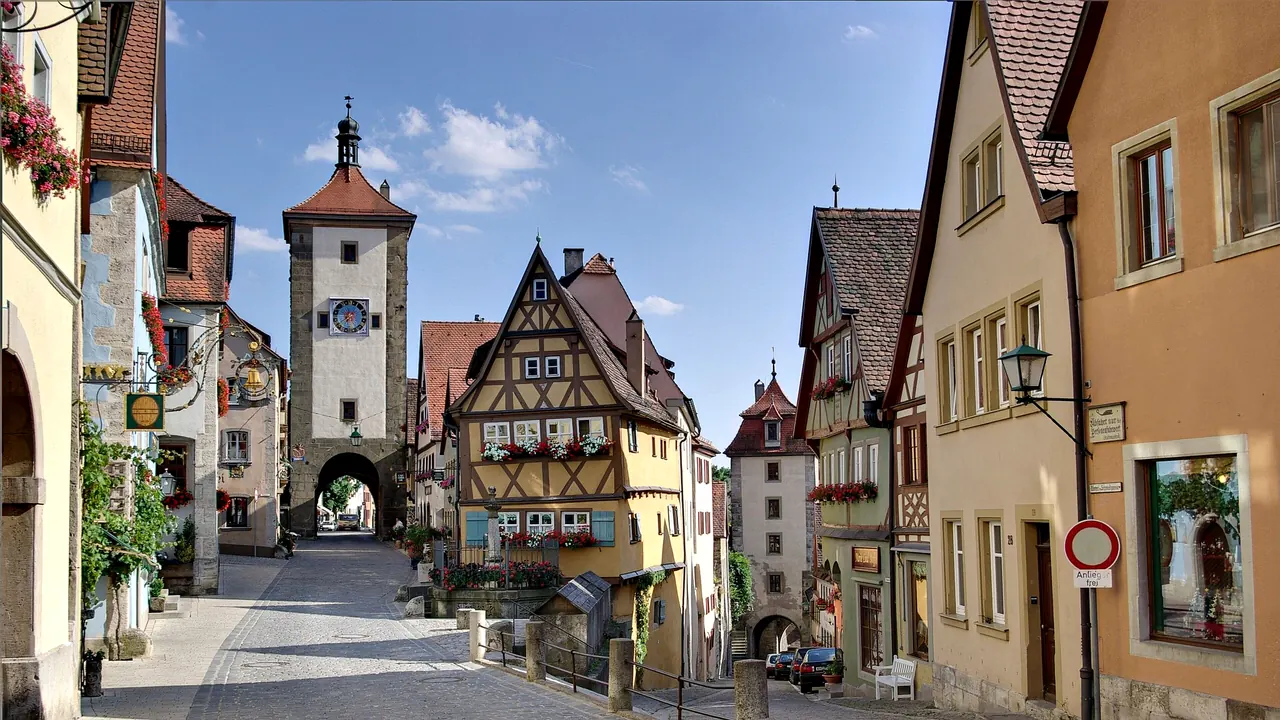
Photos: Chamonix by Tiia Monto, CC BY-SA 3.0, cropped; Rothenburg ob der Tauber by Berthold Werner, Public domain.
Chamonix or Rothenburg ob der Tauber?
Our verdict in twelve categories, each scored against the same fixed benchmark cities, and the climate month by month, so you can choose for your trip.
Choose Chamonix for
- nature and the outdoors
- nightlife
- families
Chamonix is for travellers who want the mountains to be the whole point. Cable cars lift you from the town centre into glacier country, and the trails and ski areas start at the edge of town. In the evenings there is a sociable bar scene, and a spa with glacier views to recover in. It costs a good deal more, though, and there is little to see indoors.
Choose Rothenburg ob der Tauber for
- culture and sights
- prices
- day trips
Choose Rothenburg ob der Tauber if what you want is to walk through history. The walled town, Riemenschneider's altar and the Romantic Road towns around it make a rich few days for anyone who prefers old streets to steep ones. Of the two it is the gentler, cheaper and quieter stay, with early nights rather than late ones.
Scoreboard
Twelve categories on one fixed scale from 0 to 100. The shaded stretch is the gap between the two.
Your match
Pick a travel style or drag the sliders, and both match scores follow your weighting.
Wins on nature and the outdoors and nightlife with your weighting.
Wins on culture and sights and prices with your weighting.
What matters to you?
Category by category
What the scores mean for a trip.
Beaches & swimming
Neither town is a place for swimming, though Chamonix does a little better. At Lac de Passy, down the Arve valley, you can swim in July and August with Mont Blanc straight ahead, and the clear water of Lake Annecy is a little over an hour away.
Rothenburg has its outdoor pool, or the artificial lakes of the Franconian lake district about an hour's drive away. Their grassy shores are pleasant enough but have no view to compare with Mont Blanc.
Food & drink
Chamonix eats better, mainly thanks to its setting and range. Savoyard cheese dishes made with local Reblochon and Beaufort are served on refuge terraces facing the glaciers. The international crowd also keeps bistros and a few ambitious hotel kitchens going, even if menus repeat and many places close between seasons.
Rothenburg's choice is narrower: roast pork, Schäufele and bratwurst with Silvaner or a regional beer, and too many Marktplatz menus aimed at coach parties. The better meals are in family guesthouses and Tauber valley wine taverns away from the square.
Culture & sights
Here the order is reversed, and sharply. In Rothenburg the walled old town is the sight itself. You can walk long stretches of the covered ramparts, look down on the Plönlein and stand before Riemenschneider's Holy Blood Altar in St Jakob's, a high point of late Gothic carving.
Chamonix has a good story rather than great buildings. It is the birthplace of alpinism and hosted the first Winter Olympics, a history told in the Musée Alpin and around the old guides' quarter. Half a day covers it all, while Rothenburg's lanes reward a full day of wandering.
Nightlife
Of the two, only Chamonix has a real night out. In winter, après-ski fills the bars from late afternoon. Later, a lane of pubs in the old town keeps guides, seasonal workers and visitors together until late, and a couple of small clubs carry on after that. The crowd is young and English-speaking, and the scene goes quiet in the shoulder seasons.
In Rothenburg an evening means a wine tavern, dinner and the night watchman's tour, and the lanes are silent by eleven. For anything livelier you would have to drive to Würzburg or Nuremberg.
Nature & outdoors
This is Chamonix's defining strength, and nowhere are the two further apart. The Aiguille du Midi lifts you to 3,842m among the glaciers, and the Lac Blanc and Tour du Mont Blanc trails start from town. The valley has serious skiing, mountaineering, climbing and paragliding.
Rothenburg's countryside is soft by comparison. There are green paths into the Tauber valley below the walls, the family cycle route through vineyards and villages, and orchards in blossom in spring. It suits an easy afternoon walk or ride, not a vacation built around the outdoors.
Day trips
Rothenburg has the stronger choice of outings, because the towns around it rival it. Dinkelsbühl, and Nördlingen inside its meteorite crater, are short drives along the Romantic Road. Würzburg's Residenz and Nuremberg's castle are each about an hour away, though in practice you need a car.
Chamonix's trips cover more varied country but there are fewer of them. Courmayeur and Roman Aosta are through the tunnel, Annecy and Geneva are a little over an hour away, and the Mont Blanc Express runs to Martigny. After those, most places within reach are other resorts.
Good for families
Chamonix gives children more to do, as long as the family enjoys being outside. In winter there are nursery slopes and sledging. In summer the luge, treetop courses, the Merlet animal park and the little red train to the Mer de Glace fill several days. The highest cable cars are unsuitable for small children, though, and costs add up.
Rothenburg works like a storybook for a day or two, with the covered ramparts, the Rathaus tower and the night watchman with his lantern. Older children are often gripped by the Crime Museum. After that, the cobbles are hard work with pushchairs, and families tend to head off on excursions.
Getting around
Both centres are easy on foot, but Chamonix's is flat. Along the valley, guests ride the buses and the Mont Blanc Express free, so you can do without a car altogether. Expect packed ski buses in winter and thin evening services.
You can cross Rothenburg's walled town in fifteen minutes, but on cobbles and with a steep climb back from the valley. Leaving it is harder. The branch line usually means a change at Steinach and the buses are sparse, so a car is the practical way to explore.
Shopping & style
Neither town is a shopping destination, and what each sells reflects what it is. Chamonix's pedestrian streets are lined with long-established climbing and ski shops with expert staff, worth saving a big gear purchase for. There are also Savoyard cheeses, génépi and rock crystals from the massif.
Rothenburg sells Christmas all year: glass baubles, nutcrackers and Erzgebirge carvings along the Herrngasse. In December it holds one of Germany's most atmospheric Christmas markets on the Marktplatz.
Affordability
Rothenburg is clearly easier on the wallet. Prices are those of small-town Germany with a tourist premium, beer and wine in the inns are reasonable, and the sights charge little. Staying just outside the walls cuts costs further.
Chamonix is expensive, especially in the peak weeks, and lift passes, the big cable cars and mountain guides add up fast. Free valley transport, self-catering and trails that need no lift all help, as do the cheaper shoulder seasons.
Live music & performing arts
Both are thin on performance, and neither has a theatre or concert season. Rothenburg's moments come from its history: the costumed Meistertrunk play, summer open-air theatre and organ concerts in St Jakob's.
Chamonix's are tied to the mountains, with a summer jazz festival that plays some sets high up on the slopes, and mountain film evenings. For opera or an orchestra, you would go to Geneva.
Wellness & relaxation
Chamonix has more for genuine pampering. Its large Italian-style day spa has hot outdoor pools facing the glaciers, many chalets have saunas, and the old thermal springs of Saint-Gervais are about 25 minutes away. The town itself is busy and starts its days early in high season.
Rothenburg's calm costs nothing: the lanes are empty at dawn and after the coach groups leave. For thermal bathing you drive about an hour to the salt-water pool at Bad Windsheim or to Bad Mergentheim.
When should you go?
Pick your month. The climate figures are measured averages, not a forecast.
Chamonix in July
Rothenburg ob der Tauber in July
Daytime high, °C
Rainfall in the month, mm
Where the figures come from
Chamonix's temperatures are measured 35 km from the centre, at Bourg-St-Maurice.
Chamonix has no rain gauge within 25 km of the centre, so its rainfall comes from a gridded climate dataset read at the city rather than from a gauge further away.
Rothenburg ob der Tauber's sunshine is measured 27 km from the centre, at Feuchtwangen-heilbronn.
Temperature and rainfall are climate normals, averaged over the years shown. Chamonix: 1999-2020 (rainfall 1991-2020) normals, Bourg-St-Maurice (34.9 km from centre). Rothenburg ob der Tauber: 1991-2020 normals, Rothenburg ob der Tauber (0.9 km from centre).
Chamonix has two seasons that matter. From December to March the valley is cold, with daytime highs that rarely leave single figures until spring, and this is the time for skiing. June to September is for hiking and climbing, with highs of around 27°C in July. July and August are also when the mountain lakes are warm enough to swim. The valley is wet all year, with more than 100mm of rain every month, though midsummer is the least wet stretch. December, November and May are the wettest months, so the gaps between the two seasons are the least rewarding time to come.
Rothenburg follows a similar curve but runs a couple of degrees cooler. Its highs peak at about 25°C in July and August, which is pleasant for walking the walls without being hot. It is also far drier: in winter it gets well under half Chamonix's rain, and even in summer noticeably less. May to September brings long, bright days for the ramparts and the Tauber valley, and July is the sunniest month. December and January are cold and dim, with less than two hours of sunshine a day on average.
Which traveller are you?
For an outdoors trip, Chamonix is the clear choice. Cable cars, glacier walks, the Tour du Mont Blanc, ski touring and guided climbing all start from town. Rothenburg has only gentle valley paths and a riverside cycle route.
On a culture and arts trip, Rothenburg suits you better. Its intact medieval walls, Riemenschneider's altar in St Jakob's and nearby Dinkelsbühl, Würzburg and Nuremberg fill several days. Chamonix's mountaineering heritage can be seen in half a day.
On a trip with a tight budget, your money goes much further in Rothenburg. Rooms outside the walls, reasonably priced local wine and beer and modest entry fees keep costs down. In Chamonix, lift passes, cable cars and peak-season rooms quickly use up a budget.
Before you go
| Measure | Chamonix | Rothenburg ob der Tauber |
|---|---|---|
| Official language | French | German |
| Currency | Euro (EUR) | Euro (EUR) |
| Sockets | CE230 V, 50 Hz | CF230 V, 50 Hz |
| Driving side | Right | Right |
| Time zone | UTC+1, UTC+2 in summer | UTC+1, UTC+2 in summer |
| Emergency number | 112 | 112 |
| Elevation | 995 m | 430 m |
| Main airport | Geneva International Airport (GVA)68 km from centre150 non-stop destinations | Nuremberg Airport (NUE)66 km from centre56 non-stop destinations |
| Public holidays this year | 11 days | 12 days |
By the numbers
| Measure | Chamonix | Rothenburg ob der Tauber |
|---|---|---|
| City population | 8,705 | 11,331 |
| People per km² | 75 | 272 |
| Museums within 10 km | 3 | 6 |
| UNESCO World Heritage sites within 50 km | 0 | 2 |
Where else could you go?
Every comparison below shares a destination with this one, so you can follow Chamonix or Rothenburg ob der Tauber somewhere new.
- Annecyvs Chamonix
- Genevavs Chamonix
- Nurembergvs Rothenburg ob der Tauber
- Zermattvs Chamonix
- Lausannevs Chamonix
- Bambergvs Rothenburg ob der Tauber