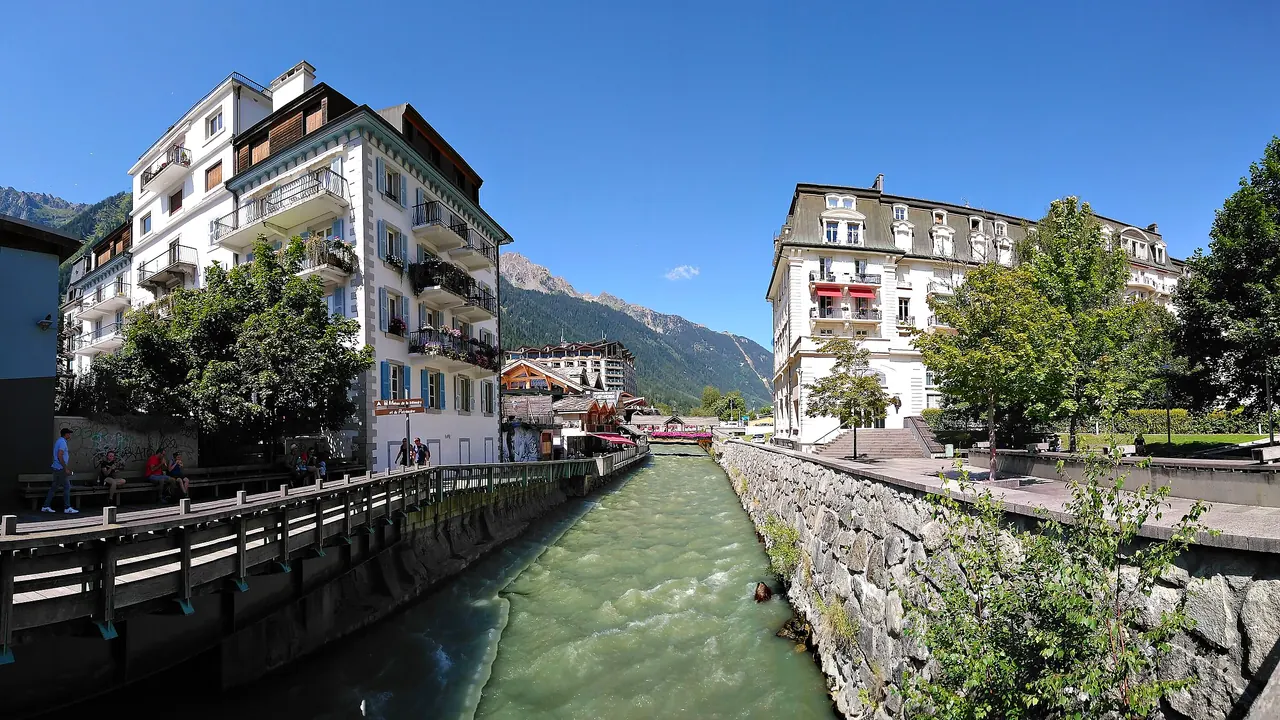
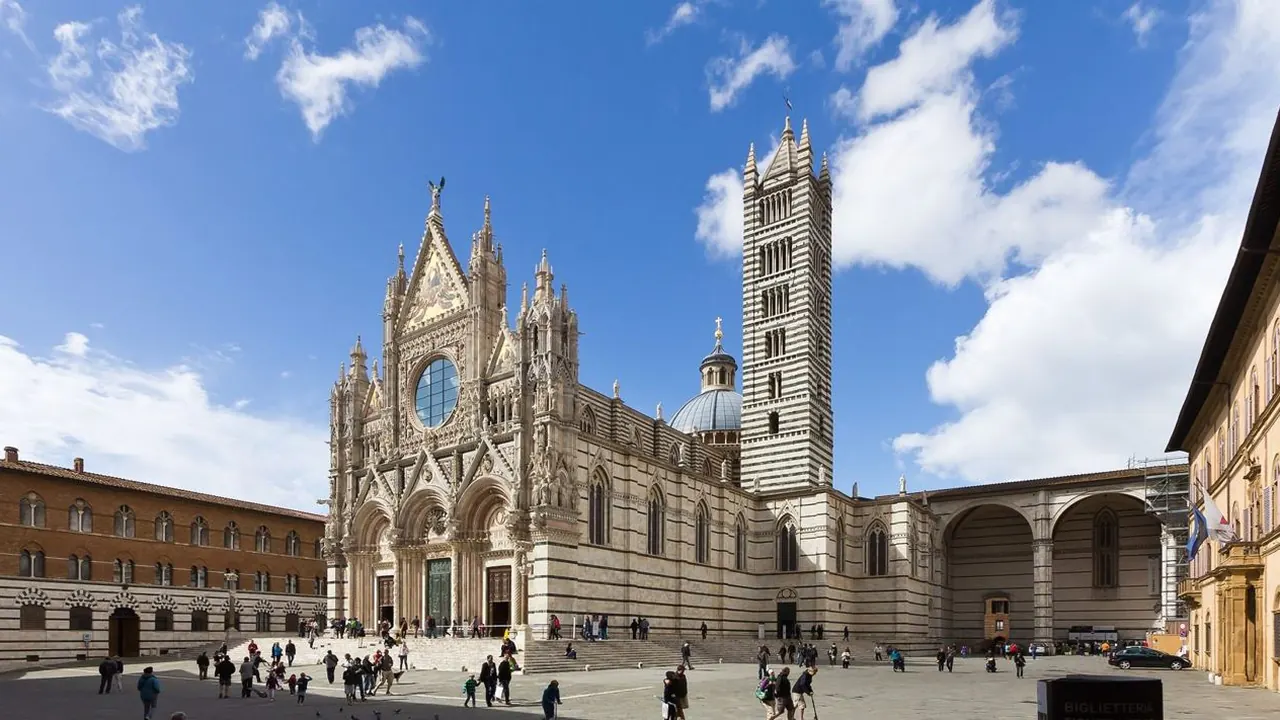
Photos: Chamonix by Tiia Monto, CC BY-SA 3.0, cropped; Siena by Raimond Spekking, CC BY-SA 4.0, cropped.
Chamonix or Siena?
Our verdict in twelve categories, each scored against the same fixed benchmark cities, and the climate month by month, so you can choose for your trip.
Choose Chamonix for
- nature and the outdoors
- families
- nightlife
Chamonix is the choice when the mountains are the whole point of the trip. Cable cars lift you from the town centre into glacier terrain, the trails and climbing routes start at the edge of the streets, and in winter the valley has some of the steepest skiing in the Alps. It also suits active families and anyone who wants a loud après-ski bar at the end of the day. In return you pay resort prices and get little in the way of museums, theatre or varied cooking.
Choose Siena for
- culture and sights
- day trips
- prices
Siena makes more sense for travellers who want art, architecture and good food in one walkable medieval centre. The Campo, the Duomo and the Sienese painters fill two or three days, and there is the whole of southern Tuscany to explore after that: wine villages, hill towns, abbeys and hot springs. It costs less than Chamonix, and evenings are spent over a long dinner rather than in a bar. The landscape is gentle, cut out for cycling and walking rather than climbing.
Scoreboard
Twelve categories on one fixed scale from 0 to 100. The shaded stretch is the gap between the two.
Your match
Pick a travel style or drag the sliders, and both match scores follow your weighting.
Wins on nature and the outdoors and families with your weighting.
Wins on culture and sights and day trips with your weighting.
What matters to you?
Category by category
What the scores mean for a trip.
Beaches & swimming
Neither city is a place for a beach trip. Chamonix's swimming means Lac de Passy down the valley or a day at Lake Annecy, so you swim in cool, clear mountain lakes with peaks behind them. From Siena it is a long drive to the sandy Maremma coast for a sea swim, and on most summer days a hotel or agriturismo pool is the easier option.
Food & drink
Siena eats better and with more depth. Hand-rolled pici, ribollita, cinta senese pork and the panforte and ricciarelli from old bakeries are a proper regional cuisine. Chianti Classico, Brunello and Vino Nobile are grown close by, and the family osterie in the contrade are the places to try them.
Chamonix's strength is narrower. It does Savoyard cheese dishes like fondue and tartiflette, eaten on terraces facing the glaciers, and the food shops are good for a picnic for the hills. Away from that, menus repeat themselves, and many places close between the winter and summer seasons.
Culture & sights
Here the gap is wide. Siena is a complete medieval city, with the shell-shaped Campo, the Palazzo Pubblico and its Good and Bad Government frescoes, the striped Duomo, and Santa Maria della Scala and the Pinacoteca for the Sienese painters. Sightseeing fills two or three days properly.
Chamonix's heritage is the story of alpinism, from the first ascent of Mont Blanc in 1786 to the 1924 Winter Olympics. The Musée Alpin and the climbers' cemetery tell that story well, but it is a half-day subject, and the real sight is the massif above town.
Nightlife
Chamonix has the livelier evenings, though neither town is a big night out. In winter, après-ski bars at the foot of the slopes fill up in the late afternoon, and then a lane of pubs in the old town and a couple of small clubs stay open late, with a young, mostly English-speaking crowd.
Siena's evenings are slower: dinner, a glass of wine on the Campo and a stroll through the lit streets, with student pubs but almost no clubs. The Palio nights, when the contrade dine outdoors until late, are the one big exception.
Nature & outdoors
Chamonix is one of the great mountain destinations anywhere. The Mont Blanc massif rises almost 4km above the valley floor, and cable cars put you among hanging glaciers and granite needles within minutes. Skiing, ski touring, the Vallée Blanche, mountaineering, via ferrata and paragliding all start in the valley.
Siena's countryside is gentler and more pastoral: the bare clay hills of the Crete Senesi, the cypress lanes of the Val d'Orcia, and white gravel roads for cycling. It is beautiful to ride or walk through, but there are no high peaks and no real wilderness.
Day trips
Siena has far more within reach. Florence, San Gimignano, Monteriggioni, Volterra, the Chianti villages, Pienza, Montalcino and Montepulciano are all close, and the abbeys of Sant'Antimo and San Galgano add more. You could fill a week without repeating yourself, though a car makes the hill towns much easier.
Chamonix's day trips come from its position near three countries: Courmayeur and Roman Aosta through the tunnel, Annecy and Geneva by road, and Martigny by the Mont Blanc Express. After those, most places within reach are other ski resorts.
Good for families
Chamonix suits families better, provided they like being outdoors. It has ski schools and sledging in winter, and lake walks, a luge, treetop courses and the Merlet animal park in summer. The red train to the Mer de Glace is a hit with children of every age. The highest cable cars are not for toddlers, and wet days are hard to fill.
Siena is safe and mostly free of cars, and children are welcome at the table, but older children get the most from climbing the Torre del Mangia and watching the contrada drummers. With small children, a farmhouse with a pool outside town works better.
Getting around
Chamonix is easier to get around without a car. The flat centre has the Aiguille du Midi and Montenvers stations within walking distance, and the buses and the Mont Blanc Express along the valley are free with the guest card. Ski buses get packed in winter, though, and evening services are sparse.
Siena's centre is walkable and largely closed to traffic, but it sits on three ridges, so expect steep climbs and stepped lanes, with escalators up from the station. Getting out is the weak point: trains are slow, and most visitors hire a car for the hill towns.
Shopping & style
Neither town is a shopping destination, but they are good for different things. Chamonix is about technical gear: its old climbing and ski shops are a reason for climbers to save their big purchases for this trip. Siena has Italian clothing and leather on Banchi di Sopra, hand-painted majolica, contrada scarves and the big weekly market by the Fortezza. For fashion, go to Geneva from one and Florence from the other.
Affordability
Siena is the easier place to keep costs down. Rooms inside the walls are in demand, especially around the Palio, but an osteria lunch with house wine is good value, and staying in an agriturismo outside town cuts the cost further. Museum entry is the main thing that adds up.
Chamonix is expensive at almost every turn. Peak-week chalets, lift passes, the big cable cars, guides and paragliding all cost a lot. Free valley transport, self-catering, picnics and trails that start from the valley floor help, and so does visiting in the shoulder seasons.
Live music & performing arts
Siena has a modest but real musical life. The Accademia Chigiana's summer concerts in palaces and churches, Siena Jazz, and a winter drama season at the Teatro dei Rinnovati and the Teatro dei Rozzi give you something to book. Chamonix has a summer jazz festival with some sets played high in the mountains and the odd church concert or mountain film evening, but no season at all. For opera, both send you elsewhere, Siena to Florence and Chamonix to Geneva.
Wellness & relaxation
Both are good for unwinding, in different ways. In Chamonix, relaxation comes after a hard day: hot outdoor pools and saunas facing the glaciers, chalet spas, and the thermal springs of Saint-Gervais in their wooded gorge. Around Siena, the warm water is out in the countryside, at the travertine pools of Rapolano, the medieval bath at Bagno Vignoni and the free limestone pools of Bagni San Filippo. A farmhouse stay among the hills completes the calm, slower pace.
When should you go?
Pick your month. The climate figures are measured averages, not a forecast.
Chamonix in July
Siena in July
Daytime high, °C
Rainfall in the month, mm
Where the figures come from
Chamonix's temperatures are measured 35 km from the centre, at Bourg-St-Maurice.
Chamonix has no rain gauge within 25 km of the centre, so its rainfall comes from a gridded climate dataset read at the city rather than from a gauge further away.
Siena's temperatures are measured 45 km from the centre, at Arezzo.
Siena has no rain gauge within 25 km of the centre, so its rainfall comes from a gridded climate dataset read at the city rather than from a gauge further away.
Temperature and rainfall are climate normals, averaged over the years shown. Chamonix: 1999-2020 (rainfall 1991-2020) normals, Bourg-St-Maurice (34.9 km from centre). Siena: 2006-2017 (rainfall 1991-2020) normals, Arezzo (45 km from centre).
Chamonix has two seasons that matter. From December to March the valley is cold and snowy, which is what the skiers come for. From June to September the days are warm enough for high trails and mountaineering, with July reaching about 27°C. Rain and snow are spread across the whole year, so even summer brings frequent wet days, and spring and late autumn are damp and in between.
Siena is warmer and much drier for most of the year. Spring and autumn are the best months for walking the streets and the countryside. July and August reach about 31°C, hot for the steep lanes, but they are the driest months. The rain arrives in autumn and peaks in November at about 127mm, and winter is mild compared with the Alps. In high summer, when Siena is hottest, Chamonix is at its best.
Which traveller are you?
On an outdoors trip, Chamonix is the obvious pick. The high mountains begin where the town ends, and what you do depends on the season: steep skiing and ski touring in winter, glacier walks, climbing and paragliding in summer. Siena's farmland suits cyclists but has no peaks.
For a culture and arts trip, Chamonix offers mountains rather than monuments, and its alpine history takes half a day. Siena is the clear choice. First-rank painting and architecture sit minutes apart, with more art in the surrounding hill towns and abbeys.
On a family trip with children, Chamonix keeps them busier. There are nursery ski slopes, a summer luge and an animal park, and the flat little town is easy on small legs. Siena's medieval streets suit older children, but younger ones tire on its hills.
Before you go
| Measure | Chamonix | Siena |
|---|---|---|
| Official language | French | Italian |
| Currency | Euro (EUR) | Euro (EUR) |
| Sockets | CE230 V, 50 Hz | CFL230 V, 50 Hz |
| Driving side | Right | Right |
| Time zone | UTC+1, UTC+2 in summer | UTC+1, UTC+2 in summer |
| Emergency number | 112 | 112 |
| Elevation | 995 m | 322 m |
| Main airport | Geneva International Airport (GVA)68 km from centre150 non-stop destinations | Florence Airport, Peretola (FLR)55 km from centre46 non-stop destinations |
| Public holidays this year | 11 days | 13 days |
By the numbers
| Measure | Chamonix | Siena |
|---|---|---|
| City population | 8,705 | 52,812 |
| People per km² | 75 | 446 |
| Museums within 10 km | 3 | 30 |
| UNESCO World Heritage sites within 50 km | 0 | 5 |
Where else could you go?
Every comparison below shares a destination with this one, so you can follow Chamonix or Siena somewhere new.