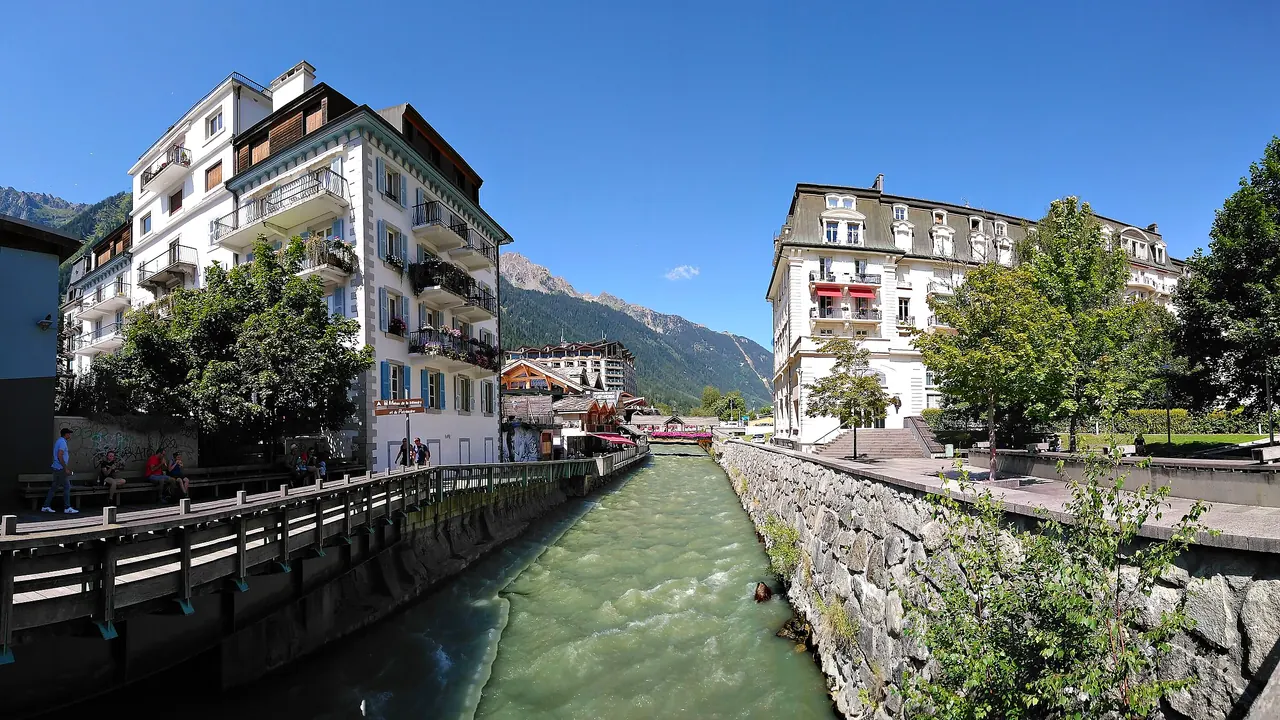
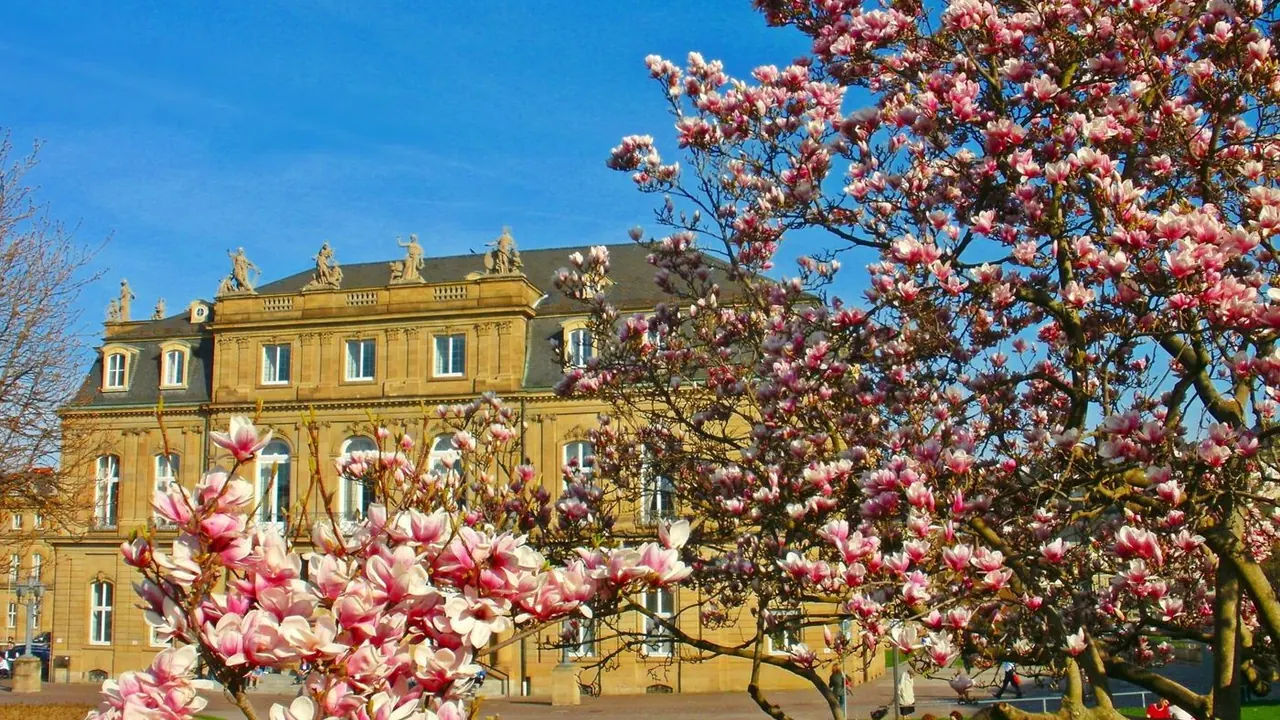
Photos: Chamonix by Tiia Monto, CC BY-SA 3.0, cropped; Stuttgart by Baden de, CC BY 3.0, cropped.
Chamonix or Stuttgart?
Our verdict in twelve categories, each scored against the same fixed benchmark cities, and the climate month by month, so you can choose for your trip.
Choose Chamonix for
- nature and the outdoors
- beaches
Chamonix is for people who travel to be in the mountains. The Mont Blanc massif rises straight out of the town, cable cars reach glacier terrain within minutes, and in every season the days go on skiing, hiking, climbing or simply looking up at the ice. You pay well for it, and when the weather closes in there is little else to do, but nowhere in this pairing comes close for high-mountain scenery and sport.
Choose Stuttgart for
- live music and the arts
- culture and sights
- shopping
Stuttgart suits a traveller who wants a well-run city with plenty going on indoors and out. It has world-class car museums, a ballet company with a European reputation, mineral baths, Swabian wine taverns and a rail network that puts Heidelberg, Tübingen and the Black Forest within easy reach. It is also the cheaper of the two, and the gentler choice for a mixed group or a short break.
Scoreboard
Twelve categories on one fixed scale from 0 to 100. The shaded stretch is the gap between the two.
Your match
Pick a travel style or drag the sliders, and both match scores follow your weighting.
Wins on nature and the outdoors and beaches with your weighting.
Wins on live music and the arts and culture and sights with your weighting.
What matters to you?
Category by category
What the scores mean for a trip.
Beaches & swimming
Neither city is a place for a swimming vacation, though Chamonix gives you slightly better options. Lac de Passy has a grassy shore and a sandy strip facing Mont Blanc, and Lake Annecy's clear, warm water is close enough for a summer day out.
Stuttgart has no swimmable river or lake of its own, so summer swimming means its outdoor pools, some of them fed by mineral springs. Lake Constance is the nearest open water, and it is too far for a casual afternoon.
Food & drink
Both kitchens are heavy mountain-country cooking, but Stuttgart eats better. Swabian classics like Maultaschen and Käsespätzle come with Trollinger and Riesling from vineyards inside the city, seasonal Besen taverns and the Art Nouveau Markthalle add character, and there is a serious fine-dining tier too.
Chamonix's strength is the setting: fondue and tartiflette on a terrace facing the glaciers, or a picnic of Beaufort and charcuterie from the town's shops. Beyond the Savoyard staples, menus repeat themselves and many places close outside the main seasons.
Culture & sights
Stuttgart has far more to see. The car museums are of international standing, the Staatsgalerie holds a fine run of European painting, and the Weissenhof Estate's Le Corbusier houses are UNESCO-listed. The Neues Schloss and Altes Schloss around Schlossplatz add a historic core, even if bombing left it patchy.
Chamonix's sights all tell one story, the birth of alpinism. The Musée Alpin, the pioneers' statues and the climbers' cemetery are worth a morning, and then the mountains take over.
Nightlife
Neither is a big night out, but they go out in different ways. Chamonix is a resort scene, with loud winter après-ski, a short lane of pubs packed with guides, seasonal workers and young English-speaking visitors, and a couple of small clubs. Summer and the shoulder seasons are much quieter.
Stuttgart is a city scene. It has the bar strip on Theodor-Heuss-Strasse, basement clubs with an electronic following, and wine bars in the Bohnenviertel. It comes fully alive for the Cannstatter Volksfest beer tents and the late-summer wine village.
Nature & outdoors
This is Chamonix's whole reason for being, and the gap is wide. Glaciers, granite needles and the summit of Western Europe tower almost 4km over the town, and the Aiguille du Midi and the Mer de Glace railway take anyone into that terrain without a climb. Skiing, ski touring, mountaineering and via ferrata are all on the doorstep.
Stuttgart offers green countryside rather than drama: vineyard trails above the Neckar, deer forests at the Rotwildpark and Schönbuch, and the Swabian Jura and northern Black Forest about an hour out. It suits walkers and cyclists in any season, but none of it is high mountain country.
Day trips
Stuttgart is the stronger base, mainly because trains do the work. Ludwigsburg's palace and half-timbered Esslingen are short S-Bahn rides away. Tübingen and Heidelberg each take under an hour, and Maulbronn, Hohenzollern Castle, Ulm and even Strasbourg are within a day's reach.
Chamonix's appeal is crossing borders: Courmayeur and Roman Aosta through the tunnel, Martigny over the Swiss side on the Mont Blanc Express, and Annecy or Geneva by road. Beyond those, mountain roads are slow and most destinations are other resorts.
Good for families
Stuttgart is the easier family choice by a modest margin. Wilhelma's zoo and botanical garden fills a day, the Killesberg park has a little railway and animals, and the car museums keep older children busy, with plenty to fall back on when it rains.
Chamonix is excellent for families who like being outdoors: nursery slopes, sledging, the Merlet animal park and the red train to the Mer de Glace. The highest cable cars are unsuitable for small children, though, and wet days are hard to fill.
Getting around
Both are easy without a car, in different ways. Chamonix is a small, flat town where the cable car stations are in the centre, and buses and the Mont Blanc Express run along the valley free with a guest card, though winter ski buses get crowded.
Stuttgart's centre is just as walkable, but the city climbs its basin walls, so light rail, S-Bahn, a rack railway and a funicular take over, all on one ticket.
Shopping & style
Stuttgart is the place for shopping in general. It has the long pedestrian Königstrasse, the Breuninger department store for designer fashion, independent shops around Calwer Strasse, and the Metzingen outlets half an hour away.
Chamonix does one thing extremely well: technical climbing and ski gear from long-established specialist shops, worth saving a big purchase for. Beyond that, it is cheese, génépi, crystals and souvenirs.
Affordability
Stuttgart is clearly the cheaper stay. Hotel rooms are expensive mainly during trade fairs and ease off at weekends, tavern meals are fair for their size, and transport is reasonably priced.
Chamonix is expensive at every turn, from peak-season chalets to lift passes, cable cars and guides. Self-catering, picnics, free valley buses and trails from the valley floor soften the cost, as do the quieter months, when some lifts are shut.
Live music & performing arts
Here the two are barely comparable. Stuttgart has a full season at the state theatre, with a bold opera company and one of Europe's most respected ballets, plus serious drama, orchestras and a Bach tradition at the Liederhalle, and long-running musicals.
Chamonix has a summer jazz festival with some sets played high in the mountains, a few church concerts and mountain film nights. For anything more, people drive to Geneva.
Wellness & relaxation
Stuttgart has the deeper bathing culture. Its mineral springs, among Europe's most productive, feed the Cannstatt and Leuze baths, where warm carbonated water and saunas make an easy afternoon between sights.
Chamonix's version is recovery after exertion: hot outdoor pools facing the glaciers at its large day spa, chalet saunas, and the old thermal springs of Saint-Gervais down the valley. The town itself is busy and early-rising, so quiet comes from choosing the shoulder seasons.
When should you go?
Pick your month. The climate figures are measured averages, not a forecast.
Chamonix in July
Stuttgart in July
Daytime high, °C
Rainfall in the month, mm
Where the figures come from
Chamonix's temperatures are measured 35 km from the centre, at Bourg-St-Maurice.
Chamonix has no rain gauge within 25 km of the centre, so its rainfall comes from a gridded climate dataset read at the city rather than from a gauge further away.
Temperature and rainfall are climate normals, averaged over the years shown. Chamonix: 1999-2020 (rainfall 1991-2020) normals, Bourg-St-Maurice (34.9 km from centre). Stuttgart: 1991-2020 normals, Stuttgart / Neckartal (2.8 km from centre).
Chamonix has two high seasons that want very different weather. From December to March the valley stays cold, with highs around 5°C in January, and that cold keeps the ski areas and the Vallée Blanche running. July and August bring highs of about 27°C on the valley floor, which is the time for high trails, Lac Blanc and a swim at Lac de Passy. Rain or snow falls heavily all year, peaking at about 170mm in December, and spring and late autumn are wet and in between.
Stuttgart follows a similar temperature curve but is far drier and gets more settled sunshine, with its rain coming mostly in short summer bursts. May to September is comfortable for walking the streets and the vineyard slopes, and the city stays perfectly usable in winter, when its museums, opera and mineral baths do the work.
Which traveller are you?
For an outdoors trip, Chamonix is the clear choice. You can be among glaciers by mid-morning, fill a week without repeating a day, and hire a guide when you want to go higher. Stuttgart's outdoors means gentle walks between city days.
On a culture and arts trip, Stuttgart wins easily. In Chamonix the mountaineering story takes one unhurried morning, and after that it becomes a mountain trip. In Stuttgart you can spend several days in museums and galleries and every evening at the theatre.
For a trip on a tight budget, Stuttgart goes much further. In Chamonix, saving money means giving up the lifts and guided days you came for. In Stuttgart, a modest budget still covers sightseeing, meals out and train trips into the region.
Before you go
| Measure | Chamonix | Stuttgart |
|---|---|---|
| Official language | French | German |
| Currency | Euro (EUR) | Euro (EUR) |
| Sockets | CE230 V, 50 Hz | CF230 V, 50 Hz |
| Driving side | Right | Right |
| Time zone | UTC+1, UTC+2 in summer | UTC+1, UTC+2 in summer |
| Emergency number | 112 | 112 |
| Elevation | 995 m | 245 m |
| Main airport | Geneva International Airport (GVA)68 km from centre150 non-stop destinations | Stuttgart Airport (STR)10 km from centre124 non-stop destinations |
| Public holidays this year | 11 days | 12 days |
By the numbers
| Measure | Chamonix | Stuttgart |
|---|---|---|
| City population | 8,705 | 609,365 |
| People per km² | 75 | 2,938 |
| Museums within 10 km | 3 | 42 |
| UNESCO World Heritage sites within 50 km | 0 | 3 |
Where else could you go?
Every comparison below shares a destination with this one, so you can follow Chamonix or Stuttgart somewhere new.
- Annecyvs Chamonix
- Genevavs Chamonix
- Baden-Badenvs Stuttgart
- Lausannevs Chamonix
- Heidelbergvs Stuttgart
- Strasbourgvs Stuttgart