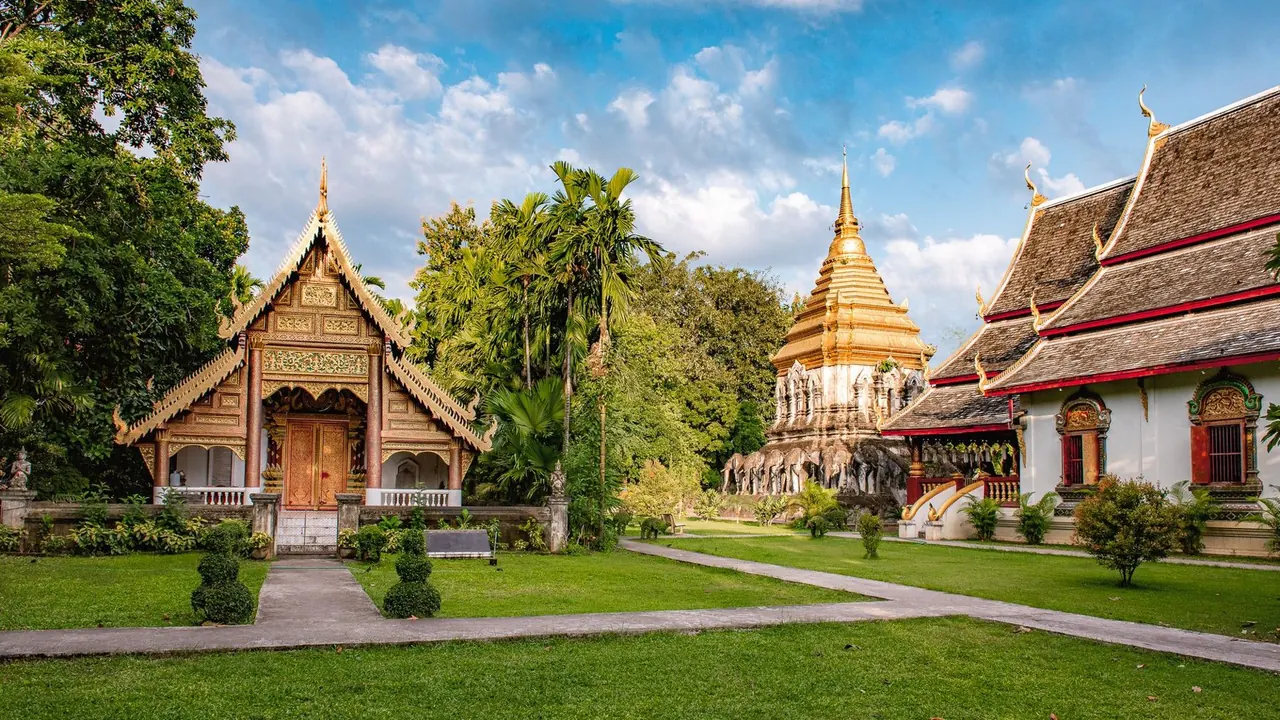
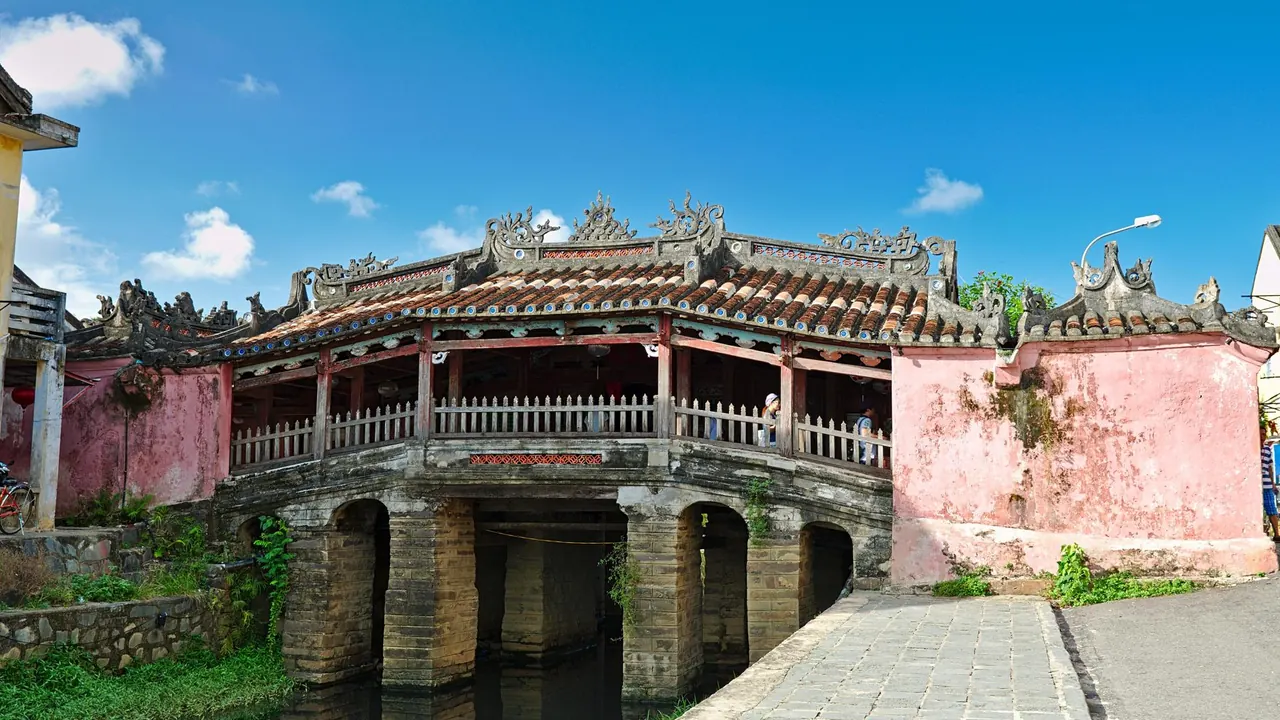
Photos: Chiang Mai by Gije Cho, Pexels License; Hoi An by François Guerraz, CC BY-SA 3.0, cropped.
Chiang Mai or Hoi An?
Our verdict in twelve categories, each scored against the same fixed benchmark cities, and the climate month by month, so you can choose for your trip.
Choose Chiang Mai for
- nightlife
- wellness
- food and drink
Chiang Mai is the better choice for travellers who want mountains, food and a slow, restorative stay. Forest trails start at the edge of town, northern Thai cooking and hill-grown coffee fill the days, and massage schools, meditation temples and hot springs make it easy to stay a week or more. There are also more bars and more live music in the evenings than in Hoi An, though there is no sea at all.
Choose Hoi An for
- beaches
- getting around
- families
Pick Hoi An if you want a beach within cycling distance of a lantern-lit old town. The merchant streets on the Thu Bon river are compact and easy to walk, and flat lanes lead through rice fields to An Bang. Splitting the stay between town and the sea suits couples and families who prefer quiet evenings to a night out.
Scoreboard
Twelve categories on one fixed scale from 0 to 100. The shaded stretch is the gap between the two.
Your match
Pick a travel style or drag the sliders, and both match scores follow your weighting.
Too close to call, 1 point apart
Wins on nightlife and wellness with your weighting.
Wins on beaches and getting around with your weighting.
What matters to you?
Category by category
What the scores mean for a trip.
Beaches & swimming
Here the two could hardly differ more. Chiang Mai has no coast within a day's reach. Swimming there means hotel pools, the Huay Tung Tao reservoir or the quarry lakes on the edge of town, and a beach has to be a separate trip south.
Hoi An has An Bang about 5km away through the paddies, and the sandy shore runs north towards Da Nang with quieter stretches easy to find. The catch is the autumn monsoon, when red flags go up and the beach is for walking rather than swimming.
Food & drink
Both cuisines are regional and cheap, but Chiang Mai's is broader. Northern dishes such as khao soi, sai ua sausage and chilli dips with sticky rice fill the morning markets, the evening stalls by the city gates and the weekend walking streets. Coffee from the surrounding hills supports a café culture that Hoi An cannot match.
Hoi An's list of dishes is shorter but entirely its own. Cao lau, white rose dumplings and Hoi An chicken rice are hard to find anywhere else, and a cooking class that starts at the market is one of the best things to do there. The riverfront restaurants all serve much the same menu, so the best food is at the plastic stools.
Culture & sights
The two are evenly matched, but they offer different things. Chiang Mai's culture is a spread of temples across the moated old city, from the ruined chedi of Wat Chedi Luang to the Lanna wooden halls of Wat Phra Singh, with Doi Suthep looking down over it all.
Hoi An's is a single townscape: an old trading port of merchant houses, Chinese assembly halls and the Japanese Bridge, best walked as a whole at dawn or under the lanterns. In both towns the museums are small, and two days covers the highlights.
Nightlife
Chiang Mai is the livelier of the two, though neither is a clubbing city. Its evenings run until around midnight, with a choice of cocktail and craft beer bars in Nimmanhaemin, backpacker terraces around Tha Phae Gate and the louder strip along Loi Kroh Road.
Hoi An's nights are about the lantern-lit riverbank and a quiet drink. A few backpacker bars on An Hoi islet and some beach bars at An Bang stay open a little later, but for a late night you have to go to Da Nang.
Nature & outdoors
Chiang Mai has the better outdoors. Forest trails and waterfalls begin at the edge of town in Doi Suthep-Pui National Park, and Doi Inthanon rises to about 2,565m an hour and a half away. The nearby valleys add rafting, ziplines, treks and elephant sanctuaries where the animals are not ridden. The drawback is the smoky haze of the burning season.
Hoi An's landscape is flatter and gentler: paddies seen by bicycle, basket boats in the Cam Thanh palm waterways, and snorkelling over the coral at the Cham Islands, which Chiang Mai cannot offer. For mountain scenery you need to drive to Son Tra or the Hai Van Pass.
Day trips
Neither is a great base for excursions, and the difference is in the kind of trip. From Chiang Mai the outings are to old northern towns: Lamphun with its gilded chedi, and Lampang with its horse-drawn carriages and teak houses. Craft villages close to the city make easy half days.
From Hoi An the one outing of real weight is My Son, the ruined Cham temples in a jungle valley. Da Nang's Cham sculpture museum and the Marble Mountains make a second day. In both places the best-known names further away, Chiang Rai and Pai or Hue, need an overnight stay.
Good for families
Both are easy-going with children, in different ways. Chiang Mai's draw is animals and adventure: elephant sanctuaries, the zoo and the Night Safari, ziplines and quarry swimming parks. With young children, avoid the hazy burning season.
Hoi An offers crafts and the seaside: making lanterns, riding basket boats, cycling through rice fields and swimming from a gentle sandy shore in the calm months. Resort pools and a coastal theme park are close by. Broken pavements and motorbikes are a nuisance in both.
Getting around
Hoi An is the easier of the two to get around. The old town is small and largely closed to motor traffic, and bicycles, which many hotels lend free, reach the beach, the paddies and outlying villages on flat lanes. Only the longer trips need a car.
Chiang Mai is more spread out. The moated old city is walkable, though its pavements are narrow. Beyond it you rely on the red songthaew trucks, tuk-tuks, ride-hailing or a hired scooter in heavy traffic, and you need a driver for the mountains.
Shopping & style
Both are places for handmade things rather than brands, and the difference is in what is made. Chiang Mai's strength is its markets and craft villages: the Sunday Walking Street, the Saturday market on Wualai Road, painted umbrellas from Bo Sang, weaving from San Kamphaeng, and celadon and lacquerware.
Hoi An is about tailoring, with suits, dresses, shoes and bags made to measure over a few days of fittings. Beyond that, the lanterns and souvenirs are much the same from shop to shop.
Affordability
Both are very cheap, and a comfortable stay costs little in either. In Chiang Mai the savings come from guesthouses in teak buildings, free temples and daily massages. The costs add up on sanctuary visits, treks and the hill resorts.
In Hoi An, homestays with pools, free bicycles and market meals keep costs down. Spending goes up with the old town's heritage ticket, the riverfront restaurants and the beach resorts.
Live music & performing arts
Neither town has theatre or a concert season, but Chiang Mai has a little more to fill an evening. You can choose between the nightly jazz and blues jams near the north gate, bands in Nimmanhaemin, khantoke dinners with Lanna dance, and Muay Thai fights.
Hoi An's performances are mostly put on for visitors: bai choi sung card games in the old town, short folk shows, and a large outdoor spectacle on an island in the river. For live music, the nearest place is Da Nang.
Wellness & relaxation
Chiang Mai is made for slowing down. Thai massage is part of daily life and is taught at long-established schools. Temples such as Wat Umong and Wat Suan Dok run meditation retreats, and the San Kamphaeng hot springs offer bathing in natural spring water.
Hoi An's relaxation is simpler: massage rooms on every street, yoga classes, and resorts among the paddies or by the sea. It has no hot springs or bathhouses, so it is restful rather than a place for a wellness retreat.
When should you go?
Pick your month. The climate figures are measured averages, not a forecast.
Chiang Mai in July
Hoi An in July
Daytime high, °C
Rainfall in the month, mm
Temperature and rainfall are climate normals, averaged over the years shown. Chiang Mai: 1991-2020 normals, Chiang Mai (0.6 km from centre). Hoi An: 1991-2020 normals, Da Nang (23.5 km from centre).
Chiang Mai is at its best from November to February, when the days are dry, sunny and warm rather than hot, which is ideal for temple walks and mountain trails. The heat then builds to 37°C in April. The rains arrive in May and peak in August at 234mm, and midsummer has the least sunshine of the year.
Hoi An runs on almost the opposite calendar. February to April is dry and comfortable for walking the old town. From May to August the days reach 35°C and the sea is around 29°C, the best stretch for swimming. From September the monsoon takes over: October brings 726mm of rain, and the grey, stormy weather lasts into December. Put simply, winter favours Chiang Mai, and spring and early summer favour Hoi An.
Which traveller are you?
For a beach and sun trip, Hoi An is the clear choice. The sand at An Bang is a short bike ride from the old town, and the sea is warm and calm through the summer. Chiang Mai is a long day's travel from any coast.
On a relaxing and wellness trip, Chiang Mai suits a longer, slower stay. Yoga, herbal steam rooms and spas in old teak houses fill the days, and the Mae Rim valley resorts are built for quiet. Hoi An is pleasant for a few lazy days but has less to sustain a longer one.
For a food and nightlife trip, Chiang Mai gives you more. Start with khao soi and northern market cooking, then move on to cocktail bars in Nimmanhaemin or the jazz jams by the north gate. Hoi An's food is distinctive, but its nights end early.
Before you go
| Measure | Chiang Mai | Hoi An |
|---|---|---|
| Official language | Thai | Vietnamese |
| Currency | Baht (THB) | Dong (VND) |
| Sockets | ABCF220 V, 50 Hz | ACFG220 V, 50 Hz |
| Driving side | Left | Right |
| Time zone | UTC+7 | UTC+7 |
| Emergency number | Police 191, ambulance 1669, fire 199 | Police 113, ambulance 115, fire 114 |
| Elevation | 310 m | 13 m |
| Main airport | Chiang Mai International Airport (CNX)3 km from centre28 non-stop destinations | Da Nang International Airport (DAD)23 km from centre47 non-stop destinations |
By the numbers
| Measure | Chiang Mai | Hoi An |
|---|---|---|
| City population | 1,198,000 | 121,716 |
| People per km² | 2,958 | - |
| Museums within 10 km | 6 | 5 |
| UNESCO World Heritage sites within 50 km | 0 | 2 |
| Swim season, months above 21 °C | - | 12 months |
Where else could you go?
Every comparison below shares a destination with this one, so you can follow Chiang Mai or Hoi An somewhere new.