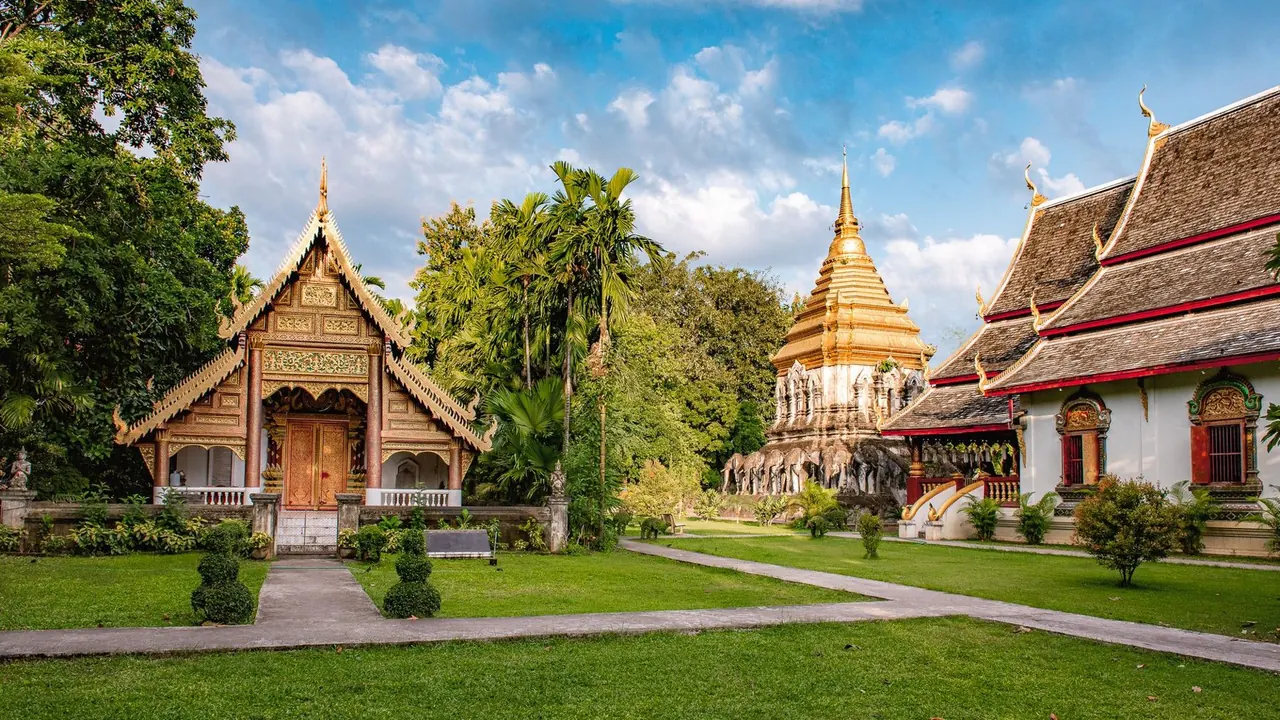
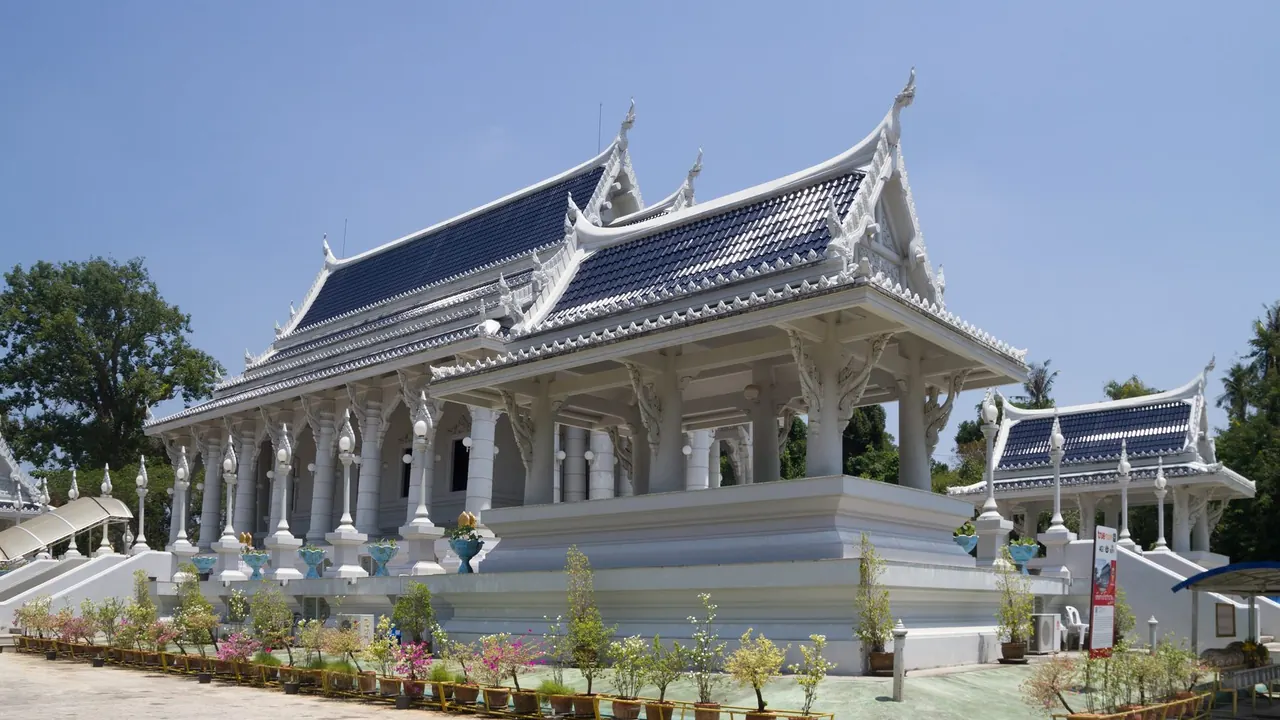
Photos: Chiang Mai by Gije Cho, Pexels License; Krabi by Maksym Kozlenko, CC BY-SA 4.0, cropped.
Chiang Mai or Krabi?
Our verdict in twelve categories, each scored against the same fixed benchmark cities, and the climate month by month, so you can choose for your trip.
Choose Chiang Mai for
- culture and sights
- shopping
- food and drink
Chiang Mai suits travellers who want a town to explore rather than a shoreline. The moated old city is full of Lanna temples, the northern cooking and hill-grown coffee reward curious eaters, the craft markets are some of the best in the country, and massage schools and temple meditation make slowing down easy. Forested mountains begin at the edge of town, and it is the cheaper of the two places to stay.
Choose Krabi for
- beaches
- nature and the outdoors
Pick Krabi when the trip is about the sea. Limestone cliffs rise straight out of warm water at Railay and Phra Nang, and the days fill with island hops, kayaking through mangroves and climbing above the sand, followed by an easy drink on the beach at sunset. There are few sights and little shopping, so it rewards people happy to swim, climb and rest rather than sightsee.
Scoreboard
Twelve categories on one fixed scale from 0 to 100. The shaded stretch is the gap between the two.
Your match
Pick a travel style or drag the sliders, and both match scores follow your weighting.
Wins on culture and sights and shopping with your weighting.
Wins on beaches and nature and the outdoors with your weighting.
What matters to you?
Category by category
What the scores mean for a trip.
Beaches & swimming
Only one of these is a beach destination. Chiang Mai sits in a mountain valley a long way from the coast, so swimming means the reservoir under Doi Suthep, a quarry lake or a hotel pool.
Krabi is the reverse. Railay West and Phra Nang, framed by limestone cliffs, are a short longtail ride from Ao Nang, Klong Muang is quieter, and boats run out to Poda and the Hong islands. The dry months bring calm, clear water, while the monsoon makes the sea rough. Many travellers pair the two, with the north first and the Andaman coast after.
Food & drink
Chiang Mai is the better place to eat, because its northern cooking is a reason to come in its own right: khao soi, herby sai ua sausage, nam prik noom and sticky rice from Warorot market and the stalls at Chang Phueak Gate. Coffee grows in the surrounding hills, and the city's cafés are a real draw.
Krabi's southern food is hotter and shaped by its Muslim communities, with yellow fish curries, khao mok gai and roti. It is at its best at Krabi Town's evening market and in the grilled seafood. Ao Nang's restaurants lean towards pizza and milder curries for visitors, so eating well there takes more effort.
Culture & sights
Chiang Mai has far more to see. Inside the moat, Wat Chedi Luang's ruined chedi, the wooden Lanna halls of Wat Phra Singh and the silver Wat Sri Suphan fill two or three days of slow walking, and Doi Suthep looks down on the valley from its mountain.
In Krabi, sightseeing fits into a morning. The main sight is the long stair climb at the Tiger Cave Temple, and beyond that there are a few Chinese shophouses along Krabi Town's riverfront. Museums are thin in both, but only Chiang Mai has a historic townscape worth exploring.
Nightlife
Neither place is for dancing until dawn, but Chiang Mai has more going on. Nimmanhaemin has cocktail and craft beer bars full of students from the nearby university, the lanes around Tha Phae Gate have backpacker bars and rooftops, and Loi Kroh Road is the brasher strip.
Krabi's evenings are mostly a beach drink. You get a short run of bars on Ao Nang's beach road, and hammocks, reggae and fire-spinning at Railay. Both are mostly quiet by midnight, and in Krabi anyone wanting a real party night takes the ferry to Phi Phi.
Nature & outdoors
Krabi's scenery is the more striking. Sheer limestone towers rise from the sea and the jungle, Railay and Tonsai are famous for sport climbing, and you can kayak through the mangroves of Ao Thalane, visit Phang Nga Bay by boat or snorkel off the outer islands.
Chiang Mai's outdoors means mountain forest rather than coast. Trails and waterfalls in Doi Suthep-Pui start at the edge of town, Doi Inthanon's cloud forest is about an hour and a half away, and the Mae Taeng valley adds rafting and treks to hill villages. Haze from February to April can spoil the views and the hiking.
Day trips
Chiang Mai has the better day trips if you like old towns. Lamphun's gilded chedi is half an hour south, Lampang has horse-drawn carriages and teak mansions, and the craft villages of Bo Sang and San Kamphaeng make easy half days. Chiang Rai and Pai are better done as overnight stays.
From Krabi, nearly every outing goes by boat and is about the scenery. The most rewarding places to visit are Koh Lanta's stilted Old Town and the fishing villages of Koh Yao Noi, while Phuket's Old Town makes a long day. There are no major heritage sites within easy reach.
Good for families
Both welcome children warmly, but the days look very different. Chiang Mai has the attractions: elephant sanctuaries, the zoo on Doi Suthep, the Night Safari, ziplines and quarry swimming parks. Getting around with small children is harder, though, with broken pavements, heavy traffic around the moat and poor air in the burning season.
Krabi has nothing built for children, so family days revolve around the shallow, warm water at Klong Muang and Phra Nang, resort pools and kids' clubs. Open longtail boats and strong sun need planning with toddlers.
Getting around
Neither has a metro, but Chiang Mai is a little easier. The old city inside the moat is walkable, red songthaews are flagged down in the street, and ride-hailing makes Nimmanhaemin or the airport a quick trip. For the hills you need a scooter or a hired driver.
Krabi is spread out along the coast, with white songthaews linking Ao Nang, the northern beaches and Krabi Town. Railay has no road, so every trip there depends on a longtail, and those stop running in heavy seas.
Shopping & style
Chiang Mai is where you fill a bag. The Sunday market down Ratchadamnoen takes over the old city with stall after stall of woven cloth, woodcarving and embroidery from the hill villages, and the Night Bazaar is there every evening when the weekend markets are not. Celadon pottery and lacquerware are local crafts with long histories, and Nimmanhaemin's small studios add modern design.
Krabi has little to buy beyond what you need on the beach. Ao Nang's main road sells swimwear, souvenirs and tailoring, Krabi Town's weekend market feels more local, and the malls cover only the basics. Neither city suits anyone shopping for labels.
Affordability
Both are good value, but Chiang Mai stretches a budget further. Teak guesthouses are cheap, street food costs very little, temples are nearly free and a daily massage is affordable. The extras that add up are sanctuary visits, treks and cooking classes.
In Krabi, the cost depends on where you stay. Krabi Town is very cheap, Ao Nang costs more and Railay the most, since everything arrives there by boat. Island tours, longtail fares and park entry fees for foreigners mount up over a beach stay.
Live music & performing arts
For an evening of live music, Chiang Mai gives you far more choice. Jazz and blues jam sessions near the old city's north gate run every night, bands play in Nimmanhaemin, khantoke dinners pair a northern meal with Lanna dance, and Yi Peng fills the streets with processions. There is still no theatre or concert season.
Krabi's evening entertainment is fire-spinning on the sand, cover bands and Muay Thai bouts staged for visitors near Ao Nang.
Wellness & relaxation
Chiang Mai goes deeper. It is the best-known place in Thailand to learn Thai massage, Wat Umong and Wat Suan Dok run meditation retreats and talks with monks, and the San Kamphaeng hot springs are under an hour away. Its quiet, green old-city lanes suit a long stay.
Krabi's rest comes from the sea. Spas at the resorts along Klong Muang, Tubkaek and Railay have open-air pavilions facing the water, and the Hot Springs Waterfall at Khlong Thom is a pleasant outing. Ao Nang's busy main road is the one thing that spoils the calm.
When should you go?
Pick your month. The climate figures are measured averages, not a forecast.
Chiang Mai in July
Krabi in July
Daytime high, °C
Rainfall in the month, mm
Where the figures come from
Krabi's temperatures are measured 67 km from the centre, at Phuket Airport.
Krabi has no rain gauge within 25 km of the centre, so its rainfall comes from a gridded climate dataset read at the city rather than from a gauge further away.
Temperature and rainfall are climate normals, averaged over the years shown. Chiang Mai: 1991-2020 normals, Chiang Mai (0.6 km from centre). Krabi: 1991-2020 normals, Phuket Airport (66.6 km from centre).
Chiang Mai is most pleasant from November to January, when the days are dry, sunny and warm, with December highs near 29°C. February stays dry but already reaches 33°C, as hot as June. By April the heat peaks at 37°C, so temple walks belong to the early morning and evening, and burning-season haze hangs over the valley from February. The rains begin in May and are heaviest in August and September. Sunshine is at its lowest in July and August, though the hills turn green.
Krabi is hot all year with little change from month to month, and the sea stays around 29°C even in the wettest months, so it is always warm enough to swim. The rain is what changes. January and February are the driest months, the wet season builds from April, and October is the wettest month, with more than 300mm. November is still wet. For calm water, January to March is best, and that fits well with Chiang Mai's dry season if you are combining the two.
Which traveller are you?
For a beach and sun trip, Krabi is the only real choice. Railay and Phra Nang lie under limestone cliffs a short longtail ride from Ao Nang, and island hops add more coves. Chiang Mai has no sea at all, only reservoirs and pools.
On a culture and arts trip, Chiang Mai wins easily. Its moated old city holds dozens of Lanna temples within walking distance, with Doi Suthep above and khantoke dance at dinner. Krabi offers little beyond the long climb at the Tiger Cave Temple.
On a shopping trip, choose Chiang Mai for handmade things: the Sunday and Saturday walking-street markets, silver on Wualai Road, painted umbrellas at Bo Sang and weaving at San Kamphaeng. Krabi's stalls mostly sell beachwear, souvenirs and copies.
Before you go
| Measure | Chiang Mai | Krabi |
|---|---|---|
| Official language | Thai | Thai |
| Currency | Baht (THB) | Baht (THB) |
| Sockets | ABCF220 V, 50 Hz | ABCF220 V, 50 Hz |
| Driving side | Left | Left |
| Time zone | UTC+7 | UTC+7 |
| Emergency number | Police 191, ambulance 1669, fire 199 | Police 191, ambulance 1669, fire 199 |
| Elevation | 310 m | 16 m |
| Main airport | Chiang Mai International Airport (CNX)3 km from centre28 non-stop destinations | Krabi International Airport (KBV)9 km from centre14 non-stop destinations |
By the numbers
| Measure | Chiang Mai | Krabi |
|---|---|---|
| City population | 1,198,000 | 30,499 |
| People per km² | 2,958 | - |
| Museums within 10 km | 6 | 0 |
| UNESCO World Heritage sites within 50 km | 0 | 0 |
| Swim season, months above 21 °C | - | 12 months |
Where else could you go?
Every comparison below shares a destination with this one, so you can follow Chiang Mai or Krabi somewhere new.