China
Shenzhen
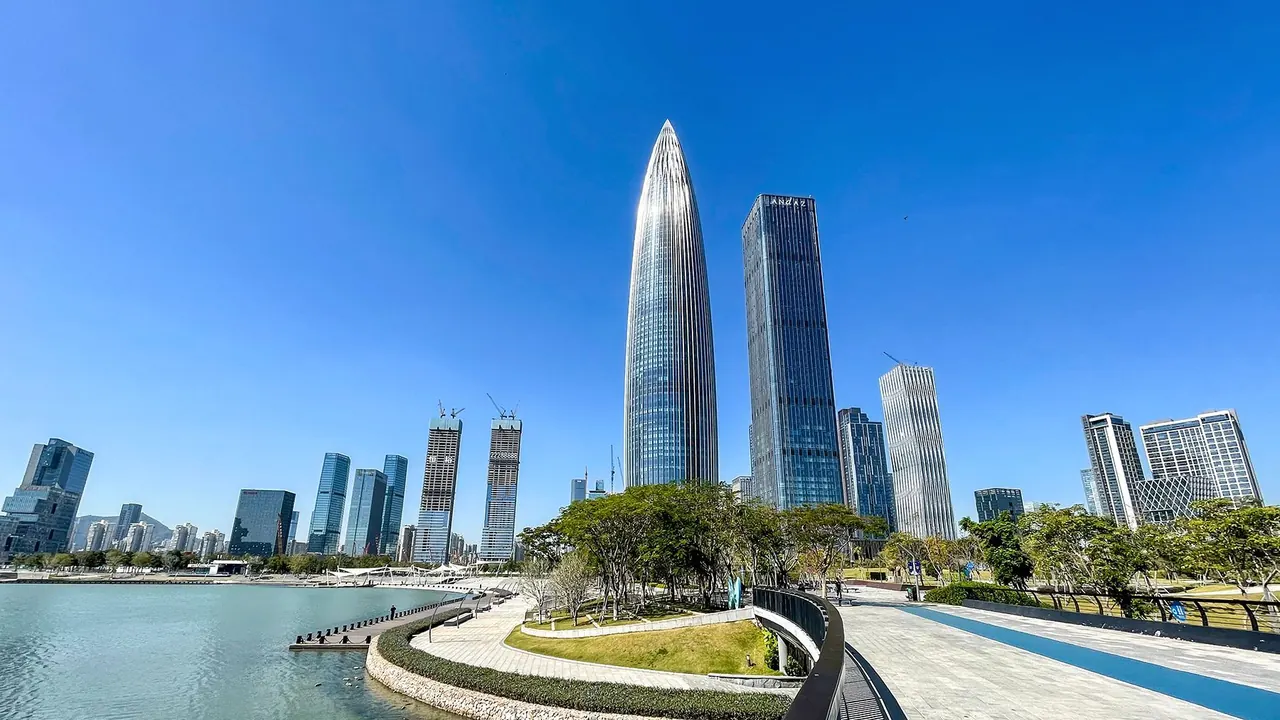
The Shenzhen Bay skyline
- Day trips76
- Getting around76
- Families70
Photo: Windmemories, CC BY-SA 4.0, cropped
Match
60
Every category weighted equally
- Beach & sun62
- Culture & arts58
- Food & nightlife58
- Family trip64
- Outdoors64
- Relax & unwind62
- Shopping & style60
- On a budget61
Shenzhen in twelve categories
Our verdict on each, scored 0 to 100 against the same fixed benchmark cities, so a score means the same thing on every page.
Beaches & swimming. Scores 50 out of 100.
Food & drink. Scores 66 out of 100.
Culture & sights. Scores 36 out of 100.
Nightlife. Scores 48 out of 100.
Nature & outdoors. Scores 64 out of 100.
Day trips. Scores 76 out of 100.
Good for families. Scores 70 out of 100.
Getting around. Scores 76 out of 100.
Shopping & style. Scores 62 out of 100.
Affordability. Scores 70 out of 100.
Live music & performing arts. Scores 38 out of 100.
Wellness & relaxation. Scores 68 out of 100.
Shenzhen category by category
Beaches & swimming
50Shenzhen's beaches are all on the eastern side of the city, along the Dapeng peninsula and Dapeng Bay, roughly an hour or more by metro, bus or taxi from Futian and Nanshan. Dameisha and Xiaomeisha are long public sands that get very crowded on summer weekends. Xichong, further out at the southern tip of the peninsula, is the most attractive: a wide curve of sand facing open sea with green hills behind. Jiaochangwei is a village of guesthouses and seafood places by a small beach.
The water is warm, around 28°C in summer, and swimming is popular from May to October, although typhoons and red-flag days interrupt the season. The beaches make a good day out, but the waterfront in the city centre is reclaimed land and port, so swimming is never part of everyday life here.
Food & drink
66Almost everyone in Shenzhen comes from somewhere else, and the food shows it. Cantonese dim sum and roast meats sit alongside Chaoshan beef hotpot and braised goose, Hakka salt-baked chicken, fiery Sichuan and Hunan cooking, and northern dumpling and noodle houses, often cooked by people from those regions. Seafood is a reason to go to the coast at Nan'ao or Shekou, where you choose fish and shellfish from tanks and have them cooked to order.
Where it falls short is in a cuisine of its own and in old neighbourhoods built around eating, so most good meals happen in malls, office districts and residential streets rather than historic quarters. Bubble tea and specialist coffee are everywhere, and Shekou and the OCT area have the most international restaurants and craft beer. Menus are often only in Chinese or behind QR codes, so a translation app makes a big difference.
Culture & sights
36Shenzhen was a cluster of fishing and farming villages until the late twentieth century, and its sights reflect that. Its main landmarks are modern: the Ping An tower and the Shenzhen Bay skyline, Civic Centre with its sweeping roof in Futian, and the Shenzhen Museum's account of the city's rapid rise. The OCT district is home to OCT Loft's converted factories and galleries and the He Xiangning Art Museum, and Dafen is a village of workshops where painters turn out copies of oil paintings by hand.
Older layers survive in places: the Ming-era walls and lanes of Nantou old town, the coastal Dapeng Fortress, and Hakka walled villages such as Crane Lake in Longgang. They are worth seeing but take time to reach, and the whole set is modest. Visitors after deep history usually look beyond the city.
Nightlife
48Nights out in Shenzhen are mainly in a few clusters. Around Coco Park in Futian there are bars and large clubs with bottle service and big-room DJs. Shekou, by Sea World, has the most relaxed, international scene of pubs, craft beer and terraces, and the OCT area has smaller bars with more of an arts crowd. Karaoke in private KTV rooms runs late and is how many locals spend the night.
The city stays up late enough and feels safe after dark, but it has little street life, the venues sit far apart and much of it is inside malls and towers. It works for an evening out, but few people come here for it.
Nature & outdoors
64Shenzhen has more green space than its skyline suggests. Wutong Mountain, the highest peak in the city at just under 950m, is a stiff climb with views over the reservoirs to Hong Kong, and Lianhuashan and Bijiashan are quick walks in the centre. The best outdoor day is on the Dapeng peninsula, where a coastal trail runs between rocky headlands and coves from Dalu Bay towards Xichong, and the eastern coast also has kayaking and paddleboarding.
Along Shenzhen Bay, a long waterfront path for cycling and running passes a mangrove reserve where egrets and migrating waders feed in winter, and greenways link many of the city's parks. The hills are modest, though, and summer heat, humidity and storms make autumn and winter the best seasons to be out walking.
Day trips
76Shenzhen's position on the Pearl River Delta is one of its biggest strengths. Hong Kong is just over the border: fast trains reach West Kowloon in under half an hour, and the metro connects to the border crossings at Luohu and Futian, so a day on Hong Kong Island or in Kowloon is easy. Guangzhou is about half an hour away by high-speed train, for Cantonese temples, the Chen Clan Ancestral Hall and the colonial Shamian Island, and Foshan's ancestral temple and martial-arts heritage are just beyond it.
Macau, with its Portuguese old town and the ruins of St Paul's, is reached by ferry or across the long delta bridge, and Zhuhai lies along the same coast. Beyond these cities the list gets thinner, and trips to Hong Kong or Macau need the right passport and visa arrangements to get back into the mainland.
Good for families
70Shenzhen is easy with children. Overseas Chinese Town in Nanshan has a cluster of theme parks: Happy Valley with its roller coasters, the miniature world landmarks at Window of the World, and Splendid China's model villages and folk shows. OCT East in the eastern hills adds more rides and mountain scenery, Shenzhen Safari Park has drive-through and walking areas, and Xiaomeisha has a marine park and a beach. The science museum and the big city parks, with playgrounds and lawns, are good for quieter days.
The city is safe and clean, the metro has lifts, and malls with nursing rooms and play areas are everywhere. Against that, summer heat is intense, attractions are far apart, and away from the main parks little information is in English.
Getting around
76Shenzhen's metro is extensive, clean and simple to use, with bilingual signs and announcements, and it reaches the airport, the theme parks, the border crossings and the high-speed stations at Futian and Shenzhen North. Buses and ride-hailing apps fill the gaps, and shared bicycles are everywhere along the flat waterfront.
The catch is scale. The city stretches some 80km east to west, so getting from Shekou to the Dapeng beaches takes much of a morning, and districts are separated by multilane roads that make walking between them dull. Within an area such as Futian, OCT or Shekou walking is pleasant. Most payments run through mobile apps, so setting them up before arriving makes everything smoother. A car is never needed.
Shopping & style
62Shenzhen's best shopping is the kind only it can offer. Huaqiangbei is a district of multi-storey electronics markets packed with stalls selling components, phones, drones, gadgets and accessories, and it is fascinating to wander even if you buy nothing. Luohu Commercial City by the border is a warren of tailors, fabric sellers and copy goods, and Dafen village sells hand-painted canvases by the metre.
For everything else there are big, polished malls in Futian, Nanshan and around Shenzhen Bay, with international brands and Chinese design labels, and Dongmen is the older, crowded street-shopping district. Luxury fashion is mostly confined to a few mall floors rather than streets of flagships, independent boutiques are scattered and hard to find, and there are few traditional crafts to bring home.
Affordability
70Shenzhen is one of the more expensive cities in mainland China, but for most visitors it is still good value. Comfortable modern hotels cost well below what similar rooms fetch in most large international cities, the metro and buses are very cheap, and a bowl of noodles, a dim sum lunch or a hotpot dinner in an ordinary neighbourhood costs little. Prices go up in the international bars of Shekou and Coco Park, for imported wine and cocktails, at the big theme parks and in the luxury hotels on Shenzhen Bay, but a careful traveller spends modestly here.
Live music & performing arts
38Shenzhen has modern performance venues and a regular programme, but not a famous scene. The Shenzhen Concert Hall in Futian is home to the city's symphony orchestra, and the Poly Theatre and Shenzhen Grand Theatre host touring ballet, Chinese-language musicals, acrobatics and visiting orchestras. A handful of live houses around OCT Loft and Nanshan put on Chinese indie and rock bands. Most theatre is in Mandarin and much of the programme is touring, so a visitor can find a good concert but will not plan a trip around it.
Wellness & relaxation
68Wellness in Shenzhen means massage and bathing, and it is a real part of the city's life. Foot-massage and reflexology parlours sit on almost every block, open late, and the city is known across the region for vast bathhouse complexes that run through the night, with hot and cold pools, saunas, sleeping halls, buffets and massage rooms on several floors. People come over the border just to spend an evening in one. Hot-spring resorts lie in the hills around the city and in neighbouring Huizhou.
These are modern, commercial places rather than historic baths, and away from the biggest complexes staff and menus are mostly in Chinese, so a translation app helps. The rest of the city is less restful: fast-paced, built up and humid for much of the year. Quiet moments come in tea houses, along the Shenzhen Bay waterfront and in the parks early in the morning.
When should you go?
Pick a month to see what it is like. The climate figures are measured averages, not a forecast.
Shenzhen in July
Daytime high, °C
Rainfall in the month, mm
The whole year
Shaded against this city’s own year: the deepest cell is its best month for that figure and the palest its weakest.
Where the figures come from
Shenzhen has no rain gauge within 25 km of the centre, so its rainfall comes from a gridded climate dataset read at the city rather than from a gauge further away.
Shenzhen's sunshine is measured 28 km from the centre, at King's Park.
Temperature and rainfall are climate normals, averaged over the years shown. Shenzhen: 1999-2020 (sunshine 1991-2020, rainfall 1991-2020) normals, Shenzhen (4.7 km from centre).
Before you go
| Measure | Shenzhen |
|---|---|
| Official language | Putonghua |
| Currency | Yuan Renminbi (CNY) |
| Sockets | ACI220 V, 50 Hz |
| Driving side | Right |
| Time zone | UTC+8 |
| Emergency number | Police 110, ambulance 120, fire 119 |
| Elevation | 0 m |
| Main airport | Shenzhen Bao'an International Airport (SZX)28 km from centre174 non-stop destinations |
| Public holidays this year | 6 days |
By the numbers
| Measure | Shenzhen |
|---|---|
| City population | 17,494,398 |
| People per km² | 8,759 |
| Museums within 10 km | 7 |
| UNESCO World Heritage sites within 50 km | 0 |
| Swim season, months above 21 °C | 8 months |
Compare Shenzhen with
Every comparison with a written verdict behind it.