Photos: Chongqing by xiquinhosilva, CC BY 2.0, cropped; Shanghai by xiquinhosilva, CC BY 2.0, cropped.
Chongqing or Shanghai?
Our verdict in twelve categories, each scored against the same fixed benchmark cities, and the climate month by month, so you can choose for your trip.
Choose Chongqing for
- nature and the outdoors
- prices
- wellness
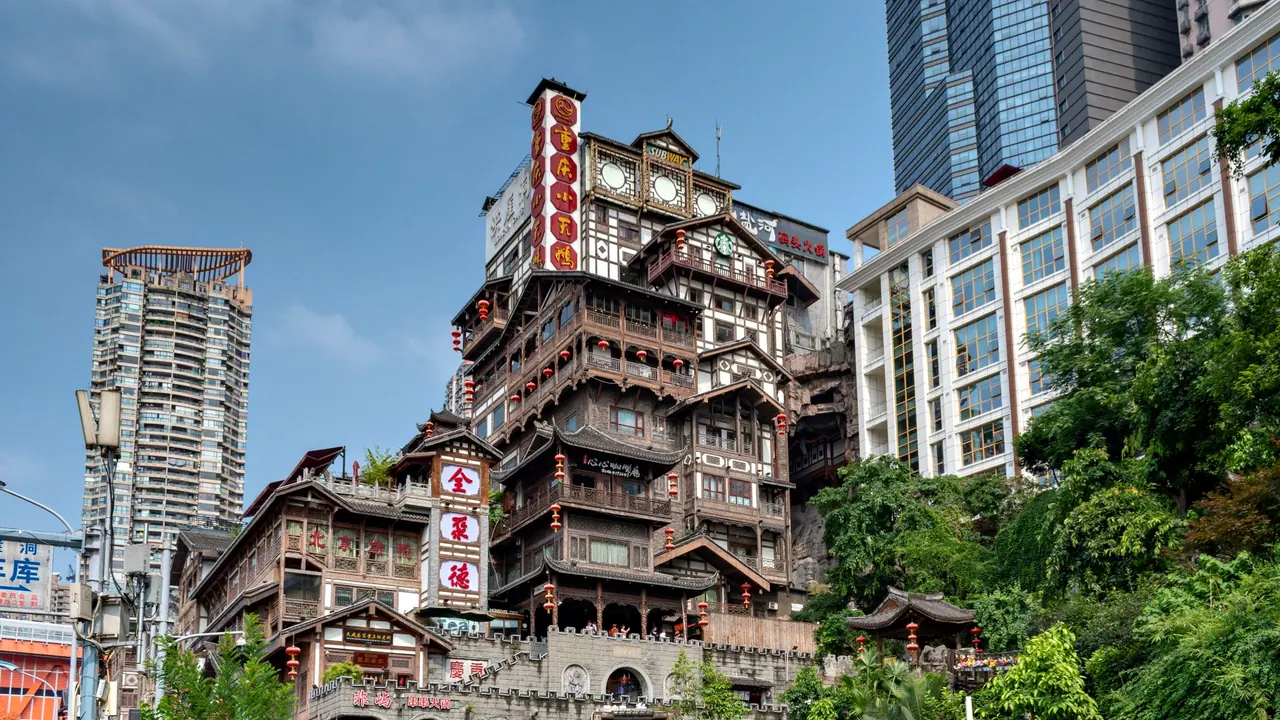
Chongqing suits travellers who come to eat and want their money to go further. Fiery hotpot and noodle culture are the draw, and the mountain city itself is the sight, with monorails through hillsides and towers lit up on ridges over two rivers. Real landscapes such as Nanshan, Wulong's karst and the Three Gorges are within reach. Expect stairs, chilli and a city built for locals rather than visitors.
Choose Shanghai for
- live music and the arts
- families
- shopping
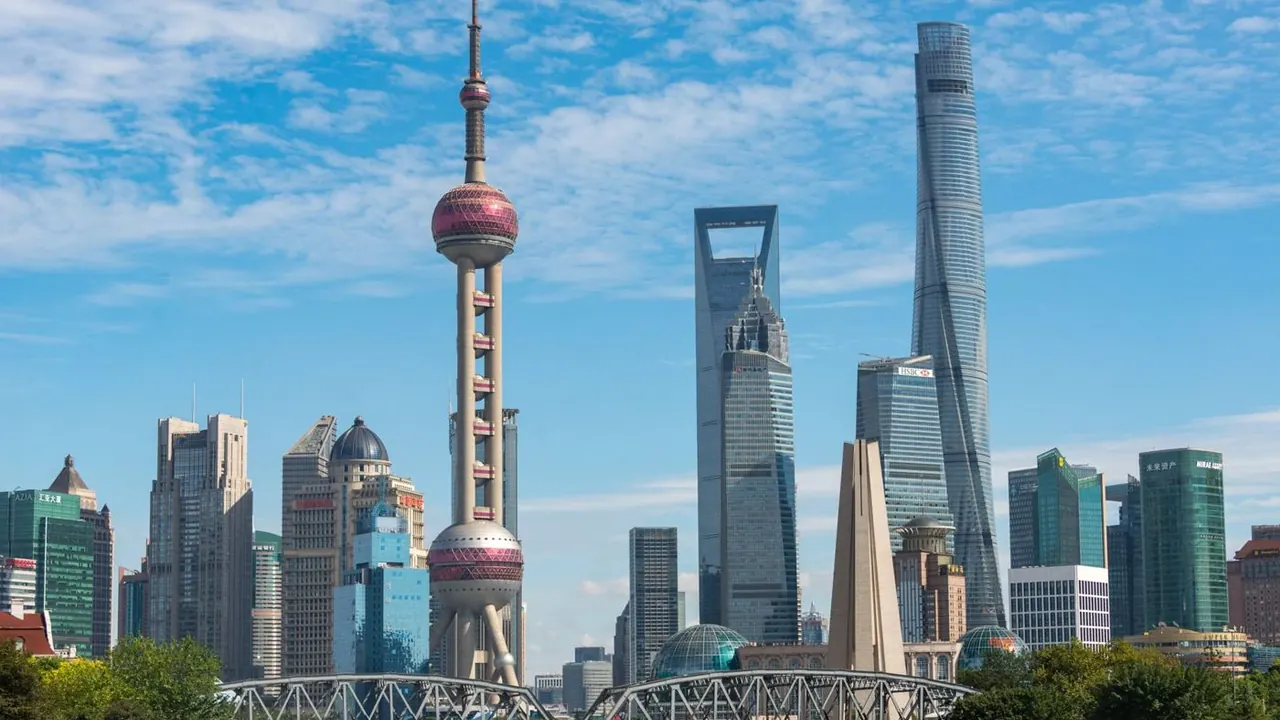
Shanghai is the better pick for a first trip to China, for families, and for anyone who wants a broad, easy city. The food covers far more ground, the nights out are stronger, and the museums, theatres and shops go deeper, while the metro makes it simple to get about. Suzhou, Hangzhou and the canal towns are a short train ride away, so it works as a base for a week or more. In return it costs more and has little nature.
Scoreboard
Twelve categories on one fixed scale from 0 to 100. The shaded stretch is the gap between the two.
Your match
Pick a travel style or drag the sliders, and both match scores follow your weighting.
Wins on nature and the outdoors and prices with your weighting.
Wins on live music and the arts and families with your weighting.
What matters to you?
Category by category
What the scores mean for a trip.
Beaches & swimming
Neither city is for a beach trip. Chongqing is more than 1,000km inland, and its rivers are fast and muddy. Shanghai is on the coast but faces Yangtze mudflats. Its only sand is the walled, filtered bay at Jinshan, about an hour and a half away in an industrial setting. In summer, swimming in either city mostly means a hotel pool, though Chongqing also has hot-spring resorts and Shanghai at least has that one artificial beach.
Food & drink
Both are serious eating cities, but they eat very differently. Chongqing is single-minded: hotpot in chilli-laden tallow broth, xiaomian noodles for breakfast, and skewers and spicy chicken late into the night. Anyone who struggles with spice finds the choice narrows, though split pots help.
Shanghai has the edge for most visitors because of its range. Its own sweet, soy-braised benbang cooking and soup dumplings sit alongside food from every corner of China, a deep international scene, fine dining and the cafés and bistros of the former French Concession. Chongqing has little of that breadth.
Culture & sights
Shanghai has more to see, and more of it is distinctive. The Bund's Art Deco and neoclassical waterfront faces the towers of Lujiazui, the former French Concession has its shikumen lanes, and the Shanghai Museum holds outstanding bronzes and ceramics. Add the West Bund galleries and there is enough for several days.
In Chongqing the cityscape is the main event: towers on ridges, the monorail through buildings and Hongyadong lit up at night. The Three Gorges Museum, a few temples and guild halls and the wartime-capital sites round it out. Most of the old city has gone, though, so two or three days covers it.
Nightlife
Shanghai has the more varied night out. There are speakeasy cocktail bars in the former French Concession and hotel bars high above the Bund. Its clubs range from big rooms with international DJs to underground techno, and the busiest run until dawn at weekends.
Chongqing's nights are just as late but built around eating. River views and the cable car lead into hotpot and skewers past 2am, and Jiujie in Jiangbei has loud table-service clubs in the Chinese style. It is lively in the company of locals, but there is far less variety and little of it is aimed at visitors.
Nature & outdoors
Chongqing wins clearly here. It is a city of mountains and rivers. Nanshan's forest paths rise straight across the Yangtze from the centre, Jinyun and Gele mountains make half-day escapes, and Wulong's natural bridges and sinkholes or a Three Gorges cruise take you into big landscapes. Heat, haze and fog limit the good walking to spring and autumn.
Shanghai sits on a flat delta. Its outdoors means Century Park, cycling along the Huangpu, the low Sheshan hills and birdwatching on Chongming Island. Real hiking needs a longer trip to Moganshan or beyond.
Day trips
Shanghai is one of China's best bases for day trips. Suzhou's gardens are about half an hour away by fast train, Hangzhou's West Lake about an hour and Nanjing a little further. Canal towns such as Zhujiajiao and Wuzhen add stone bridges and boat rides.
Chongqing has some strong single outings. Chengdu and its pandas are an hour away by high-speed train, and there are the Dazu Rock Carvings, the Diaoyu Fortress and quiet stilt-house towns like Zhongshan. Beyond those, longer trips are mostly about landscape, and the choice is narrower than Shanghai's.
Good for families
Shanghai is far easier with children. Disney is on the metro, Legoland and an ocean park are on the edges of the city, and the science and natural history museums are big and hands-on. Lifts in the stations make a buggy workable. The main strains are the summer heat and the distances between sights.
Chongqing has pandas at its zoo, a riverfront science museum and the thrill of the cable car and monorail. But stairs and steep lanes defeat pushchairs, and much of the food has to be ordered mild for young palates.
Getting around
Both cities have huge, cheap rail networks signed in English, and neither needs a car. Shanghai's is easier to use: the streets are flat, most stations have lifts, lines run to both airports and Disneyland, and Huangpu ferries make a scenic shortcut. Crossing the city still takes time.
Chongqing's metro and monorail reach almost everywhere, but the ridges complicate every walk, with stairs, lifts and street levels that confuse map apps. Cheap taxis help between the hillside districts.
Shopping & style
Shanghai is the shopping city of the two. Beyond the luxury malls of West Nanjing Road and Lujiazui, it has independent designer boutiques on Wukang Road and Anfu Road, fabric-market tailors who make a qipao in a few days, and tea and silk around Yu Garden.
Chongqing's malls around Jiefangbei and Guanyinqiao are big but much like those in any large Chinese city. The local things worth taking home are packs of hotpot base, Sichuan pepper and spicy snacks.
Affordability
Chongqing makes a budget go much further. Local food, metro rides and taxis are cheap in both cities, but in Chongqing even good mid-range and upscale hotels cost little. The main extras are Yangtze cruises, cable cars and paid viewpoints.
In Shanghai the bargain is eating where locals eat. Central hotels, cocktails and Western restaurants are priced like a European capital's.
Live music & performing arts
Shanghai has far more on stage. Acrobatics shows are a regular part of the city's nights, and Kunqu, Yue and Peking opera all have homes, including the 1920s Yifu Theatre. The symphony, the Grand Theatre and the Oriental Art Center bring ballet and musicals, often in English, and a jazz scene dating back to the 1930s survives in a few clubs.
Chongqing's main draw is Sichuan opera with its face-changing and fire-spitting acts, plus touring shows at the glass Grand Theatre on the Jiangbei waterfront. Beyond that the scene is small and mostly in Chinese.
Wellness & relaxation
Both cities have a real tradition of bathing and massage, in different forms. Chongqing has natural hot springs, with outdoor pools in wooded valleys at Beiwenquan and Nanwenquan, though reaching them means leaving the centre. In town, a late foot massage after hotpot is the local habit.
Shanghai's version is the large urban bath centre with pools, saunas and rest halls, alongside hotel spas and traditional medicine clinics. For calm, there are tea houses and morning tai chi in the parks.
When should you go?
Pick your month. The climate figures are measured averages, not a forecast.
Chongqing in July
Shanghai in July
Daytime high, °C
Rainfall in the month, mm
Temperature and rainfall are climate normals, averaged over the years shown. Chongqing: 1991-2020 normals, Chongqing (10.2 km from centre). Shanghai: 1991-2020 (rainfall 1981-2010) normals, Shanghai / Hongqiao (8.1 km from centre).
Chongqing's summer is fierce. July and August reach 34°C with heavy humidity, and June is the wettest month at 211mm. Winters are dry but grey and very dim, with hardly any sunshine from November to January. April and October are the best months, warm, only moderately wet and comfortable for climbing the city's stairs. May is also fine if you can accept more rain.
Shanghai follows a similar pattern but gets far more sun all year, so its winters, though cold and damp, are brighter than Chongqing's. Summer peaks at 33°C, with heavy rain from June to August. The sea at Jinshan warms to 28°C in August, though the setting is hardly tempting. April, May, October and November are the comfortable months for walking the city.
Which traveller are you?
On an outdoors trip, Chongqing is the clear choice. Nanshan's forest trails start just across the river from the centre, and Wulong's karst gorges and the Three Gorges are within reach. Shanghai's flat delta offers parks and riverside cycling at best.
On a family trip with children, Shanghai is far easier. Disney, Legoland, hands-on museums and an aquarium keep children busy, and the metro has lifts for buggies. In Chongqing, stairs, steep lanes and fiery food wear families down quickly.
For a trip on a tight budget, Chongqing goes further. Hotpot, noodles and skewers cost little, and comfortable hotels are much cheaper than in Shanghai, where central rooms and drinks in the smarter bars are priced like a European capital's.
Before you go
| Measure | Chongqing | Shanghai |
|---|---|---|
| Official language | Putonghua | Putonghua |
| Currency | Yuan Renminbi (CNY) | Yuan Renminbi (CNY) |
| Sockets | ACI220 V, 50 Hz | ACI220 V, 50 Hz |
| Driving side | Right | Right |
| Time zone | UTC+8 | UTC+8 |
| Emergency number | Police 110, ambulance 120, fire 119 | Police 110, ambulance 120, fire 119 |
| Elevation | 237 m | 4 m |
| Main airport | Chongqing Jiangbei International Airport (CKG)19 km from centre167 non-stop destinations | Shanghai Pudong International Airport (PVG)33 km from centre208 non-stop destinations |
| Public holidays this year | 6 days | 6 days |
By the numbers
| Measure | Chongqing | Shanghai |
|---|---|---|
| City population | 32,054,159 | 24,870,895 |
| People per km² | - | 3,922 |
| Museums within 10 km | 7 | 45 |
| UNESCO World Heritage sites within 50 km | 0 | 0 |
| Swim season, months above 21 °C | - | 5 months |
Where else could you go?
Every comparison below shares a destination with this one, so you can follow Chongqing or Shanghai somewhere new.
- Suzhouvs Shanghai
- Hangzhouvs Shanghai
- Chengduvs Chongqing
- Zhangjiajievs Chongqing
- Xi'anvs Chongqing
- Guilinvs Chongqing