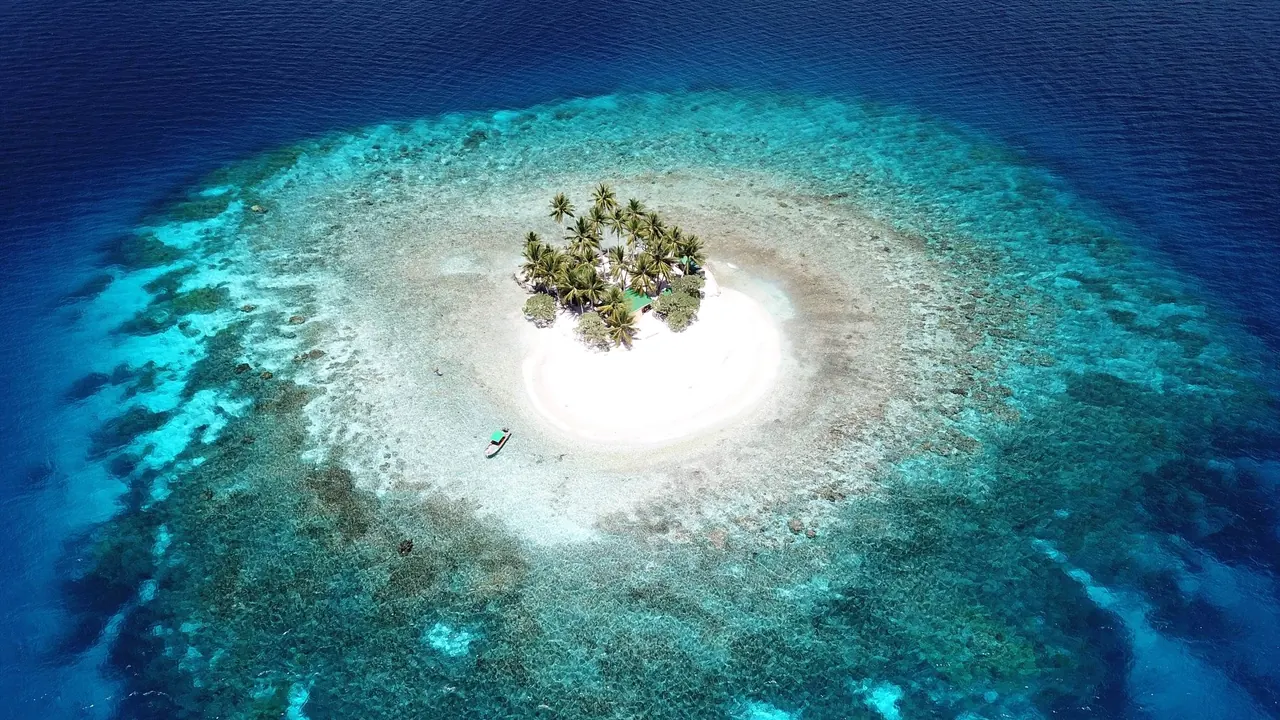
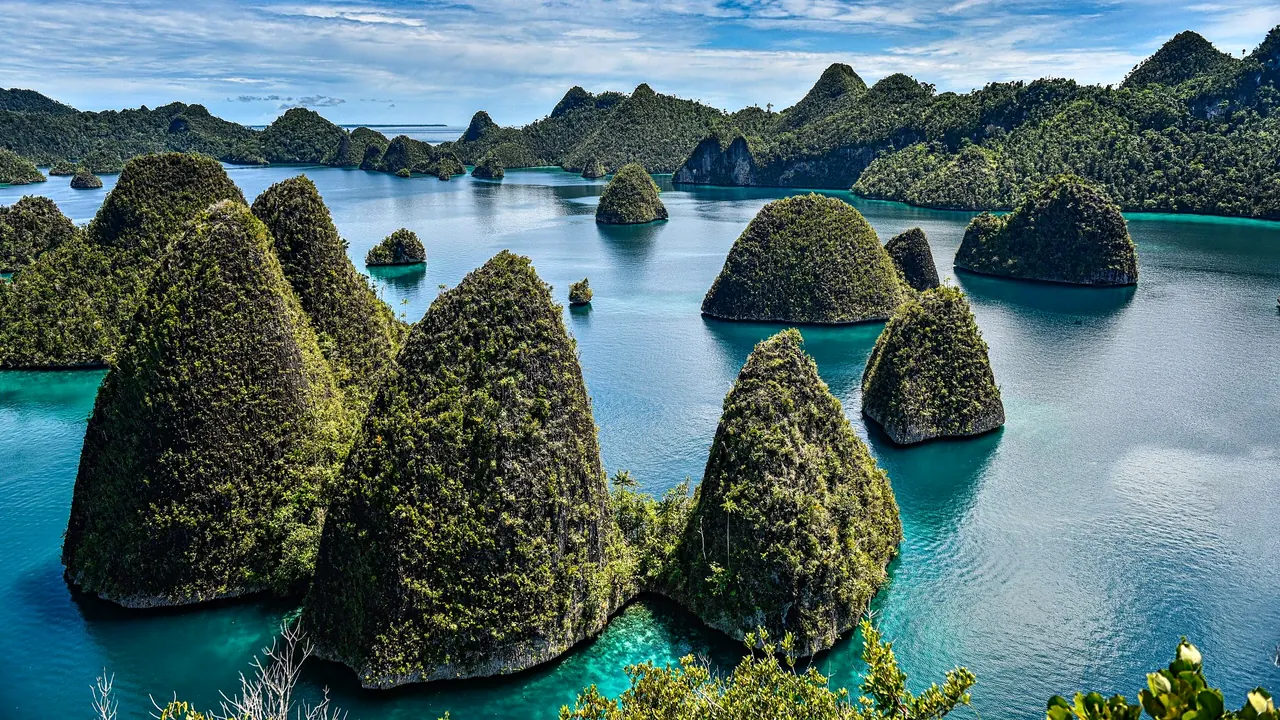
Photos: Chuuk Lagoon by Motoki Kurabayashi, CC BY-SA 4.0, cropped; Raja Ampat by Rolandandika, CC BY-SA 4.0, cropped.
Chuuk Lagoon or Raja Ampat?
Our verdict in twelve categories, each scored against the same fixed benchmark cities, and the climate month by month, so you can choose for your trip.
Choose Chuuk Lagoon for
- day trips
- getting around
- nightlife
Chuuk Lagoon is for divers who come for history under the water. The sunken Japanese fleet, with holds still full of trucks, aircraft parts and munitions, is a reason to fly across the Pacific in its own right. Weno is easy to work from on a dive trip, since the boat picks you up at the hotel jetty. If you don't dive, though, there is little to keep you here beyond a morning among the wartime guns and the lighthouse at Sapuk.
Choose Raja Ampat for
- beaches
- wellness
- nature and the outdoors
Raja Ampat gives more to people who want living reef, wildlife and scenery. Its coral and fish at the heart of the Coral Triangle are richer, and the karst lagoons of Wayag and Piaynemo and the birds of paradise give you things to do above the water too. Homestays sit on white sand over shallow reef, so snorkellers, couples after quiet and anyone who wants a beach as well as the sea will get more from it. In return, the journey and the logistics take more effort.
Scoreboard
Twelve categories on one fixed scale from 0 to 100. The shaded stretch is the gap between the two.
Your match
Pick a travel style or drag the sliders, and both match scores follow your weighting.
Wins on day trips and getting around with your weighting.
Wins on beaches and wellness with your weighting.
What matters to you?
Category by category
What the scores mean for a trip.
Beaches & swimming
Raja Ampat is far better for time on the sand. You can step from your hut on Kri, Mansuar or Arborek onto a strip of white coral sand and straight into shallow reef. There are also empty coves and sandbars between the karst islands. The beaches are short and full of coral, but they are right on your doorstep.
In Chuuk, the shore around Weno is rocky and lined with mangroves. The good sand is on the palm-topped islets at the lagoon's edge, and each visit is a boat outing. They are lovely and nearly empty, but you go for a day and come back, so a stay built around the beach doesn't really work.
Food & drink
Neither place has a food scene, and in both you eat where you sleep. Chuuk's dive hotels rely on imported rice and tinned goods, with reef fish, tuna and breadfruit or taro when they turn up, and beer is about all there is to drink. Raja Ampat's homestays serve set meals of that morning's fish, greens, tempe, sambal and sometimes papeda. The food is fresher but the same every day, and alcohol is even harder to find.
Culture & sights
Both have very little to visit on land, but what there is differs. Chuuk's heritage is the Pacific War: gun emplacements in hillside caves on Weno, the lighthouse at Sapuk and the old blast-proof Japanese building now used by a mission school.
Raja Ampat offers living Papuan village life instead. You can visit the stilt villages of Arborek and Sawinggrai, with their wooden churches and handicrafts. Around Misool there are ochre hand paintings on the limestone cliffs, which you see from a boat. Neither is worth a trip for the sights alone.
Nightlife
There is no nightlife in either. In both, evenings mean dinner, talk about the day's dives and an early night before the morning boat. The setting differs. In Chuuk you spend the evening at a hotel in town, where the few places that serve alcohol close early. In Raja Ampat you sit on a homestay deck or a liveaboard under a very dark sky, in villages that often discourage drinking.
Nature & outdoors
Both are among the world's great dive destinations, but Raja Ampat has more to offer overall. Its reefs hold an exceptional range of coral and fish, and you can see mantas at the cleaning stations and reef sharks and wobbegongs in the Dampier Strait. Snorkellers see a great deal from the jetty. Above the water there are karst viewpoints at Wayag and Piaynemo, birds of paradise displaying at dawn on Waigeo and Gam, and good kayaking between the islands.
Chuuk's strength is narrower: the coral-covered wrecks of the Japanese fleet, plus sharks and pelagic fish in the reef passes. That is world class for divers. Non-divers miss most of it, though, and the steep green islands offer only a few rough walks.
Day trips
Chuuk has a little more to visit, though it is still a short list. A boat across the lagoon takes you to the ruins of the Japanese base on Tonoas, and the villages on Fefen and Uman have further wartime remains.
In Raja Ampat, outings to see people and places are even fewer: the stilt villages of Arborek and Sawinggrai, the small town of Waisai, or the rock paintings if you are based near Misool. Most boat trips there are for the scenery or the reefs, which are covered under nature.
Good for families
Chuuk asks a lot of a family and gives children little back. Older children who snorkel well can enjoy the warm, calm lagoon and the picnics on the outer islets, and certified teenage divers can see some of the shallower wrecks. Beyond that there is nothing made for them, the boats and rough roads take stamina, and medical care on Weno is basic.
Raja Ampat gives older children who swim confidently a little more, because the reef starts at the homestay jetty, with turtles and reef fish right below. The trade-off is basic huts with shared bathrooms and mosquito nets, malaria in this part of Papua, and serious medical care a boat ride and a flight away. Toddlers and young children are better off elsewhere.
Getting around
Chuuk is the simpler of the two. Once you land on Weno, hotel vans and shared taxis cover the short, potholed roads. Dive boats collect you at the hotel jetty, so a dive trip runs without much effort.
Raja Ampat takes more work at every step. You fly to Sorong, take the ferry of about two hours to Waisai, then a boat transfer, and every outing after that is a chartered or shared speedboat. Wayag is several hours away and Misool is a separate trip. From about June to September rough seas can cancel crossings, which is why many divers choose a liveaboard.
Shopping & style
Neither place is for shopping, and in both you should bring what you need, from dive spares to sunscreen and cash. The handicrafts are what differ. Chuuk has carved love sticks, woven items and shell work, sold at the hotels or by the makers. In Raja Ampat, women on Arborek weave pandanus hats and bags, often with a manta ray in the pattern, and other villages sell noken string bags, all bought straight from the people who made them.
Affordability
Both trips start with long, costly flights. After that, the difference is how much of the spending you can control. A Chuuk trip exists for the wrecks, so a boat dive almost every day is the main cost, and a liveaboard, the way most people dive the fleet, costs more again. Your room on Weno is not what drives the bill, and the only way to spend much less is to dive less, which defeats the purpose of coming.
Raja Ampat can be done far more cheaply because its best water starts at the shore. Stay in a family homestay with meals included and snorkel the reef off its jetty, and the daily cost stays low. You cannot avoid the park permit or the journey through Sorong. Speedboats to Wayag or Piaynemo and the diving are where you choose how much to spend, and the boat trips cost much less when you share them. On a modest budget a snorkeller can have a full trip there. A wreck diver in Chuuk cannot.
Live music & performing arts
You cannot plan for performances in either, and both have no theatres or venues. In Chuuk you might catch songs and dances at a church event or a hotel occasion by chance. In Raja Ampat the chances feel a little more vivid. A boat may be met on a village jetty by dancers in feathers and the beat of tifa drums, and on Sunday mornings the singing from the wooden churches carries across the water.
Wellness & relaxation
Raja Ampat is much better for real rest. There is no traffic and often no phone signal, the day follows the sun and the tides, and a hammock over the water is easy to find. A few upmarket island resorts can arrange a massage.
In Chuuk you stay in Weno, a working town rather than a retreat, and a dive trip there with several dives a day is active rather than restful. Its quietest hours are on the outer islets, which you visit for a day rather than stay on.
When should you go?
Pick your month. The climate figures are measured averages, not a forecast.
Chuuk Lagoon in July
Raja Ampat in July
Daytime high, °C
Rainfall in the month, mm
Where the figures come from
Raja Ampat's temperatures are measured 65 km from the centre, at Sorong / Jefman.
Raja Ampat has no rain gauge within 25 km of the centre, so its rainfall comes from a gridded climate dataset read at the destination rather than from a gauge further away.
Temperature and rainfall are climate normals, averaged over the years shown. Chuuk Lagoon: 1991-2020 normals, Weno Island, Chuuk Int. Airp. (1.4 km from centre). Raja Ampat: 1996-2020 (rainfall 1991-2020) normals, Sorong / Jefman (65 km from centre).
Neither place has a cool season. Both are hot every month, and the sea stays around 29°C all year, so swimming is never limited by the temperature. The real difference is the rain. Chuuk is wet all year. It is a little lighter in February, at about 227mm, and peaks in September at around 382mm. March has the most sunshine and December the least, but the sheltered lagoon makes diving possible in any month.
Raja Ampat has a clearer season. October to December is the driest stretch, with November down to about 161mm, and the seas are calmest from about October to April. From May the rain builds to a peak of around 338mm in June and July. Through June to September the southeast wind can roughen crossings and some shores, especially around Misool. Late in the year suits Raja Ampat best, while in Chuuk the timing matters less.
Which traveller are you?
On a beach and sun trip, Raja Ampat is the better choice. Homestays on Kri, Gam and Arborek sit right on white coral sand, with reef a few steps out. Chuuk's beaches are on outer islets you only reach on a boat picnic.
For a relaxing and wellness trip, Raja Ampat wins on quiet. There is no traffic, often no phone signal, and you get hammocks over the water and early nights. In Chuuk you stay in Weno, a working, untidy town, and the days are built around early dive boats.
For wreck divers, Chuuk Lagoon has no equal here. More than fifty coral-covered ships and many aircraft lie in warm, sheltered water, with shallower wrecks for recreational divers and deeper ones for technical divers. Raja Ampat's diving is about reef life, not wrecks.
Before you go
| Measure | Chuuk Lagoon | Raja Ampat |
|---|---|---|
| Official language | English | Indonesian |
| Currency | US Dollar (USD) | Rupiah (IDR) |
| Sockets | AB120 V, 60 Hz | CF50 Hz |
| Driving side | Right | Left |
| Time zone | UTC+10 | UTC+9 |
| Emergency number | 911 | 112 |
| Main airport | Chuuk International Airport (TKK)7 non-stop destinations | Domine Eduard Osok Airport (SOQ)10 non-stop destinations |
| Public holidays this year | 8 days | - |
By the numbers
| Measure | Chuuk Lagoon | Raja Ampat |
|---|---|---|
| Population | 41,745 | - |
| People per km² | 448 | - |
| Swim season, months above 21 °C | 12 months | 12 months |
Where else could you go?
Every comparison below shares a destination with this one, so you can follow Chuuk Lagoon or Raja Ampat somewhere new.
- Pohnpeivs Chuuk Lagoon
- Guamvs Chuuk Lagoon
- Floresvs Raja Ampat
- Yapvs Chuuk Lagoon
- Palawanvs Raja Ampat
- Gili Islandsvs Raja Ampat