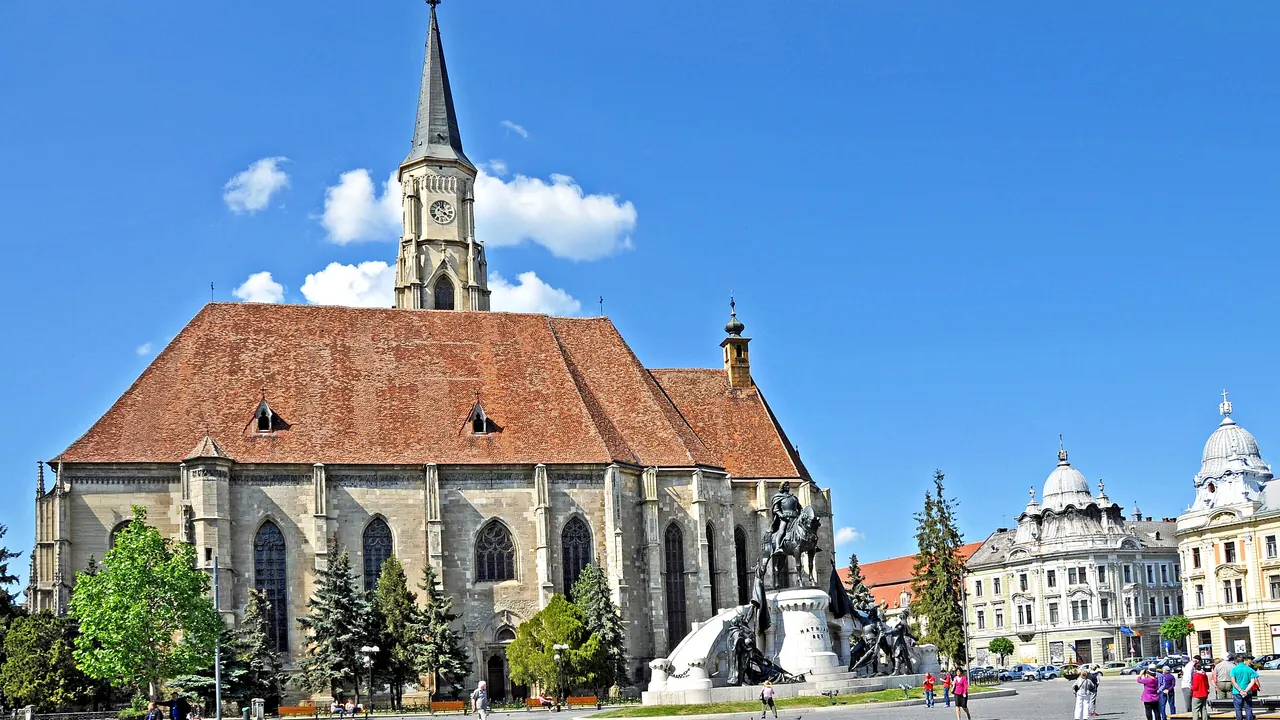
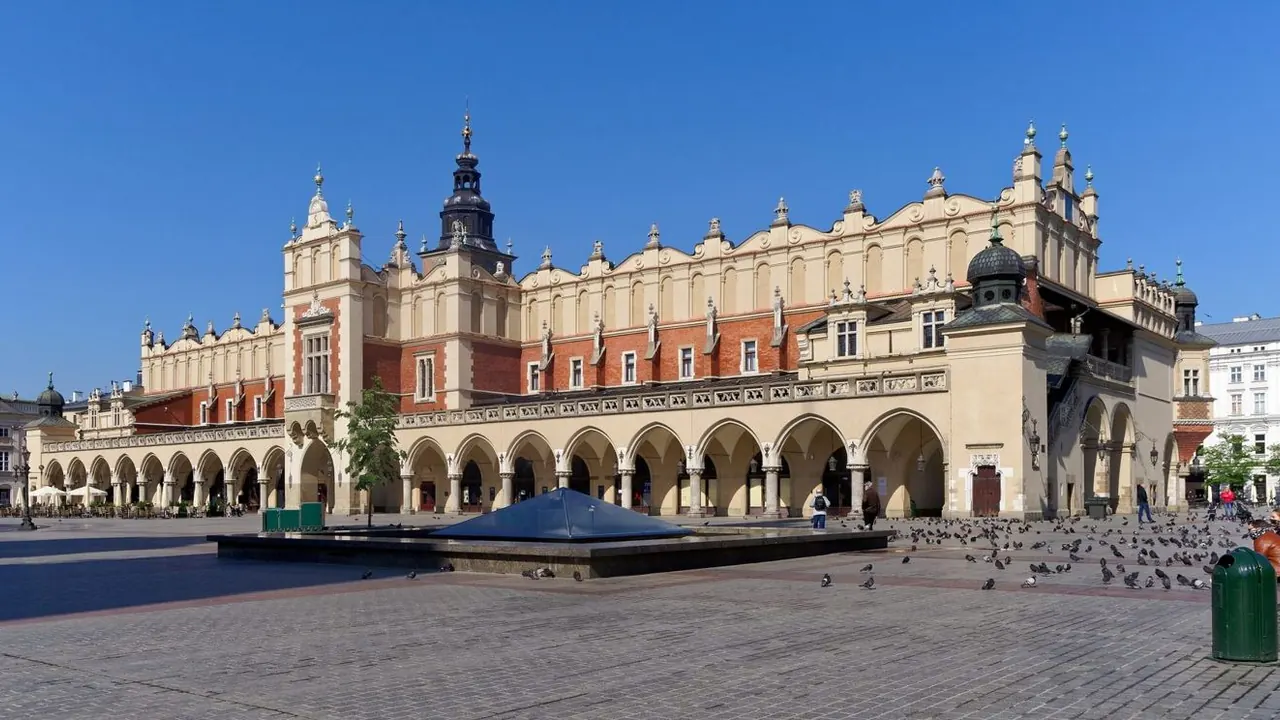
Photos: Cluj-Napoca by Dennis G. Jarvis, CC BY-SA 2.0, cropped; Krakow by Jakub Hałun, CC BY-SA 4.0, cropped.
Cluj-Napoca or Krakow?
Our verdict in twelve categories, each scored against the same fixed benchmark cities, and the climate month by month, so you can choose for your trip.
Choose Cluj-Napoca for
- nature and the outdoors
- live music and the arts
Cluj-Napoca is for the traveller who wants a quieter, less visited base in Transylvania and is happy to hire a car. Its centre takes a day or two, and the real draw is what lies around it: Turda Gorge and the salt mine, the karst country of the Apuseni Mountains, and Saxon and Hungarian towns. Add a stage life shared between Romanian and Hungarian houses and big summer music festivals, and it rewards a slower, more independent trip.
Choose Krakow for
- culture and sights
- day trips
- families
Krakow is the stronger all-round city break. The medieval centre, Wawel Hill and Kazimierz give far more to see on foot, the nights out run later and across more neighbourhoods, and Wieliczka and Auschwitz are easy to reach by train or bus. Families, first-time visitors to Central Europe and anyone without a car will find it the easier and fuller choice.
Scoreboard
Twelve categories on one fixed scale from 0 to 100. The shaded stretch is the gap between the two.
Your match
Pick a travel style or drag the sliders, and both match scores follow your weighting.
Wins on nature and the outdoors and live music and the arts with your weighting.
Wins on culture and sights and day trips with your weighting.
What matters to you?
Category by category
What the scores mean for a trip.
Beaches & swimming
Neither city has any beach life, so the difference is only in how locals cool off. From Cluj, the outdoor salt lakes at Turda, about forty minutes south, let you float in dense salty water. In Krakow, the flooded Zakrzowek quarry is a tram ride away, with turquoise water and cliffs but swimming only in fenced areas.
Food & drink
Krakow gives more to eat and drink. Pierogi in every filling, zurek served in bread, cheap milk-bar lunches and late-night zapiekanki from the round market hall on Plac Nowy cover every hour of the day, and flavoured vodkas and craft beer make the drinking side much broader.
Cluj's cooking is the more unusual mix, Romanian and Hungarian at once, with varză à la Cluj and papanași worth seeking out, plus serious specialty coffee around Piața Unirii. Beyond that the range runs out sooner, and in neither city is fine dining the point.
Culture & sights
Cluj fills a handsome, compact day or two. You have Gothic St Michael's and the statue of Matthias Corvinus on Piața Unirii, the national art collection in the Bánffy Palace, the Tailors' Bastion on the old walls, and the wooden houses and churches in the open-air section of the Ethnographic Museum. A walk along the quiet paths of Hajongard cemetery rounds it off, but no single sight is enough to carry a trip.
Krakow has far more to see. Its medieval centre came through the war intact, so the Cloth Hall, Veit Stoss's carved altarpiece in St Mary's and the bugle call from its tower every hour belong to a living old town, and you can see the medieval street level beneath the square. Across the river, the Schindler Factory museum carries the story into the twentieth century. Plan on two or three days here rather than one.
Nightlife
Both are student cities, but Krakow goes out harder and in more places. Cellar bars under the Old Town run past midnight, and the courtyards and vodka bars of Kazimierz give the night real character, though weekend stag groups in the Old Town are something to steer around.
In Cluj the evening comes down to a few streets around Piața Muzeului and Strada Iuliu Maniu, plus a handful of electronic clubs in old industrial spaces. It is lively in term time and noticeably quieter in summer once the students leave.
Nature & outdoors
The two are about even, with the difference in distance and terrain. Cluj has forest right on its edge in Făget and Hoia, Turda Gorge under an hour away, and the caves, karst plateaus and shepherds' villages of the Apuseni Mountains for those with a car. Krakow's near landscape is gentler, the Planty, Wolski Forest and the small limestone valley of Ojcow, but the Tatras, with true alpine hiking, and rafting on the Dunajec lie about two hours south.
Day trips
Krakow has the two outings most visitors to Poland make, the carved salt chapels of Wieliczka and the Auschwitz-Birkenau memorial, both easy without a car, with Zakopane and the wooden churches beyond.
Cluj's Turda Salt Mine is just as memorable, and Alba Iulia's star-shaped citadel, Bánffy Castle at Bonțida and the village of Rimetea fill more days. The best-known Transylvanian towns, Sighișoara and Sibiu, sit nearly three hours off, though, so the strongest trips from Cluj need an overnight stay.
Good for families
Cluj is safe and manageable with children, but there isn't much for them to do. The Turda Salt Mine, with play areas and a small Ferris wheel deep underground, is the day they will remember. Beyond that there are rowing boats on the Central Park lake and a morning in the Botanical Garden, so most families treat the city as one stop on a wider Transylvanian route.\n\nKrakow keeps children busy over several days.
The dragon legend gives a visit to Wawel a story to follow, from the Dragon's Den cave under the hill to the metal beast by the river, and the horse carriages and street performers on the Main Square entertain younger ones. The indoor water park fills a wet or cold afternoon, the zoo sits in the Wolski Forest, Wieliczka suits older children, and Energylandia is about an hour's drive away. The drawbacks are cobbles that are hard on pushchairs and several sights, Auschwitz above all, that are too heavy for young children.
Getting around
Both centres are compact and walkable, but Krakow is easier once you widen the circle. Trams link the Old Town, Kazimierz and Podgorze, a train runs to the airport, and the main day trips work by train or bus.
Cluj's flat centre around Piața Unirii is just as easy on foot, but slow trains and sparse buses mean the gorge, the mountains and the villages really call for a hired car.
Shopping & style
Neither is a shopping destination, but Krakow has more worth carrying home. The Cloth Hall stalls sell amber, carved boxes and lace, blue-patterned Boleslawiec pottery is the classic buy, and Kazimierz adds vintage shops and a weekend flea market.
In Cluj, the best finds are Transylvanian crafts, embroidered blouses, painted ceramics and woodwork, from folk-art fairs and the ethnographic museum's shop, with the Christmas market on Piața Unirii as the busiest time.
Affordability
Both are cheap by Western European standards, and they differ in where costs creep up. Cluj is dearer than most of Romania because of its tech and university economy, and rooms sell out during the summer festivals. In Krakow the premium is around the Main Square and on organised tours, and simply moving into Kazimierz or Podgorze, or taking the train to the salt mine yourself, brings it down.
Live music & performing arts
The two are evenly matched but different in flavour. Cluj has two cultures on stage, Romanian and Hungarian, each with its own opera, so ballet and opera run most of the year, and summer brings huge electronic and pop festivals. Krakow is more intimate: Chopin recitals in churches and palaces most evenings, jazz in brick cellars and klezmer in Kazimierz, ending in the open-air concert of the Jewish Culture Festival.
Wellness & relaxation
Neither has a bathing tradition, but Krakow offers a little more for a slow day. Its water park has saunas, Wieliczka runs underground salt-air sessions, and the naturally hot pools of Podhale are about two hours south.
Cluj's nearest equivalent is Turda, with its old salt-mine air cure and summer salt lakes, otherwise it is hotel spas and quiet hours in the Botanical Garden.
When should you go?
Pick your month. The climate figures are measured averages, not a forecast.
Cluj-Napoca in July
Krakow in July
Daytime high, °C
Rainfall in the month, mm
Temperature and rainfall are climate normals, averaged over the years shown. Cluj-Napoca: 1991-2020 normals, Cluj-Napoca (2.4 km from centre). Krakow: 1991-2020 (sunshine 1961-1990) normals, Krakow (10.1 km from centre).
Both cities are best from May to September. Cluj warms up sooner and stays warmer through the summer, with July highs around 27°C against 25°C in Krakow, and it gets more sunshine in every month of the year, a difference you notice most in Krakow's dark winters. Both turn cold from November, and January days are barely above freezing in either, so winter suits museums and cellar cafés more than long walks. Neither city has a sea, so summer swimming means the salt lakes at Turda or the quarry at Zakrzowek.
Most rain falls in the warm months. Cluj's wettest month is June, at about 91mm, while Krakow's is July, at around 100mm, so bring an umbrella in early summer in Cluj and in high summer in Krakow. May and September are the best months for walking the streets in mild weather in both cities, and Cluj stays a few degrees warmer into September.
Which traveller are you?
On a culture and arts trip, Krakow is the clear choice. Its undamaged medieval core, Wawel's royal castle and cathedral, the synagogues of Kazimierz and Leonardo's Lady with an Ermine fill several days, where Cluj's handsome centre is done in one or two.
On a family trip with children, Krakow again has more to offer: the fire-breathing dragon below Wawel, a car-free main square, a zoo, an indoor water park and Energylandia within an hour. Cluj's salt mine playground is a highlight, but there is little else.
For summer music festival-goers, Cluj is the one to pick. It hosts some of Eastern Europe's largest electronic and pop festivals around the stadium and a nearby castle estate. Krakow's summer is quieter by comparison, built around jazz, chamber recitals and klezmer.
Before you go
| Measure | Cluj-Napoca | Krakow |
|---|---|---|
| Official language | Romanian | Polish |
| Currency | Romanian Leu (RON) | Zloty (PLN) |
| Sockets | CF230 V, 50 Hz | CE50 Hz |
| Driving side | Right | Right |
| Time zone | UTC+2, UTC+3 in summer | UTC+1, UTC+2 in summer |
| Emergency number | 112 | 112 |
| Elevation | 356 m | 219 m |
| Main airport | Avram Iancu Cluj International Airport (CLJ)7 km from centre53 non-stop destinations | Kraków John Paul II International Airport (KRK)11 km from centre132 non-stop destinations |
| Public holidays this year | 17 days | 14 days |
By the numbers
| Measure | Cluj-Napoca | Krakow |
|---|---|---|
| City population | 286,598 | 804,237 |
| People per km² | 1,640 | 2,459 |
| Museums within 10 km | 6 | 113 |
| UNESCO World Heritage sites within 50 km | 0 | 4 |
Where else could you go?
Every comparison below shares a destination with this one, so you can follow Cluj-Napoca or Krakow somewhere new.
- Sibiuvs Cluj-Napoca
- Brasovvs Cluj-Napoca
- Wroclawvs Krakow
- Warsawvs Krakow
- Brnovs Krakow
- Budapestvs Krakow