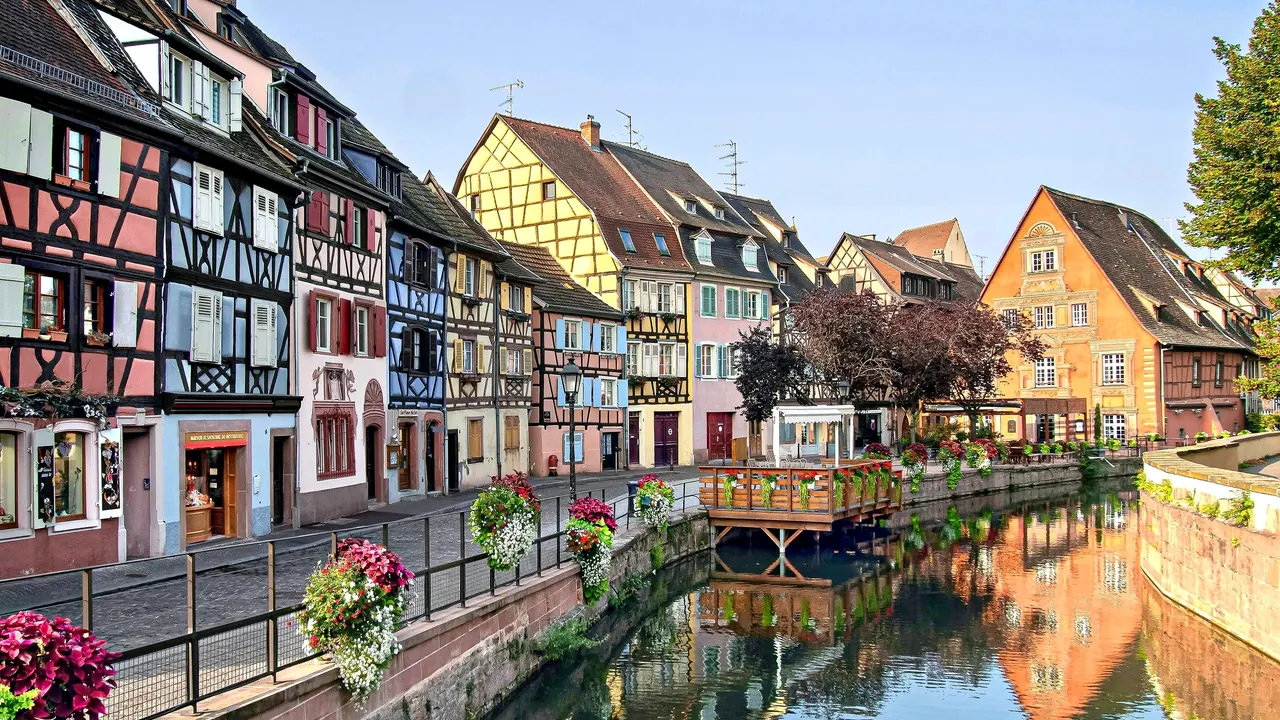
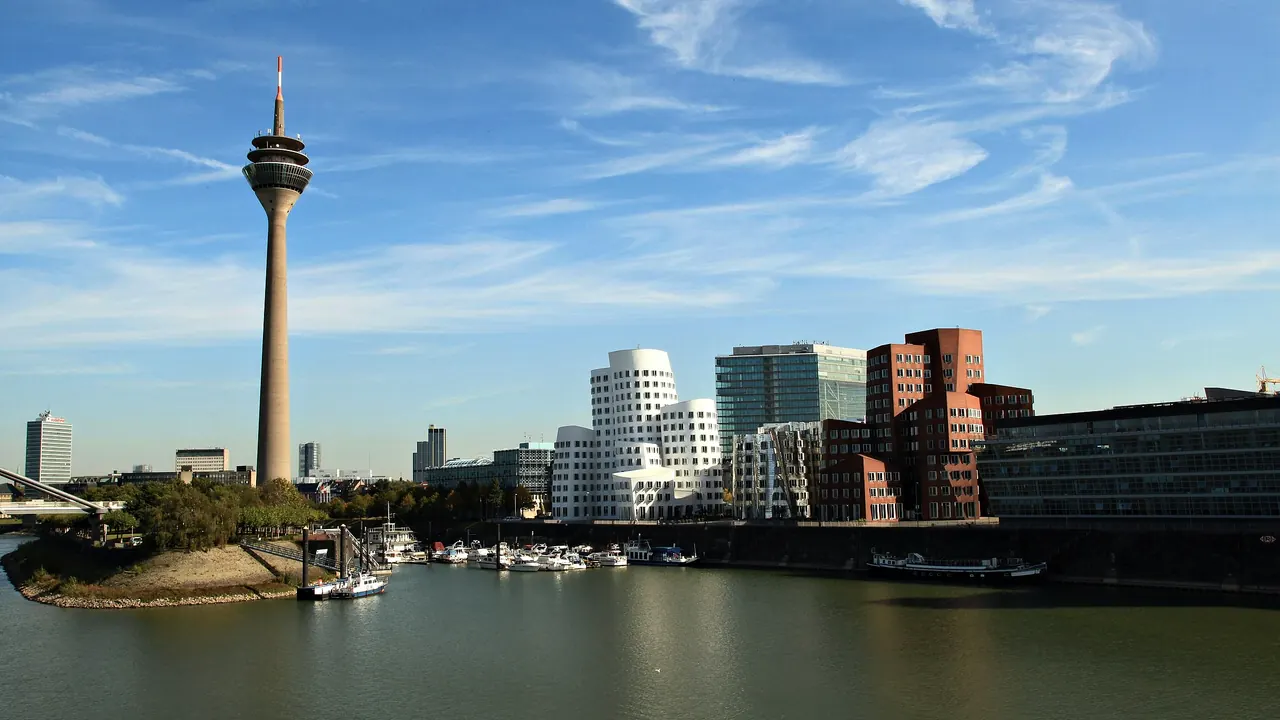
Photos: Colmar by Rolf Kranz, CC BY-SA 4.0, cropped; Dusseldorf by Frank Vincentz, CC BY-SA 3.0, cropped.
Colmar or Dusseldorf?
Our verdict in twelve categories, each scored against the same fixed benchmark cities, and the climate month by month, so you can choose for your trip.
Choose Colmar for
- nature and the outdoors
- culture and sights
- day trips
Colmar suits a slower trip built around wine, painted old streets and open country. The old town has survived almost whole, the Isenheim Altarpiece alone justifies the journey, and the vineyards and Vosges ridges begin at the edge of town. It is best for travellers happy with quiet evenings and a hire car or bicycle for the wine villages.
Choose Dusseldorf for
- nightlife
- live music and the arts
- shopping
Pick Düsseldorf if you want a city that keeps going after dinner. The Altstadt brewhouses, the Königsallee, a full opera and concert season and strong modern art collections make it the better fit for shoppers, night owls and anyone who would rather take trains than drive. What it cannot offer is old-world charm or real scenery close by.
Scoreboard
Twelve categories on one fixed scale from 0 to 100. The shaded stretch is the gap between the two.
Your match
Pick a travel style or drag the sliders, and both match scores follow your weighting.
Wins on nature and the outdoors and culture and sights with your weighting.
Wins on nightlife and live music and the arts with your weighting.
What matters to you?
Category by category
What the scores mean for a trip.
Beaches & swimming
Neither city has a coast, and swimming is a side activity in both. Düsseldorf is a little better placed, with Unterbacher See and its bathing lawns inside the city limits, although the Rhine itself is unsafe for swimming. In Colmar it comes down to municipal pools or the small Vosges lakes, which mean a drive up the valleys.
Food & drink
The two eat equally well but in different ways. Colmar is a wine town first. You eat choucroute, baeckeoffe and munster in wood-panelled winstubs, local Riesling and Gewurztraminer are poured everywhere, and producers in the villages offer cellar tastings. Outside Alsatian cooking, though, there is little choice.
Düsseldorf runs on beer instead: Altbier in small glasses, hearty Rhineland dishes and the city's sharp mustard. It also has a genuine second cuisine in the Japanese quarter around Immermannstrasse, which gives it more variety from one meal to the next.
Culture & sights
For historic atmosphere Colmar is the stronger of the two. Its half-timbered streets, Petite Venise, the Maison Pfister and the Koïfhus read as a single intact townscape, and Grünewald's altarpiece at the Unterlinden is a reason to travel in itself, though two days covers the town.
Düsseldorf's strength is modern art: the Klee collection at K20, the net under K21's glass dome and the wide range of the Kunstpalast. Its Altstadt was largely rebuilt after the war, so its finest old building is Benrath Palace in the suburbs.
Nightlife
Düsseldorf wins this easily. On weekends the few hundred pubs and brewhouses of the Altstadt spill out onto the lanes until well past midnight, Carlstadt and the Medienhafen offer calmer cocktail bars, and at Carnival the whole city goes out in costume for days.
An evening in Colmar is a long dinner with a glass of Alsace wine, then perhaps a canal-side terrace in summer. The streets grow quiet early, and anyone wanting more takes the train to Strasbourg.
Nature & outdoors
Colmar has the scenery. Within half an hour you can be walking marked paths through the vineyards. Above them the Route des Crêtes passes the Hohneck and the Grand Ballon, with glacial lakes, summer pastures and some winter skiing, and autumn is the finest season.
Düsseldorf's outdoors is flat and gentle: Rhine meadows with long cycle paths, Grafenberg forest, the Neandertal valley and the Bergisches Land hills further out. It is pleasant for an afternoon but has no mountains.
Day trips
Both make excellent bases, but for different kinds of day out. From Colmar the draw is small places: Eguisheim, Riquewihr, Kaysersberg and the castle of Haut-Koenigsbourg lie a few kilometres apart along the wine route, though the villages really need a car or a bike. Strasbourg, with its cathedral and the Grande Île, is about half an hour away by train, and across the borders Basel and Freiburg are each within about an hour.
Düsseldorf's day trips are to cities and heritage sites: Cologne cathedral within half an hour, then Bonn, the baroque palaces at Brühl, the Zollverein colliery, Aachen and Dutch Maastricht. Fast, frequent trains reach nearly all of them.
Good for families
Both are safe and easy with children. The difference is where the fun is. In Colmar itself there are boat rides through Petite Venise and storks on the rooftops. The monkey park, the eagle show, the stork and otter park and Europa-Park all lie out of town and need a car.
Düsseldorf keeps more of it in town and reachable by tram: the Aquazoo, the lift up the Rheinturm and the free game park in Grafenberg forest. Phantasialand is about an hour away.
Getting around
Düsseldorf is far easier without a car. The flat centre is walkable, trams and light rail cover the rest, the airport is minutes away by train, and the same regional network reaches Cologne and the Ruhr.
Colmar is just as walkable within the old town, and trains to Strasbourg and Mulhouse are quick. The wine villages and the Vosges, however, have few buses, so hiring a car or a bike becomes part of the trip.
Shopping & style
Düsseldorf is the shopping city. It has the luxury flagships and arcades of the Königsallee, department stores around Schadowstrasse, design boutiques in Flingern and the stationery and homeware shops of the Japanese quarter.
Colmar's shopping is about regional things to carry home: wine bought from the producer, Soufflenheim pottery, kougelhopf moulds, printed table linen and gingerbread. Its Christmas markets are the high point of the year, but fashion is thin.
Affordability
Overall costs are similar, and in both the hotel room is the main expense. In Colmar, rooms get expensive in summer and during the Christmas market weeks, so staying in a nearby village helps, and wine tastings cost little. In Düsseldorf, trade fair weeks can multiply hotel prices, so check the fair calendar before booking, while brewhouse meals and Japanese noodle bars keep food costs down.
Live music & performing arts
Düsseldorf has a full programme all year. The Deutsche Oper am Rhein stages opera and ballet, the symphony orchestra plays in the domed Tonhalle, and the Schauspielhaus offers theatre, mostly in German. Political cabaret, jazz and the city's place in electronic music as Kraftwerk's home add to that.
Colmar has a small Italian-style theatre and a calendar built around festivals: classical music in early July, jazz in autumn and big concerts at the summer wine fair. Outside those weeks, serious music means going to Strasbourg or Basel.
Wellness & relaxation
Neither city has hot springs, but Düsseldorf offers more to anyone who likes a spa. Public pools and leisure baths have sauna areas, mostly mixed and without swimwear, large thermal complexes lie within an hour, and Aachen's hot springs are a little further.
Colmar has little beyond hotel spas. Its restfulness comes instead from the quiet canals once the day-trippers leave, long lunches and walks through the vines.
When should you go?
Pick your month. The climate figures are measured averages, not a forecast.
Colmar in July
Dusseldorf in July
Daytime high, °C
Rainfall in the month, mm
Temperature and rainfall are climate normals, averaged over the years shown. Colmar: 1991-2020 normals, Ihringen (21.1 km from centre). Dusseldorf: 1991-2020 normals, Düsseldorf (8.3 km from centre).
The two share the same pattern of cold, grey winters and warm summers. Colmar's summers are a little warmer and clearly sunnier, reaching about 27°C in August. May, June and September are the best months for walking the streets in either city, and October is still pleasant at around 16°C, which in Colmar coincides with the turning vines. Neither is a beach place, and only July and August are warm enough for a lake or an outdoor pool.
Where they really differ is rain. Colmar sits in the shelter of the Vosges, so its winters are dry, about 32mm in January, and May is its wettest month. Düsseldorf gets rain evenly all year, with damp winters of around 70mm in December and very little sun from November to February.
Which traveller are you?
On an outdoors trip, Colmar is the clear choice. Vineyard footpaths start close to town, the Route des Crêtes climbs to Vosges summits and glacial lakes, and the wine route is fine cycling country. Düsseldorf has only flat riverside rides and gentle woods.
On a food and nightlife trip, Düsseldorf has the edge. Both eat well, but after dinner the Altstadt brewhouses keep pouring Altbier past midnight and the Japanese quarter adds ramen and izakaya, while Colmar's streets go quiet early.
For a shopping trip, go to Düsseldorf. The Königsallee, the big department stores and Flingern's design boutiques cover fashion and luxury, and trams link them easily. Colmar only suits those looking for wine, Alsatian pottery and Christmas market gifts.
Before you go
| Measure | Colmar | Dusseldorf |
|---|---|---|
| Official language | French | German |
| Currency | Euro (EUR) | Euro (EUR) |
| Sockets | CE230 V, 50 Hz | CF230 V, 50 Hz |
| Driving side | Right | Right |
| Time zone | UTC+1, UTC+2 in summer | UTC+1, UTC+2 in summer |
| Emergency number | 112 | 112 |
| Elevation | 185 m | 38 m |
| Main airport | EuroAirport Basel–Mulhouse–Freiburg (BSL)55 km from centre112 non-stop destinations | Düsseldorf Airport (DUS)7 km from centre182 non-stop destinations |
| Public holidays this year | 11 days | 11 days |
By the numbers
| Measure | Colmar | Dusseldorf |
|---|---|---|
| City population | 66,970 | 619,444 |
| People per km² | 1,006 | 2,849 |
| Museums within 10 km | 9 | 25 |
| UNESCO World Heritage sites within 50 km | 3 | 4 |
Where else could you go?
Every comparison below shares a destination with this one, so you can follow Colmar or Dusseldorf somewhere new.
- Colognevs Dusseldorf
- Baselvs Colmar
- Strasbourgvs Colmar
- Maastrichtvs Dusseldorf
- Baden-Badenvs Colmar
- Zurichvs Colmar