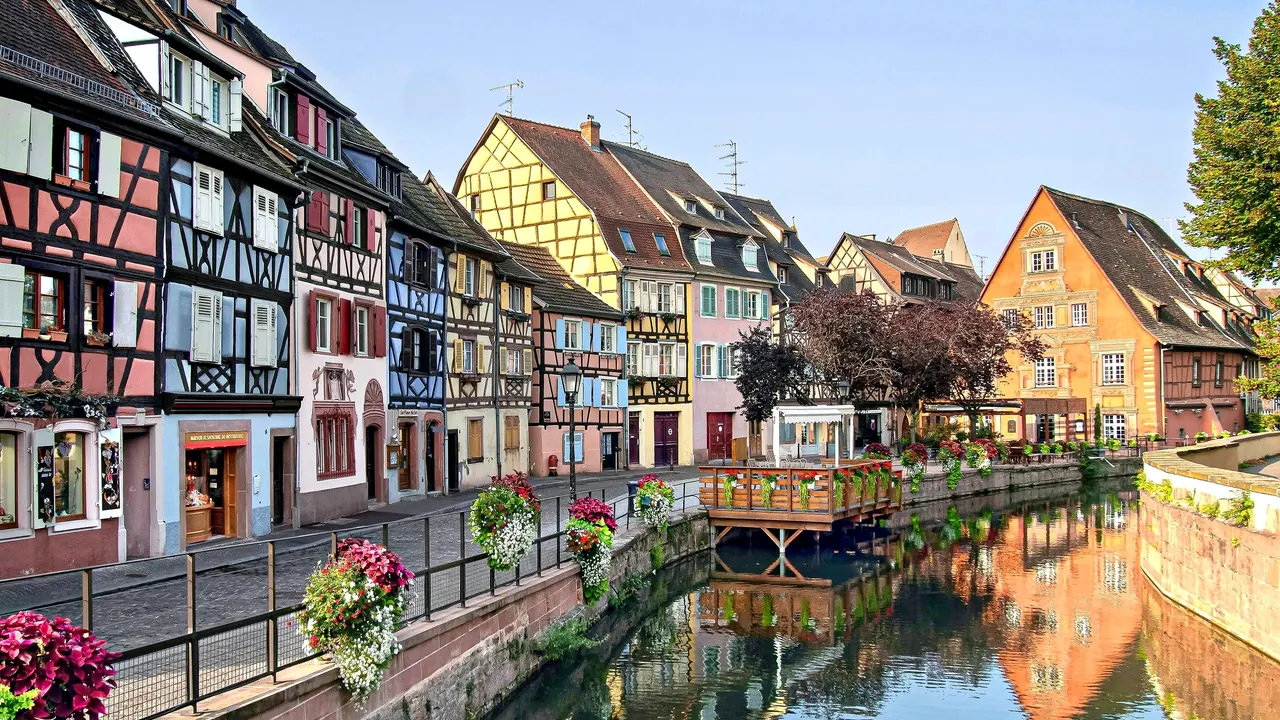
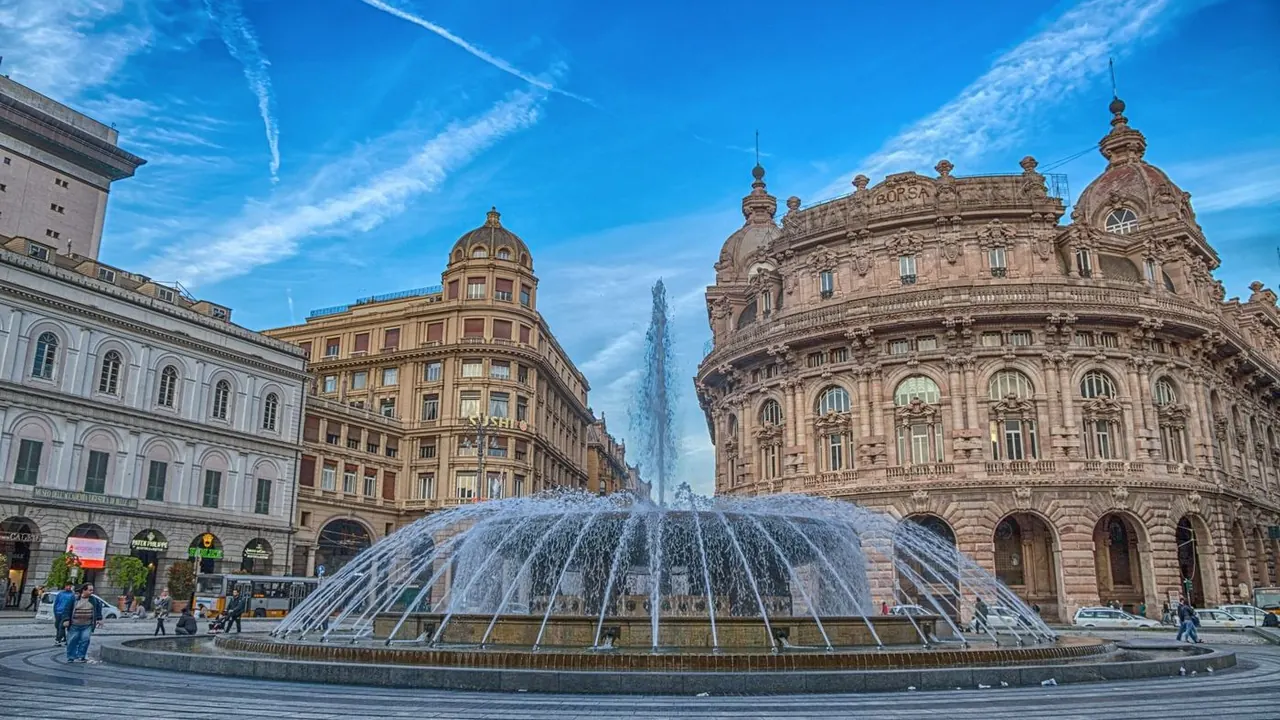
Photos: Colmar by Rolf Kranz, CC BY-SA 4.0, cropped; Genoa by Faber1893, CC BY-SA 4.0, cropped.
Colmar or Genoa?
Our verdict in twelve categories, each scored against the same fixed benchmark cities, and the climate month by month, so you can choose for your trip.
Choose Colmar for
- day trips
Colmar suits a slower, smaller trip built around wine and a perfectly kept old town. Its painted half-timbered streets and the Isenheim Altarpiece can be seen in a couple of unhurried days, and the rest of the stay can go on the wine villages, the Vosges and easy runs to Strasbourg, Basel and Freiburg. It is the better pick for couples who want long dinners and cellar tastings, and for anyone who would rather have a car and a vineyard than a sea view.
Choose Genoa for
- beaches
- nightlife
- live music and the arts
Travellers who want more of everything will be happier in Genoa. It has the sea within the city and the Riviera along the railway, a much larger medieval centre and palace museums, cheaper everyday eating with focaccia and farinata, an opera house and livelier evenings in the old town squares. The price is steep lanes and stairs, which wear on pushchairs and tired legs, but for a mixed trip of sights, swimming, walking and food it offers more.
Scoreboard
Twelve categories on one fixed scale from 0 to 100. The shaded stretch is the gap between the two.
Your match
Pick a travel style or drag the sliders, and both match scores follow your weighting.
Wins on day trips with your weighting.
Wins on beaches and nightlife with your weighting.
What matters to you?
Category by category
What the scores mean for a trip.
Beaches & swimming
Colmar is in the Rhine plain, hours from any coast. In summer the swimming comes down to municipal pools and the small lakes up in the Vosges valleys.
Genoa can fill a beach afternoon without leaving the city: the pebble cove at Boccadasse, the bathing establishments over the rocks along the Corso Italia, and the platforms below the promenade at Nervi. The train runs on to Camogli, Sestri Levante and the sandier shore at Varazze. Expect pebbles, rented loungers and crowded summer weekends.
Food & drink
Colmar eats Alsatian food: choucroute, baeckeoffe and tarte flambée in panelled winstubs, with the region's white wines poured everywhere. It also has a few ambitious restaurants that Genoa largely lacks. But the choice beyond regional cooking is narrow, and the prettiest streets are full of tired menus.
Genoa eats well more easily and more cheaply. A day might run from focaccia dunked in cappuccino at breakfast to trofie with pesto at lunch, with farinata and fried fish from the old-town shops in between and seafood in the harbour trattorias. The Mercato Orientale shows the whole Ligurian larder in one place.
Culture & sights
Colmar's strength is how complete it is. The old town reads as one painted whole, from the Maison Pfister to the canals of Petite Venise, and the Unterlinden Museum holds the Isenheim Altarpiece, a painting worth the journey on its own. Two days covers it.
Genoa has much more to see. Its caruggi form one of Europe's largest medieval quarters, and above them the Rolli palaces of Via Garibaldi hold Van Dyck and Rubens in painted halls. Add the cathedral of San Lorenzo, the Lanterna and the marble sculpture of Staglieno, and the city rewards several days of exploring.
Nightlife
A night in Colmar means a long dinner, a glass of Riesling on a terrace in Petite Venise and an early, quiet walk home. Anyone wanting more takes the train to Strasbourg.
Genoa is no party city either, but its evenings carry on longer. Students and locals fill the bars around Piazza delle Erbe and the university lanes at weekends, and in summer the crowd moves to waterfront bars at the Porto Antico and the beach clubs along the Corso Italia.
Nature & outdoors
Colmar's countryside starts at the vineyards. Marked paths run through the vines between wine villages, the flat plain is good for cycling, and higher up the Route des Crêtes crosses the rounded, forested Vosges past the Hohneck and the Grand Ballon. You really need a car to reach much of it.
Genoa puts steep hills and the sea side by side, and you can reach much of it without a car. A funicular climbs to Righi and the ring of old forts, the Portofino promontory has cliff paths down to San Fruttuoso, and the Cinque Terre trails are a train ride away. Boats also leave the harbour to look for whales and dolphins in the Pelagos Sanctuary.
Day trips
Both make excellent bases, and the difference lies in where you go. From Colmar the trips are to wine villages a few kilometres apart, such as Eguisheim, Riquewihr and Kaysersberg, plus Haut-Koenigsbourg on its ridge. Three countries are within easy reach, with Strasbourg, Basel and Freiburg all close, though the villages are far easier by car or bike.
From Genoa the trips follow the coast by train, east to Portofino, Santa Margherita and the Cinque Terre and west to Noli and Finale Ligure Borgo. Milan and Turin are each about an hour and a half away.
Good for families
Families do about equally well in either city, in different ways. Colmar itself is small, flat and gentle, with boat rides through Petite Venise and storks on the roofs. Its big draws are spread around the countryside: the monkey park and eagle show at Kintzheim, the stork park at Hunawihr and Europa-Park across the Rhine, and almost all of them need a car.
Genoa puts its best family day in one spot at the Porto Antico, where the large aquarium, the science centre and the walk-through submarine sit side by side. Away from the harbour, the steep, shady lanes and endless stairs are hard work with a pushchair.
Getting around
Colmar is flat and small, with the station, the museums and Petite Venise all a few minutes apart on foot. Quick regional trains run to Strasbourg and Mulhouse, but the buses out to the wine villages and the Vosges are thin, so a hire car or a bicycle does most of the work.
Genoa climbs steeply from the water, and its old-town lanes are a maze, so funiculars, a rack railway and public lifts carry you uphill while buses crawl through the traffic. The coastal railway makes up for it, reaching Nervi and the Riviera towns with no need to drive.
Shopping & style
Colmar is for regional things to take home: wine bought from the grower, Soufflenheim pottery, kougelhopf moulds and Alsatian table linen. Its Christmas markets are the high point of the shopping year, and fashion is thin.
Genoa gives a shopper more range. The arcades of Via XX Settembre and the Galleria Mazzini carry the familiar Italian labels, and the old town adds silver filigree workshops, coral and long-established shops selling candied fruit and olive oil.
Affordability
Genoa is the easier city on a budget. Focaccia and farinata make meals very cheap, and central hotels cost less than in Italy's busiest cities, though lounger hire and the smart Riviera resorts add up in summer.
In Colmar, food and wine tastings are reasonable, but rooms are the problem. The town is small, summer demand is high, and in the Christmas market weeks hotels near the old town are expensive and book up early, so staying in a nearby village helps.
Live music & performing arts
Colmar's music happens mostly in festival weeks: classical in early July, jazz in autumn and the concerts that come with the summer wine fair. Outside those weeks there is only a small municipal theatre, and serious opera means going to Strasbourg or Basel.
Genoa has a year-round season at the Teatro Carlo Felice, with opera, ballet and symphonic concerts, plus an established drama company. Its small live-music clubs also carry on the city's singer-songwriter tradition. That is enough for a good night or two at the opera or a gig.
Wellness & relaxation
Neither city has a spa culture, and in both the spas are mostly in hotels. The difference is in how you find calm. In Colmar the town slows down once the day-trippers leave, and the evenings by the canals and walks in the vines are restful.
Genoa's centre is noisy with port and traffic, so for quiet you go to the villa gardens and promenade of Nervi. It does have one thing Colmar lacks: the thermal waters of Acqui Terme, a little over an hour away.
When should you go?
Pick your month. The climate figures are measured averages, not a forecast.
Colmar in July
Genoa in July
Daytime high, °C
Rainfall in the month, mm
Where the figures come from
Genoa has no rain gauge within 25 km of the centre, so its rainfall comes from a gridded climate dataset read at the city rather than from a gauge further away.
Genoa's sunshine is measured 80 km from the centre, at Capo Mele.
Temperature and rainfall are climate normals, averaged over the years shown. Colmar: 1991-2020 normals, Ihringen (21.1 km from centre). Genoa: 1991-2020 normals, Genova / Sestri (6.7 km from centre).
Colmar has cold, grey winters, with daytime highs around 6°C and little sunshine from November to February, so it is not a place for long days outdoors then. Summers are warm and sunny, reaching about 27°C in August. Most of the rain falls from late spring through summer, and May is the wettest month, so it is better saved for a trip that can take a few showers. June and September are the most comfortable months for walking the old town and the vineyard paths, and September, as the harvest begins, is the finest of all.
Genoa is milder all year, with winter highs around 13°C, which makes a winter city break there far more pleasant than in Colmar. The sea is warm enough for swimming from June to September and reaches 25°C in August, and July is both the driest and the sunniest month, though it is hot for climbing the lanes. Autumn is when the rain arrives: September turns wet, and October and November are by far the wettest months, with October bringing about 212mm. For walking the steep lanes and coastal paths, late spring and June give the best mix of warmth and dry weather.
Which traveller are you?
For a beach and sun trip, Genoa is the only real choice. It has swimming coves at Boccadasse and Nervi, bathing platforms along the Corso Italia and the Riviera towns a short train ride away. Colmar is far inland, and the most it offers is a pool or a mountain lake.
On a food and nightlife trip, Genoa gives more to eat and more to do after dark. There is pesto, focaccia, fried fish from the friggitorie and harbour seafood, then aperitivo crowds in Piazza delle Erbe until late. Colmar's evenings end soon after dinner.
For a wine-tasting trip, Colmar stands apart. It sits at the heart of the Alsace wine route, with Riesling, Gewurztraminer and Pinot Gris poured in every winstub and cellar doors open in Eguisheim, Riquewihr and Kaysersberg. Genoa's Vermentino goes well with lunch but is not a reason to travel.
Before you go
| Measure | Colmar | Genoa |
|---|---|---|
| Official language | French | Italian |
| Currency | Euro (EUR) | Euro (EUR) |
| Sockets | CE230 V, 50 Hz | CFL230 V, 50 Hz |
| Driving side | Right | Right |
| Time zone | UTC+1, UTC+2 in summer | UTC+1, UTC+2 in summer |
| Emergency number | 112 | 112 |
| Elevation | 185 m | 20 m |
| Main airport | EuroAirport Basel–Mulhouse–Freiburg (BSL)55 km from centre112 non-stop destinations | Genoa Cristoforo Colombo Airport (GOA)7 km from centre25 non-stop destinations |
| Public holidays this year | 11 days | 13 days |
By the numbers
| Measure | Colmar | Genoa |
|---|---|---|
| City population | 66,970 | 558,745 |
| People per km² | 1,006 | 2,325 |
| Museums within 10 km | 9 | 51 |
| UNESCO World Heritage sites within 50 km | 3 | 1 |
| Swim season, months above 21 °C | - | 4 months |
Where else could you go?
Every comparison below shares a destination with this one, so you can follow Colmar or Genoa somewhere new.
- Portofinovs Genoa
- Baselvs Colmar
- Strasbourgvs Colmar
- La Speziavs Genoa
- Baden-Badenvs Colmar
- Zurichvs Colmar