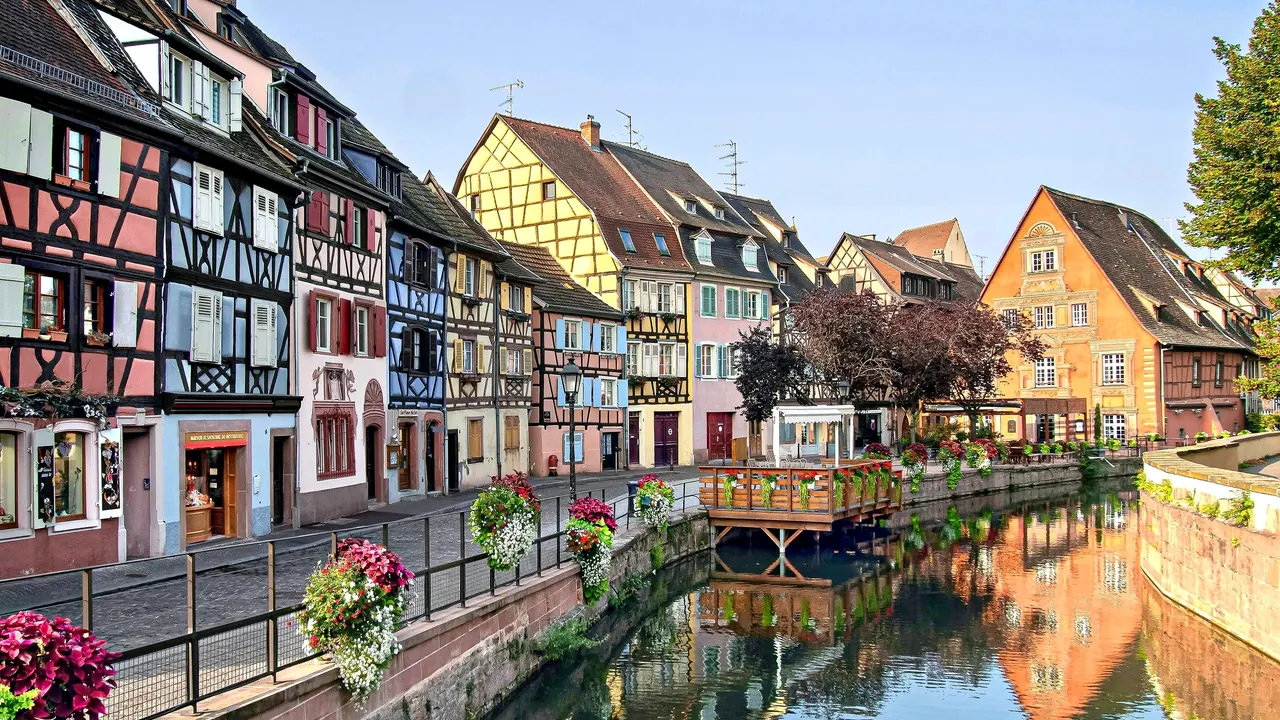
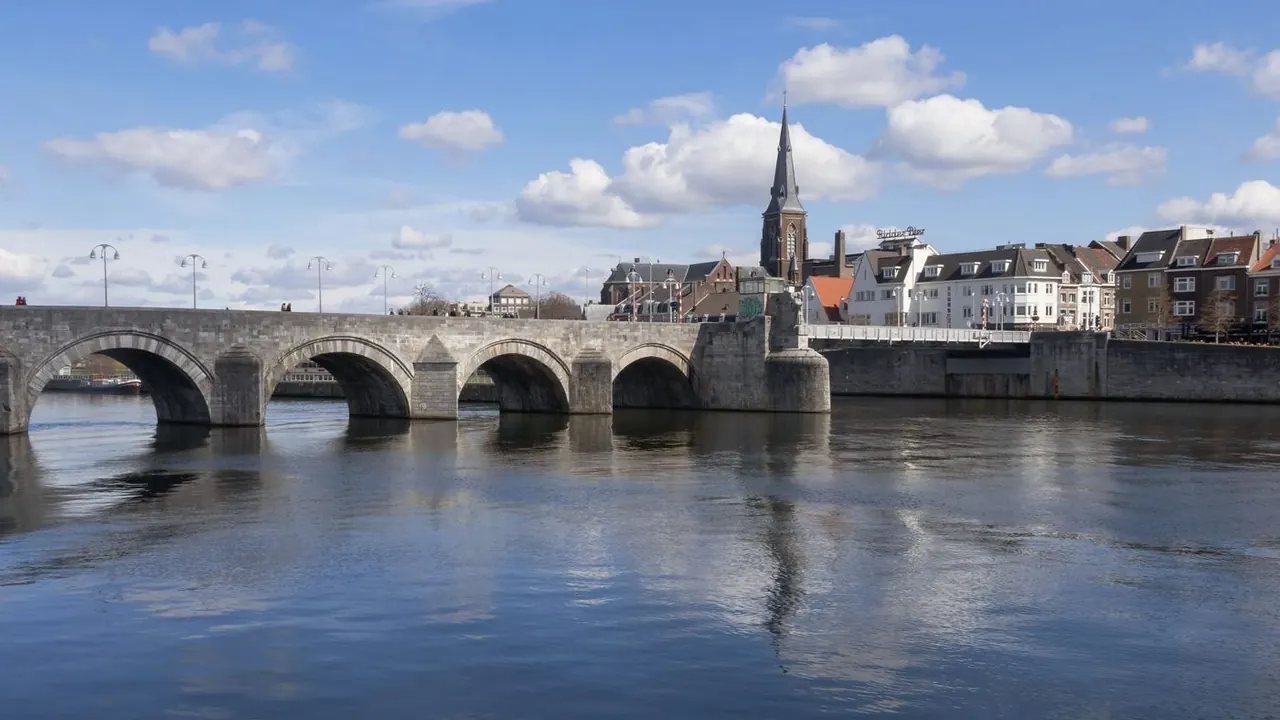
Photos: Colmar by Rolf Kranz, CC BY-SA 4.0, cropped; Maastricht by Michielverbeek, CC BY-SA 4.0, cropped.
Colmar or Maastricht?
Our verdict in twelve categories, each scored against the same fixed benchmark cities, and the climate month by month, so you can choose for your trip.
Choose Colmar for
- nature and the outdoors
- day trips
- families
Colmar suits travellers who want the countryside to be the point of the trip. The painted old town and the Isenheim Altarpiece fill a couple of days, and then the wine villages, the Vosges ridge and the Black Forest across the Rhine are all within easy reach. It is the better choice for walkers, cyclists, wine lovers and families with a car, and it costs a little less. Evenings are early and quiet.
Choose Maastricht for
- nightlife
- shopping
- wellness
Maastricht is the better fit for a sociable weekend away. It has busier squares, brown cafés full of students, proper shopping streets and a theatre with its own orchestra and opera. Thermal baths at Valkenburg and Aachen are close by, and you can walk or cycle everywhere without a car. It also puts Belgium and Germany on the doorstep, although the hills around it are gentler than the Vosges.
Scoreboard
Twelve categories on one fixed scale from 0 to 100. The shaded stretch is the gap between the two.
Your match
Pick a travel style or drag the sliders, and both match scores follow your weighting.
Wins on nature and the outdoors and day trips with your weighting.
Wins on nightlife and shopping with your weighting.
What matters to you?
Category by category
What the scores mean for a trip.
Beaches & swimming
Neither city has a beach, and swimming plays almost no part in a trip to either. Colmar has municipal pools and small lakes in the Vosges valleys.
Maastricht has old gravel-pit lakes along the Maas, with small sandy shores and lifeguards, so it is a little easier to cool off on a hot afternoon.
Food & drink
The food is about equally good in both, but the two cuisines are different. Colmar cooks Alsatian food in wood-panelled winstubs: choucroute, baeckeoffe and munster cheese, with Riesling and Gewurztraminer from the slopes outside town and cellar tastings in the villages nearby.
Maastricht serves Limburg dishes such as zuurvlees and vlaai, and the drink is Belgian beer rather than wine. Its fine dining is strong for a city of its size. Both offer little beyond their regional cooking.
Culture & sights
Each city fills about two days, and they are much the same in depth. Colmar has the more striking whole: an almost intact painted old town around Petite Venise, and in the Unterlinden Museum's Isenheim Altarpiece a single masterpiece worth travelling for.
Maastricht's strengths are older and more spread out. It has two Romanesque basilicas, the Helpoort, the oldest city gate in the country, guided tours of the tunnels under the Sint-Pietersberg and the Bonnefanten's mix of old masters and contemporary art.
Nightlife
Maastricht is livelier after dark. A large student population keeps the cafés on the Markt and the Platielstraat busy late at weekends during term, and carnival turns the whole city into a street party for several days.
Colmar's evenings end with a long dinner and perhaps a glass in a wine bar near Petite Venise. Anyone who wants a real night out has to take the train to Strasbourg.
Nature & outdoors
Colmar has the bigger landscape. Vineyards rise straight into the forested Vosges, the ridge road gives views to the Black Forest and sometimes the Alps, and walkers have glacial lakes, high pastures and winter skiing to choose from.
Around Maastricht the scenery is gentler: the marl cliffs of the Sint-Pietersberg, the Jeker valley and the orchards and steep lanes of the Heuvelland. It makes a pleasant setting for a walk or a ride rather than a reason to come.
Day trips
Both cities make very good bases, and Colmar has the edge. Strasbourg is about half an hour away by train, a string of picture-book wine villages such as Eguisheim and Riquewihr lie a few kilometres apart, and Basel and Freiburg are each about an hour away.
Maastricht's strength is variety rather than density. Aachen and Liège are about half an hour away and Tongeren and Valkenburg are closer, but Cologne and Brussels take most of a day. For the villages around Colmar you need a car or bike, while most of Maastricht's trips work by train.
Good for families
Colmar offers more for children. In town there are boat rides through Petite Venise and storks nesting on the roofs. Within a drive are the stork and otter park at Hunawihr, the macaques and eagle show at Kintzheim, the railway and car museums in Mulhouse and Europa-Park an hour away.
Maastricht is just as easy with a buggy, but its main draw for children is the tunnel tour. Valkenburg's caves and fairy-tale park are close, and much of the city's appeal is aimed at adults.
Getting around
Maastricht is easier to get around. The centre is flat and largely pedestrianised on both banks of the Maas, the bike is the normal way to get about, and trains run into Belgium and Germany as well as across the Netherlands.
Colmar is just as walkable within its old town, and regional trains link it quickly to Strasbourg and Mulhouse. Its weakness is the wine villages and the Vosges, where buses are thin and a hired car or bicycle becomes almost essential.
Shopping & style
Maastricht is a proper shopping destination, and Dutch, Belgian and German visitors come for the weekend just for that. It has designer boutiques in the restored houses of the Stokstraat quarter, high-street brands on the Grote Staat and independent interiors and vintage shops in Wyck.
In Colmar you mainly shop for things to take home, such as wine from the producer, Soufflenheim pottery and kougelhopf moulds, Alsatian table linen and the Christmas market stalls. There is very little fashion.
Affordability
Colmar is the slightly cheaper of the two. Set lunches and regional wine are reasonable, and village tastings are often free. The catch is rooms, which become expensive and scarce in summer and during the Christmas market weeks, so staying in a nearby village helps.
Maastricht has Dutch prices on its terraces and in its hotels, and weekend rooms are in high demand. Visiting from Sunday to Thursday and living on bakery lunches and brown-café beer makes the biggest difference.
Live music & performing arts
Maastricht has more going on through the year. The theatre on the Vrijthof is home to a regional symphony orchestra and an opera company, the conservatory and churches add recitals, and big open-air summer concerts fill the square.
Colmar's small Italian-style theatre has a modest season, and the town's music comes mostly in festival weeks: classical in July, jazz in autumn and concerts at the wine fair. At other times you have to go to Strasbourg or Basel.
Wellness & relaxation
For a spa break, Colmar has little to offer. It has no tradition of thermal bathing, so a massage or a sauna means booking a hotel with its own spa, in town or in one of the wine villages. What it does have is a slow, easy pace, with quiet canal-side lanes in the evening and long, unhurried mornings in the vineyards.
Maastricht is clearly ahead if warm water is part of the plan. The city has no baths of its own, but it lies at the centre of a real spa region across three countries, with mineral pools at Valkenburg, Aachen and Spa all close enough for an afternoon visit during a city weekend. Back in town, the riverside paths and calm squares keep the pace gentle.
When should you go?
Pick your month. The climate figures are measured averages, not a forecast.
Colmar in July
Maastricht in July
Daytime high, °C
Rainfall in the month, mm
Temperature and rainfall are climate normals, averaged over the years shown. Colmar: 1991-2020 normals, Ihringen (21.1 km from centre). Maastricht: 1991-2020 normals, Maastricht Airport Zuid Limburg (10 km from centre).
Colmar has the warmer, sunnier summer. July and August reach about 26°C to 27°C there, against roughly 24°C in Maastricht, and Colmar gets clearly more sunshine through the warm months. June is closer between the two. Neither city is ever too hot for walking the streets, and with no sea at either, summer means terraces and hills rather than the beach. Colmar's rain peaks in May and Maastricht's in August, so a late-summer break in Maastricht carries more risk of showers. Late spring and September are pleasant in both, and autumn is when Colmar's vineyards turn colour.
Winters are equally cold, with highs around 6°C from December to February, which is too chilly for long days outdoors in either place. Colmar is clearly drier in those months, with about half Maastricht's rainfall, so its grey season is easier to bear. Maastricht stays damp through most of the colder half of the year.
Which traveller are you?
On a food and nightlife trip, choose Maastricht. Dinner is about as good in either city, but in Maastricht the evening carries on afterwards, with a student crowd and Belgian beer in the cafés until late at weekends. In Colmar the evening usually ends when dinner does.
For an outdoors trip, choose Colmar. Walks can start in the vineyards just outside town, and you can climb into proper mountain country for a full day on the trails or, in winter, on skis. Maastricht's countryside suits an easy afternoon ride better than a serious day out.
On a shopping trip, Maastricht is the obvious pick. People come here just to shop, and fashion, big brands and small independents all sit within a short walk of each other, with café terraces for breaks. Colmar is better for a few good souvenirs than for a day of browsing.
Before you go
| Measure | Colmar | Maastricht |
|---|---|---|
| Official language | French | Dutch |
| Currency | Euro (EUR) | Euro (EUR) |
| Sockets | CE230 V, 50 Hz | CF230 V, 50 Hz |
| Driving side | Right | Right |
| Time zone | UTC+1, UTC+2 in summer | UTC+1, UTC+2 in summer |
| Emergency number | 112 | 112 |
| Elevation | 185 m | 49 m |
| Main airport | EuroAirport Basel–Mulhouse–Freiburg (BSL)55 km from centre112 non-stop destinations | Maastricht Aachen Airport (MST)9 km from centre5 non-stop destinations |
| Public holidays this year | 11 days | 11 days |
By the numbers
| Measure | Colmar | Maastricht |
|---|---|---|
| City population | 66,970 | 120,227 |
| People per km² | 1,006 | 2,000 |
| Museums within 10 km | 9 | 21 |
| UNESCO World Heritage sites within 50 km | 3 | 6 |
Where else could you go?
Every comparison below shares a destination with this one, so you can follow Colmar or Maastricht somewhere new.
- Baselvs Colmar
- Strasbourgvs Colmar
- Dusseldorfvs Maastricht
- Colognevs Maastricht
- Brusselsvs Maastricht
- Antwerpvs Maastricht