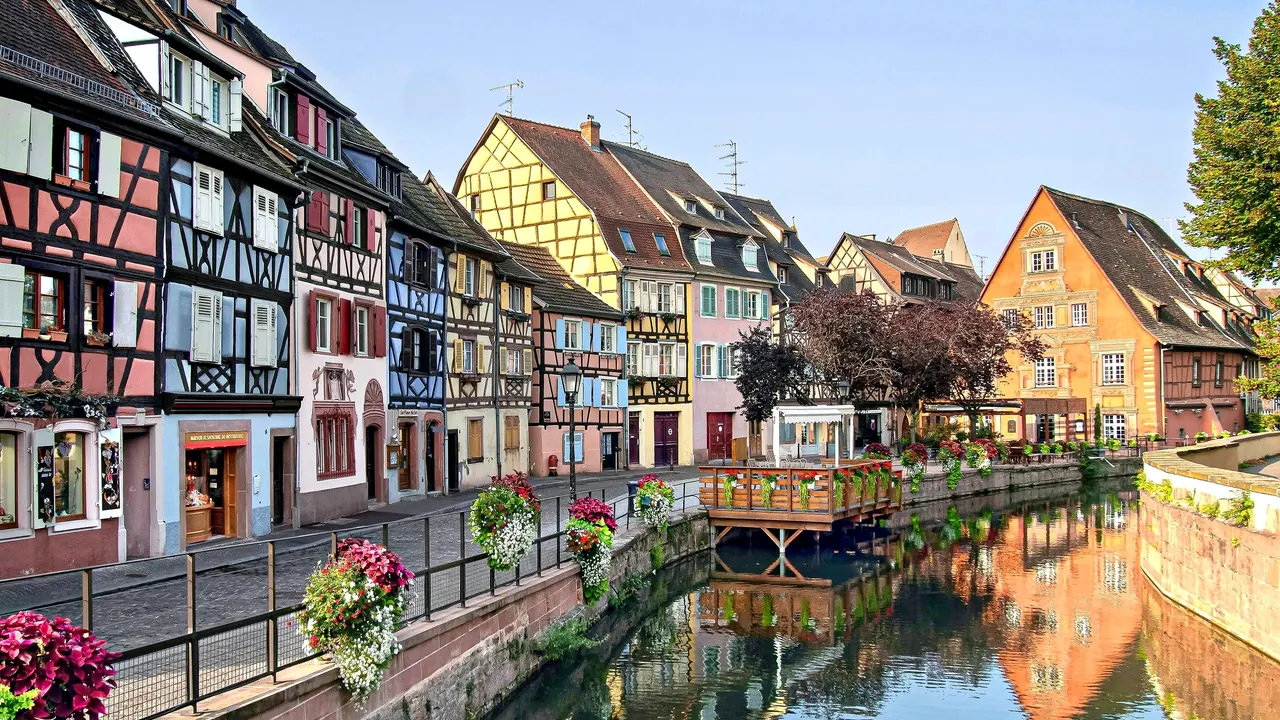
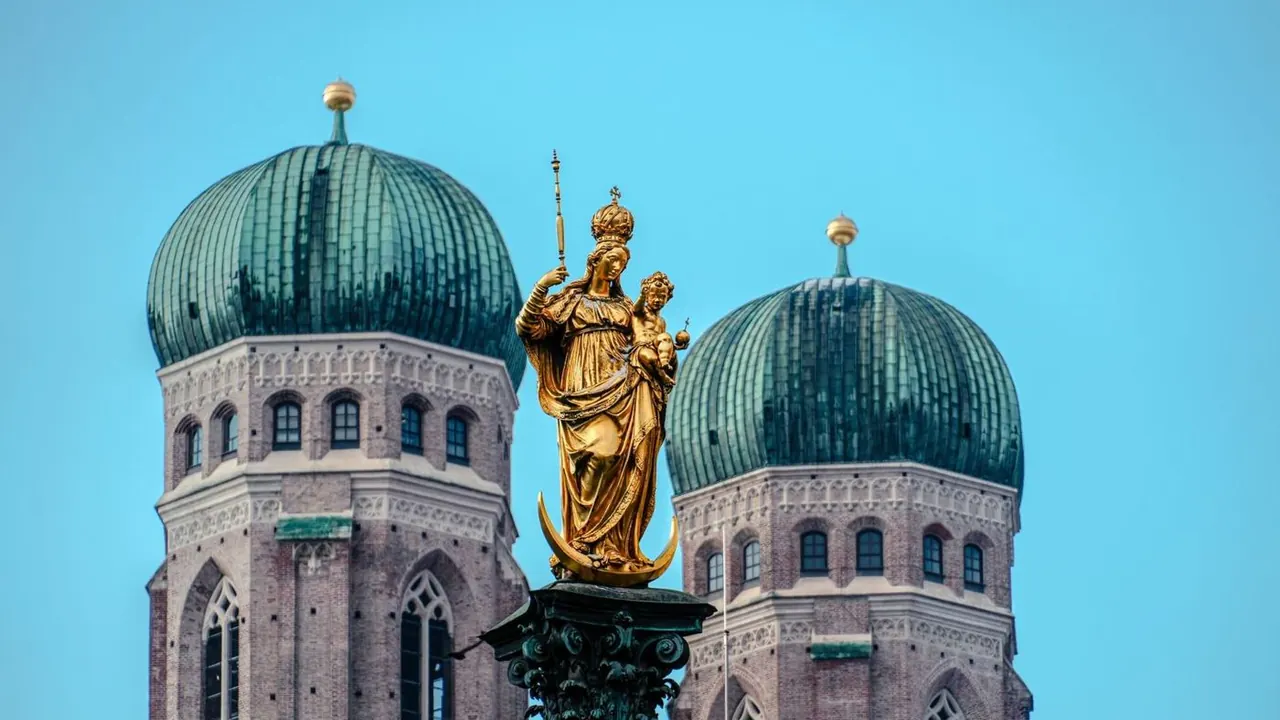
Photos: Colmar by Rolf Kranz, CC BY-SA 4.0, cropped; Munich by 0xd1ma, Pexels License.
Colmar or Munich?
Our verdict in twelve categories, each scored against the same fixed benchmark cities, and the climate month by month, so you can choose for your trip.
Choose Colmar for
- prices
- food and drink
Colmar suits a slower, smaller trip built around wine and old streets. The painted half-timbered lanes of Petite Venise and the tanners' quarter, the Isenheim Altarpiece at the Unterlinden and a ring of wine villages just a few kilometres away make it a fine base for two or three unhurried days, especially for couples who want long dinners in a winstub and cellar tastings in the afternoon. It costs somewhat less than Munich, though you will want a car or a bike to get the most out of the countryside.
Choose Munich for
- live music and the arts
- nightlife
- shopping
Munich is the better pick for travellers who want a full city around them. It has royal art collections and palaces, a world-class opera house and three serious orchestras, beer gardens that stay busy into the evening and an integrated transport network that gets you to the Alps, the lakes and Salzburg without a car. Families, culture lovers and anyone who wants nightlife and shopping on the same trip will get more out of it, as long as they accept the higher hotel bills.
Scoreboard
Twelve categories on one fixed scale from 0 to 100. The shaded stretch is the gap between the two.
Your match
Pick a travel style or drag the sliders, and both match scores follow your weighting.
Wins on prices and food and drink with your weighting.
Wins on live music and the arts and nightlife with your weighting.
What matters to you?
Category by category
What the scores mean for a trip.
Beaches & swimming
Neither city is near a sea, but Munich gives summer swimmers far more to do. Locals sunbathe on the gravel banks of the Isar at the Flaucher, and the S-Bahn reaches the Starnberger See and the Ammersee in under an hour, with lawns, jetties and clear, fresh water that warms to around 20-23°C.
Colmar has little beyond the municipal pools and a few small lakes up in the Vosges valleys near the Route des Crêtes. That makes a swim there a short break on a mountain drive, not a day out in itself.
Food & drink
The two eat equally well, but around different drinks. Colmar is wine country, with Riesling, Gewurztraminer and Pinot Gris poured in wood-panelled winstubs alongside choucroute, baeckeoffe, tarte flambée and munster cheese from the valleys, and with producers' cellars a short drive away.
Munich revolves around beer. You eat in brewery halls and chestnut-shaded beer gardens, with roast pork, white sausage before noon and Obatzda from the Viktualienmarkt. It also has a little more range beyond its regional cooking, with Italian, Turkish and Balkan kitchens, while Colmar's choice narrows quickly once you step outside Alsatian dishes.
Culture & sights
Munich has the bigger and deeper cultural offer. The Kunstareal alone, with the Alte Pinakothek, the Glyptothek and the Blue Rider paintings at the Lenbachhaus, could fill several days, before you add the Residenz, Nymphenburg and the Deutsches Museum.
Colmar's strength is different. Its old town survived largely intact, so the coloured gables, the Maison Pfister and the Koïfhus read as one continuous townscape, unlike Munich's centre, which was largely rebuilt after the war. With Grünewald's Isenheim Altarpiece and Schongauer's Madonna it is a remarkable small set, but it is a set you finish in a couple of days.
Nightlife
Munich offers a real night out and Colmar mostly does not. In Munich, beer halls lead on to the cocktail and gay bars of Glockenbach and Gärtnerplatz and the student pubs of Schwabing, and a few techno clubs stay open until morning at weekends.
In Colmar the evening is dinner and a glass of wine. A handful of bars around Petite Venise stay open, but the streets go quiet early, and locals wanting more take the train to Strasbourg.
Nature & outdoors
Munich has the grander outdoors and better access to it. Regional trains reach the Zugspitze, the Wetterstein and Tegernsee for proper alpine hiking and skiing, and the city has the vast English Garden, Eisbach surfers and cycle paths along the Isar.
Colmar's landscape is gentler and starts right at the edge of town. Marked paths run through the vines between wine villages, and the rounded, forested Vosges rise above them, with the ridge road past the Hohneck and the Grand Ballon. It is lovely cycling country, especially at harvest time, but buses are limited, so a car makes most of it far easier.
Day trips
Both are first-rate bases, but the trips look different. From Colmar they are short hops. Eguisheim, Riquewihr, Kaysersberg and Ribeauvillé sit a few kilometres apart on the Route des Vins, Strasbourg is half an hour by train, and Basel and Freiburg put a second and third country within an hour. The villages themselves need a car or a bike.
Munich's excursions cover more distance and run mostly by rail: Augsburg, Nuremberg, Regensburg on the Danube, Salzburg and Innsbruck. The classic outing is the two-hour journey to Neuschwanstein, a bigger day than any of Colmar's village loops.
Good for families
Munich is the easier city with children. There are playgrounds in every park and beer gardens with play areas, Hellabrunn zoo spreads along the Isar, and the Deutsches Museum and Sea Life are all within reach on transport that takes pushchairs.
Colmar's small, flat centre is pleasant for an afternoon, with boat rides through Petite Venise and storks on the rooftops. The bigger draws, though, such as the Montagne des Singes, the Hunawihr stork park and Europa-Park across the Rhine, mean time in a car.
Getting around
Munich is much easier to get around without a car. U-Bahn, S-Bahn, trams and buses form one network that covers the museums, the palaces, the lakes and the airport, and regional trains handle most day trips. Delays on the central S-Bahn line are the main irritation.
Colmar is simple on foot, with the station, the museums and Petite Venise all close together, and trains to Strasbourg and Mulhouse are quick. Between the wine villages and up into the Vosges, though, buses are thin, so most visitors end up hiring a car or cycling the vineyard roads.
Shopping & style
Munich is a proper shopping city. It has luxury houses on Maximilianstrasse, department stores along Neuhauser Strasse, the old delicatessen Dallmayr, independent boutiques in Glockenbach, and specialist tailors for dirndls and lederhosen.
Colmar is for regional things to take home rather than fashion: wine bought from the producer, Soufflenheim pottery and kougelhopf moulds, Alsatian table linen and gingerbread, with the Christmas markets as the high point of the year.
Affordability
Colmar is the cheaper of the two. Meals and regional wine are moderately priced, village tastings are often free, and staying outside the old town keeps rooms reasonable, though the Christmas market weeks push hotel prices up sharply.
Munich is Germany's most expensive city, and its hotels are dear all year, even more so at Oktoberfest and during trade fairs. Beer-garden picnics, free parks and lakes, and token Sunday museum fees soften the bill somewhat.
Live music & performing arts
This is where the two are furthest apart. Munich has the Bavarian State Opera in the National Theatre, three orchestras of international standing, chamber opera in the rococo Cuvilliés Theatre, operetta at the Gärtnerplatztheater and big touring concerts in the Olympic Park.
Colmar has a small Italian-style theatre and a calendar built around its July classical festival and its autumn jazz festival. Outside those weeks there is little on, and serious opera means a trip to Strasbourg or Basel.
Wellness & relaxation
Munich has a real bathing culture. There are vaulted Art Nouveau pools and a Roman-style steam bath at the Müller'sches Volksbad, German public saunas with infusion rituals, and the huge Erding thermal complex about forty minutes away.
Colmar has only hotel spas. What it offers instead is calm: quiet canals once the day-trippers leave, long lunches and slow walks through the vines, which suit a restful few days even without any spa tradition.
When should you go?
Pick your month. The climate figures are measured averages, not a forecast.
Colmar in July
Munich in July
Daytime high, °C
Rainfall in the month, mm
Temperature and rainfall are climate normals, averaged over the years shown. Colmar: 1991-2020 normals, Ihringen (21.1 km from centre). Munich: 1991-2020 normals, München (1.9 km from centre).
Colmar and Munich follow almost the same pattern through the year: a properly cold winter and a warm, fairly short summer. Colmar runs a little warmer and is clearly drier. Its summer highs reach about 27°C in August, and even its wettest month, May, stays below 90mm. Munich peaks around 25°C, and from May to August every month brings well over 100mm of rain, so a summer trip there needs a rain plan. Munich's lakes are good for a swim from June to early September. Colmar has no water worth planning around, so its warm, sunny months are better spent on the vineyard paths and up in the Vosges.
Late spring and early autumn are the best times for walking the streets in either city. In Colmar, September brings the grape harvest and mild days around 21°C, and October is cooler but still pleasant in the vines. The hills around Munich are at their best for hiking in the same weeks. From November to February daytime highs stay in single figures in both places and sunshine is scarce, so a winter visit means indoor sights and warm food. Munich is the colder of the two, though Colmar's December is the darker month.
Which traveller are you?
For a culture and arts trip, Munich is the clear choice. The Pinakotheks, the Residenz and Nymphenburg come on top of the Bavarian State Opera and three major orchestras, while Colmar's superb altarpiece and old town take about two days and its concerts mostly come at festival time.
On a family trip with children, Munich makes life easier. Pushchair-friendly transport takes you to the Hellabrunn zoo, the hands-on Deutsches Museum, and beer gardens with playgrounds. Colmar has boat rides and storks, but most of its children's attractions lie outside town and need a car.
On a trip on a tight budget, Colmar goes further. Set lunch menus, regional wine and free or cheap village tastings keep costs moderate, and rooms in a nearby village are easier on the wallet than hotels in Munich, which are expensive all year.
Before you go
| Measure | Colmar | Munich |
|---|---|---|
| Official language | French | German |
| Currency | Euro (EUR) | Euro (EUR) |
| Sockets | CE230 V, 50 Hz | CF230 V, 50 Hz |
| Driving side | Right | Right |
| Time zone | UTC+1, UTC+2 in summer | UTC+1, UTC+2 in summer |
| Emergency number | 112 | 112 |
| Elevation | 185 m | 519 m |
| Main airport | EuroAirport Basel–Mulhouse–Freiburg (BSL)55 km from centre112 non-stop destinations | Munich Airport (MUC)29 km from centre210 non-stop destinations |
| Public holidays this year | 11 days | 12 days |
By the numbers
| Measure | Colmar | Munich |
|---|---|---|
| City population | 66,970 | 1,505,036 |
| People per km² | 1,006 | 4,844 |
| Museums within 10 km | 9 | 75 |
| UNESCO World Heritage sites within 50 km | 3 | 1 |
Where else could you go?
Every comparison below shares a destination with this one, so you can follow Colmar or Munich somewhere new.
- Baselvs Colmar
- Strasbourgvs Colmar
- Innsbruckvs Munich
- Baden-Badenvs Colmar
- Salzburgvs Munich
- Zurichvs Colmar