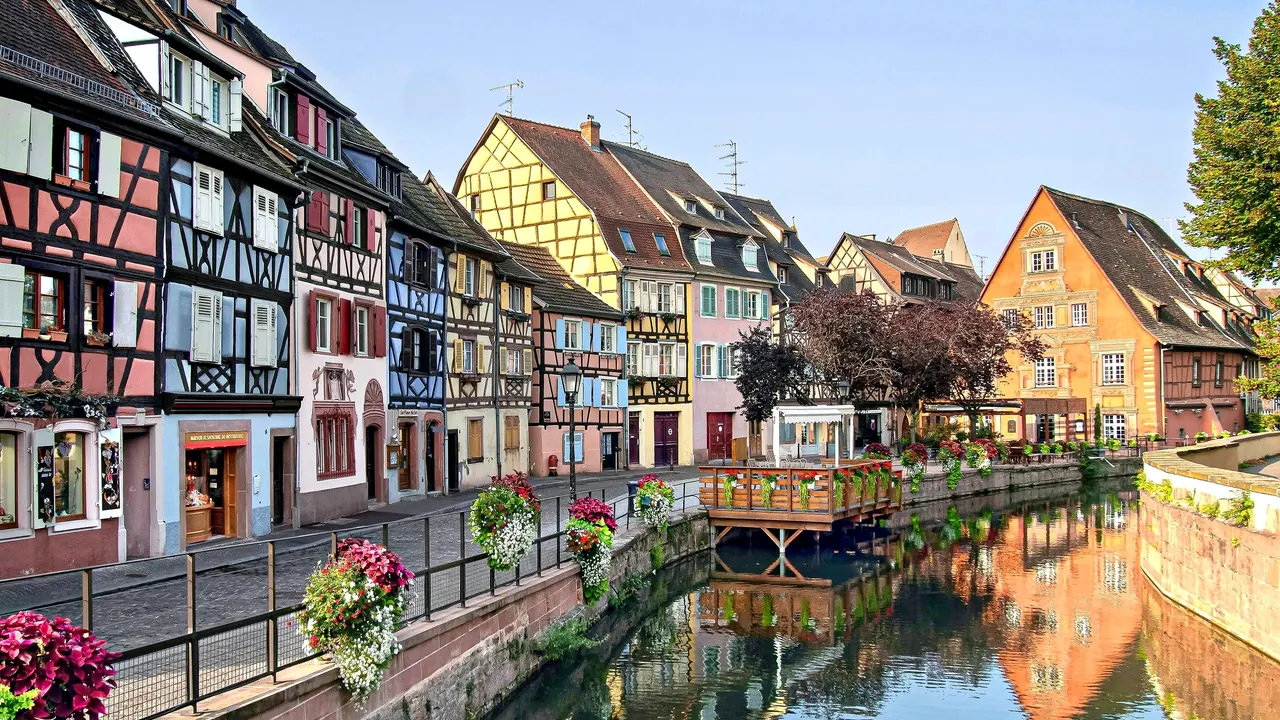
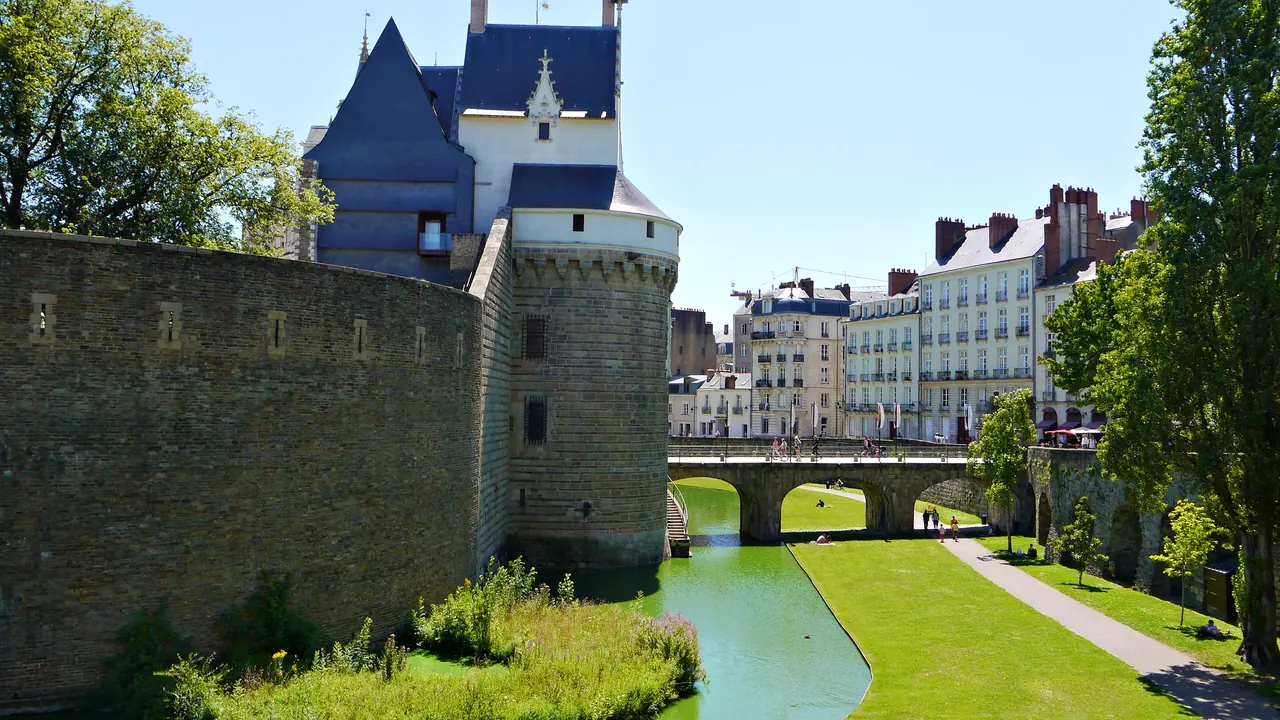
Photos: Colmar by Rolf Kranz, CC BY-SA 4.0, cropped; Nantes by Carole44, CC BY-SA 3.0, cropped.
Colmar or Nantes?
Our verdict in twelve categories, each scored against the same fixed benchmark cities, and the climate month by month, so you can choose for your trip.
Choose Colmar for
- nature and the outdoors
- day trips
- culture and sights
Colmar suits travellers who want a small, beautiful town as a base for wine country and mountains. The old town and the Unterlinden Museum fill two days, and after that the real draw is outside the walls: the wine villages along the Route des Vins, the Vosges ridges, and Strasbourg, Basel and Freiburg all close by. Go for slow lunches, vineyard walks and quiet evenings, and bring or hire a car.
Choose Nantes for
- beaches
- nightlife
- live music and the arts
Nantes is the better pick if you want a proper city that runs on its own steam. Trams link the sights, students keep Bouffay and the Ile de Nantes busy after dark, and the stage runs from opera at the Théâtre Graslin to the giant machines on the old shipyards. The Atlantic beaches at La Baule and Pornic are close enough for a day by the sea, which Colmar cannot offer.
Scoreboard
Twelve categories on one fixed scale from 0 to 100. The shaded stretch is the gap between the two.
Your match
Pick a travel style or drag the sliders, and both match scores follow your weighting.
Wins on nature and the outdoors and day trips with your weighting.
Wins on beaches and nightlife with your weighting.
What matters to you?
Category by category
What the scores mean for a trip.
Beaches & swimming
Nantes has the sea within reach and Colmar does not. From Nantes a train gets you to the long sandy bay at La Baule or the coves around Pornic in about an hour, and the Jade coast is a short drive, so a beach day fits easily into a summer stay. The water is the cool Atlantic, though, and the swimming season is short.
Colmar sits deep in the Rhine plain, with no coast anywhere near. Swimming means a municipal pool or a small lake up in the Vosges valleys, which is pleasant on a hot afternoon but not a reason to go.
Food & drink
The two eat about equally well, but they eat very differently. Colmar's table is Alsatian and hearty, meant for the cold months: choucroute, baeckeoffe, tarte flambée and munster cheese in wood-panelled winstubs. It goes with Riesling and Gewurztraminer from slopes you can see from town, and there are cellar tastings in the villages and a small fine-dining tier.
Nantes looks to the river and the coast instead. It means fish with beurre blanc, oysters, buckwheat galettes and crisp Muscadet, with a wider spread of bistros from Bouffay to the Ile de Nantes. Wine lovers will find Colmar the more absorbing place. Anyone tired of regional cooking after a few days will find more variety in Nantes.
Culture & sights
Both reward two or three days of sightseeing, but in different ways. Colmar's strength is a whole townscape: painted half-timbered houses, the Maison Pfister and Petite Venise, read as one intact late-medieval scene. It also has a single masterpiece worth the journey on its own, Grünewald's Isenheim Altarpiece in the Unterlinden Museum.
Nantes tells a bigger, harder story. The Château des Ducs de Bretagne and the Memorial to the Abolition of Slavery face the city's past in the Atlantic slave trade. The merchant façades of the Ile Feydeau, the Musée d'Arts and the Jules Verne museum add range. Choose Colmar for beauty and one great painting, Nantes for history and variety.
Nightlife
Nantes has a real night out and Colmar mostly does not. In Colmar the evening is a long dinner and a glass of wine by the canals, with a few bars staying open and the streets quiet early. Anyone wanting to stay out late takes the train to Strasbourg.
Nantes owes its after-dark life to its students. The lanes of the Bouffay quarter fill with pubs and terraces, the crowd moves later to the converted warehouses and docks at the tip of the Ile de Nantes, and Graslin has calmer cocktail bars. Expect it to go quiet midweek outside term.
Nature & outdoors
Colmar has the more varied country on its doorstep. Within half an hour you are walking through vineyards between wine villages, and a little further up, the Munster and Kaysersberg valleys climb to the Route des Crêtes, the Hohneck and the Grand Ballon. On clear days you can see across to the Black Forest and the Alps, and in winter there is modest skiing.
Nantes is flat and watery rather than dramatic. The Erdre makes a lovely boat or canoe trip, the Loire à Vélo route follows the river to the estuary, and the reed beds of the Brière suit birdwatchers. For walking with real views, Nantes means the cliff paths of the Côte Sauvage and Pornic, an hour or so away.
Day trips
Colmar is the stronger base, mainly because so much is packed so close. Eguisheim, Riquewihr, Kaysersberg and Ribeauvillé lie only a few kilometres apart, Haut-Koenigsbourg watches over the plain, and Strasbourg is half an hour by train. You can be in another country for lunch, in Basel or Freiburg. The catch is that the villages really need a car or bike.
Nantes spreads its excursions over a wider area. Closest is Clisson, an Italianate town around a ruined castle among the Muscadet estates. Further out, Guérande and its salt marshes are about an hour away, Angers and the Apocalypse Tapestry a little under that by fast train, and Vannes on the Gulf of Morbihan a little over. The Loire châteaux at Saumur take closer to two hours, so the days out are longer.
Good for families
Both work well with children, but the fun sits in different places. In Colmar the town is the gentle part, with boat rides through Petite Venise, storks on the rooftops and a children's Christmas market. The big outings are out of town and need a car: the macaques at Kintzheim, the stork park at Hunawihr, the Mulhouse train museum and Europa-Park across the Rhine.
Nantes has its showpiece in the centre: the mechanical elephant and sea-creature carousel at the Machines de l'Ile. Trams make buggies easy, the Puy du Fou is within reach and summer adds sandy beaches.
Getting around
Nantes is the easier place to get around. Its tram lines and busway cover the city simply, river shuttles cross the Loire, and Paris is about two hours away by fast train. You only need a car for the marshes and the small coastal villages.
Colmar is so small that walking covers everything in town, and trains to Strasbourg and Mulhouse are quick. The wine villages and the Vosges are poorly served by bus, though, so most of what makes Colmar worthwhile means hiring a car or a bike.
Shopping & style
Nantes offers more actual shopping. The three-level Passage Pommeraye is a pleasure to browse in itself, Rue Crébillon and Graslin have the fashion chains and a department store, and Bouffay and Decré add independent designers and second-hand shops.
Colmar is better for what you take home than for clothes. Think wine bought straight from the grower, Soufflenheim pottery, kougelhopf moulds and Alsatian linen. In December its Christmas markets spread across several squares and outshine anything Nantes does.
Affordability
Overall costs are much the same, but the pressure points differ. In Colmar the problem is rooms: the town is small, and summer and the Christmas market weeks push hotel prices up and fill them early. Free or cheap tastings in the villages help balance things out.
Nantes is a big city with plenty of hotels, so beds are easier to find, and trams keep transport cheap. There the money goes on dinners, drinks and on beach days in high summer.
Live music & performing arts
Nantes is much the better choice for evenings at a performance. The regional opera plays at the Théâtre Graslin and the national orchestra at the concert hall. The Lieu Unique, in the old biscuit factory, has contemporary dance and theatre, and La Folle Journée fills the winter with short classical concerts. The city's taste for giant street puppetry turns public squares into stages too.
Colmar has a small Italian-style theatre and a handful of festivals, classical in July and jazz in autumn. Outside those weeks, anything serious means going to Strasbourg or Basel.
Wellness & relaxation
Neither has a bathing tradition, and in both towns spa time means hotel spas. Nantes has the edge thanks to the long-established thalassotherapy centres at La Baule and Pornic, about an hour away, where you can take the French seawater cure.
Colmar's version of rest is quieter: empty canals once the day-trippers leave, long lunches and slow walks through the vines.
When should you go?
Pick your month. The climate figures are measured averages, not a forecast.
Colmar in July
Nantes in July
Daytime high, °C
Rainfall in the month, mm
Temperature and rainfall are climate normals, averaged over the years shown. Colmar: 1991-2020 normals, Ihringen (21.1 km from centre). Nantes: 1991-2020 normals, Nantes (6.6 km from centre).
The two climates pull in opposite directions. Colmar sits in a sheltered inland plain, so its summers are the warmer of the two, reaching about 27°C in August, and its winters the colder, around 6°C in December and January. It is also unusually dry in winter, and most of its rain falls in late spring and summer, peaking at about 87mm in May. That makes the cold, crisp Christmas season and the sunny early autumn, with the grape harvest under way, the best times for walking the lanes and the vineyards. High summer is pleasant but brings showers.
Nantes has the mild, damp Atlantic pattern. Its winters are a few degrees softer but much wetter, with rain building from October to about 101mm in December. Summer is its driest and sunniest season, and from June to September the city is comfortable for walking and the coast is at its best, with the sea reaching about 19°C in August. For the beach, July to early September is the window. Spring is a fair time to visit either city.
Which traveller are you?
On a beach and sun trip, Nantes is the only real option. Trains reach the wide sandy bay at La Baule and the coves of Pornic in about an hour, while Colmar is hundreds of kilometres from the sea and has only pools and mountain lakes.
For an outdoors trip, Colmar wins clearly. Marked paths run through the vines straight from the wine villages, and the Vosges above give you glacial lakes, high pastures and the Route des Crêtes. Flat, watery Nantes offers towpaths and marshes but no hills.
On a food and nightlife trip, choose Nantes. Both cities eat well, but Colmar goes quiet soon after dinner. In Nantes the evening carries on from bistros to Bouffay's packed terraces and then to the riverside clubs on the Ile de Nantes.
Before you go
| Measure | Colmar | Nantes |
|---|---|---|
| Official language | French | French |
| Currency | Euro (EUR) | Euro (EUR) |
| Sockets | CE230 V, 50 Hz | CE230 V, 50 Hz |
| Driving side | Right | Right |
| Time zone | UTC+1, UTC+2 in summer | UTC+1, UTC+2 in summer |
| Emergency number | 112 | 112 |
| Elevation | 185 m | 2 m |
| Main airport | EuroAirport Basel–Mulhouse–Freiburg (BSL)55 km from centre112 non-stop destinations | Nantes Atlantique Airport (NTE)8 km from centre97 non-stop destinations |
| Public holidays this year | 11 days | 11 days |
By the numbers
| Measure | Colmar | Nantes |
|---|---|---|
| City population | 66,970 | 327,734 |
| People per km² | 1,006 | 5,027 |
| Museums within 10 km | 9 | 11 |
| UNESCO World Heritage sites within 50 km | 3 | 0 |
| Swim season, months above 21 °C | - | None |
Where else could you go?
Every comparison below shares a destination with this one, so you can follow Colmar or Nantes somewhere new.