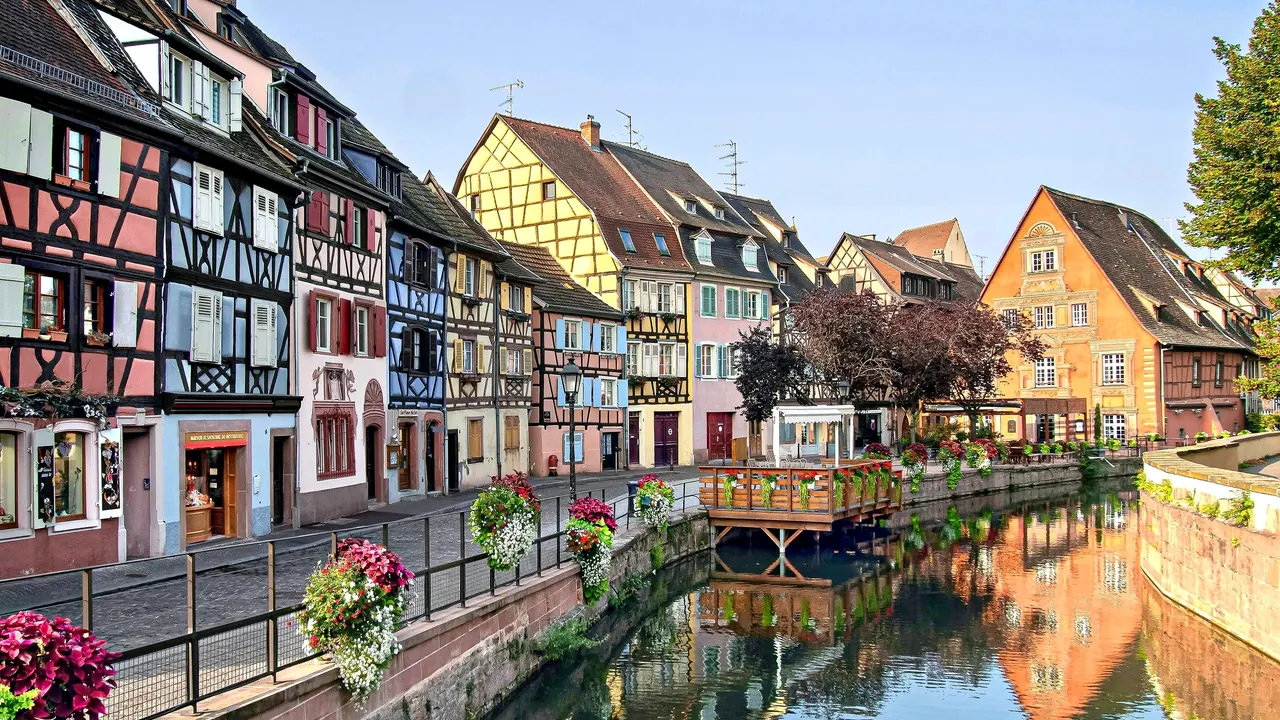
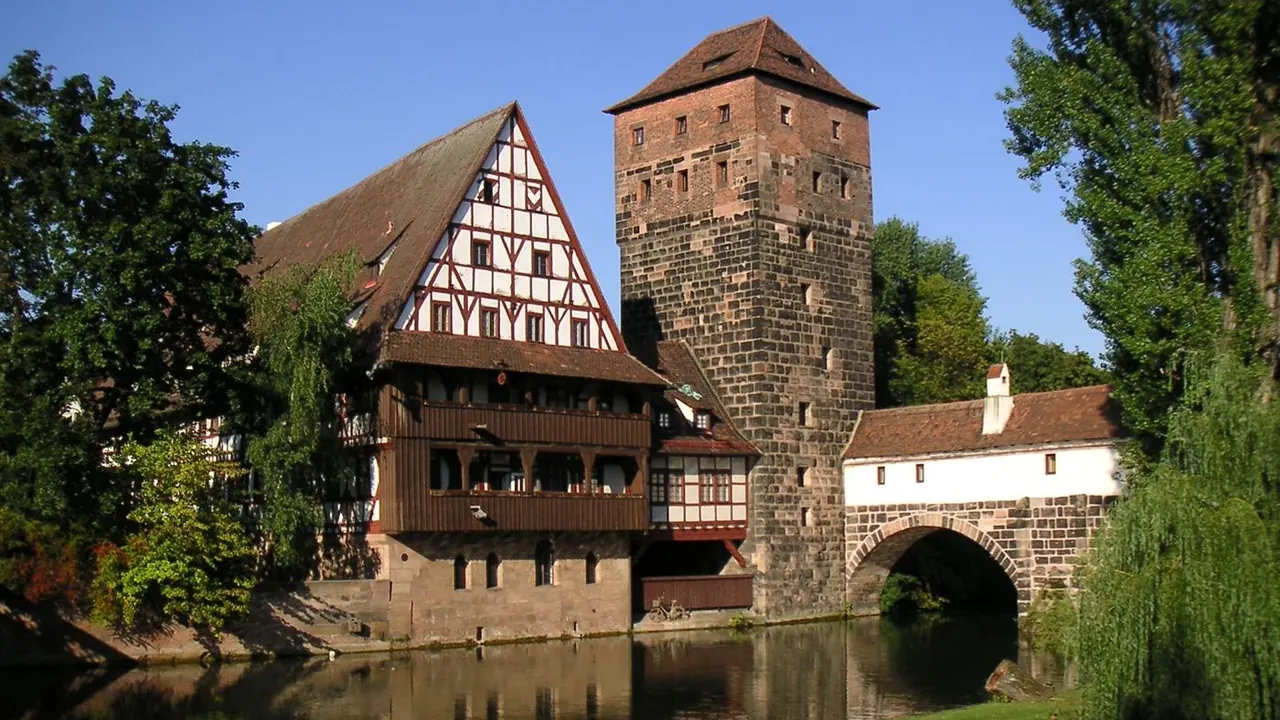
Photos: Colmar by Rolf Kranz, CC BY-SA 4.0, cropped; Nuremberg by Horst Gutmann, CC BY 2.0, cropped.
Colmar or Nuremberg?
Our verdict in twelve categories, each scored against the same fixed benchmark cities, and the climate month by month, so you can choose for your trip.
Choose Colmar for
- nature and the outdoors
- food and drink
- day trips
Colmar suits a slower trip built around wine, food and landscape. The painted old town and the Isenheim Altarpiece take a couple of days. After that the draw lies outside: villages strung along the Route des Vins, cellar doors, walks through the vines and the ridge road over the Vosges. It is best with a car or a bike, evenings that end after a long winstub dinner, and a traveller who is happy without a night scene.
Choose Nuremberg for
- live music and the arts
- nightlife
- getting around
Nuremberg is the better pick for a proper city stay. Its trams and U-Bahn make it easy to get about without a car, the Staatstheater and two orchestras give it a real arts calendar, Gostenhof keeps the bars going late, and its history runs from the imperial castle to the courtroom of the war crimes trials. It also works well as a base for other historic towns by train.
Scoreboard
Twelve categories on one fixed scale from 0 to 100. The shaded stretch is the gap between the two.
Your match
Pick a travel style or drag the sliders, and both match scores follow your weighting.
Wins on nature and the outdoors and food and drink with your weighting.
Wins on live music and the arts and nightlife with your weighting.
What matters to you?
Category by category
What the scores mean for a trip.
Beaches & swimming
Neither city is anywhere near a coast. Nuremberg has the better option for a hot day: the Franconian Lake District, about an hour south, where reservoirs like the Brombachsee have grassy shores, small sandy strips and water that warms up in late summer.
Colmar has nothing of that size. Swimming means the municipal pools or a small mountain lake up in the Vosges valleys, which is more of a stop on a drive than a lakeside day.
Food & drink
Colmar eats better, and it has wine on its side. Alsatian cooking sits between France and Germany: baeckeoffe, tarte flambée and munster cheese in panelled winstubs, with Riesling and Gewurztraminer from the slopes outside town and a few serious restaurants along the wine route. The catch is the tired menus on the most photographed streets.
Nuremberg's table is plainer and heavier. You get small beechwood-grilled bratwurst, Schäufele with dumplings, and Lebkuchen all year. What lifts it is Franconian beer, from smoky Kellerbier in old-town taverns to riverside beer gardens. Outside that, the restaurants are ordinary.
Culture & sights
The two are close in depth but feel quite different. Colmar's strength is how complete it is. The painted half-timbered streets, the Maison Pfister and Petite Venise survived the wars largely intact, and the Unterlinden Museum holds one overwhelming masterpiece, Grünewald's Isenheim Altarpiece. It is concentrated, and two days covers it.
Nuremberg covers more ground in time. The walls, the Kaiserburg and the Gothic churches were carefully rebuilt after the bombing, and the Germanisches Nationalmuseum can fill a whole day. The Rally Grounds and Courtroom 600 add a sobering twentieth-century chapter that Colmar simply does not have.
Nightlife
Nuremberg gives you a much better evening out. Students fill the squares and riverbanks on summer nights, and Gostenhof, west of the walls, has small bars and alternative venues. Erlangen's students keep the weekends lively.
Colmar goes quiet early. A night there is a long dinner, then perhaps a glass in a wine bar near Petite Venise. Anyone after more takes the train to Strasbourg.
Nature & outdoors
Colmar has the more dramatic country on its doorstep. Vineyard trails between wine villages start within half an hour, and above them the Vosges rise to the Hohneck and the Grand Ballon, with views to the Black Forest and sometimes the Alps. There is modest skiing in winter, and the turning vines make autumn the best season of all.
Nuremberg's outdoors are pleasant but flatter. The Reichswald pine forest begins at the city edge and suits easy walks and rides. The best of it is Franconian Switzerland, an hour away, with its limestone towers, caves and well-known rock climbing.
Day trips
Both make excellent bases, but they lead to different kinds of day out. From Colmar you go to villages: Eguisheim, Riquewihr, Kaysersberg and Ribeauvillé lie only kilometres apart, with Haut-Koenigsbourg above them. Strasbourg, Basel and Freiburg, across two borders, add big-city days. The villages really need a car or a bike.
From Nuremberg you go to towns, and almost all of them by train. Bamberg, Regensburg and Würzburg are each about an hour away, Rothenburg is a little further, and Munich is within easy reach by fast train.
Good for families
With children, the real question is whether you want to drive. Colmar itself offers small, gentle pleasures: flat-bottomed boat rides through Petite Venise, the little tourist train and storks nesting on the rooftops. The bigger outings are out in the countryside, such as the free-roaming macaques of the Montagne des Singes, the eagle show at Kintzheim, the stork and otter park at Hunawihr and Europa-Park about an hour away across the Rhine. Nearly all of them need a car.
Nuremberg keeps its best family days inside the city. The Toy Museum draws on centuries of toy-making, the railway museum has full-size locomotives and the first German train, and the zoo spreads through wooded former quarries and has a dolphin and manatee house. Both towns set up a separate children's market at Christmas, but in Nuremberg the steep, cobbled climb to the castle is hard going with a pushchair.
Getting around
Both centres are compact and walkable. The difference is what happens beyond them. Nuremberg has U-Bahn lines, trams, buses and S-Bahn all on one ticket, which covers the zoo, the Rally Grounds and Fürth, while regional trains handle the day trips. The cobbled climb to the castle is the only real effort.
In Colmar the trains to Strasbourg and Mulhouse are quick, but the wine villages and the Vosges have only sparse buses. Most visitors end up hiring a car or cycling the vineyard roads.
Shopping & style
Nuremberg has more ordinary shopping, with chain and department stores along Königstraße. It also has the Handwerkerhof for crafts, wooden toys and Lebkuchen in decorated tins.
Colmar is all about regional things to take home: wine bought from the producer, Soufflenheim pottery, printed Alsatian linen and kougelhopf moulds, with little fashion to speak of. Both peak in Advent. Colmar spreads its markets across several squares, while Nuremberg has its famous single Christkindlesmarkt on the Hauptmarkt.
Affordability
Day to day the costs are much the same, and the savings come from different places. In Colmar it is set lunches and village tastings that are often free. In Nuremberg it is filling tavern meals, cheap local beer and cheap transport.
Rooms are the problem in both, but at different times. Colmar is small, so summer and the Christmas market weeks fill it quickly. Nuremberg's prices jump during its big trade fairs and Advent.
Live music & performing arts
Nuremberg has a real year-round stage. The Staatstheater runs opera, ballet and drama in its Art Nouveau house, two orchestras play the Meistersingerhalle, and summer adds the free Bardentreffen folk weekend and a large open-air concert in the Luitpoldhain.
Colmar's small Italian-style theatre has a modest season, and the town's calendar depends on festivals: classical music in July and jazz in autumn. Outside those weeks, serious music means a trip to Strasbourg or Basel.
Wellness & relaxation
For proper spa time, Nuremberg wins. A large thermal spa with sauna gardens is a short U-Bahn ride away in Fürth, and Bad Windsheim's saline pools are an hour west. Expect the German custom of nude, mixed saunas.
Colmar has hotel spas and not much else. Its form of rest is the calm after the day-trippers leave: quiet canals in the evening, long lunches and slow walks through the vines.
When should you go?
Pick your month. The climate figures are measured averages, not a forecast.
Colmar in July
Nuremberg in July
Daytime high, °C
Rainfall in the month, mm
Temperature and rainfall are climate normals, averaged over the years shown. Colmar: 1991-2020 normals, Ihringen (21.1 km from centre). Nuremberg: 1991-2020 normals, Nuernberg (5.5 km from centre).
The two share a central European climate, but Colmar runs a little warmer at both ends of the year. Summer highs peak around 27°C in Colmar and 25°C in Nuremberg, so July and August are warm enough for a lake afternoon or a long terrace evening in either, without being too hot for walking. May to September is the main season. September is often the most pleasant month for exploring, mild and still fairly sunny, and in Colmar it brings the grape harvest.
The rain falls mostly in summer. Colmar's wettest month is May at around 87mm, and Nuremberg's is July at about 77mm, though in both the showers come between long sunny spells. Winters are cold and grey in both, with Nuremberg the colder at around 4°C in January. December is mainly worth it for the Christmas markets, not for spending long days outdoors.
Which traveller are you?
On an outdoors trip, Colmar is the stronger choice. Vineyard paths start within half an hour, and above them the Vosges have glacial lakes, summer pastures and the Route des Crêtes. Nuremberg's Franconian Switzerland is good but gentler, and it is further away.
For a culture and arts trip, Nuremberg offers more variety. It has the Germanisches Nationalmuseum, the castle and the Nazi-era sites. Its evenings bring opera, ballet and orchestral concerts all season, while Colmar's stage life is thin outside its festival weeks.
For wine lovers, Colmar is the clear pick. It is the heart of Alsace wine, and Riesling, Gewurztraminer and Pinot Gris come from the slopes around town. Tastings in villages such as Riquewihr and Eguisheim are a short drive or bike ride away. Nuremberg's drink is beer.
Before you go
| Measure | Colmar | Nuremberg |
|---|---|---|
| Official language | French | German |
| Currency | Euro (EUR) | Euro (EUR) |
| Sockets | CE230 V, 50 Hz | CF230 V, 50 Hz |
| Driving side | Right | Right |
| Time zone | UTC+1, UTC+2 in summer | UTC+1, UTC+2 in summer |
| Emergency number | 112 | 112 |
| Elevation | 185 m | 209 m |
| Main airport | EuroAirport Basel–Mulhouse–Freiburg (BSL)55 km from centre112 non-stop destinations | Nuremberg Airport (NUE)5 km from centre56 non-stop destinations |
| Public holidays this year | 11 days | 12 days |
By the numbers
| Measure | Colmar | Nuremberg |
|---|---|---|
| City population | 66,970 | 531,159 |
| People per km² | 1,006 | 2,848 |
| Museums within 10 km | 9 | 50 |
| UNESCO World Heritage sites within 50 km | 3 | 1 |
Where else could you go?
Every comparison below shares a destination with this one, so you can follow Colmar or Nuremberg somewhere new.