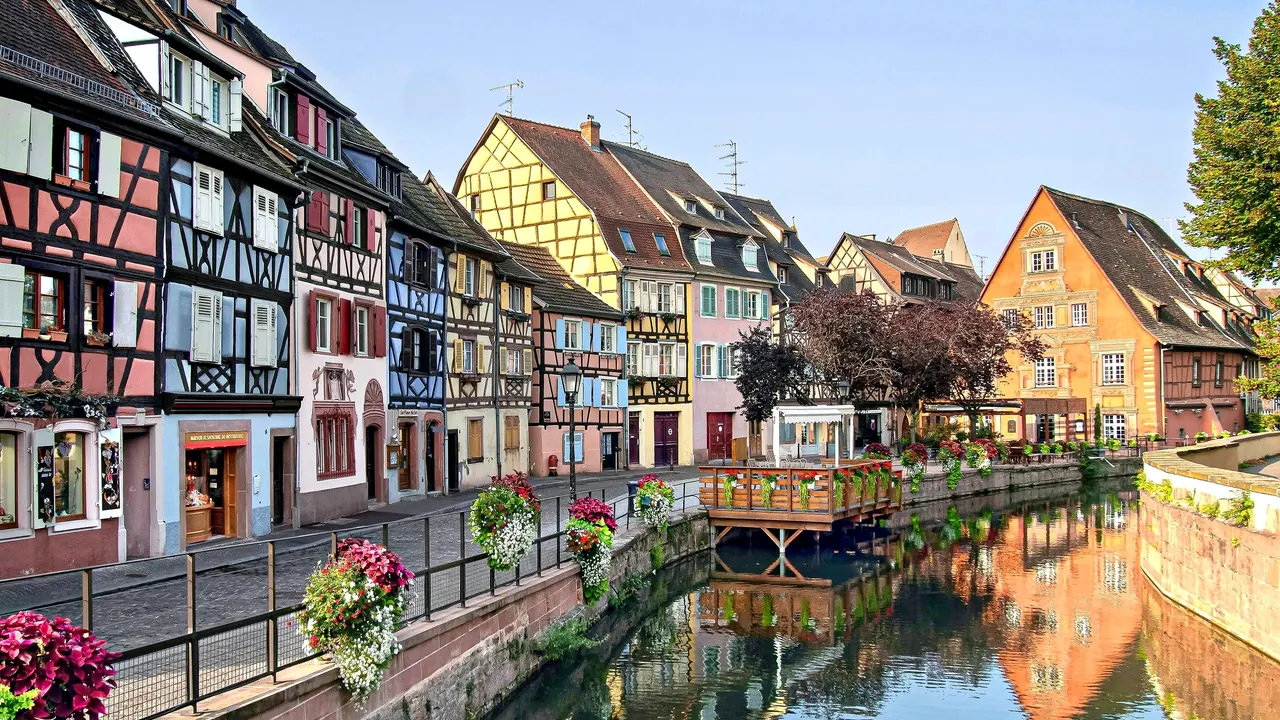
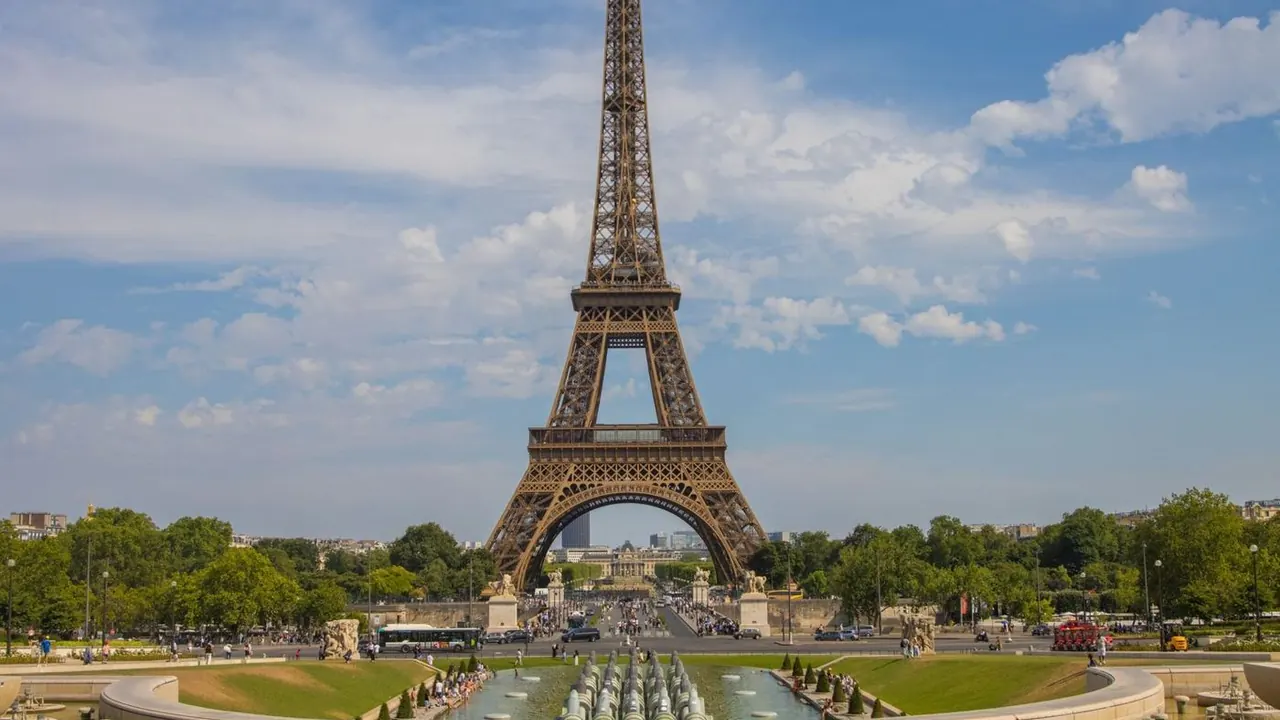
Photos: Colmar by Rolf Kranz, CC BY-SA 4.0, cropped; Paris by Efrem Efre, Pexels License.
Colmar or Paris?
Our verdict in twelve categories, each scored against the same fixed benchmark cities, and the climate month by month, so you can choose for your trip.
Choose Colmar for
- prices
- nature and the outdoors
Colmar suits a slower trip built around wine, painted streets and the countryside. You spend a couple of days in a compact old town with the Isenheim Altarpiece at its heart, then head out to the wine villages and the Vosges by car or bike. It costs less than Paris and asks less of you, but evenings end early and the choice beyond Alsatian cooking is narrow.
Choose Paris for
- nightlife
- shopping
- live music and the arts
Paris is the better pick when the city itself is the reason for going. It has museums you could spend weeks in, serious eating at every level, opera and late bars, and shopping that runs from couture houses to a vast flea market. You pay for that depth with higher costs, crowds and queues, and you get a place a whole week barely dents.
Scoreboard
Twelve categories on one fixed scale from 0 to 100. The shaded stretch is the gap between the two.
Your match
Pick a travel style or drag the sliders, and both match scores follow your weighting.
Wins on prices and nature and the outdoors with your weighting.
Wins on nightlife and shopping with your weighting.
What matters to you?
Category by category
What the scores mean for a trip.
Beaches & swimming
Neither city is a place for beaches, and they differ only in how you cool off. Colmar has municipal pools and small lakes in the Vosges valleys. Paris dresses parts of its riverbanks as sandy beaches in summer, lets you swim in the Bassin de la Villette and the Seine, and has some handsome Art Deco pools, with the cool Normandy coast about two hours away by train.
Food & drink
Colmar offers one cuisine done well: Alsatian cooking in wood-panelled winstubs, from choucroute and baeckeoffe to munster cheese, poured alongside the Riesling and Gewurztraminer of the slopes just outside town. It is a rewarding place for wine lovers, but once you step outside the regional repertoire the options thin out quickly.
Paris works on a different scale. It has neighbourhood bakeries and street markets, zinc-counter bistros, haute cuisine, natural wine bars and small neo-bistros in the east. Belleville and the 13th add North African and Vietnamese cooking. You could eat for a week without repeating a style, which Colmar cannot offer.
Culture & sights
Colmar's strength is coherence. Its half-timbered old town, Petite Venise and the tanners' quarter survive as a whole, and the Unterlinden Museum holds the Isenheim Altarpiece, a painting worth the journey on its own. Two days covers the town well.
Paris is one of the world's great cultural capitals. It has the Louvre, the Impressionists at the Orsay, the Pompidou, the Sainte-Chapelle and Notre-Dame, all set among Haussmann's boulevards and the old townhouses of the Marais. A week only scratches the surface, though the queues at the famous sights need planning around.
Nightlife
A Colmar evening is a long dinner followed by a glass of wine on a terrace by the canals. By late evening the streets are quiet, and there is almost nothing in the way of clubs.
Paris has a real night out. The bars of Oberkampf, the Canal Saint-Martin and Belleville fill up on warm evenings, South Pigalle does cocktails and the Marais has its gay scene. After the bars close, clubs and riverside barges carry on with house and techno until dawn. Locals from Colmar take the train to Strasbourg for this, and it is a small fraction of what Paris offers.
Nature & outdoors
Colmar has the better landscape on its doorstep. Vineyard paths link the wine villages within half an hour, and the Munster and Kaysersberg valleys climb to the Route des Crêtes, with views from the Grand Ballon to the Black Forest. Add glacial lakes, summer pastures and flat cycling across the plain, and it is a fine base for active days, best with a car.
Paris offers green space rather than scenery. There are the formal Luxembourg and Tuileries gardens, the cliffs of the Buttes-Chaumont and the big woods of Boulogne and Vincennes. Fontainebleau's forest and climbing boulders are the best of what lies further out.
Day trips
Colmar's day trips sit close together. Eguisheim, Riquewihr and Kaysersberg lie a few kilometres apart along the wine route, Haut-Koenigsbourg looks down over the plain, and Strasbourg, Basel and Freiburg are all within about an hour, so you can visit three countries in one stay.
Paris has the longer and grander list. Versailles, Chartres, Giverny and Fontainebleau are close by, and fast trains reach Reims and its Champagne houses, Rouen and the Loire châteaux. Nearly all of it can be done by train from a central station, while Colmar's wine villages, the main reason to base yourself there, really need a car or a bike.
Good for families
Colmar is a gentle, easy town for children, with boat rides through Petite Venise, storks on the rooftops and a children's Christmas market. Its bigger draws, such as the monkey park at Kintzheim, the stork park at Hunawihr and Europa-Park across the Rhine, all mean driving.
Paris gives families more to do and puts more of it within reach. Disneyland and Parc Astérix are a short ride out, and in the city there are the hands-on Cité des Sciences, the skeletons at the Jardin des Plantes and the carousels and sailboats of the Luxembourg. The trade-off is stairs in the metro, crowded trains and small hotel rooms.
Getting around
Colmar is easy until you leave town. The old town, the museums and the station are a few minutes' walk apart, and regional trains reach Strasbourg and Mulhouse quickly. Buses out to the wine villages and the Vosges are sparse, though. Many visitors hire a bicycle, and on the quiet vineyard roads that is a pleasure in its own right.
Paris rarely leaves you stuck. The metro puts a station within a few minutes of almost anywhere, the RER runs out to Versailles and the airports, and bike-share fills the gaps, so a car is more trouble than help. The drawbacks are long corridors with stairs, packed lines at rush hour and pickpockets.
Shopping & style
Colmar is for regional things to take home: wine bought from the producer, Soufflenheim pottery, kougelhopf moulds, Alsatian table linen and gingerbread. The Christmas markets are the high point of the year. There is little in the way of fashion.
Paris is a shopping destination in its own right. It has the couture flagships of Avenue Montaigne, the grand department stores, and independent designers and vintage shops in the Marais. The covered passages, the Saint-Ouen flea market and the riverside bouquinistes add antiques, old books and prints, so a whole trip could be built around it.
Affordability
Colmar is the cheaper stay. Set lunches and regional wine are reasonable, and tastings in the villages often cost little or nothing. Rooms are the exception, especially in the Christmas market weeks, when staying in a nearby village helps.
Paris is expensive almost everywhere you turn: small, costly hotel rooms, terrace drinks and full-price admission at the big museums. You can soften it by walking, eating from bakeries and markets, using the free permanent collections of the city's museums and staying in the outer arrondissements.
Live music & performing arts
In Colmar, live music depends on the calendar. There is a classical festival in early July, jazz in autumn and big concerts at the summer wine fair, plus a season in the small Italian-style theatre. Outside those weeks there is little on.
Paris has a full programme all year: ballet at the Palais Garnier, opera at the Bastille, orchestras at the Philharmonie, and candlelit chamber concerts in the Sainte-Chapelle. Add jazz cellars around the rue des Lombards and cabaret in Pigalle. Theatre is mostly in French, but music needs no translation.
Wellness & relaxation
Neither city has a spa culture, but Paris has a little more to offer. Its North African hammams, above all the tiled steam rooms of the Grande Mosquée with mint tea afterwards, add something Colmar lacks. Day spas and historic pools round it out.
Colmar's version of rest is the pace itself: quiet evenings by the canals once the day-trippers leave, and slow walks through the vines. Its spa options come down to hotel spas, though the town is calmer than Paris, where rest comes in short breaks between the crowds.
When should you go?
Pick your month. The climate figures are measured averages, not a forecast.
Colmar in July
Paris in July
Daytime high, °C
Rainfall in the month, mm
Temperature and rainfall are climate normals, averaged over the years shown. Colmar: 1991-2020 normals, Ihringen (21.1 km from centre). Paris: 1991-2020 (sunshine 1961-1990) normals, Paris-Montsouris (4.6 km from centre).
Colmar swings further through the year. July and August reach about 27°C with long sunny days, while winter highs drop to around 6°C and the sun barely shows. Paris follows a similar curve but stays a little milder in the cold months, at around 8°C. Summer in either city is warm rather than oppressive, so walking the streets stays comfortable. Winter suits museums or the Christmas markets better than long days outdoors.
In both cities May is the wettest month, with 87mm in Colmar and 75mm in Paris. After that, Colmar stays showery through the summer, when storms come with the warm weather, and turns dry in winter. Paris spreads its rain more evenly and has another damp spell in December. Colmar is at its best in June and from September into early October, when the vines turn. Paris is most pleasant in June and September, either side of the May rain.
Which traveller are you?
For an outdoors trip, Colmar is the clear choice. Marked paths through the vineyards start within half an hour, and the Vosges ridge road, glacial lakes and forest trails lie just beyond. Paris offers parks, woods and Fontainebleau's boulders, but nothing on that scale.
On a tight budget, Colmar stretches the money further. Set lunches, regional wine and free tastings in the villages keep daily costs moderate. In Paris, rooms and terrace drinks add up fast, though picnics and the free city museums help. Avoid Colmar's Christmas market weeks.
For a food and nightlife trip, Paris is in another league. You can go from a bakery breakfast and market lunch to neo-bistro dinners and then bars in Oberkampf or Belleville, with clubs running until dawn. Colmar offers a fine Alsatian dinner and a glass of Riesling, then quiet streets.
Before you go
| Measure | Colmar | Paris |
|---|---|---|
| Official language | French | French |
| Currency | Euro (EUR) | Euro (EUR) |
| Sockets | CE230 V, 50 Hz | CE230 V, 50 Hz |
| Driving side | Right | Right |
| Time zone | UTC+1, UTC+2 in summer | UTC+1, UTC+2 in summer |
| Emergency number | 112 | 112 |
| Elevation | 185 m | 27 m |
| Main airport | EuroAirport Basel–Mulhouse–Freiburg (BSL)55 km from centre112 non-stop destinations | Charles de Gaulle International Airport (CDG)22 km from centre277 non-stop destinations |
| Public holidays this year | 11 days | 11 days |
By the numbers
| Measure | Colmar | Paris |
|---|---|---|
| City population | 66,970 | 2,103,778 |
| People per km² | 1,006 | 19,960 |
| Museums within 10 km | 9 | 251 |
| UNESCO World Heritage sites within 50 km | 3 | 5 |
Where else could you go?
Every comparison below shares a destination with this one, so you can follow Colmar or Paris somewhere new.