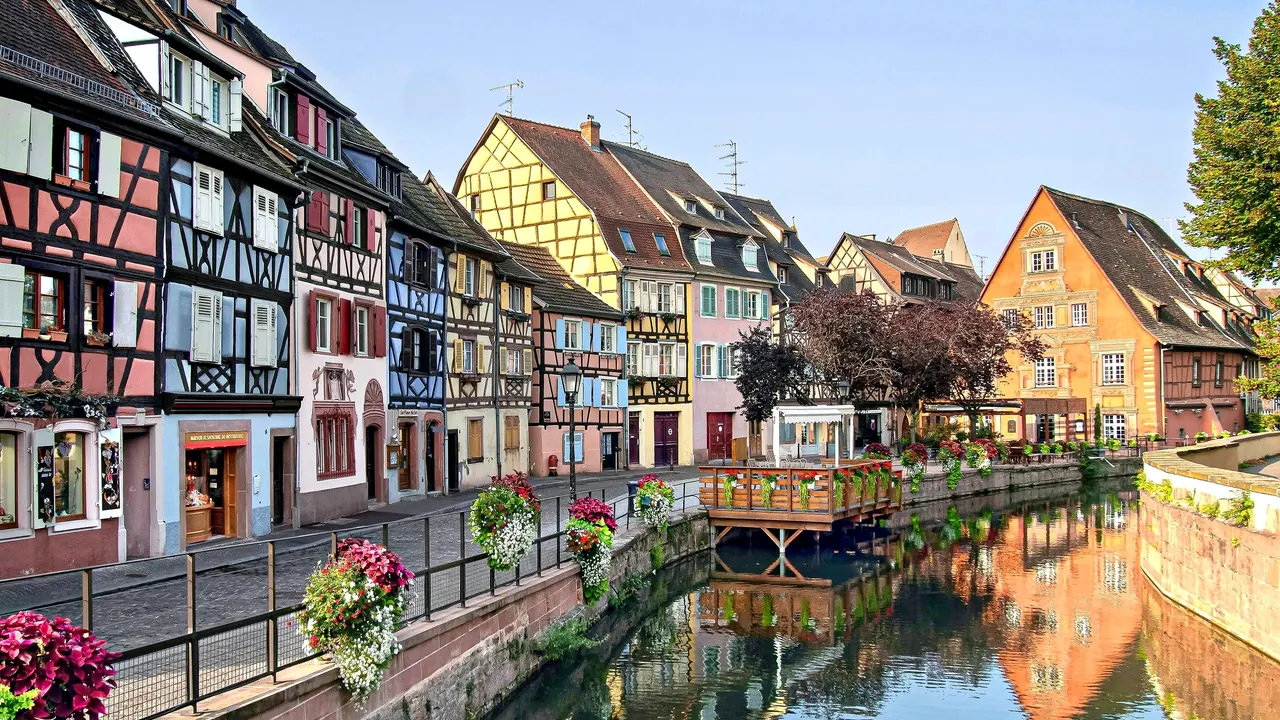
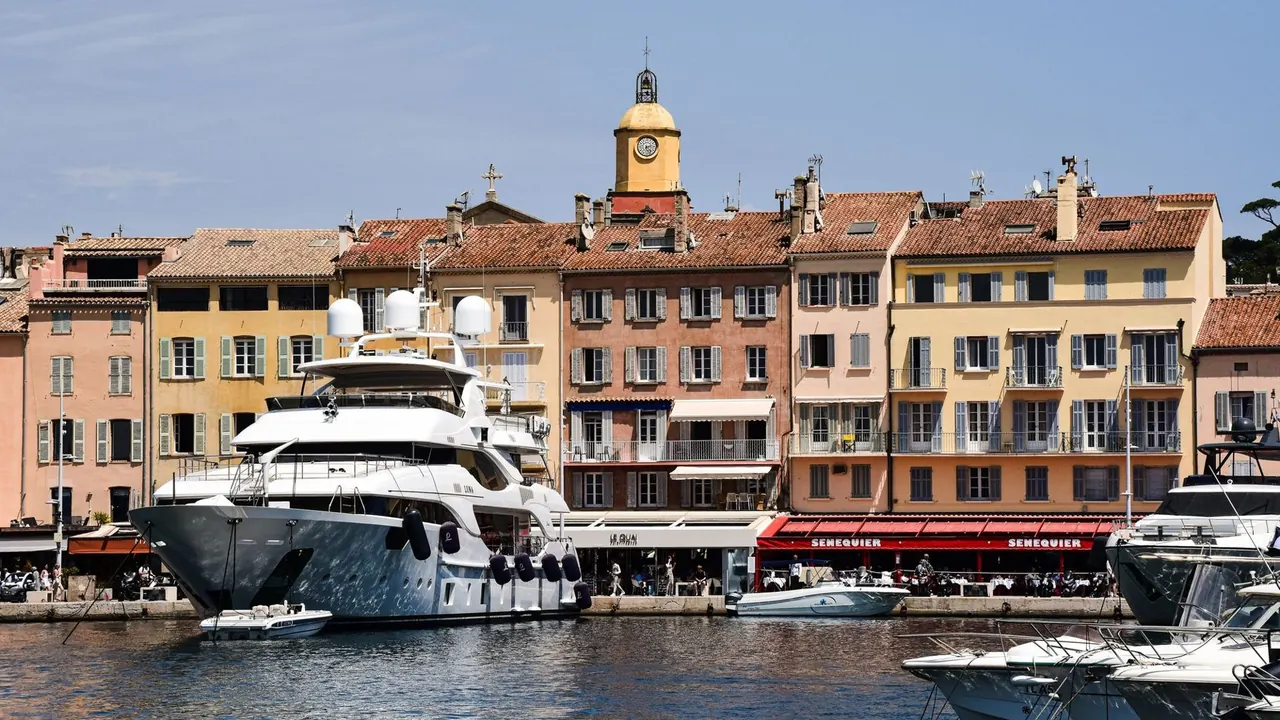
Photos: Colmar by Rolf Kranz, CC BY-SA 4.0, cropped; Saint-Tropez by AXP Photography, Pexels License.
Colmar or Saint-Tropez?
Our verdict in twelve categories, each scored against the same fixed benchmark cities, and the climate month by month, so you can choose for your trip.
Choose Colmar for
- prices
- getting around
- culture and sights
Colmar is the better pick for a trip built around old towns, wine and day trips. Its half-timbered centre and the Isenheim Altarpiece fill two unhurried days. After that, the Route des Vins, Strasbourg, Basel and Freiburg are all within easy reach by train or car. It costs much less and is easier with children, though evenings end early and there is no sea.
Choose Saint-Tropez for
- beaches
- nightlife
- shopping
Saint-Tropez makes sense when the point of the trip is the Mediterranean in summer: the long sand of Pampelonne, the coastal path round the capes, and a glamorous beach-club and harbour scene that runs until dawn. You go there for sun, swimming and dressing up rather than sightseeing. It is also very expensive, so it suits a short stay with a generous budget, or a day visit from across the gulf.
Scoreboard
Twelve categories on one fixed scale from 0 to 100. The shaded stretch is the gap between the two.
Your match
Pick a travel style or drag the sliders, and both match scores follow your weighting.
Too close to call, 2 points apart
Wins on prices and getting around with your weighting.
Wins on beaches and nightlife with your weighting.
What matters to you?
Category by category
What the scores mean for a trip.
Beaches & swimming
Colmar lies deep in the Alsace plain, a long way from any sea. Swimming there means a municipal pool or a small lake up in the Vosges valleys.
Saint-Tropez is the opposite. Pampelonne has around 5km of pale sand on the Ramatuelle side, with beach clubs and public stretches in between, and wilder coves such as Cap Taillat lie further south. If swimming matters to you at all, Saint-Tropez is the choice.
Food & drink
Colmar eats better for most visitors. Alsace cooking is hearty and distinctive, from baeckeoffe and choucroute in wood-panelled winstubs to munster cheese and kougelhopf. With it comes the Riesling and Gewurztraminer grown on the slopes just outside town, which you can taste in the village cellars.
Saint-Tropez serves lighter Provençal food, such as grilled fish, aïoli and rosé on the sand, and its top hotel dining rooms are genuinely good. The weak spot is the middle: honest, good-value meals are harder to find than in Colmar, and much of the town shuts in winter.
Culture & sights
Colmar is much the richer place for sightseeing. Its painted half-timbered streets, the Maison Pfister and the canals of Petite Venise survive as a complete late-medieval town. The Unterlinden Museum holds Grünewald's Isenheim Altarpiece, a painting worth the trip on its own.
Saint-Tropez has one fine collection, the pointillist and Fauvist paintings in the Annonciade on the port. Add the maritime museum in the citadel and the lanes of La Ponche and you have a pleasant morning, but people come for the setting rather than the heritage.
Nightlife
After dark Saint-Tropez is in a different league, at least in summer. Afternoon parties at the Pampelonne beach clubs turn into champagne on the harbour and then clubs open until dawn, with table service and dress codes. By October the town has gone quiet.
In Colmar an evening means a long dinner and a glass of wine in a winstub or on a terrace by the canals, and the streets empty early. For a club night you would take the train to Strasbourg.
Nature & outdoors
Both have fine outdoor country close by, but of very different kinds. Around Colmar it is vineyards and mountains. Marked paths run between the wine villages, and above them are the rounded, forested Vosges with the Route des Crêtes, glacial lakes and modest winter skiing. The flat plain is good for cycling.
Saint-Tropez is all coast. The Sentier du Littoral runs past pine-backed coves to the capes of Camarat and Taillat, the gulf is good for sailing and snorkelling, and the national-park islands of Port-Cros and Porquerolles are within reach. The trails are best in spring and autumn, after or before the summer heat and fire risk.
Day trips
Colmar is much the better base for outings. Eguisheim, Riquewihr and Kaysersberg sit a few kilometres apart on the wine route, and Strasbourg is about half an hour away by train. Basel and Freiburg put two more countries within about an hour.
The outings from Saint-Tropez are pretty but smaller: the hilltop villages of Ramatuelle and Gassin, the castle at Grimaud, a boat to Port Grimaud, or a full day on Porquerolles. Few of them have much historic weight, and summer traffic on the gulf road can take up half the day.
Good for families
Colmar works better with children. The town is flat and easy, with boat rides through Petite Venise and storks on the roofs. With a car you can reach plenty of family outings: the stork and otter park at Hunawihr, the macaques of the Montagne des Singes, the train and car museums in Mulhouse and Europa-Park across the Rhine.
Saint-Tropez gives families gently shelving sand at Pampelonne and Gigaro and not much more, since the harbour and the clubs are aimed at adults. With the high prices and the summer traffic jams on top, many families stay in Sainte-Maxime instead.
Getting around
Both centres are small enough to walk, so the difference lies in reaching everything else. Colmar's station is a short walk from the old town, with quick trains to Strasbourg and Mulhouse, though you need a car or a bike for the wine villages.
Saint-Tropez has no railway at all, the buses are slow, and the main beaches are several kilometres out of town. In July and August the one road along the gulf jams for hours, so the passenger boat from Sainte-Maxime is often the quickest way in.
Shopping & style
Saint-Tropez is the stronger shopping town, which is unusual for a place its size. The big fashion houses open summer boutiques behind the port, resort labels and jewellers fill the lanes, and the hand-stitched Tropézienne sandal is a local craft worth buying.
Shopping in Colmar is about taking Alsace home: wine bought straight from the producers, Soufflenheim pottery, printed table linen and gingerbread. The Christmas markets are the high point of its year. There is little fashion.
Affordability
Neither is cheap, but Colmar is far easier on the budget. Set lunch menus, regional wine and free or cheap village tastings keep daily costs moderate. Rooms are the expensive part, especially during the Christmas market weeks, and staying in a nearby village helps.
Saint-Tropez is one of the most expensive places to stay on the Mediterranean. Rooms, loungers, harbourside meals and taxis are all priced for the yachting crowd, and budget visitors tend to sleep inland and come over for the day.
Live music & performing arts
Neither town is worth planning a trip around for the stage, but Colmar has more to offer. Its small Italian-style theatre runs a season of plays, opera and concerts, and the Opéra national du Rhin tours there. A classical festival in July and a jazz festival in autumn fill out the calendar.
Saint-Tropez has open-air concerts in summer on the citadel and in gardens, and the Bravade each May, a centuries-old procession of costumed townspeople carrying muskets. For anything more you face a long drive to Toulon or Nice.
Wellness & relaxation
Neither town has a spa tradition, and in both the wellness offer comes down mostly to hotel spas. What differs is when they slow down. Colmar turns quiet whenever the day-trippers leave, with evenings by the canals and walks through the vines. Saint-Tropez is loud in high summer and only becomes calm in May, June and September, with pétanque under the plane trees and early walks up to the citadel.
When should you go?
Pick your month. The climate figures are measured averages, not a forecast.
Colmar in July
Saint-Tropez in July
Daytime high, °C
Rainfall in the month, mm
Where the figures come from
Saint-Tropez has no rain gauge within 25 km of the centre, so its rainfall comes from a gridded climate dataset read at the city rather than from a gauge further away.
Saint-Tropez's sunshine is measured 62 km from the centre, at Nice.
Temperature and rainfall are climate normals, averaged over the years shown. Colmar: 1991-2020 normals, Ihringen (21.1 km from centre). Saint-Tropez: 1999-2020 (sunshine 1991-2020, rainfall 1991-2020) normals, Le Luc (24.2 km from centre).
Colmar has a continental climate. From June to August afternoons reach about 27°C, which is pleasant for the old town and comfortable on the Vosges ridges, and these are also its sunniest months. Rain falls mostly in the warm half of the year. May is the wettest month, and summer brings thunderstorms rather than settled weather. September is cooler but still good for walking the vineyards. By November the days are short and grey, and winter highs sit around 6°C.
Saint-Tropez is warmer and much sunnier all year. July and August are hot, about 32°C, and almost dry, too hot for walking in the middle of the day, and the sea warms to about 24°C. June and September are gentler and still warm enough for swimming. The rain comes in autumn and peaks in November at about 155mm. Winter is mild but too cool for the sea, and spring suits the coast path. Both are best in summer, but in different ways. Colmar is at its best from June to September, warm without being hot. Saint-Tropez is at its hottest for the beach in July and August, with June and September as the easier months.
Which traveller are you?
On a beach and sun trip, Saint-Tropez wins outright. Pampelonne has fine sand and clear water, there are quieter coves at Gigaro and Escalet, and the summers are reliably hot and dry. Colmar is far inland and offers only pools and small mountain lakes.
For a culture and arts trip, Colmar is the stronger choice. Its intact old town, the Isenheim Altarpiece at the Unterlinden and short train rides to Strasbourg and Basel fill several days. Saint-Tropez's Annonciade and citadel can be seen in one day.
On a tight budget, Colmar lets the money go much further. Many of its best things cost nothing: wandering the painted streets and canals, or cycling the vineyard roads to the next village. In Saint-Tropez, even getting out to Pampelonne usually means a scooter or a taxi.
Before you go
| Measure | Colmar | Saint-Tropez |
|---|---|---|
| Official language | French | French |
| Currency | Euro (EUR) | Euro (EUR) |
| Sockets | CE230 V, 50 Hz | CE230 V, 50 Hz |
| Driving side | Right | Right |
| Time zone | UTC+1, UTC+2 in summer | UTC+1, UTC+2 in summer |
| Emergency number | 112 | 112 |
| Elevation | 185 m | 0 m |
| Main airport | EuroAirport Basel–Mulhouse–Freiburg (BSL)55 km from centre112 non-stop destinations | Nice-Côte d'Azur Airport (NCE)64 km from centre130 non-stop destinations |
| Public holidays this year | 11 days | 11 days |
By the numbers
| Measure | Colmar | Saint-Tropez |
|---|---|---|
| City population | 66,970 | 3,582 |
| People per km² | 1,006 | 320 |
| Museums within 10 km | 9 | 4 |
| UNESCO World Heritage sites within 50 km | 3 | 0 |
| Swim season, months above 21 °C | - | 3 months |
Where else could you go?
Every comparison below shares a destination with this one, so you can follow Colmar or Saint-Tropez somewhere new.
- Cannesvs Saint-Tropez
- Antibesvs Saint-Tropez
- Baselvs Colmar
- Strasbourgvs Colmar
- Nicevs Saint-Tropez
- Monacovs Saint-Tropez