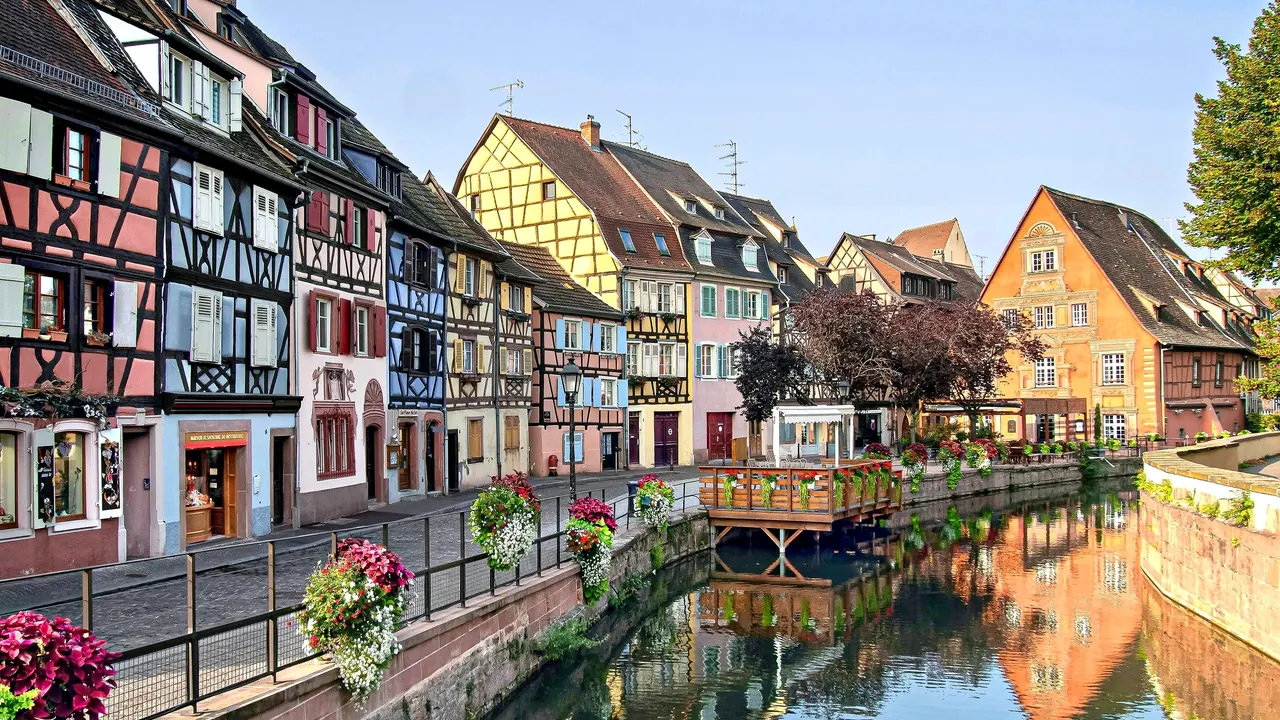
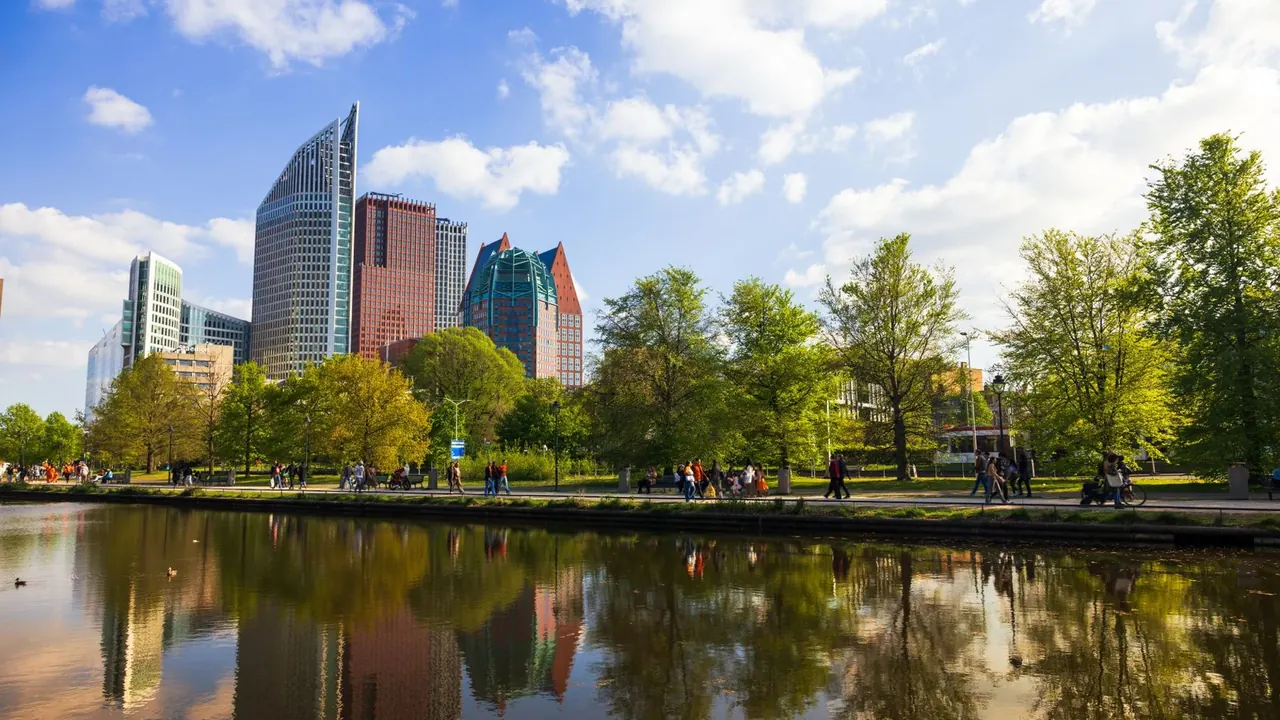
Photos: Colmar by Rolf Kranz, CC BY-SA 4.0, cropped; The Hague by Bráulio jardim, Pexels License.
Colmar or The Hague?
Our verdict in twelve categories, each scored against the same fixed benchmark cities, and the climate month by month, so you can choose for your trip.
Choose Colmar for
- nature and the outdoors
- food and drink
- prices
Colmar is the pick for travellers who want wine, food and countryside around a small, painted old town. Its winstubs and cellar tastings, the vineyard paths and the high Vosges ridge make it a place for slow days outdoors and long dinners. It suits couples and walkers with a car who don't mind quiet evenings.
Choose The Hague for
- beaches
- live music and the arts
- nightlife
The Hague works better if you'd rather leave the car at home and still have the sea, a stage and a bit of evening life within reach. Trams run to a sandy beach, Nederlands Dans Theater performs here, and the trains to Delft, Leiden and Amsterdam are quick. That makes it the stronger choice for families and for anyone who wants a city that keeps going after dinner.
Scoreboard
Twelve categories on one fixed scale from 0 to 100. The shaded stretch is the gap between the two.
Your match
Pick a travel style or drag the sliders, and both match scores follow your weighting.
Wins on nature and the outdoors and food and drink with your weighting.
Wins on beaches and live music and the arts with your weighting.
What matters to you?
Category by category
What the scores mean for a trip.
Beaches & swimming
Colmar has no beach to speak of. It lies deep in the Rhine plain, and swimming means a municipal pool or a small lake up in the Vosges.
The Hague has the sea inside the city limits. Scheveningen's broad sand is a short tram ride from the centre, and Kijkduin is quieter, with dunes behind it. The North Sea stays cold and choppy, so expect sunbathing and quick dips rather than long swims. Even so, it's a real beach day, which Colmar can't offer.
Food & drink
Colmar is the better place to eat. You get the whole of Alsatian cooking in wood-panelled winstubs, from choucroute and baeckeoffe to munster cheese, and Riesling and Gewurztraminer are poured straight from the slopes outside town. Outside the regional cooking, the choice is narrow.
The Hague's strength is elsewhere. Its Indonesian food, from a full rijsttafel to plates of rendang and sate, is unusually good because of long ties to the former East Indies. The rest is herring carts, harbour fish stalls and solid brown cafés, which are pleasant but rarely a reason to travel.
Culture & sights
The two are broadly even, but they offer different things. Colmar's draw is a whole late-medieval townscape of painted half-timbering and canals, plus one overwhelming masterpiece: Grünewald's Isenheim Altarpiece in the Unterlinden Museum.
The Hague is stately rather than picturesque. Its sights are the Binnenhof and the institutions of government and international law, and its art is Golden Age painting at the Mauritshuis, with Vermeer and Rembrandt, plus Mondrian and Escher. Colmar takes about two days, while The Hague rewards an extra one.
Nightlife
The Hague gives you more of an evening, though it's still a modest one. Terraces on the Plein fill after work, the Grote Markt bars stay busy at weekends, and in summer the beach pavilions at Scheveningen turn to music and dancing.
In Colmar the night usually ends with dinner and a glass of wine by the canals. There are few clubs and the streets go quiet early. In both cities, a real night out means a train ride, to Strasbourg from Colmar or to Rotterdam and Amsterdam from The Hague.
Nature & outdoors
Colmar has far richer country on its doorstep. Vineyards rise straight out of the plain onto the Vosges, and within an hour you can be on the high ridge road near the Grand Ballon, with views to the Black Forest and sometimes the Alps. There are forested trails, lakes and some winter skiing, and autumn is the best season.
The Hague's outdoors is entirely flat and shaped by the coast: the protected dunes of Meijendel, the old Haagse Bos forest, beach walks and kitesurfing. It's pleasant for cycling, but there isn't a hill anywhere.
Day trips
Both are excellent bases, and they differ in what you visit. From Colmar, the outings are wine villages a few kilometres apart, such as Eguisheim, Riquewihr and Kaysersberg, plus Strasbourg, Basel and Freiburg across two borders.
From The Hague, the outings are cities. Delft and Leiden are minutes away, and Rotterdam, Gouda and Amsterdam are an easy train ride, with Kinderdijk's windmills and the spring bulb fields added in. The Dutch trips all work by train. The Alsace villages are best done by car or bike.
Good for families
The Hague is the easier family base, mainly because so much is in town. Madurodam, the sea aquarium, the beach and Museon are a tram ride from the centre, and Duinrell is just outside. Rainy days push everyone indoors, though.
Colmar itself is gentle with children, with boat rides through Petite Venise and storks on the rooftops. Its bigger draws are the otter park at Hunawihr, the macaques at Kintzheim and Europa-Park, and almost all of them need a car.
Getting around
The Hague is much easier to get around without a car. Trams link the compact centre to the beach and the Peace Palace, bike lanes run almost everywhere, and two main stations put the neighbouring cities within suburban reach.
Colmar's centre is small enough that you'll walk everywhere, and trains to Strasbourg and Mulhouse are quick. The villages and the Vosges are where it gets harder, since buses are thin. Most visitors hire a car or a bicycle.
Shopping & style
The Hague has more to browse. Antique dealers, galleries and small boutiques line the Denneweg and Noordeinde, the 1880s Passage is a covered arcade, and the Haagse Markt is a huge open-air market of fabrics and spices. What it lacks is a local craft to bring home.
Colmar is the reverse. The range is small, but what you take home is distinctly regional: wine bought from the producer, Soufflenheim pottery, kougelhopf moulds and printed table linen. Its Christmas markets are the shopping high point of the year.
Affordability
Colmar is the cheaper of the two, at ordinary French provincial levels, with reasonable set lunches and often free tastings in the villages. Rooms are the exception: they get expensive in summer and especially during the Christmas market weeks, and staying in a nearby village helps.
The Hague charges full Northern European rates, with a premium for seafront hotels in summer. Weekends can be easier on the budget because business travellers fill central hotels during the week. Indonesian and Surinamese eateries and the Haagse Markt help keep daily costs down.
Live music & performing arts
The Hague has much more on stage. Nederlands Dans Theater, one of the world's leading contemporary dance companies, is based here, and the Residentie Orkest plays a full season. Much of the theatre is in Dutch, and there's no resident opera company.
Colmar has a small Italian-style theatre with touring opera, and its main moments are the classical festival in July and the jazz festival in autumn. Outside those weeks, a serious concert means going to Strasbourg or Basel.
Wellness & relaxation
The Hague has an actual wellness culture: large Dutch sauna complexes where you can spend a whole day moving between steam rooms, cold plunges and quiet gardens. Nudity is usually the rule. The calm streets of embassies and offices help you unwind too.
Colmar has only hotel spas. Its restfulness comes from the pace: long lunches, quiet canals once the day-trippers leave, and slow walks through the vines.
When should you go?
Pick your month. The climate figures are measured averages, not a forecast.
Colmar in July
The Hague in July
Daytime high, °C
Rainfall in the month, mm
Where the figures come from
The Hague has no rain gauge within 25 km of the centre, so its rainfall comes from a gridded climate dataset read at the city rather than from a gauge further away.
The Hague's sunshine is measured 60 km from the centre, at De Bilt.
Temperature and rainfall are climate normals, averaged over the years shown. Colmar: 1991-2020 normals, Ihringen (21.1 km from centre). The Hague: 1991-2020 normals, Valkenburg (13.6 km from centre).
Colmar has the warmer summer. Afternoons reach about 27°C in August, which is good weather for terrace dinners and vineyard walks without being too hot for the streets. May to August is also its wettest stretch, though. September and October are drier and still mild, and that makes them the best time for walking among the vines. Spring warms up quickly from April. Winters are chilly, with highs of about 6°C and very little sunshine from November to January, but they are also the driest part of Colmar's year.
The Hague stays cooler in summer, with highs of around 21°C in July and August. That's pleasant for walking the streets but only just warm enough for the beach, and the North Sea reaches about 19°C at best. Its rain runs the other way from Colmar's. April to June is the driest and sunniest time, and the rain builds through autumn to around 104mm in October. Winter highs are about the same in both cities, but The Hague's winter months are much wetter.
Which traveller are you?
For an outdoors trip, Colmar is the clear choice. Marked trails through the vines link the wine villages, the Route des Crêtes climbs to glacial lakes and summer pastures, and the flat plain is easy cycling. The Hague's dunes are pleasant, but they're flat and windy.
On a beach and sun trip, only The Hague is in the running. Scheveningen is a long sandy beach a short tram ride from the centre, with pavilions and a pier. Colmar is far inland, and the nearest swim is a pool or a mountain lake.
On a family trip with children, The Hague is easier. Madurodam, the sea aquarium, the beach and Duinrell are all close, and trams take pushchairs. Colmar has storks, monkeys and Europa-Park nearby, but you'll need a car for nearly all of it.
Before you go
| Measure | Colmar | The Hague |
|---|---|---|
| Official language | French | Dutch |
| Currency | Euro (EUR) | Euro (EUR) |
| Sockets | CE230 V, 50 Hz | CF230 V, 50 Hz |
| Driving side | Right | Right |
| Time zone | UTC+1, UTC+2 in summer | UTC+1, UTC+2 in summer |
| Emergency number | 112 | 112 |
| Elevation | 185 m | 1 m |
| Main airport | EuroAirport Basel–Mulhouse–Freiburg (BSL)55 km from centre112 non-stop destinations | Rotterdam The Hague Airport (RTM)16 km from centre53 non-stop destinations |
| Public holidays this year | 11 days | 11 days |
By the numbers
| Measure | Colmar | The Hague |
|---|---|---|
| City population | 66,970 | 548,320 |
| People per km² | 1,006 | 5,589 |
| Museums within 10 km | 9 | 54 |
| UNESCO World Heritage sites within 50 km | 3 | 4 |
| Swim season, months above 21 °C | - | None |
Where else could you go?
Every comparison below shares a destination with this one, so you can follow Colmar or The Hague somewhere new.
- Rotterdamvs The Hague
- Haarlemvs The Hague
- Amsterdamvs The Hague
- Utrechtvs The Hague
- Baselvs Colmar
- Strasbourgvs Colmar