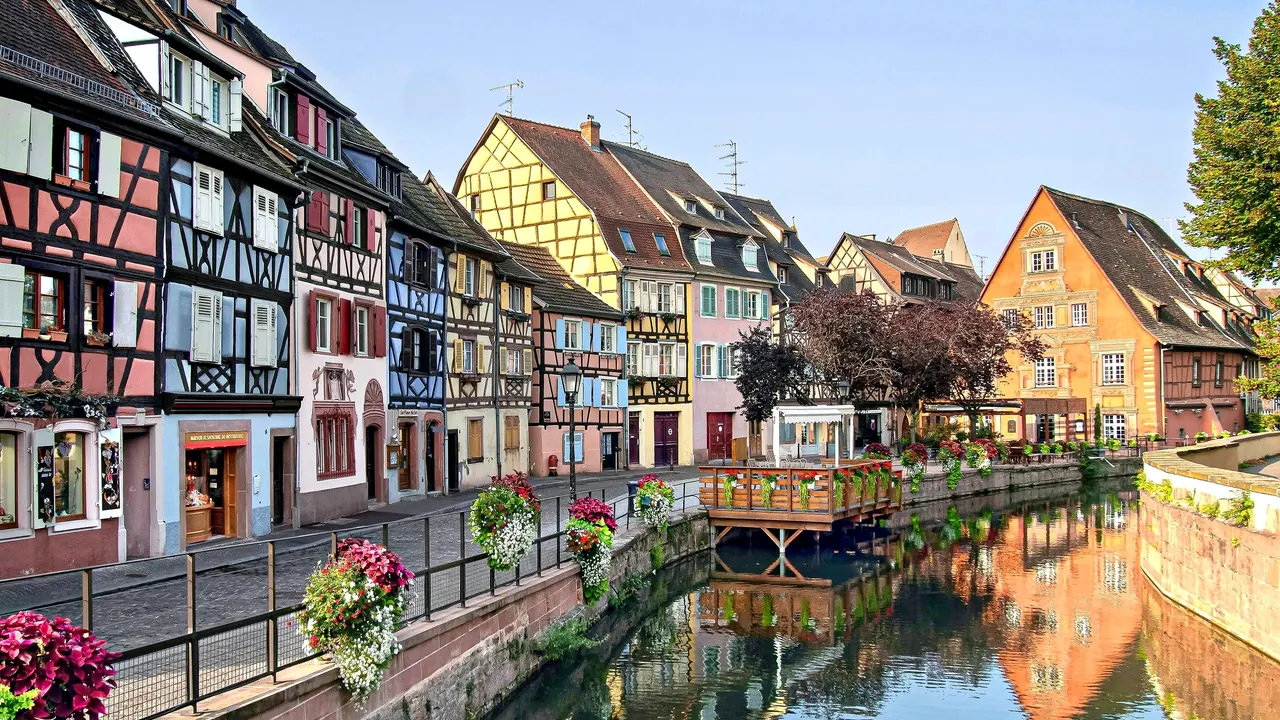
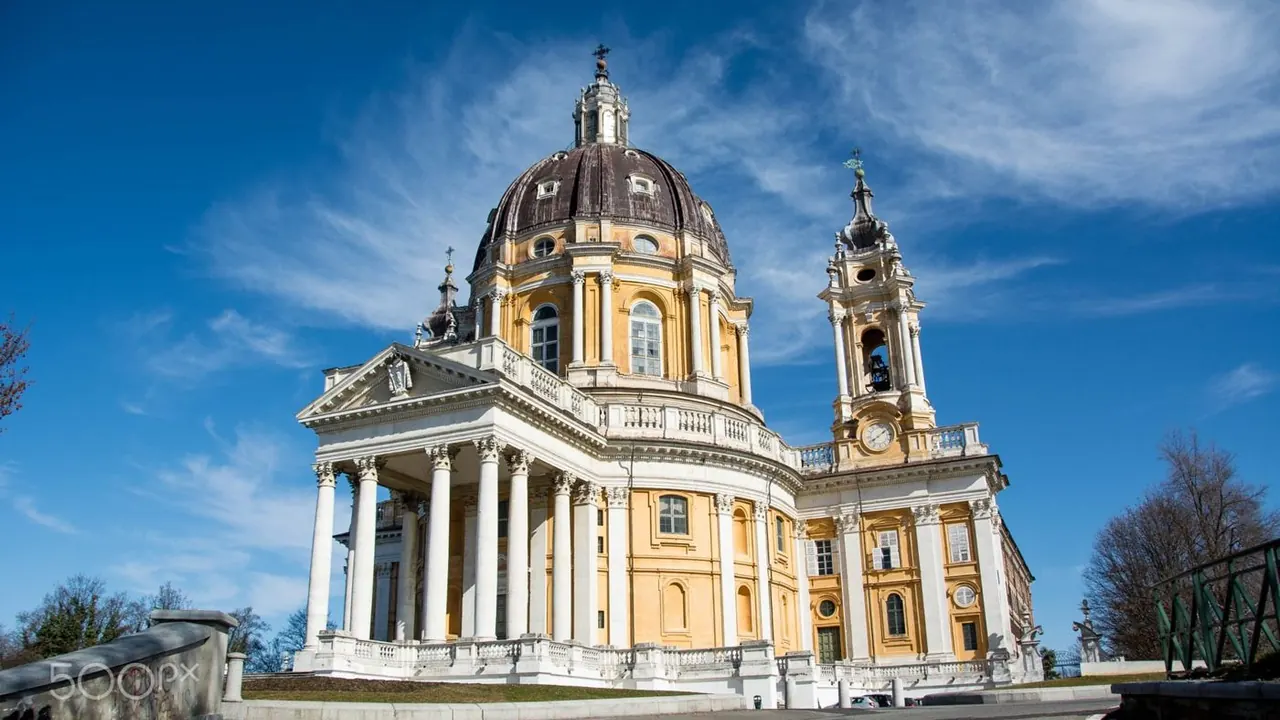
Photos: Colmar by Rolf Kranz, CC BY-SA 4.0, cropped; Turin by Konstantin Dacosta, CC BY 3.0, cropped.
Colmar or Turin?
Our verdict in twelve categories, each scored against the same fixed benchmark cities, and the climate month by month, so you can choose for your trip.
Choose Colmar for
- families
- day trips
Colmar suits a slow, small-scale trip built around wine and villages. The painted half-timbered old town, the Isenheim Altarpiece and the canals of Petite Venise fill two unhurried days, and after that the town works as a base for Riquewihr, Eguisheim, the Vosges ridge and Strasbourg. It fits couples who want long dinners and quiet evenings, and families with a car who will use the parks and castles around it. Expect early nights and little to do after dark.
Choose Turin for
- live music and the arts
- nightlife
- shopping
Turin is the better pick if you want a proper city. It has a larger and more varied food scene, the Museo Egizio and the Savoy palaces, a real opera house and orchestra, and an evening that runs from aperitivo to bar streets and the riverside. The Alps and the Langhe wine hills are both within reach, so a week never runs short. It also costs a little less day to day, though its charm is stately rather than storybook.
Scoreboard
Twelve categories on one fixed scale from 0 to 100. The shaded stretch is the gap between the two.
Your match
Pick a travel style or drag the sliders, and both match scores follow your weighting.
Wins on families and day trips with your weighting.
Wins on live music and the arts and nightlife with your weighting.
What matters to you?
Category by category
What the scores mean for a trip.
Beaches & swimming
Neither city is a place for the water, but Turin comes out slightly ahead because the Ligurian Riviera is within a long day's reach, and the lakes at Avigliana, Viverone and Lago Maggiore give it more choice in summer. Colmar has municipal pools and a few small Vosges lakes, and no sea within practical distance.
Food & drink
Colmar's table is all Alsace: winstub dishes such as choucroute, baeckeoffe and tarte flambée, munster cheese, and white wines poured from the slopes outside town. It is hearty and characterful, but once you step outside regional cooking the choice is narrow, and the prettiest lanes have their share of tired menus.
Turin goes deeper and wider. You get agnolotti del plin, vitello tonnato, autumn truffles from the Langhe and red wines like Barolo and Barbaresco, plus the city's own vermouth, aperitivo, gianduiotto chocolate and bicerin in the arcade cafés. Porta Palazzo market adds cheap everyday eating that a small town like Colmar cannot match.
Culture & sights
Colmar's appeal is the townscape: an intact old centre of painted half-timbered houses, Maison Pfister, the Koïfhus and the canals. Its single great work of art is Grünewald's altarpiece at the Unterlinden. It is concentrated and memorable, but small.
Turin works on a different scale. A former royal capital, it has the Museo Egizio, the Royal Palace and armoury, Palazzo Madama, the Shroud cathedral and the ring of Savoy residences led by Venaria. On top of that come the Cinema Museum in the Mole, the car museum and contemporary art at Rivoli and the GAM, enough for a much longer stay.
Nightlife
Colmar goes quiet early. A few wine bars and brasseries around Petite Venise and some late summer terraces are about all there is, and anyone wanting more takes the train to Strasbourg.
Turin has a real evening culture. Aperitivo leads on to the cocktail bars of the Quadrilatero Romano, crowded pavements in San Salvario, the more alternative Vanchiglia and the Murazzi by the Po in summer, with clubs in old industrial spaces. The mood is sociable rather than wild, but there is far more going on than in Colmar.
Nature & outdoors
Colmar's countryside is gentle and close at hand. You can walk through the vineyards between wine villages, drive up the rounded forested Vosges along the Route des Crêtes or cycle the flat wine route, and the Black Forest is about an hour away.
Turin has the bigger outdoors. The Alps are about an hour away, with ibex and high trails in Gran Paradiso, serious skiing around Sestriere, and hut-to-hut hiking and climbing in summer. Closer to town there are the Superga hills, the Mandria forest and the cycle paths along the Po.
Day trips
Both cities are superb bases, and the difference lies in the kind of outing. From Colmar the trips are short and close together: storybook wine villages a few kilometres apart, Haut-Koenigsbourg, Strasbourg half an hour by train, and Basel and Freiburg across two borders.
Turin's trips cover more ground and more variety. The Langhe wine hills and Alba sit about an hour south and Milan is an hour by fast train, while the Sacra di San Michele, Aosta and Genoa make fuller days. Colmar's villages really need a car or bike, whereas Turin's city trips run easily by rail.
Good for families
Colmar has a slight edge with children, mostly thanks to what surrounds it. The town is small and flat, with canal boats, a tourist train and a children's Christmas market. Within a short drive are the stork and otter park at Hunawihr, the macaques of Montagne des Singes and Europa-Park.
Turin's flat, arcaded grid is easy with a pushchair, and older children enjoy the glass lift in the Mole, the mummies and the planetarium. It has no zoo or theme park within the city, though, and its main family day out, Zoom Torino, involves a drive.
Getting around
Both centres are walked rather than ridden, and Turin is a little easier overall. Colmar's old town is so small that the station and the museums are minutes apart, but the villages and the Vosges have thin bus services, so a hired car or bicycle becomes almost essential.
Turin adds a driverless metro line, trams and good rail links to the rest of Italy. Its long arcades make walking pleasant in rain or sun, and you only need a car for the wine hills and the mountains.
Shopping & style
Colmar is for regional souvenirs: wine bought from the grower, Soufflenheim pottery, kougelhopf moulds, printed Alsatian linen and gingerbread. December, when the Christmas markets spread across several squares, is the best time for it. Fashion barely features.
Turin has a real retail spread. Big labels line the arcades of Via Roma, mainstream shops fill Via Garibaldi, and antique dealers cluster on Via Maria Vittoria. The Balon flea market runs on Saturdays, and the chocolate makers and delicatessens make food the standout buy.
Affordability
Turin is the easier city on the wallet. A generous aperitivo can stand in for dinner, the trattorie and Porta Palazzo market are good value, and central hotels are fairly priced except during trade fairs.
Colmar's meals and village wine tastings are reasonable, but rooms are the problem. A small town with high demand gets expensive in summer and especially during the Christmas market weeks, so staying in a nearby village helps.
Live music & performing arts
Here the gap is wide. Colmar has a small Italian-style theatre, visits from the Opéra national du Rhin and a calendar that comes alive mainly for the July classical festival, the autumn jazz festival and the wine fair concerts.
Turin runs a full year-round programme. The Teatro Regio stages opera and ballet, the RAI National Symphony Orchestra plays at its own auditorium, and there are concerts at the Lingotto and jazz clubs across the centre. The plays at the Teatro Carignano are almost all in Italian, though.
Wellness & relaxation
Neither city has a bathing tradition, and both rely on hotel spas, but Turin offers a little more. It has a few day spas, and thermal waters at Acqui Terme and in the Aosta valley are reachable in a long excursion.
Colmar's restfulness is of a quieter, rural kind: canal-side evenings once the day-trippers have gone and slow walks through the vines. Turin's calm is urban, found in long coffee breaks in historic cafés and afternoons in Valentino park.
When should you go?
Pick your month. The climate figures are measured averages, not a forecast.
Colmar in July
Turin in July
Daytime high, °C
Rainfall in the month, mm
Where the figures come from
Turin has no rain gauge within 25 km of the centre, so its rainfall comes from a gridded climate dataset read at the city rather than from a gauge further away.
Temperature and rainfall are climate normals, averaged over the years shown. Colmar: 1991-2020 normals, Ihringen (21.1 km from centre). Turin: 1991-2020 normals, Torino / Caselle (15.4 km from centre).
Colmar is at its best from late May to September, when daytime highs sit in the mid-twenties and June to August bring its longest, sunniest days. Rain is spread through the warm months rather than kept to one season, and May is the wettest month at 87mm. September and October stay mild and are good for walking in the vineyards at harvest time. Winter is cold and grey, with highs of around 6°C and little sun, so walking the streets for long is chilly, though winter is also the driest part of the year and December is when the Christmas markets are on.
Turin runs a few degrees warmer all year, and its rain falls in two bursts. Spring is wet, peaking in May at 115mm, June stays fairly damp, and the rain returns in October and November. July is the driest of the warm months, but highs of about 29°C make it hot work on the plain, which is when the shade of the arcades and trips into the Alps help. September is the best month for walking the city, with highs around 24°C and less rain than June or late autumn. Neither city has a sea, but July and August are warm enough for lake swimming near both.
Which traveller are you?
On a family trip with young children, Colmar is the easier choice. Boat rides through Petite Venise, storks on the rooftops, the monkey park and eagle show at Kintzheim and Europa-Park across the Rhine are enough for several days with a car.
For a food and nightlife trip, Turin wins comfortably. Piedmontese cooking, Barolo, vermouth and the aperitivo ritual lead into evenings in San Salvario, the Quadrilatero and along the Murazzi. In Colmar the night ends with dinner and a glass of Riesling.
On a culture and arts trip, Turin offers more depth. The Museo Egizio, the Royal Palace, the Cinema Museum and contemporary art at Rivoli sit alongside a full opera season. Colmar's Isenheim Altarpiece is superb, but its old town is covered in two days.
Before you go
| Measure | Colmar | Turin |
|---|---|---|
| Official language | French | Italian |
| Currency | Euro (EUR) | Euro (EUR) |
| Sockets | CE230 V, 50 Hz | CFL230 V, 50 Hz |
| Driving side | Right | Right |
| Time zone | UTC+1, UTC+2 in summer | UTC+1, UTC+2 in summer |
| Emergency number | 112 | 112 |
| Elevation | 185 m | 239 m |
| Main airport | EuroAirport Basel–Mulhouse–Freiburg (BSL)55 km from centre112 non-stop destinations | Turin Airport (TRN)14 km from centre65 non-stop destinations |
| Public holidays this year | 11 days | 13 days |
By the numbers
| Measure | Colmar | Turin |
|---|---|---|
| City population | 66,970 | 841,600 |
| People per km² | 1,006 | 6,474 |
| Museums within 10 km | 9 | 72 |
| UNESCO World Heritage sites within 50 km | 3 | 4 |
Where else could you go?
Every comparison below shares a destination with this one, so you can follow Colmar or Turin somewhere new.