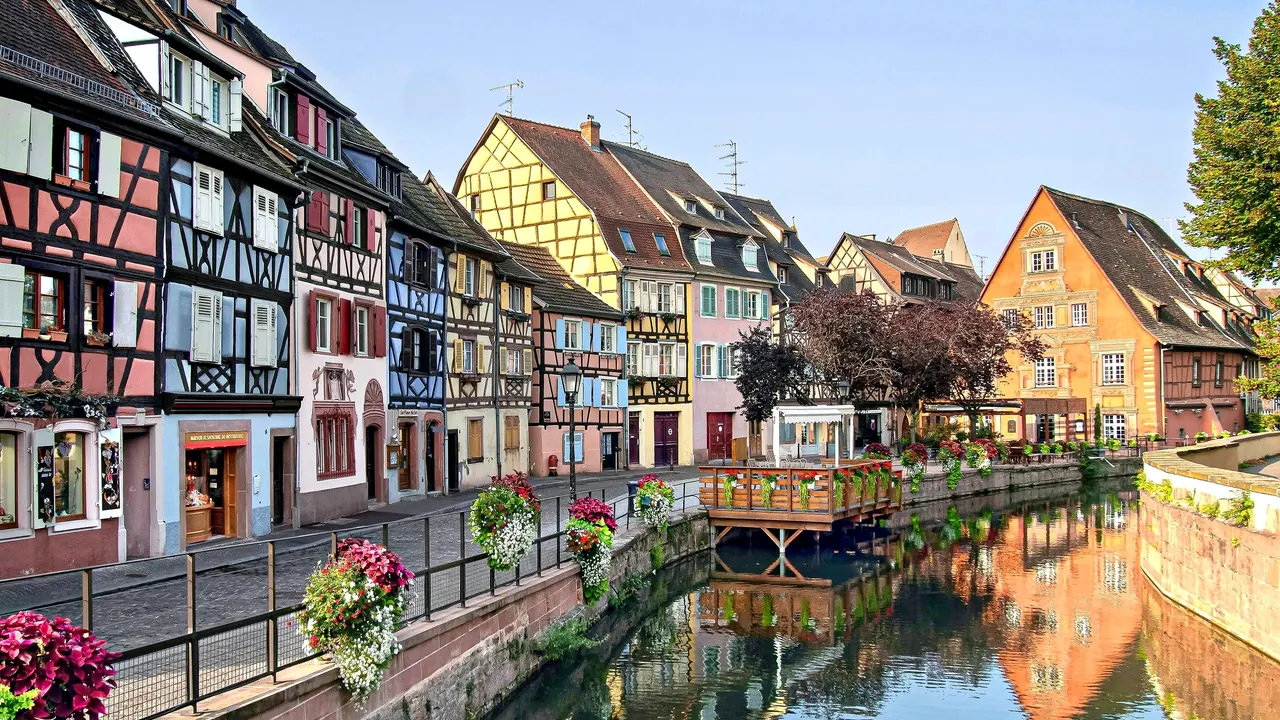
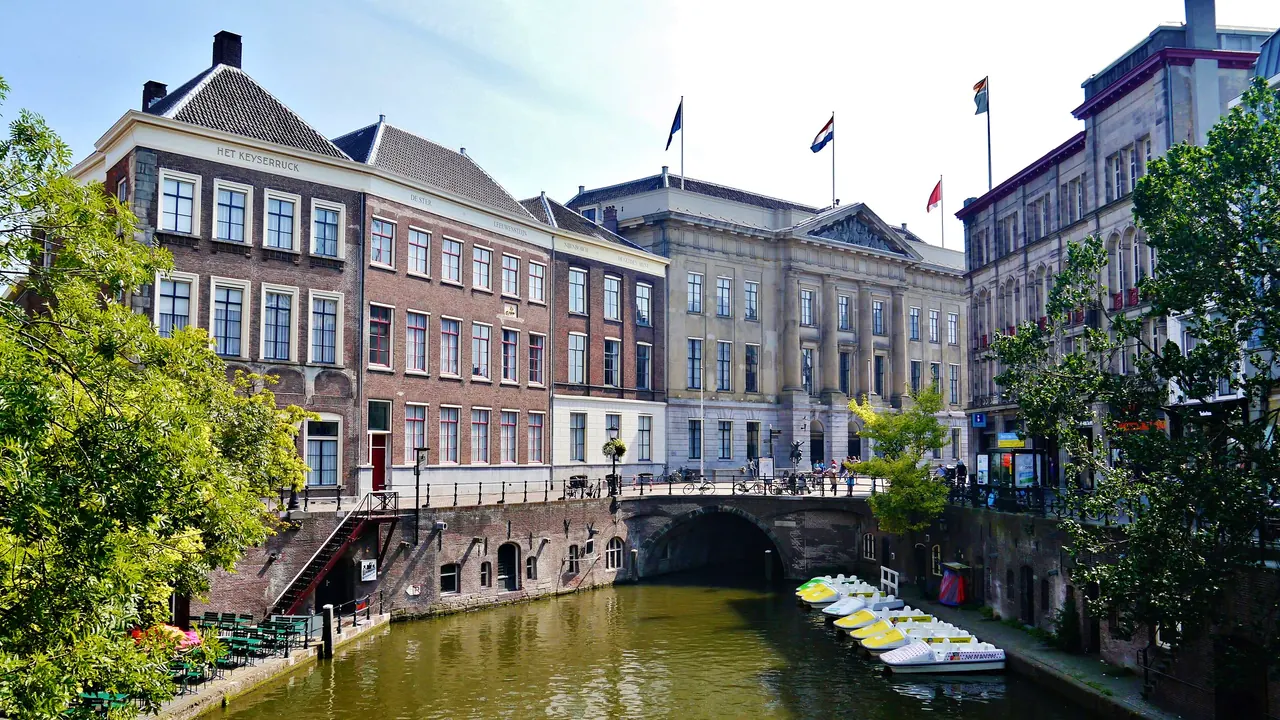
Photos: Colmar by Rolf Kranz, CC BY-SA 4.0, cropped; Utrecht by Zairon, CC BY-SA 4.0, cropped.
Colmar or Utrecht?
Our verdict in twelve categories, each scored against the same fixed benchmark cities, and the climate month by month, so you can choose for your trip.
Choose Colmar for
- food and drink
- nature and the outdoors
- prices
Colmar is the pick for travellers who want to eat, drink and walk. The cooking of Alsace, the wine cellars a short drive away and the climb from the vineyards into the Vosges make it a place for long lunches and long days outdoors. It suits a couple with a car, a slower pace and quiet evenings, and it costs a little less than Utrecht for the same comfort.
Choose Utrecht for
- live music and the arts
- nightlife
- getting around
Utrecht suits people who want a city that works without effort and keeps going after dark. Trains from the station on the edge of the old town reach most of the Netherlands, the student bars along the Oudegracht stay full on weeknights, and TivoliVredenburg gives it a real concert life. Go there for music, canal terraces and easy day trips, not for the food or the scenery.
Scoreboard
Twelve categories on one fixed scale from 0 to 100. The shaded stretch is the gap between the two.
Your match
Pick a travel style or drag the sliders, and both match scores follow your weighting.
Wins on food and drink and nature and the outdoors with your weighting.
Wins on live music and the arts and nightlife with your weighting.
What matters to you?
Category by category
What the scores mean for a trip.
Beaches & swimming
Neither city is a place to swim, but Utrecht has more options. Its recreation lakes, such as the Maarsseveense Plassen, are on the edge of the city, and the North Sea at Zandvoort or Scheveningen is a train ride of about an hour, though the water stays cool.
Colmar is far from any coast. In a hot spell you have the town pools or a small lake up in the Vosges valleys.
Food & drink
Colmar is the better place to eat by a distance. It has a real regional cuisine, choucroute, baeckeoffe, tarte flambée and munster cheese served in wood-panelled winstubs, with Riesling and Gewurztraminer from the slopes outside town and a few ambitious tables along the wine route. Just steer clear of the tired menus in the most photographed streets.
Utrecht has no cooking of its own to match. The pleasure there is the setting, eating at the water's edge on the Oudegracht wharves, plus casual Indonesian and Surinamese kitchens and Belgian beer in the brown cafés.
Culture & sights
The two are fairly evenly matched, and both take two or three days. Colmar's appeal is a whole townscape of painted half-timbered houses, Petite Venise and the Koïfhus, with one great painting at its centre: Grünewald's Isenheim Altarpiece in the Unterlinden Museum.
Utrecht offers a medieval centre built around the Dom Tower, which you can climb, and the unusual two-level Oudegracht. Its strength is modern design, with the De Stijl collections of the Centraal Museum and the Rietveld Schröder House, which is on the UNESCO list.
Nightlife
Colmar's evenings centre on the dinner table. After a long meal in a winstub you might move on to a wine bar near Petite Venise or stay out on a summer terrace, but by late evening the old town is mostly asleep. Even the Christmas markets and the summer wine fair, which bring big crowds, do not turn into a late-night scene.
Utrecht has far more going on once dinner is over. Late in the evening the squares of the Neude and the Janskerkhof are still full, people sit drinking on the canal wharves in summer, and a few clubs, some run by cultural organisations, keep going after the bars close. Neither city is the place for a big night out, and both send serious clubbers off by train, Colmar to Strasbourg and Utrecht to Amsterdam.
Nature & outdoors
Colmar has much the richer landscape. Vineyards rise from the Rhine plain to the rounded, forested Vosges, with summer pastures, glacial lakes, the high ridge road past the Grand Ballon and views across to the Black Forest. There is even some modest skiing in winter, although a car helps a great deal.
Utrecht's countryside is flat and pleasant. You can cycle along the Vecht past country estates and windmills, walk the heath and low ridges of the Utrechtse Heuvelrug or sail on the Loosdrecht lakes, but there are no real heights.
Day trips
Both make excellent bases, but in different ways. From Colmar the best trips are short hops by car or bike to wine villages such as Eguisheim, Riquewihr and Kaysersberg, plus Haut-Koenigsbourg on its ridge. Strasbourg, Basel and Freiburg take you across borders and into three cultures.
Utrecht's trips run on the national railway. Amsterdam, Rotterdam, The Hague, Delft and Gouda are all an easy train ride away, with Kasteel de Haar and Kinderdijk further out, and you never need a car.
Good for families
Both are calm, safe places with children. Colmar's charm is in town, with boat rides through Petite Venise and storks on the rooftops, while the big outings are a drive away: the stork park at Hunawihr, the macaques at Kintzheim and Europa-Park across the Rhine.
Utrecht keeps more within walking distance. The Railway Museum and the Miffy museum are in the city itself, which is easier without a car. The thing to watch is the constant stream of bikes.
Getting around
Utrecht is much easier to get around. Utrecht Centraal sits on the edge of the old town, the sights are a flat walk away, trams and buses use the same tap-in card as the trains, and a rental bike covers everything else.
Colmar's centre is just as walkable, and trains reach Strasbourg and Mulhouse quickly. But the wine villages and the Vosges have only thin bus services, so to see the region properly you need a hired car or bicycle.
Shopping & style
Utrecht is the better place to shop. Independent fashion, design and book shops line the Twijnstraat and the Elisabethstraat, the Hoog Catharijne mall by the station has the chains, and there are flower and textile markets.
Colmar's shopping is mostly about things to take home from Alsace: wine bought from the producer, Soufflenheim pottery, printed table linen and gingerbread. Its Christmas markets are the high point of the year.
Affordability
Colmar is somewhat easier on the wallet. Set lunches and regional wine are reasonable, village tastings cost little or nothing, and staying out of the centre keeps rooms affordable, except during the Christmas weeks.
Utrecht's old town has few hotels, so beds there cost what they would in a large city, and a dinner with drinks adds up. Student lunch cafés and a bike in place of transport help, but the room bill is hard to avoid.
Live music & performing arts
Utrecht has the stronger music life. TivoliVredenburg puts classical, pop, jazz and experimental music under one roof most evenings, and the Festival Oude Muziek draws early-music lovers from across Europe. There is no opera house, though, and most theatre is in Dutch.
Colmar's calendar depends on its festivals: classical music in July, jazz in autumn and the wine-fair concerts. Its small municipal theatre has a modest season, and for anything bigger people travel to Strasbourg or Basel.
Wellness & relaxation
Neither city has a tradition of baths. Utrecht has the edge thanks to the large Dutch sauna complexes in the green belt around the city, with steam rooms and outdoor pools, as well as calm spots like the Pandhof cloister garden.
Colmar has only hotel spas in town and in the wine villages. What it offers instead is a slow rhythm of long lunches, quiet canal evenings and walks through the vines.
When should you go?
Pick your month. The climate figures are measured averages, not a forecast.
Colmar in July
Utrecht in July
Daytime high, °C
Rainfall in the month, mm
Temperature and rainfall are climate normals, averaged over the years shown. Colmar: 1991-2020 normals, Ihringen (21.1 km from centre). Utrecht: 1991-2020 normals, De Bilt (4.3 km from centre).
Colmar has the warmer summer and the more marked seasons. July and August reach about 27°C with plenty of sunshine, good weather for vineyard walks and the Vosges ridges, though May is its wettest month. Winters are cold but fairly dry, and the short grey days of December and January suit the Christmas markets better than long sightseeing walks. Autumn, with the grape harvest, stays mild into September.
Utrecht's summer is cooler, around 23°C, which is comfortable for walking and cycling but rarely beach weather, and the North Sea only climbs to about 19°C by August. Its rain is spread across the year, and autumn and winter are wetter than in Colmar, often around 80mm a month. Late April to June is the driest and sunniest part of the year there, the best time for the canals and the countryside.
Which traveller are you?
For an outdoors trip, Colmar is the clear choice. Marked trails run through the vines between wine villages, and the forested Vosges, the Route des Crêtes and the glacial lakes are close by. Around Utrecht the land is flat, better for easy cycling than hiking.
For a short city break, Utrecht has the edge. The old town starts at the station, the Dom and the canals are a short walk away, and evenings bring canal-side bars and concerts at TivoliVredenburg. Colmar's compact old town goes quiet after dinner.
On a trip on a tight budget, Colmar goes further. Its best days cost little: wandering the painted lanes of the old town, walking the vineyard paths or cycling the wine route between villages. Utrecht is dearer overall, and beds most of all.
Before you go
| Measure | Colmar | Utrecht |
|---|---|---|
| Official language | French | Dutch |
| Currency | Euro (EUR) | Euro (EUR) |
| Sockets | CE230 V, 50 Hz | CF230 V, 50 Hz |
| Driving side | Right | Right |
| Time zone | UTC+1, UTC+2 in summer | UTC+1, UTC+2 in summer |
| Emergency number | 112 | 112 |
| Elevation | 185 m | 5 m |
| Main airport | EuroAirport Basel–Mulhouse–Freiburg (BSL)55 km from centre112 non-stop destinations | Amsterdam Airport Schiphol (AMS)34 km from centre287 non-stop destinations |
| Public holidays this year | 11 days | 11 days |
By the numbers
| Measure | Colmar | Utrecht |
|---|---|---|
| City population | 66,970 | 359,370 |
| People per km² | 1,006 | 3,619 |
| Museums within 10 km | 9 | 28 |
| UNESCO World Heritage sites within 50 km | 3 | 5 |
| Swim season, months above 21 °C | - | None |
Where else could you go?
Every comparison below shares a destination with this one, so you can follow Colmar or Utrecht somewhere new.
- Amsterdamvs Utrecht
- Haarlemvs Utrecht
- Rotterdamvs Utrecht
- The Haguevs Utrecht
- Baselvs Colmar
- Strasbourgvs Colmar