Photos: Colmar by Rolf Kranz, CC BY-SA 4.0, cropped; Vaduz by Justin LaBerge, CC BY 2.0, cropped.
Colmar or Vaduz?
Our verdict in twelve categories, each scored against the same fixed benchmark cities, and the climate month by month, so you can choose for your trip.
Choose Colmar for
- prices
- food and drink
- culture and sights
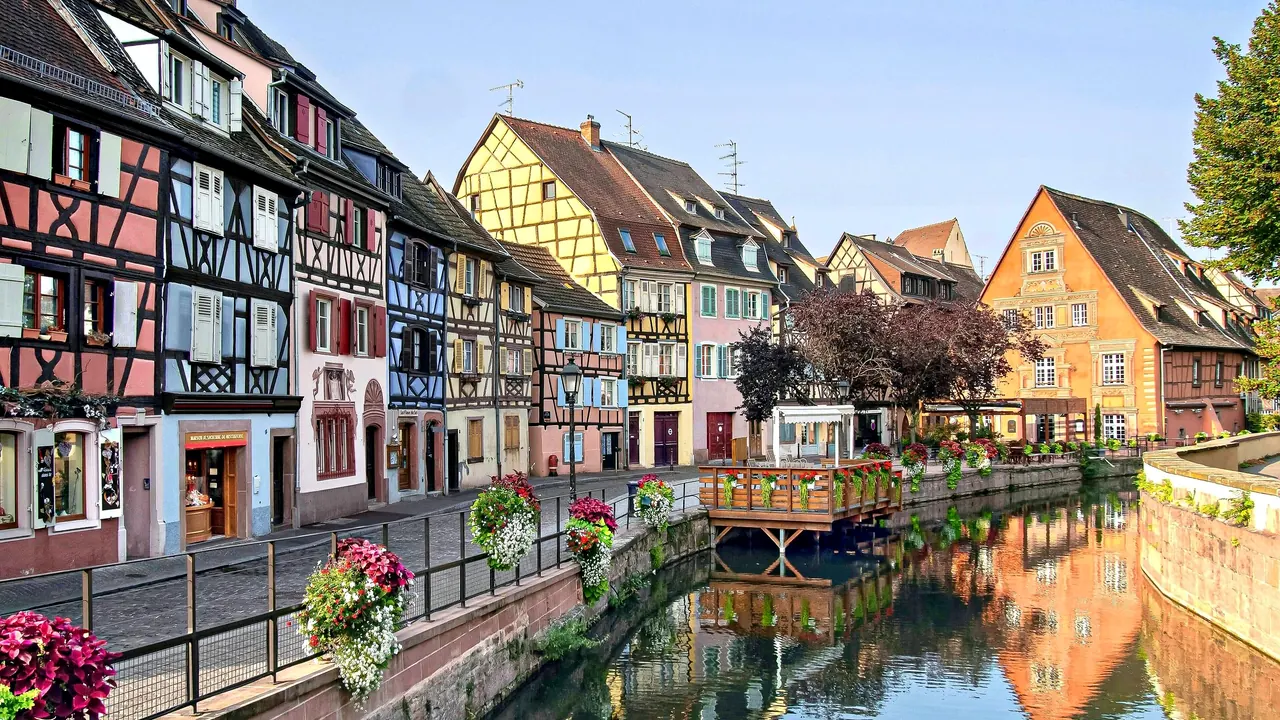
Colmar is the better pick for most trips. Its painted old town and the Isenheim Altarpiece give real cultural weight, the Alsace cooking and wine are reason enough to come, and the wine villages, Strasbourg and Basel are all close. Families find plenty to do nearby, and the bill stays at a normal French provincial level, apart from the weeks of the Christmas markets.
Choose Vaduz for
- nature and the outdoors
- wellness
- beaches
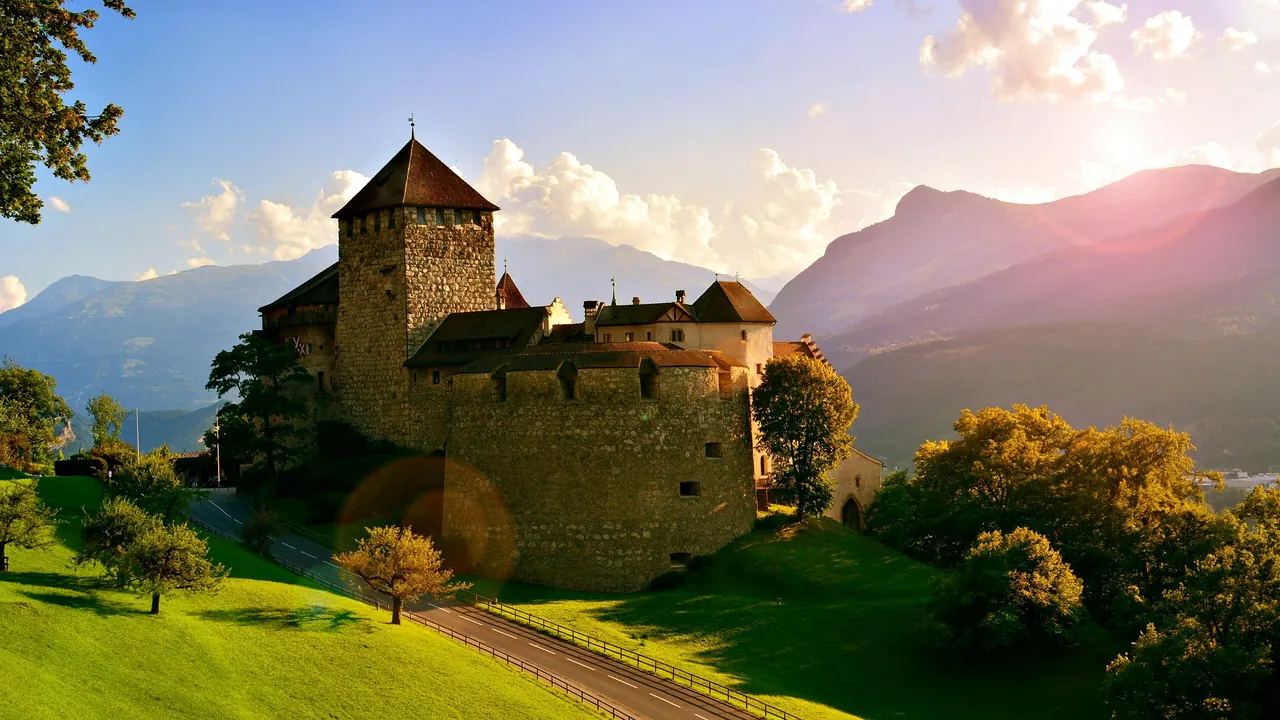
Vaduz suits a quieter traveller whose plans are mostly outdoors. The mountains start at the edge of town and buses run up to Malbun, so walking, ridge hikes and winter skiing come easily, and the thermal baths at Bad Ragaz make a good end to a day on the trails. Expect Swiss prices, a short list of sights and early nights.
Scoreboard
Twelve categories on one fixed scale from 0 to 100. The shaded stretch is the gap between the two.
Your match
Pick a travel style or drag the sliders, and both match scores follow your weighting.
Wins on prices and food and drink with your weighting.
Wins on nature and the outdoors and wellness with your weighting.
What matters to you?
Category by category
What the scores mean for a trip.
Beaches & swimming
Neither town is a place to swim, but Vaduz has better options. The Walensee, under its steep mountain walls, is about half an hour away and Lake Constance is under an hour, so a summer lake afternoon is easy. From Colmar the choice is the municipal pools or one of the small lakes up in the Vosges valleys.
Food & drink
Food is one of the main reasons to visit Colmar. Wood-panelled winstubs serve choucroute garnie, baeckeoffe and tarte flambée, munster cheese comes down from the valleys, and the covered market by the Lauch canal is good for picnic supplies. Riesling, Gewurztraminer and Pinot Gris are poured everywhere, and there is a fine-dining tier along the wine route. The one thing to avoid is the tourist menus on the most photographed streets.
Vaduz offers much less: hotel dining rooms, a few places on the Städtle and hill inns serving Käsknöpfle and rösti. The cooking is solid but there is little range. Its best pleasure is the Pinot Noir from the prince's own vineyards below the castle.
Culture & sights
Colmar gives you a whole late-medieval and Renaissance townscape. Painted half-timbered houses, the Maison Pfister and the canals of Petite Venise lead to the Unterlinden Museum and Grünewald's Isenheim Altarpiece, and two days is about right to see it all.
Vaduz turns towards the twentieth century instead. The Kunstmuseum and the Hilti Art Foundation hold a surprisingly strong modern collection, and there are the National Museum and the Postage Stamp Museum. The castle is the prince's home and closed to visitors, so a single unhurried day covers the town.
Nightlife
Both places go to bed early, but Colmar has a little more going on after dinner. Wine bars, pubs and brasseries around Petite Venise stay open, summer terraces stay pleasant late, and Strasbourg is half an hour away by train if you want more. In Vaduz the evening usually ends in a hotel lounge on the Städtle, and anyone wanting a real night out has to go to Feldkirch or Zurich.
Nature & outdoors
Vaduz has the bigger and steeper landscape, and it is right at the door. You can walk from the town centre up through vineyards and beech forest, Malbun and Triesenberg are half an hour up the road, and the Rätikon offers high routes such as the exposed Fürstensteig. In winter there is skiing at Malbun, with larger Swiss resorts within an hour.
Colmar's countryside is gentler: marked paths through the vines, the Route des Crêtes over the Hohneck and the Grand Ballon, and forested Vosges summits with glacial lakes. The plain is ideal for cycling, and autumn among the turning vines is the best season, but you will want a car to get up into the hills.
Day trips
Colmar is the stronger base, partly because so much is close. Eguisheim, Riquewihr and Kaysersberg are only a few kilometres apart on the Route des Vins, and Strasbourg's cathedral is half an hour away by train. Basel and Freiburg take about an hour or less, and Haut-Koenigsbourg looks out over the plain.
From Vaduz the outings are spread across three countries. Feldkirch is twenty minutes away, and the St Gallen abbey library, Appenzell and Lindau on Lake Constance are each around an hour. Connections often mean a change at Buchs or Sargans.
Good for families
Colmar is much better with children. In town there are flat-bottomed boat rides in Petite Venise, storks nesting on the roofs and a children's Christmas market. Within driving distance are the stork and otter park at Hunawihr, free-roaming macaques at the Montagne des Singes, the Mulhouse train museum and Europa-Park.
Vaduz is safe and calm but has nothing designed for children: no zoo, no theme park, and museums of modern art and stamps. Its strengths are open-air pools, easy walks above Triesenberg and the beginner slopes at Malbun, which suit older children who like to hike.
Getting around
Both towns are small enough to walk across in minutes, and in both a car makes the region easier. The difference is in how you get out of town. Colmar has a railway station with quick trains to Strasbourg and Mulhouse, but buses to the wine villages are thin, so a car or bicycle is the usual answer. Vaduz has no station, but its tidy bus network reaches every village and climbs as far as Malbun.
Shopping & style
Colmar gives you far more to bring home, and most of it comes from the region: wine bought directly from the producers, glazed pottery from Soufflenheim and Betschdorf, printed Alsatian table linen and foie gras. The lanes around the Grand'Rue and Rue des Marchands mix independent boutiques with souvenir shops, and the Christmas markets across several squares are the best time of year to shop. Fashion and big-name stores are thin on the ground.
Vaduz has only the Städtle, where a handful of shops sell watches, jewellery and the collectable Liechtenstein stamps. A bottle from the vineyards below the castle makes a better gift than most of what is on the shelves, and for anything more people go to Zurich.
Affordability
Colmar costs what a well-known French provincial town usually does. Set lunches and regional wine are reasonable, and village tastings are often free. Rooms are the expense, especially during the Christmas market weeks.
Vaduz is in a different price bracket. Swiss price levels apply to everything from a hotel room to a simple lunch, and there are too few hotels to offer much at the budget end. Staying across the border in Austria is the usual way to save.
Live music & performing arts
Colmar has the fuller calendar, and it is built around festivals: an international classical festival in early July, a jazz festival in autumn and big concerts during the summer wine fair. The small Italian-style municipal theatre runs a season of plays, opera and concerts, and the Opéra national du Rhin tours here. Outside the festival weeks, though, serious opera or orchestral music means going to Strasbourg or Basel.
Liechtenstein's main stage is not in Vaduz at all but in neighbouring Schaan, where it hosts drama, dance and touring productions. The country's symphony orchestra gives a short season, Vaduz holds its own summer classical festival, and a cabaret stage and the odd church concert fill the gaps. It is usually enough for one evening out during a week's stay.
Wellness & relaxation
Vaduz has the edge because of Bad Ragaz, twenty-five minutes across the Rhine, where warm water from the Tamina gorge has fed public thermal baths for centuries. Add the mountain views and a few days of walking and it makes a good slow stay. Colmar has only hotel spas, and it relaxes you in a different way: quiet evenings by the canals once the day-trippers leave, and long lunches.
When should you go?
Pick your month. The climate figures are measured averages, not a forecast.
Colmar in July
Vaduz in July
Daytime high, °C
Rainfall in the month, mm
Where the figures come from
Vaduz's temperatures are measured 51 km from the centre, at Sigmarszell-Zeisertsweiler.
Vaduz has no rain gauge within 25 km of the centre, so its rainfall comes from a gridded climate dataset read at the destination rather than from a gauge further away.
Temperature and rainfall are climate normals, averaged over the years shown. Colmar: 1991-2020 normals, Ihringen (21.1 km from centre). Vaduz: 1991-2020 normals, Sigmarszell-Zeisertsweiler (51.3 km from centre).
Colmar is the warmer, drier and sunnier of the two. From June to August afternoons reach around 26°C to 27°C with long sunny days, which is good weather for vineyard walks and canal-side terraces, though high summer can feel close on the plain. September and October stay mild and pleasant for the harvest season. Winters are cold but fairly dry, with January at about 32mm of rain, so the December market weeks are chilly rather than wet.
Vaduz runs a couple of degrees cooler all year and is much wetter in summer, when the mountains catch the rain, with August the wettest month at about 126mm. Its peak of about 24°C makes July and August comfortable for hiking and warm enough for a lake afternoon, and early autumn is often settled. Winter highs of around 4°C bring snow to the heights for skiing at Malbun, while the valley floor stays grey.
Which traveller are you?
On a culture and arts trip, Colmar is the clear choice. Its half-timbered old town survives as a complete whole, and the Unterlinden Museum and the Schongauer Madonna outweigh Vaduz's two modern art cubes and a castle you cannot enter.
For an outdoors trip, Vaduz pulls ahead. Trails leave straight from the centre, buses climb to Malbun and the Rätikon peaks, and there is proper Alpine walking and skiing. Colmar's rounded Vosges and vineyard paths are gentler and easier with a car.
On a trip on a tight budget, Colmar is far easier on the wallet. Set lunches, regional wine and free village tastings keep costs moderate. Vaduz charges Swiss prices for rooms and meals, and has very few hotels at the cheaper end.
Before you go
| Measure | Colmar | Vaduz |
|---|---|---|
| Official language | French | German |
| Currency | Euro (EUR) | Swiss Franc (CHF) |
| Sockets | CE230 V, 50 Hz | CJ230 V, 50 Hz |
| Driving side | Right | Right |
| Time zone | UTC+1, UTC+2 in summer | UTC+1, UTC+2 in summer |
| Emergency number | 112 | 112 |
| Elevation | 185 m | 455 m |
| Main airport | EuroAirport Basel–Mulhouse–Freiburg (BSL)55 km from centre112 non-stop destinations | Zürich Airport (ZRH)81 km from centre226 non-stop destinations |
| Public holidays this year | 11 days | 21 days |
By the numbers
| Measure | Colmar | Vaduz |
|---|---|---|
| Population | 66,970 | 5,668 |
| People per km² | 1,006 | 328 |
| Museums within 10 km | 9 | 7 |
| UNESCO World Heritage sites within 50 km | 3 | 3 |
Where else could you go?
Every comparison below shares a destination with this one, so you can follow Colmar or Vaduz somewhere new.