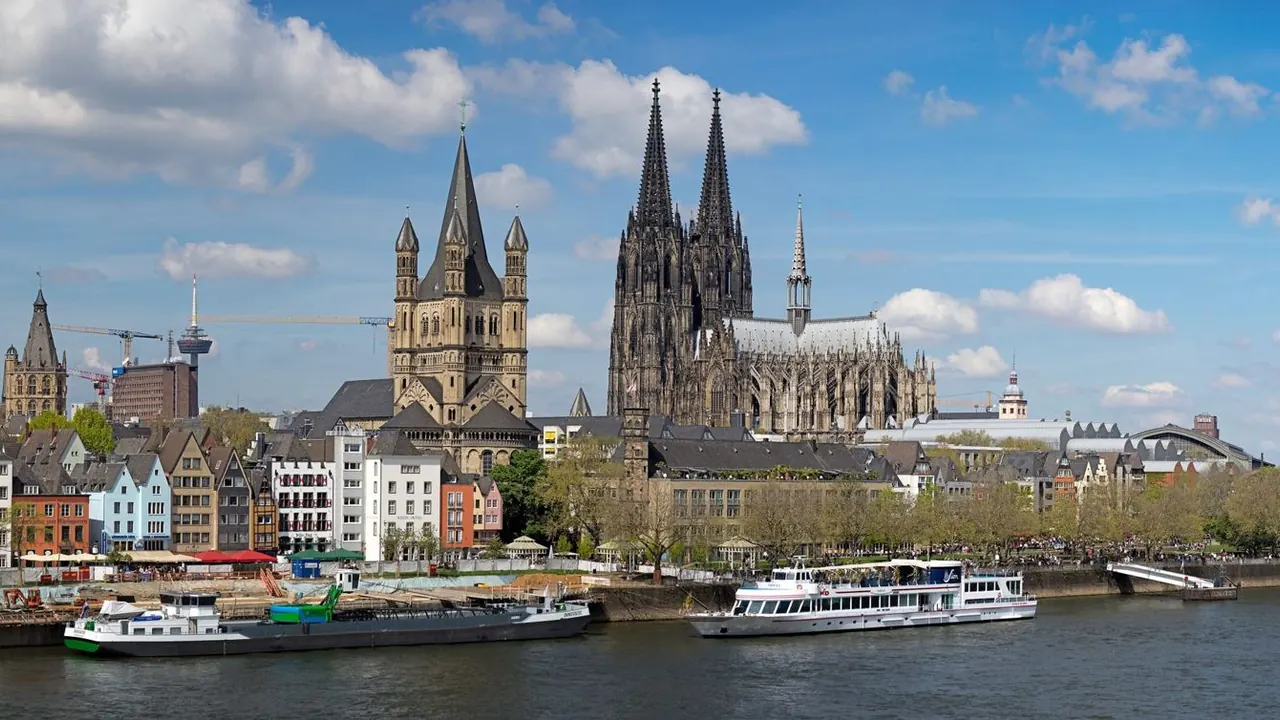
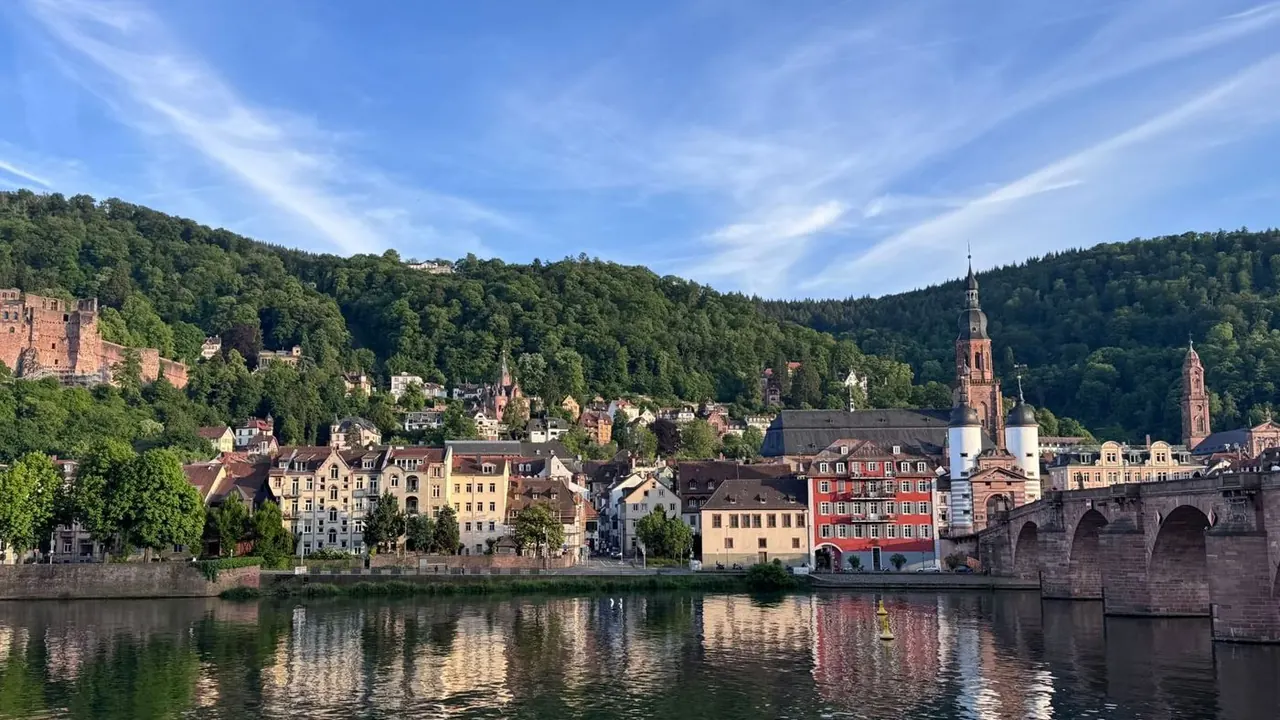
Photos: Cologne by Jörg Braukmann, CC BY-SA 4.0, cropped; Heidelberg by Kuanling Chen, Pexels License.
Cologne or Heidelberg?
Our verdict in twelve categories, each scored against the same fixed benchmark cities, and the climate month by month, so you can choose for your trip.
Choose Cologne for
- nightlife
- live music and the arts
- shopping
Cologne suits travellers who want a proper city. It has more of everything that happens indoors and after dark: a cathedral and a ring of Romanesque churches, art museums of European standing, two major orchestras, a big club and bar scene and the brewhouse culture that runs through it all. It is also the easier choice with children and for anyone who wants real shopping. The trade-off is a plain post-war townscape outside a few streets by the Rhine.
Choose Heidelberg for
- nature and the outdoors
Heidelberg is for a slower, more scenic stay. Its castle ruin, preserved baroque Altstadt and old university fit into a day or two, and wooded hills start right at the edge of town, so a walk in the forest or an evening on the Neckar meadows is never far away. Wine country lies just outside town. Choose it for charm, walking and wine rather than nightlife or big-city culture.
Scoreboard
Twelve categories on one fixed scale from 0 to 100. The shaded stretch is the gap between the two.
Your match
Pick a travel style or drag the sliders, and both match scores follow your weighting.
Wins on nightlife and live music and the arts with your weighting.
Wins on nature and the outdoors with your weighting.
What matters to you?
Category by category
What the scores mean for a trip.
Beaches & swimming
Neither city works for a beach vacation, and neither river is safe for swimming. Cologne does slightly better on a hot day, because its flooded gravel pits are on the city's own edge. Fühlinger See, Escher See and Otto-Maigler-See have grassy banks and small sandy patches.
Heidelberg's similar lakes lie out on the Rhine plain about half an hour away, so most visitors use the outdoor pools instead. From either city the sea is too far for a day trip.
Food & drink
Cologne is the better place to eat, mainly because of the Brauhaus. Waiters keep bringing small glasses of Kölsch until you cover yours with a beer mat, and Rhineland dishes such as Himmel un Ääd come with them. Ehrenfeld's Venloer Strasse adds good Turkish and Middle Eastern cooking, and the Belgian Quarter has modern bistros.
Heidelberg's strong point is wine, not food. Riesling and Pinot from the Bergstrasse and the Palatinate are on every list, and white asparagus fills menus in spring. The restaurants along the Hauptstrasse are uneven, though, so for a better meal head to the side streets, Neuenheim or the village wine taverns.
Culture & sights
Cologne has more to see and more depth. Beyond the cathedral and the Shrine of the Three Kings there is a full circuit of Romanesque churches, Roman remains, and museums such as Museum Ludwig, the Wallraf-Richartz and Kolumba. What it lacks is a historic townscape, since most of the city was rebuilt quickly after the war.
Heidelberg is the opposite: fewer major sights, but a beautiful whole. The red sandstone castle ruin, the baroque Altstadt, the Old Bridge and the graffiti-covered Student Prison of Germany's oldest university make a compact set that most visitors finish in a day or two.
Nightlife
Cologne is much the better night out. You can start in an Altstadt brewhouse and move on to cocktail bars in the Belgian Quarter, the crowded student strip on Zülpicher Strasse or the late clubs in Ehrenfeld's old factories. Around Rudolfplatz is one of Germany's largest gay scenes, and at Carnival the whole city parties in costume.
Heidelberg's nightlife runs on its students. The pubs along the Untere Strasse and the old student taverns fill up late in term time, but out of term the town goes quiet early. For a proper club night, people take the train to Mannheim or Frankfurt.
Nature & outdoors
The two are fairly even, but the landscape works differently in each. In Heidelberg the forest begins at the edge of the old town. You can walk the Philosophers' Walk, take the funicular up the 568m Königstuhl, or climb the Heiligenberg to its Celtic ramparts, all without any transport.
Cologne itself is flat, and its outdoors means the Grüngürtel parks and long cycle paths beside the Rhine. Real hills, in the Siebengebirge and the Eifel, start about forty minutes to an hour away. Neither city has mountains.
Day trips
Both make excellent bases, but the outings are of a different kind. Cologne sits on a fast rail hub, so its trips lean towards cities: Bonn, Düsseldorf and Aachen with Charlemagne's chapel, and across the border Maastricht, Liège and Brussels by high-speed train. Brühl's rococo palaces, the castle towns of the Rhine Gorge and the industrial heritage at Zollverein add variety.
From Heidelberg the outings are smaller in scale. You can see the great Romanesque cathedral at Speyer, Worms and its medieval Jewish heritage, the palace gardens at Schwetzingen, the monasteries at Lorsch and Maulbronn, and the castle villages up the Neckar. The Palatinate wine villages are easiest to reach by car, while almost all of Cologne's trips work by train.
Good for families
Cologne gives children more to do. There is a large zoo with an elephant park, the Chocolate Museum with its chocolate fountain, a cable car over the Rhine, and Phantasialand a short trip south. The one period to avoid with small children is Carnival.
Heidelberg is small and calm, and the funicular ride, the fairy-tale park on the Königstuhl and the boat trips are good for younger children. The larger attractions, such as the Technik Museum Speyer, mean a trip out of town, and the cobbled, sloping Altstadt is tiring with a pushchair.
Getting around
Getting around is about equally easy in both. Cologne's station sits right beside the cathedral and the centre is flat, though the tram and Stadtbahn map takes a while to learn.
In Heidelberg you arrive some way west of the old town and take a tram in. After that, the long, narrow Altstadt is easy to walk, apart from cobbles and the steep climb to the castle, which the funicular saves you. One fare covers the whole Rhine-Neckar area.
Shopping & style
Cologne is the shopping city of the two. Schildergasse and Hohe Strasse are among Germany's busiest high streets, Ehrenstrasse and the Belgian Quarter have independent fashion and design shops, and Eau de Cologne is still sold at the old perfume houses. Its Christmas markets fill the squares in Advent.
Heidelberg's shopping is mostly the long Hauptstrasse. High-street chains at one end give way to souvenirs, cuckoo clocks and Studentenkuss chocolates near the market square. Bergstrasse wine is the best thing to take home, and for anything more serious people go to Mannheim or Frankfurt.
Affordability
Prices are similar in both, mid-range for western Germany, and the hotel is the main cost. What differs is when rooms get expensive. In Cologne, rates jump during the big Messe trade fairs and at Carnival.
Heidelberg has few rooms for the number of visitors it gets, and congresses, graduations and summer weekends push prices up. Many visitors stay in Mannheim and come in by train. On the other hand, student cafés keep meals cheap, while in Cologne the cathedral and many churches are free to enter.
Live music & performing arts
Cologne has far more on stage. The opera and the Schauspiel share Offenbachplatz, the Gürzenich and WDR Symphony orchestras play at the Philharmonie by the cathedral, and Ehrenfeld and the Südstadt have jazz, electronic and experimental gigs most nights. The Carnival sessions, with their dialect bands, are a tradition unique to the city.
Heidelberg does well for a small town. Its municipal theatre stages opera, drama and dance, the Heidelberger Frühling festival brings chamber music in spring, and in summer plays, musicals and concerts are staged in the castle courtyard. For a bigger opera house, Mannheim is twenty minutes away.
Wellness & relaxation
Cologne has the edge for spa days because the facilities are in town. A thermal bath complex in the Rheinpark looks across the river to the cathedral, large sauna landscapes are part of everyday life, and Aachen's hot springs are less than forty minutes away. The city itself is busy, though, and not restful.
Heidelberg has no thermal baths of its own, so for that you go to the Kraichgau spa towns or to Baden-Baden. The town is calmer, however, with evenings on the Neckar meadows, forest paths above the Philosophers' Walk and unhurried wine taverns.
When should you go?
Pick your month. The climate figures are measured averages, not a forecast.
Cologne in July
Heidelberg in July
Daytime high, °C
Rainfall in the month, mm
Temperature and rainfall are climate normals, averaged over the years shown. Cologne: 1991-2020 normals, Köln-Stammheim (5.4 km from centre). Heidelberg: 1991-2020 normals, Heidelberg (4.5 km from centre).
The two climates are very close, and both cities are at their best from May to September. Midsummer highs reach about 25°C in Cologne and a degree more in Heidelberg. That is warm enough for an afternoon at the lakes from June to August and still comfortable for walking the streets. Summer is also the wettest part of the year in both, with about 80mm in July. Spring and early autumn are mild and good for sightseeing and hiking.
Cologne has the wetter winter, with 64mm in January against Heidelberg's 46mm, while Heidelberg has the sunnier summer, with clearly more bright hours from April to September. November turns cool and grey in both. From December to February daytime highs stay in single figures and daylight is short. That is the season for indoor sights rather than long walks, and Cologne's museums give it more to fill those months.
Which traveller are you?
On a culture and arts trip, Cologne is the stronger choice. The cathedral, twelve Romanesque churches, Museum Ludwig and the Wallraf-Richartz give you days of sights, and evenings bring opera, two major orchestras at the Philharmonie and a busy jazz scene.
For a food and nightlife trip, pick Cologne. The Kölsch ritual in the Altstadt brewhouses starts the evening, then come the Belgian Quarter's bars, the Zülpicher Strasse student strip and Ehrenfeld's factory clubs. Heidelberg's nights are mostly student pubs on one lane.
On an outdoors trip, Heidelberg has the edge in setting. Forest begins at the old town, the funicular climbs to the Königstuhl's trails, and the Neckar cycle path heads upstream past castles. From Cologne, the hills are a train ride away.
Before you go
| Measure | Cologne | Heidelberg |
|---|---|---|
| Official language | German | German |
| Currency | Euro (EUR) | Euro (EUR) |
| Sockets | CF230 V, 50 Hz | CF230 V, 50 Hz |
| Driving side | Right | Right |
| Time zone | UTC+1, UTC+2 in summer | UTC+1, UTC+2 in summer |
| Emergency number | 112 | 112 |
| Elevation | 59 m | 114 m |
| Main airport | Cologne Bonn Airport (CGN)15 km from centre115 non-stop destinations | Frankfurt Main Airport (FRA)69 km from centre281 non-stop destinations |
| Public holidays this year | 11 days | 12 days |
By the numbers
| Measure | Cologne | Heidelberg |
|---|---|---|
| City population | 1,025,523 | 156,092 |
| People per km² | 2,532 | 1,433 |
| Museums within 10 km | 40 | 17 |
| UNESCO World Heritage sites within 50 km | 3 | 4 |
Where else could you go?
Every comparison below shares a destination with this one, so you can follow Cologne or Heidelberg somewhere new.