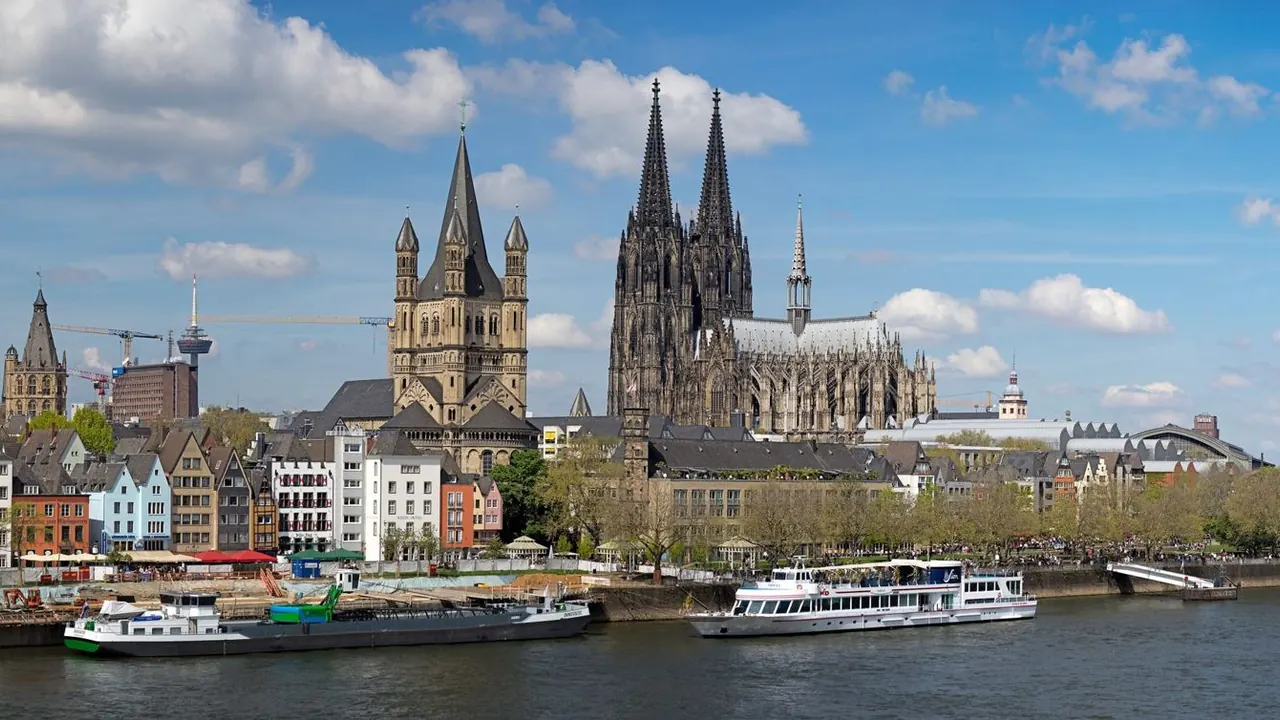
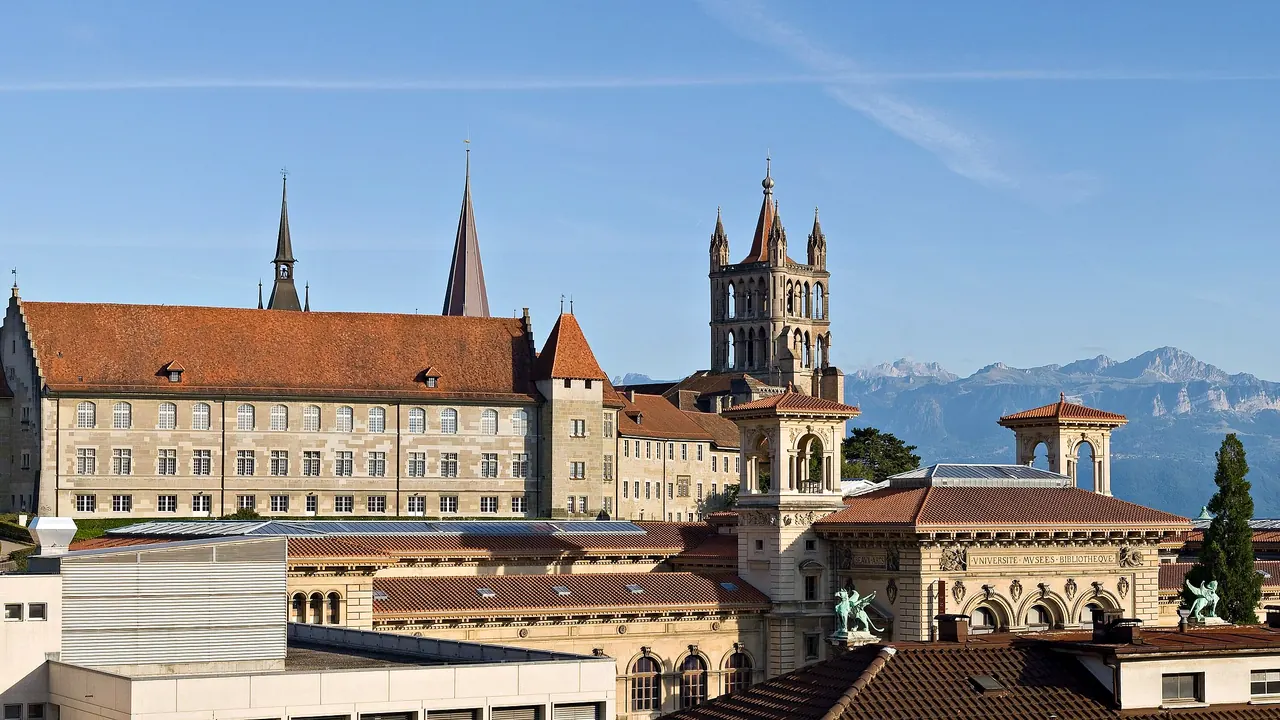
Photos: Cologne by Jörg Braukmann, CC BY-SA 4.0, cropped; Lausanne by Christian Mehlführer, CC BY-SA 3.0, cropped.
Cologne or Lausanne?
Our verdict in twelve categories, each scored against the same fixed benchmark cities, and the climate month by month, so you can choose for your trip.
Choose Cologne for
- prices
- nightlife
- shopping
Cologne suits travellers who want a proper city first and scenery second. You get a Gothic cathedral and a ring of Romanesque churches, major art museums, brewhouse evenings that run on into the bars of the Belgian Quarter and Ehrenfeld, and a stage and music scene that fills the week. It also costs far less, which makes it the easier pick for a lively weekend, a first trip to the Rhineland or anyone watching their spending.
Choose Lausanne for
- nature and the outdoors
- beaches
- day trips
Lausanne is for people whose idea of a good trip is a view and a path. The Alps rise across the lake, the Lavaux vineyard terraces start at the edge of town, the ski and hiking resorts are about an hour away, and in summer you can swim off the waterfront. In return you get quieter nights and very high Swiss prices, so it rewards walkers, wine lovers and lake-and-mountain travellers more than those who come for nightlife.
Scoreboard
Twelve categories on one fixed scale from 0 to 100. The shaded stretch is the gap between the two.
Your match
Pick a travel style or drag the sliders, and both match scores follow your weighting.
Too close to call, 2 points apart
Wins on prices and nightlife with your weighting.
Wins on nature and the outdoors and beaches with your weighting.
What matters to you?
Category by category
What the scores mean for a trip.
Beaches & swimming
Neither city is a beach destination, but Lausanne has its swimming right in front of it. In summer, Lake Geneva turns the waterfront at Vidy, Bellerive and along towards Pully and Lutry into a place to bathe. The old Bellerive lido, with its lawns and pools, makes an easy afternoon. The shores are grass, steps and shingle rather than sand, and the season is short.
Cologne cannot match that. The Rhine is too fast and too busy with shipping to swim in, so its sandy banks at Rodenkirchen are only for sitting. To swim you take a tram or bike out to the gravel-pit lakes such as Fühlinger See or Otto-Maigler-See, which are pleasant but a detour.
Food & drink
The two eat about equally well, and the big difference is beer against wine. Cologne's table is the Brauhaus: Kölsch brought by the Köbes until you cover your glass, with Himmel un Ääd, sauerbraten or a Halve Hahn to soak it up. It also has more variety for everyday meals, especially the Turkish and Middle Eastern cooking along Venloer Strasse in Ehrenfeld.
Lausanne revolves around Chasselas from the Lavaux terraces, tasted in village caveaux, alongside lake perch, papet vaudois and winter fondue. The Saturday market brings in produce from the countryside, and the region's top restaurants are among Switzerland's most celebrated. The everyday middle is plainer, though, and cheap meals are hard to find.
Culture & sights
Cologne carries more for a sightseer. The cathedral, with the Shrine of the Three Kings and its stained glass, would be enough on its own, but there are also twelve Romanesque churches, Roman remains and a strong museum line-up: Museum Ludwig for Pop Art, Wallraf-Richartz for older painting and Kolumba in its ruined church. The catch is that the postwar townscape between these highlights is plain.
Lausanne works the other way round, with a smaller list of sights but an old town that hangs together. There are steep lanes and covered stairways around Notre-Dame, where a watchman still calls the hours at night. The Olympic Museum at Ouchy, the Plateforme 10 museums and the Collection de l'Art Brut fill two or three days.
Nightlife
Cologne is the stronger night out by a clear margin. A typical evening moves from the Altstadt brewhouses to wine and cocktail bars in the Belgian Quarter, the packed Zülpicher Strasse or the factory clubs of Ehrenfeld. Around Rudolfplatz is one of Germany's largest gay scenes, and at Carnival the whole city is out in costume from morning on.
Lausanne's going out is concentrated in the Flon warehouse valley, kept going by its university students, and is busiest on Friday and Saturday. Summer evenings spill onto the waterfront at Ouchy. Weeknights are quiet, though, and drinks are expensive.
Nature & outdoors
This is where Lausanne pulls far ahead. The French Alps rise across the water, the Lavaux terraces between Lutry and Saint-Saphorin make one of Switzerland's best walks, and the lake is there for sailing and rowing. Within about an hour you can be skiing or hiking at Villars or Les Diablerets, standing on Glacier 3000 or walking the Jura ridges.
Cologne is flat and gentler. The Grüngürtel parks and the long Rhine cycle paths are good for everyday exercise, and the Siebengebirge around the Drachenfels or the Eifel national park make solid day hikes. These are wooded hills, though, not mountains.
Day trips
Both are excellent rail bases. What you get from them differs. Cologne's trips are mostly to cities and historic sites: Brühl's rococo palaces, Bonn, Düsseldorf, Charlemagne's chapel in Aachen, the castle towns of the Rhine Gorge, and across the border to Maastricht or Brussels. The Zollverein industrial site adds something completely different.
Lausanne's trips mix towns with scenery. Vevey, Montreux and the Château de Chillon lie along the lake, with Geneva and Bern's arcaded old town further out. Gruyères offers castle and cheese, and boats cross to Évian on the French shore.
Good for families
Both work well with children, though in different ways. Cologne has the bigger attractions: an old zoo with an elephant park, the Chocolate Museum's working production line, the cable car over the Rhine, and Phantasialand, a major theme park just south of town. Its streets are flat, but Carnival week is best avoided with small children.
Lausanne's family days are gentler and more outdoors. There is the hands-on Olympic Museum, the aquarium-vivarium, the animal park and pedal boats at Sauvabelin, and paddle-steamer trips on the lake. The steep streets are tiring with a pushchair, and eating out as a family is costly.
Getting around
Both are easy to manage without a car. The difference is in the terrain. Cologne is flat: you arrive at a station next to the cathedral and can walk to the museums, the Altstadt and across the Hohenzollern Bridge, or cycle along the river. Its trams and Stadtbahn reach further out but are confusing to read and can be irregular.
Lausanne is compact but steep. The m2 metro climbs from the lakeshore to the upper town and saves your legs, while stairs and lifts link the levels in between. Swiss trains run punctually along the lake, and boats connect the shore towns.
Shopping & style
Cologne is the better place to shop. Schildergasse and Hohe Strasse are among Germany's busiest high streets, while Ehrenstrasse and the Belgian Quarter add independent fashion and design. Eau de Cologne from the historic houses on Glockengasse makes a gift you can only really buy here, and the Advent Christmas markets fill the squares.
Lausanne's range is narrower. Rue de Bourg is good for a Swiss watch, jewellery or chocolate, and a bottle of Lavaux wine is the natural souvenir. Beyond that there are few independents, so shopping is a side activity.
Affordability
The gap here is large. Cologne is mid-priced for Western Europe. Brewhouse meals are reasonable, transport is fairly priced and many churches are free. Hotels are the main cost, and they jump during the big Messe trade fairs and at Carnival.
Lausanne is very expensive in every area, from rooms and restaurants to wine and taxis. Budget travellers get by on supermarket picnics, the free lakeside promenades and a glass of Chasselas in a caveau, but the overall bill stays high.
Live music & performing arts
Cologne offers more, and across a wider range. The Opera and Schauspiel share Offenbachplatz, and the Philharmonie by the cathedral is home to the Gürzenich and WDR orchestras. Below that sits a long tradition of electronic music, jazz and small gig venues in Ehrenfeld and the Südstadt. The dialect Carnival sessions are a form of performance unique to the city.
Lausanne's stage is smaller but stands out for dance. It is the home of the Béjart Ballet and the Prix de Lausanne, alongside the Théâtre de Vidy's contemporary work, a full opera season and a respected chamber orchestra. In July, the Montreux Jazz Festival is a short ride along the lake.
Wellness & relaxation
The two are evenly matched for unwinding, but the style is very different. Cologne offers the German sauna habit: large, mostly textile-free sauna landscapes used by locals at weekends, and a mineral-spring thermal bath in the Rheinpark with a view of the cathedral. Aachen's hot springs are under forty minutes away.
Lausanne's calm comes from scenery and spas. You can stroll the promenades at Ouchy and Vidy or walk the lanes through the Lavaux vines, the grand lakeside hotels have spas, and thermal water is close by at Yverdon-les-Bains or at Lavey-les-Bains in the Rhône valley.
When should you go?
Pick your month. The climate figures are measured averages, not a forecast.
Cologne in July
Lausanne in July
Daytime high, °C
Rainfall in the month, mm
Where the figures come from
Lausanne's temperatures are measured 40 km from the centre, at Payerne.
Lausanne has no rain gauge within 25 km of the centre, so its rainfall comes from a gridded climate dataset read at the city rather than from a gauge further away.
Temperature and rainfall are climate normals, averaged over the years shown. Cologne: 1991-2020 (sunshine 1981-2010) normals, Köln-Stammheim (5.4 km from centre). Lausanne: 1991-2020 (sunshine 1961-1990) normals, Payerne (39.7 km from centre).
Both cities warm up at a similar pace, with summer highs of about 25°C in Cologne and 26°C in Lausanne, so May to September is the comfortable stretch for walking in either. Neither gets too hot for sightseeing. Cologne is milder in winter but grey, with little sun from November to January. Lausanne is colder in deep winter, down to about 4°C, and often sits under low fog. When it does, the mountains above are frequently in sunshine.
The two differ most in summer. Lausanne gets clearly more sunshine from spring to early autumn, but it is also the wetter city all year round, with July rain reaching around 115mm, much of it in showers between bright spells. Cologne's wettest months are July and August at about 81mm, which is still modest. If you want to swim, Lausanne's lake is warm enough from late June to early September. Cologne's gravel-pit lakes are a short summer outing at best.
Which traveller are you?
On a trip on a tight budget, Cologne is much the kinder choice. Brewhouse meals and Kölsch cost less than in most capitals and the cathedral is free to enter. In Lausanne even a simple lunch adds up quickly, and hotels are very expensive.
For an outdoors trip, Lausanne is far ahead. You can walk the Lavaux terraces from the edge of town, sail or paddleboard on the lake, and reach Alpine trails, skiing and the Jura ridges within about an hour. Cologne offers pleasant hills, but no mountains.
On a food and nightlife trip, Cologne suits better. The Kölsch ritual in the Altstadt brewhouses leads on to cocktail bars in the Belgian Quarter, the student strip and late clubs in Ehrenfeld. Lausanne pours excellent Chasselas, but its nights are small and quiet midweek.
Before you go
| Measure | Cologne | Lausanne |
|---|---|---|
| Official language | German | French, German, Italian, Romansh |
| Currency | Euro (EUR) | Swiss Franc (CHF) |
| Sockets | CF230 V, 50 Hz | CJ230 V, 50 Hz |
| Driving side | Right | Right |
| Time zone | UTC+1, UTC+2 in summer | UTC+1, UTC+2 in summer |
| Emergency number | 112 | 112 |
| Elevation | 59 m | 495 m |
| Main airport | Cologne Bonn Airport (CGN)15 km from centre115 non-stop destinations | Geneva International Airport (GVA)52 km from centre150 non-stop destinations |
| Public holidays this year | 11 days | 9 days |
By the numbers
| Measure | Cologne | Lausanne |
|---|---|---|
| City population | 1,025,523 | 144,873 |
| People per km² | 2,532 | 3,499 |
| Museums within 10 km | 40 | 31 |
| UNESCO World Heritage sites within 50 km | 3 | 3 |
Where else could you go?
Every comparison below shares a destination with this one, so you can follow Cologne or Lausanne somewhere new.
- Dusseldorfvs Cologne
- Genevavs Lausanne
- Chamonixvs Lausanne
- Bernvs Lausanne
- Annecyvs Lausanne
- Maastrichtvs Cologne