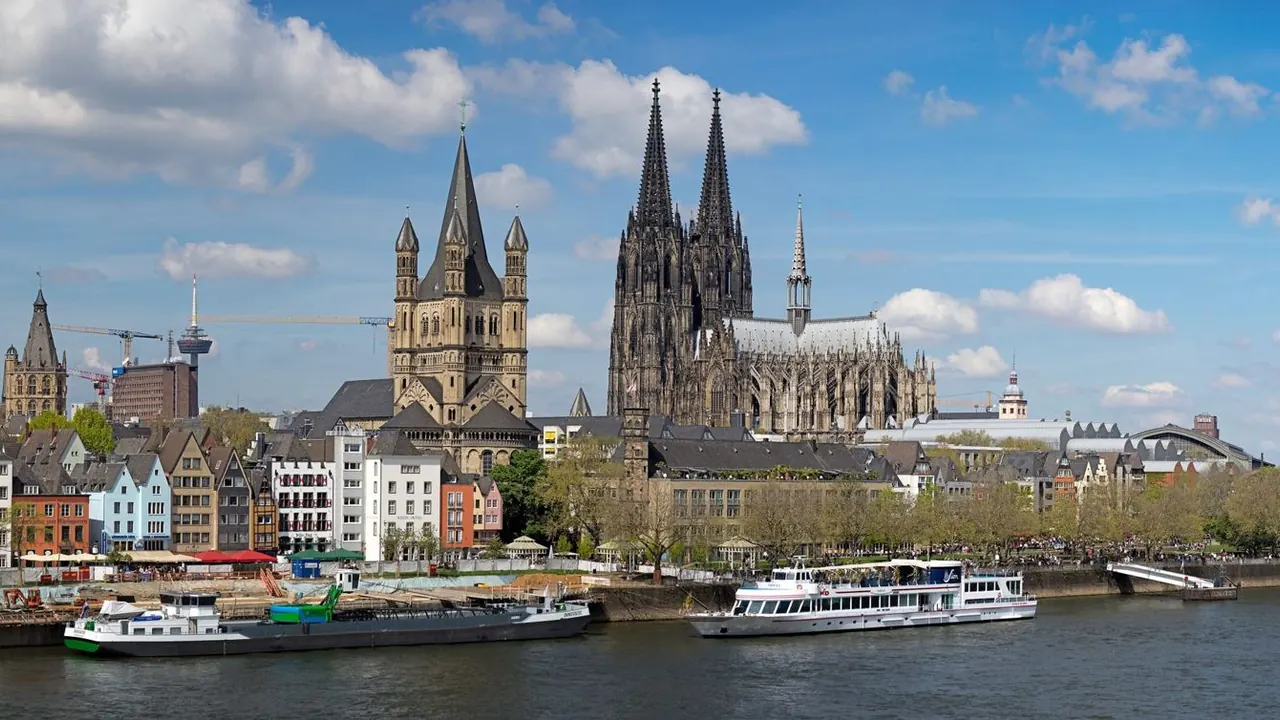
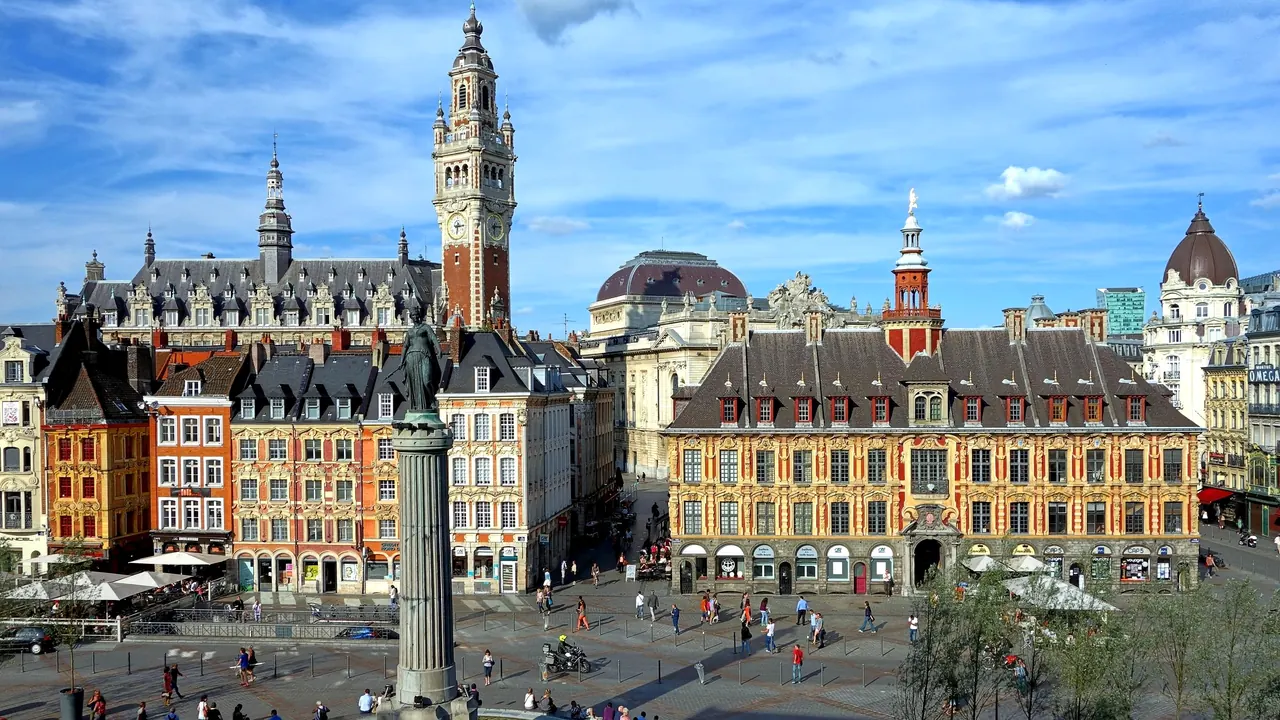
Photos: Cologne by Jörg Braukmann, CC BY-SA 4.0, cropped; Lille by Velvet, CC BY-SA 3.0, cropped.
Cologne or Lille?
Our verdict in twelve categories, each scored against the same fixed benchmark cities, and the climate month by month, so you can choose for your trip.
Choose Cologne for
- nature and the outdoors
- wellness
- families
Cologne suits travellers who want a fuller city stay rather than a quick look round. It has the cathedral, a ring of Romanesque churches and major museums, plus a Philharmonie, an opera house and gigs most nights in Ehrenfeld. The Kölsch brewhouses lead easily into a longer night out, and families get a big zoo, the Chocolate Museum and a theme park close by. Add sauna landscapes, a thermal bath and walking country in the Siebengebirge and the Eifel, and a week passes easily.
Choose Lille for
- day trips
- food and drink
- getting around
Lille is the better pick for a compact, food-led stay used as a base. Vieux-Lille's Flemish brick streets and the Palais des Beaux-Arts fill two or three unhurried days, and the estaminets serve the more distinctive regional cooking. Its real advantage is position: Brussels, Ghent, Bruges, Paris and even London are a short train ride from stations beside the old town, so you can see several cities from one hotel.
Scoreboard
Twelve categories on one fixed scale from 0 to 100. The shaded stretch is the gap between the two.
Your match
Pick a travel style or drag the sliders, and both match scores follow your weighting.
Wins on nature and the outdoors and wellness with your weighting.
Wins on day trips and food and drink with your weighting.
What matters to you?
Category by category
What the scores mean for a trip.
Beaches & swimming
Neither city is a beach destination, and they fall short in different ways. Cologne keeps you out of the Rhine but has flooded gravel pits such as Fühlinger See and Otto-Maigler-See on its edge. These are grassy-banked lakes where the water warms to about 22°C on a hot day, good for an afternoon swim.
Lille has no lakes to speak of, but it is closer to the sea. Malo-les-Bains at Dunkirk is about an hour away by train. Expect a wide, windy North Sea beach with cold water, better for a bracing walk than for swimming.
Food & drink
Lille eats better, and in a way more tied to its region. The estaminets of Vieux-Lille serve carbonnade, potjevleesch, waterzooi and the cheese-heavy welsh, with Maroilles turning up everywhere and Belgian and northern French ales poured alongside. The Sunday market at Wazemmes and the city's famous waffles round it out.
In Cologne the Brauhaus experience matters more than the cooking. The Köbes keep the small glasses of Kölsch coming, the plates are hearty sauerbraten and Himmel un Ääd, and Ehrenfeld's Turkish food adds variety. It is enjoyable, but less of a reason to come.
Culture & sights
The two are closely matched, but the appeal differs. Cologne is about standout monuments and collections: the cathedral and its Shrine of the Three Kings, twelve Romanesque churches, Roman remains, and Museum Ludwig's Pop Art. Between them, though, the post-war streets are plain.
Lille has one great museum, the Palais des Beaux-Arts, and a more complete historic townscape. Vieux-Lille's Flemish baroque brick, the Vieille Bourse and the belfry make the walk between sights part of the pleasure. La Piscine in Roubaix is worth the metro ride.
Nightlife
Cologne offers the longer and more varied night out. Evenings move from the Altstadt brewhouses to cocktail bars in the Belgian Quarter, the Zülpicher Strasse student strip and clubs in Ehrenfeld's old factories. One of Germany's largest gay scenes centres on Rudolfplatz, and at Carnival the whole city is out in costume.
Lille has a friendly student crowd on Rue Masséna and Rue Solférino and calmer beer and wine cellars in Vieux-Lille. Its clubs are few, however, and serious late nights have usually meant heading over the Belgian border.
Nature & outdoors
Within about forty minutes of Cologne the flat river plain gives way to the wooded volcanic hills of the Siebengebirge, where marked trails climb to the Drachenfels crag above the Rhine. Closer still are the Grüngürtel parks and long riverside cycle paths. About an hour away, the Eifel region has several kinds of country: a national park, crater lakes in its volcanic uplands and, in a separate valley, the vineyard slopes of the Ahr.
Lille's surroundings are gentler and flatter. French Flanders is farmed lowland. The Citadel park and the Deûle towpaths make easy outings, and the low Monts de Flandre give wide views, but for real scenery you need a long day out to the Opal Coast cliffs at Cap Blanc-Nez.
Day trips
Both are excellent bases, but Lille's reach is exceptional. Brussels is about half an hour away, Ghent and Bruges around an hour, and Paris an hour by TGV, with London possible on Eurostar. Closer to hand are Arras, Amiens cathedral, the Louvre-Lens and the First World War battlefields.
Cologne's outings stay closer to home and run along the Rhine: Brühl's rococo palaces, Bonn, Düsseldorf, Charlemagne's chapel at Aachen and the castle towns of the Rhine Gorge. Brussels takes nearer two hours.
Good for families
A major theme park lies a short trip south of Cologne at Brühl, and that alone tilts the balance. In the city itself there is an old zoo with an elephant park and aquarium, the Chocolate Museum with its chocolate fountain, and a cable car over the river to the Rheinpark playgrounds, which together fill several days. Brewhouses are relaxed about children, but Carnival week is best avoided with little ones.
Lille has the small Citadel zoo with playgrounds beside it and a hands-on science centre reached by metro. Its bigger draws, a large zoo park over the Belgian border and the aquarium at Boulogne, mean a journey. The cobbles of Vieux-Lille are hard going with a pushchair.
Getting around
Both are flat, walkable and easy to manage without a car. Arrival works similarly too: Cologne's main station stands beside the cathedral, and Lille's two stations sit side by side near the old town.
The difference is in the transit beyond the centre. Lille's driverless VAL metro and tram are simple to use. Cologne's mix of trams, Stadtbahn and S-Bahn covers more ground, but the map is confusing and services can be crowded. Cologne's long riverside cycle paths are a bonus.
Shopping & style
There is little to separate them, and in both the independent quarters beat the high streets. Cologne's Schildergasse and Hohe Strasse are mass-market chain streets, Ehrenstrasse and the Belgian Quarter have the concept stores, and Eau de Cologne from the historic Glockengasse perfume house makes a local souvenir.
Lille's chains sit on Rue Neuve and in Euralille, and Vieux-Lille has the delicatessens and design shops. Timing matters in each: Cologne's Advent Christmas markets, or Lille's September Braderie, a citywide flea market.
Affordability
Costs are much the same in both, mid-range for Western Europe. A brewhouse meal with Kölsch or an estaminet dinner with ale is fair value, and transport is reasonably priced.
The catch in each is hotel rates at peak times. In Cologne these are the Messe trade fairs and Carnival. In Lille they are the Braderie and its own fairs. Check those dates before booking either.
Live music & performing arts
Two major orchestras share Cologne's Philharmonie, the acoustically admired hall beneath the square beside the cathedral, and the WDR adds a big band and choirs. The opera and the Schauspiel share Offenbachplatz, and the Romanesque churches host early music. The popular side is just as deep, with jazz, a long electronic music tradition, gigs in Ehrenfeld and the Südstadt most nights, and the dialect songs of the Carnival sessions, which exist nowhere else.
Lille's programme is smaller but dependable: the grand Opéra on the Place du Théâtre, the Orchestre National, the Théâtre du Nord and touring bands at the Zénith and the Aéronef. It is a season to catch while you are there rather than one to plan a trip around.
Wellness & relaxation
Cologne is far better for unwinding. German sauna culture is a weekend habit there, with large sauna landscapes, cold plunges and quiet rooms, plus a mineral-spring thermal bath in the Rheinpark facing the cathedral. Aachen's Roman-era hot springs are close by.
Lille offers hotel spas and slow afternoons in Vieux-Lille tea rooms. The nearest proper thermal bath is a train ride away at Saint-Amand-les-Eaux.
When should you go?
Pick your month. The climate figures are measured averages, not a forecast.
Cologne in July
Lille in July
Daytime high, °C
Rainfall in the month, mm
Temperature and rainfall are climate normals, averaged over the years shown. Cologne: 1991-2020 (sunshine 1981-2010) normals, Köln-Stammheim (5.4 km from centre). Lille: 1991-2020 normals, Lille (7.8 km from centre).
The two climates are almost identical, so the trip matters more than the season. From May to September days are mild to warm, reaching about 25°C in Cologne and 24°C in Lille in July and August. That is comfortable for walking the streets and sitting on terraces, but it is never beach weather. Sunshine follows the same curve in both cities and is longest from May to August.
Rain falls all year in both. Cologne's wettest months are July and August, at about 81mm, so a summer stay there brings showers. Lille's wettest stretch comes later, in November and December. April, May and September are the easiest months for sightseeing in either city: mild, fairly bright and among the drier months. From December to February highs sit between 6°C and 8°C under grey skies, so those months suit museums, brewhouses and estaminets better than long days outdoors.
Which traveller are you?
On a family trip with children, Cologne is the easier choice. It has a large zoo with an elephant park, the Chocolate Museum's production line, a cable car over the Rhine and a major theme park at Brühl. Lille's attractions for children are smaller, or a drive away.
For a relaxing and wellness trip, Cologne wins clearly. German sauna culture is part of ordinary life there, a mineral-spring thermal bath looks across to the cathedral, and Aachen's hot springs are close by. Lille has no bathing tradition of its own and offers hotel spas at most.
For a short city break, Lille fits neatly. Vieux-Lille, the Grand Place and the Palais des Beaux-Arts sit within an easy walk of each other, the estaminets keep evenings simple, and two or three days covers the city without rushing.
Before you go
| Measure | Cologne | Lille |
|---|---|---|
| Official language | German | French |
| Currency | Euro (EUR) | Euro (EUR) |
| Sockets | CF230 V, 50 Hz | CE230 V, 50 Hz |
| Driving side | Right | Right |
| Time zone | UTC+1, UTC+2 in summer | UTC+1, UTC+2 in summer |
| Emergency number | 112 | 112 |
| Elevation | 59 m | 17 m |
| Main airport | Cologne Bonn Airport (CGN)15 km from centre115 non-stop destinations | Lille Airport (LIL)8 km from centre61 non-stop destinations |
| Public holidays this year | 11 days | 11 days |
By the numbers
| Measure | Cologne | Lille |
|---|---|---|
| City population | 1,025,523 | 238,246 |
| People per km² | 2,532 | 6,846 |
| Museums within 10 km | 40 | 23 |
| UNESCO World Heritage sites within 50 km | 3 | 6 |
Where else could you go?
Every comparison below shares a destination with this one, so you can follow Cologne or Lille somewhere new.