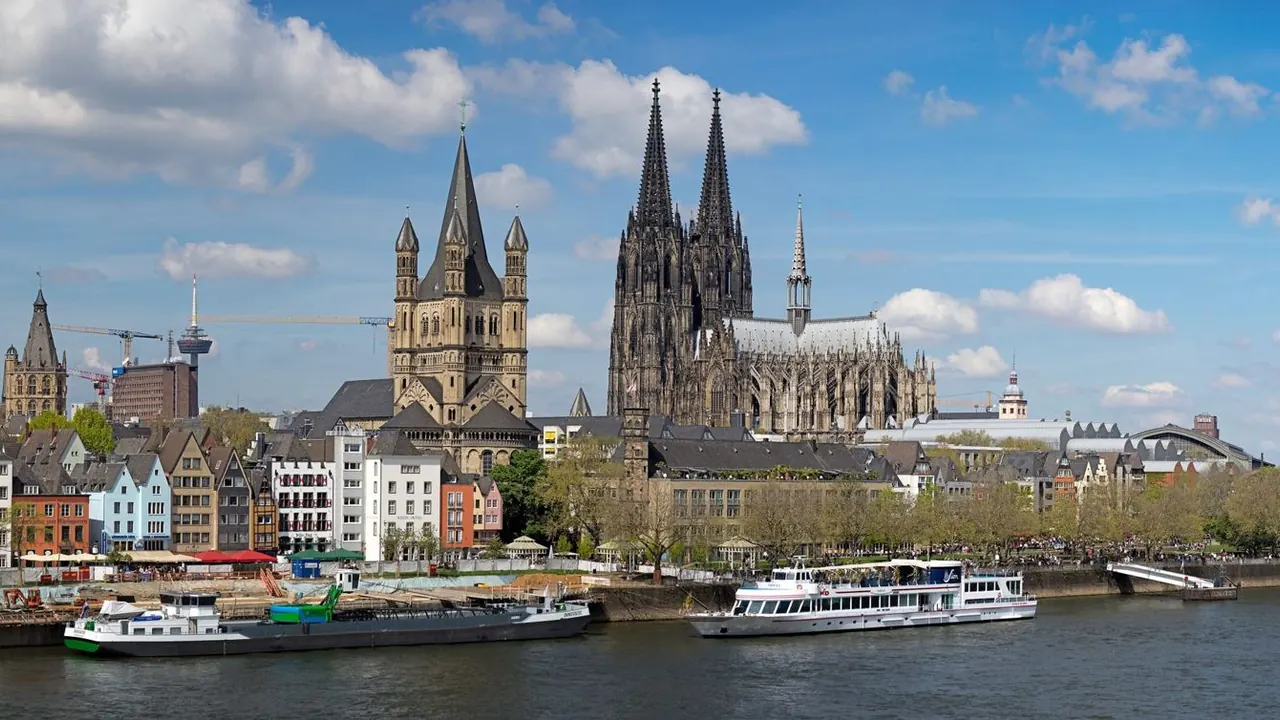
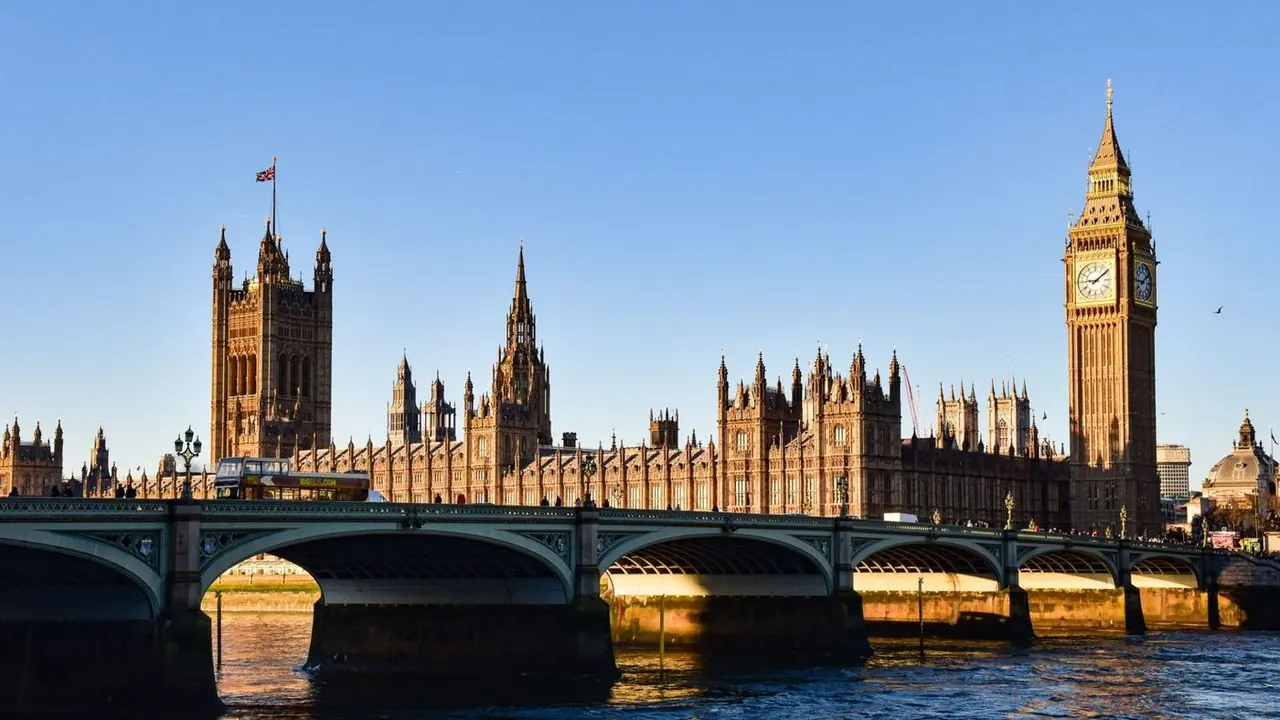
Photos: Cologne by Jörg Braukmann, CC BY-SA 4.0, cropped; London by AXP Photography, Pexels License.
Cologne or London?
Our verdict in twelve categories, each scored against the same fixed benchmark cities, and the climate month by month, so you can choose for your trip.
Choose Cologne for
- prices
- wellness
Cologne suits a traveller who wants a manageable, good-natured city at a gentler cost. You step off the train beside the cathedral, spend evenings over small glasses of Kölsch in the Altstadt brewhouses, and use fast trains for the Rhine Gorge, Aachen or Brussels. It also has the better case for unwinding, with its sauna culture and a thermal bath looking across the river. Carnival is a strong reason to go, as long as you want the party.
Choose London for
- shopping
- food and drink
- live music and the arts
London is the choice when depth matters more than budget. Its free national museums, the West End and the National Theatre, world cooking from Brick Lane to Green Lanes and some of Europe's finest shopping give it a range Cologne cannot match. Oxford, Bath and the coast are also within an easy train ride. Expect a city that is spread out, crowded and expensive, and that rewards a longer stay.
Scoreboard
Twelve categories on one fixed scale from 0 to 100. The shaded stretch is the gap between the two.
Your match
Pick a travel style or drag the sliders, and both match scores follow your weighting.
Wins on prices and wellness with your weighting.
Wins on shopping and food and drink with your weighting.
What matters to you?
Category by category
What the scores mean for a trip.
Beaches & swimming
Neither is a beach destination, but London at least puts the sea within a day out. Brighton's pebble beach and pier are about an hour by train, and Margate and Whitstable have sandier shores. The Channel stays cool, though, and inside the city people swim at the lidos and the Hampstead Heath ponds.
Cologne has no sea within reach at all, and the Rhine is too fast and too busy with shipping for swimming. On hot days locals head to the flooded gravel pits such as Fühlinger See and Otto-Maigler-See. They make a pleasant afternoon on a grassy bank, but they are not a reason to travel.
Food & drink
London is by far the better city to eat in. Its strength is the cooking of its communities: curry on Brick Lane, Punjabi food in Southall, Turkish grills in Green Lanes and Caribbean kitchens south of the river. On top of that come a large fine-dining scene, Borough Market, and the pub and Sunday roast rituals.
Cologne's food is narrower but has a clear character. The draw is the Brauhaus, where a Köbes keeps the Kölsch coming until you cover your glass with a beer mat, and the food is hearty Rhineland cooking such as Himmel un Ääd. For variety beyond that, go to the Turkish and Middle Eastern places on Ehrenfeld's Venloer Strasse.
Culture & sights
Cologne's culture centres on one great building. The cathedral, with the Shrine of the Three Kings, is the reason to come, followed by the ring of Romanesque churches and Roman remains. Museum Ludwig's Pop Art and Kolumba are rewarding too. Because most of the city was rebuilt quickly after the war, the pleasures are individual sights rather than a historic townscape.
London has far more to see. The British Museum, the National Gallery, the V&A and both Tates are each worth a full day, and most charge nothing to enter. Around them stand a thousand years of landmarks, from the Tower and Westminster Abbey to Wren's churches and Greenwich, so a week barely covers it.
Nightlife
London offers the bigger night out, spread across several districts with different characters. Soho is dense and late, Shoreditch and Dalston have the warehouse and club scene, and Brixton and Peckham have large venues and rooftop bars. Thousands of pubs sit underneath all of it, although many still close around eleven.
Cologne is more relaxed and easier to follow. A night usually runs from the Altstadt brewhouses to the Belgian Quarter's bars or the student crowds of Zülpicher Strasse, with Ehrenfeld's factory clubs for later. Its gay scene around Rudolfplatz is one of Germany's largest. Carnival turns the whole city into a street party that London has nothing to match.
Nature & outdoors
The two are about equal for green space and gentle walking, but the scenery differs. London has grand parks: Richmond Park with its deer and ancient oaks, the skyline views from Hampstead Heath, and Kew. Its walking country beyond the city is chalk, on the South Downs, the Chilterns and the Seven Sisters cliffs.
Cologne is flatter in town, with the Grüngürtel and long riverside cycle paths. Its hills are volcanic, in the Siebengebirge around the Drachenfels, and farther out lie the Eifel crater lakes and the vineyard slopes of the Ahr valley.
Day trips
Both cities are excellent rail hubs, but London has the longer and more varied list. Oxford, Cambridge and Windsor are each about an hour or less away. Bath, Stonehenge with Salisbury, Canterbury and the Kent castles fill out a week without any two trips feeling alike.
Cologne's advantage is that its trips cross borders. Brühl's rococo palaces, Bonn, Aachen's Carolingian chapel and Düsseldorf are all close. The castle towns of the Rhine Gorge are about an hour and a half away, and Maastricht, Liège and Brussels let you add a second or third country.
Good for families
London gives families more to do, and much of it is free. The dinosaurs at the Natural History Museum, the Science Museum's hands-on galleries, the Young V&A and the Diana Memorial Playground cost nothing, and Legoland and the Harry Potter studio tour are within reach. The difficulty is size: journeys are long and many Tube stations have stairs that are hard with a buggy.
Cologne is smaller and much easier to manage. Children can go to the zoo, the Chocolate Museum with its fountain, and the cable car over the Rhine, and Phantasialand at Brühl is a short trip south. The one time to avoid is Carnival.
Getting around
London's transport is the more complete system. The Underground, the Elizabeth line, buses and Thames riverboats all run on one contactless payment, and you never need a car. Its weakness is distance: crossing the city takes time, stations have long corridors, and the Tube is packed at rush hour.
Cologne puts you in the centre the moment you arrive, because the station stands beside the cathedral and the main sights lie within a flat, walkable area. Beyond that, the Stadtbahn map is confusing and the trams can be crowded and irregular, although riverside cycling makes up for much of this.
Shopping & style
For shopping, London is one of the world's leading cities. It has luxury on Bond Street and Sloane Street, bespoke tailoring on Savile Row, and department stores such as Liberty, Harrods and Fortnum & Mason that are sights in their own right. Its independent side runs from Marylebone and Seven Dials to Portobello's antiques and the bookshops of Charing Cross Road.
Cologne is good for practical shopping. Schildergasse and Hohe Strasse are long chain-store streets, and Ehrenstrasse and the Belgian Quarter have small design shops. The things to take home are Eau de Cologne from the historic perfume houses on Glockengasse and finds from the Advent markets.
Affordability
Cologne is clearly the cheaper of the two. A brewhouse meal with a few rounds costs less than in a capital, the cathedral is free, and hotel rates are reasonable in ordinary weeks. The exception is trade-fair weeks at the Messe and Carnival, when rooms become scarce, so check the dates before booking.
London is expensive at almost every turn, from small central hotel rooms to theatre seats and pub rounds. The free national museums, parks and markets ease the cost. So does staying farther out on a good rail line, but the bill still adds up.
Live music & performing arts
London is one of the world's two great theatre cities. Its range runs from West End musicals to the National Theatre, the Globe and the fringe stages above pubs, with the Royal Opera House, five major orchestras, the Wigmore Hall and the Proms at the Royal Albert Hall. Whatever night you are free, there is something serious on.
Cologne's programme is smaller but solid. It has the opera and Schauspiel on Offenbachplatz, the WDR orchestras in the Philharmonie beside the cathedral, early music in the Romanesque churches, and a long tradition of electronic and experimental music. The dialect songs of the Carnival sessions can be heard nowhere else.
Wellness & relaxation
Cologne is the better place to slow down. German sauna culture is part of local life, and the large sauna landscapes, with steam rooms and cold plunges, are an ordinary weekend habit. The Rheinpark thermal bath looks across the river to the cathedral, and Aachen's hot springs are under forty minutes away.
London's choices are fewer. It has a few Victorian Turkish baths, in Bayswater and at Ironmonger Row, the hotel spas of Mayfair, and cold dips at the Heath ponds. For proper thermal bathing, Londoners go to Bath, which is about an hour and a half away.
When should you go?
Pick your month. The climate figures are measured averages, not a forecast.
Cologne in July
London in July
Daytime high, °C
Rainfall in the month, mm
Temperature and rainfall are climate normals, averaged over the years shown. Cologne: 1991-2020 normals, Köln-Stammheim (5.4 km from centre). London: 1992-2020 (sunshine 1991-2020, rainfall 1991-2020) normals, London Weather Centre (1.3 km from centre).
The two climates are close, but they differ a little in the extremes. Cologne has slightly warmer summers, around 25°C in July and August, and colder winters, with January highs of about 6°C against London's 8°C. The bigger difference is rain. Cologne's wettest months come in high summer, when showers and thunderstorms can break up a day outdoors, while London's summer is noticeably drier and its rain gathers in autumn and early winter. Sunshine follows almost the same pattern in both cities, at around 200 hours a month from May to August and very little in December.
Neither city ever gets too hot for walking. Late May to September is the time for Cologne's lakes or London's lidos and ponds, and for long days in the parks of both. Spring and early autumn are mild and well suited to sightseeing in either city. From November to February both are grey and short of daylight, so plan indoor days. Cologne's Advent markets brighten the cold there.
Which traveller are you?
On a trip on a tight budget, Cologne is the easier city. Brewhouse meals and transport cost less, the cathedral and many churches are free, and hotels stay moderate outside trade-fair weeks and Carnival. London's free museums help, but staying there never feels cheap.
For a shopping trip, London is in another league. It has the luxury houses of Bond Street, Savile Row tailoring, Liberty and Harrods, and markets from Portobello to Columbia Road. Cologne's Schildergasse and Belgian Quarter are good for practical buys and independent design, but not much more.
On a food and nightlife trip, London gives far more choice: Bangladeshi, Cantonese and West African cooking, Borough Market, then Soho bars or the clubs of Shoreditch and Dalston. Cologne offers a friendlier and narrower night, with Kölsch rounds leading on to Ehrenfeld bars.
Before you go
| Measure | Cologne | London |
|---|---|---|
| Official language | German | English |
| Currency | Euro (EUR) | Pound Sterling (GBP) |
| Sockets | CF230 V, 50 Hz | G230 V, 50 Hz |
| Driving side | Right | Left |
| Time zone | UTC+1, UTC+2 in summer | UTC, UTC+1 in summer |
| Emergency number | 112 | 112 or 999 |
| Elevation | 59 m | 4 m |
| Main airport | Cologne Bonn Airport (CGN)15 km from centre115 non-stop destinations | London Heathrow Airport (LHR)23 km from centre224 non-stop destinations |
| Public holidays this year | 11 days | 8 days |
By the numbers
| Measure | Cologne | London |
|---|---|---|
| City population | 1,025,523 | 8,799,728 |
| People per km² | 2,532 | 5,598 |
| Museums within 10 km | 40 | 216 |
| UNESCO World Heritage sites within 50 km | 3 | 4 |
Where else could you go?
Every comparison below shares a destination with this one, so you can follow Cologne or London somewhere new.