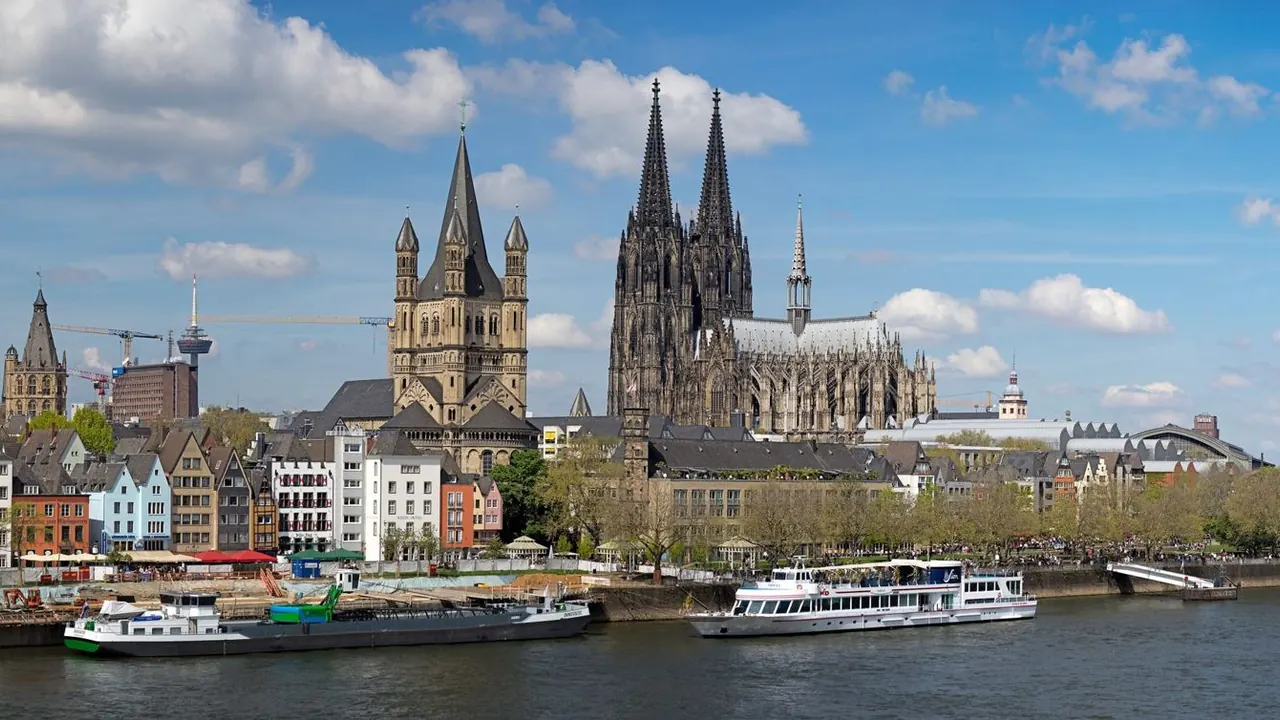
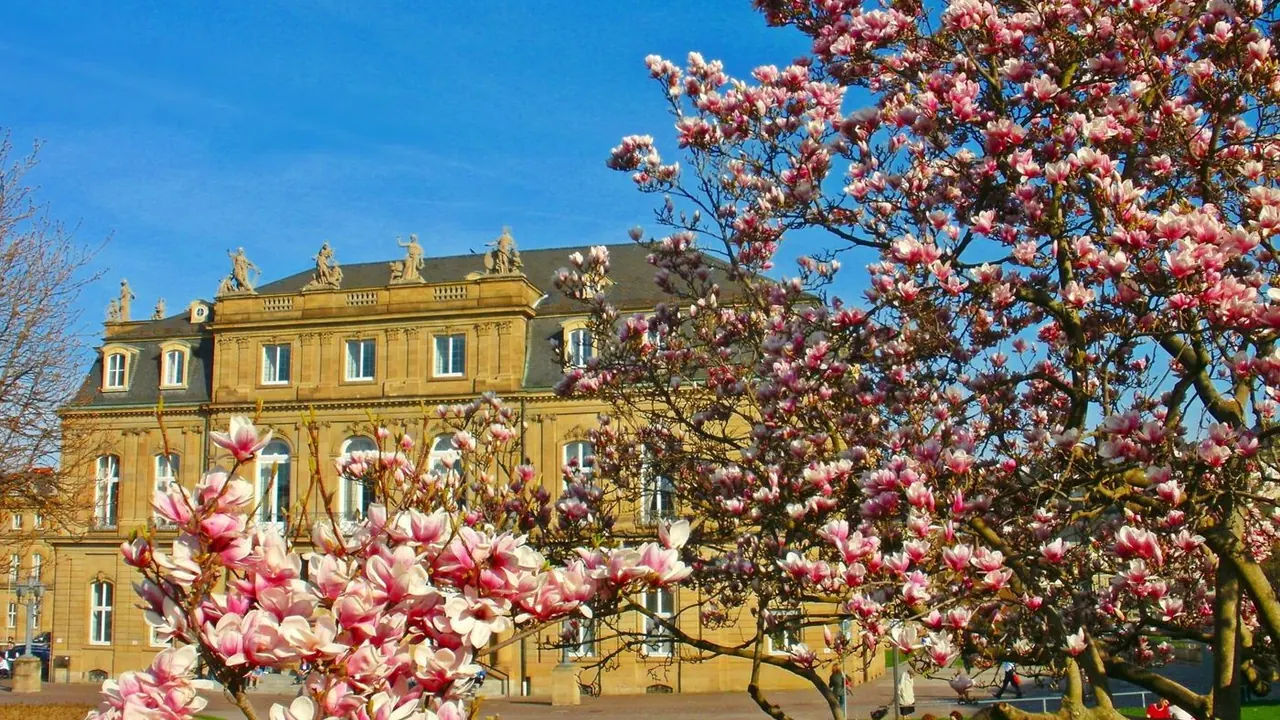
Photos: Cologne by Jörg Braukmann, CC BY-SA 4.0, cropped; Stuttgart by Baden de, CC BY 3.0, cropped.
Cologne or Stuttgart?
Our verdict in twelve categories, each scored against the same fixed benchmark cities, and the climate month by month, so you can choose for your trip.
Choose Cologne for
- nightlife
- beaches
- prices
Cologne suits travellers who care about their evenings as much as their days. Kölsch in the Altstadt brewhouses, bars in the Belgian Quarter, clubs in Ehrenfeld's old factories and one of Germany's most open gay scenes make it the livelier city, and Carnival turns it into a street party for days. In the daytime there is the cathedral and its ring of Romanesque churches, Phantasialand for families, and prices that are a little gentler.
Choose Stuttgart for
- wellness
- food and drink
- live music and the arts
If a long dinner, a night at the ballet and a morning in warm mineral water appeal more than a late bar crawl, choose Stuttgart. Swabian taverns pour wine from vineyards inside the city, the Stuttgart Ballet and the Staatsoper fill the evenings, and the carbonated springs of Bad Cannstatt make it easy to slow down. In the daytime it offers the car museums and the Weissenhof Estate, which suit travellers who prefer modern design to Gothic stone.
Scoreboard
Twelve categories on one fixed scale from 0 to 100. The shaded stretch is the gap between the two.
Your match
Pick a travel style or drag the sliders, and both match scores follow your weighting.
Too close to call, 1 point apart
Wins on nightlife and beaches with your weighting.
Wins on wellness and food and drink with your weighting.
What matters to you?
Category by category
What the scores mean for a trip.
Beaches & swimming
Neither city works for a swimming trip, and neither river is safe to swim in. Cologne has a slight edge because of its flooded gravel pits, such as Fühlinger See and Otto-Maigler-See, where grassy banks and small patches of sand make a pleasant summer afternoon. In Stuttgart the nearest equivalent is the outdoor pools, some of them fed by mineral springs, and open water at Lake Constance is more than two hours away.
Food & drink
Both cities cook hearty regional food, but Stuttgart gives a food lover more to explore. Maultaschen and Käsespätzle, Trollinger and Riesling from vineyards inside the city, the seasonal Besen taverns that growers open in their own houses and the Art Nouveau Markthalle make up a real food culture, and there is a deeper fine-dining tier on top.
In Cologne the ritual matters more than the plate. Köbes keep refilling slim glasses of Kölsch in the Altstadt brewhouses, alongside Himmel un Ääd and the Halve Hahn. Cologne pulls ahead for cheap and varied eating, though: the Turkish and Middle Eastern food along Venloer Strasse in Ehrenfeld gives it a breadth that Stuttgart's limited street food lacks.
Culture & sights
Both cities lost most of their old centres in the war, so neither has a complete historic townscape, but what survives is quite different. Cologne is the place for great religious buildings and old art. It has the cathedral with the Shrine of the Three Kings, twelve Romanesque churches and Roman remains, as well as Museum Ludwig's Pop Art and the Wallraf-Richartz.
Stuttgart's highlights belong to the twentieth century. The Mercedes-Benz and Porsche museums, the Le Corbusier houses on the Weissenhof Estate and the postmodern wing of the Staatsgalerie will appeal to anyone more interested in engineering and design than in medieval stone.
Nightlife
Cologne is by far the better city for a night out. A typical evening moves from Kölsch in the Altstadt to cocktails in the Belgian Quarter or the student crowds on Zülpicher Strasse, and can end in Ehrenfeld's factory clubs. The gay scene around Rudolfplatz is one of Germany's largest, and at Carnival the whole city celebrates for days.
In Stuttgart, going out mostly happens in the bars along Theodor-Heuss-Strasse, with clubs in basements and quieter wine bars in the Bohnenviertel. Apart from the Cannstatter Volksfest and the summer wine village, the city winds down early on weeknights.
Nature & outdoors
Neither city has real mountains, but their settings are quite different. In Stuttgart the countryside begins inside the city. It sits in a basin of wooded hills and vineyards, wine trails and the Rotwildpark forests are a walk from the centre, and the cliff paths of the Swabian Jura and the northern Black Forest are about an hour away.
Cologne is flat, and its green space is planned: the parks of the Grüngürtel and the Rhine meadows, with long cycle paths along the river. For hills you need a short trip out, to the Siebengebirge and the Drachenfels, or further to the crater lakes of the Eifel.
Day trips
Both cities are excellent bases for day trips. The difference is the kind of place you reach. From Cologne, fast trains run to other cities and across borders: Bonn, Düsseldorf, Aachen with Charlemagne's chapel, the castle towns of the Rhine Gorge, and Maastricht or Brussels.
From Stuttgart the trips lean towards smaller historic towns and palaces. Within reach are Ludwigsburg's baroque palace, half-timbered Esslingen, the steep lanes of Tübingen, Heidelberg, Maulbronn monastery and Hohenzollern Castle, with Strasbourg for a long day abroad.
Good for families
Both are easy cities with children, and the choice comes down to the big attraction. Cologne has Phantasialand at Brühl, one of Europe's major theme parks, as well as the Chocolate Museum and the cable car over the Rhine, all on flat ground that is easy with a pushchair.
Stuttgart's highlight is Wilhelma, a zoo and botanical garden set among Moorish-style pavilions. The Killesberg park railway and the rack railway add to it, though the hills mean pushing a pushchair uphill. In Cologne, avoid Carnival week if you are travelling with small children.
Getting around
Both cities have a flat, walkable centre with light rail and S-Bahn trains beyond it, so you will not need a car in either. The difference is the terrain. Cologne stays flat out to the suburbs and is easy to cycle, although its tram map is confusing. Stuttgart climbs steeply up the sides of its basin, so the rack railway, the funicular and the Stäffele stairways become part of a visit.
Shopping & style
Each city has a long pedestrian high street, Schildergasse and Hohe Strasse in Cologne and Königstrasse in Stuttgart, so shopping for the big chains is much the same. What Cologne adds is independent fashion and design in the Belgian Quarter and on Ehrenstrasse, and Eau de Cologne from its historic perfume houses. Stuttgart is the better choice for brands, with Breuninger for designer fashion and the outlet town of Metzingen half an hour away.
Affordability
Neither city is cheap, but Cologne is a little easier on the budget. A brewhouse meal with Kölsch is modestly priced and the cathedral and most churches are free to enter, while Stuttgart's wealth shows in the cost of its central hotels and smart restaurants.
In both cities, hotel prices jump during big trade fairs, and in Cologne also during Carnival. Stuttgart has one useful habit: rooms get cheaper at weekends, when the business travellers leave.
Live music & performing arts
Stuttgart has the more distinguished stage. The Stuttgart Ballet, famous since John Cranko's time, is one of the most respected companies in Europe, and the Staatsoper is known for bold productions. The Liederhalle with its Bach tradition and the big musical theatres at Möhringen fill out the year.
Cologne is strong as well, and stronger in popular music. It has the Philharmonie with the Gürzenich and WDR orchestras, a long electronic and experimental tradition, and gigs in Ehrenfeld and the Südstadt most nights. Its Carnival sessions, with bands singing in the local dialect, are found nowhere else.
Wellness & relaxation
Stuttgart is the more restful choice, thanks to some of the most productive mineral springs in Europe. At the Mineralbad Cannstatt and the Mineralbad Leuze you can soak in naturally carbonated warm water, and quiet vineyard walks start close to the centre.
Cologne depends more on the German sauna habit and a thermal bath in the Rheinpark facing the cathedral, with Aachen's hot springs a short train ride away. Its busy centre and Carnival make it the less calming base.
When should you go?
Pick your month. The climate figures are measured averages, not a forecast.
Cologne in July
Stuttgart in July
Daytime high, °C
Rainfall in the month, mm
Temperature and rainfall are climate normals, averaged over the years shown. Cologne: 1991-2020 normals, Köln-Stammheim (5.4 km from centre). Stuttgart: 1991-2020 normals, Stuttgart / Neckartal (2.8 km from centre).
Temperatures in the two cities run almost in step, so the good season is the same in both. From May to September it is warm enough for long walks and outdoor tables. High summer peaks at about 25°C in Cologne and 26°C in Stuttgart, which is warm but rarely too hot for sightseeing. November turns cool and grey. From December to February daytime highs stay in single figures and the days are short, so museums and churches suit the season better than long walks.
Where the two differ is sunshine and rain. Stuttgart is sunnier in every month, with around 242 hours of sun in July. Its winters are also much drier, with about 35mm of rain in January against 64mm in Cologne, which makes it the better choice for a trip outside summer. Summer is the wettest season in both cities. Cologne's rain peaks in July and August and Stuttgart's from May to July, so pack for showers even in the warm months.
Which traveller are you?
For a food and nightlife trip, Cologne wins because eating and going out run together there. A brewhouse supper turns straight into a night out, weekends stay late, and Ehrenfeld's Turkish kitchens are there after the bars. Stuttgart eats better, but dinner is usually the whole evening.
On a relaxing and wellness trip, Stuttgart is the better fit. Its spring-fed pools work indoors and out in any season, and the spa town of Baden-Baden makes an easy day out. Cologne's sauna landscapes are good for an evening, but the city rarely slows down.
For a short city break, Cologne is the easier choice. The train pulls in right beside the cathedral, and the museums, the Altstadt and the riverfront are all within a flat walk, so even a weekend covers a lot. In Stuttgart, the car museums and Wilhelma mean riding out from the centre.
Before you go
| Measure | Cologne | Stuttgart |
|---|---|---|
| Official language | German | German |
| Currency | Euro (EUR) | Euro (EUR) |
| Sockets | CF230 V, 50 Hz | CF230 V, 50 Hz |
| Driving side | Right | Right |
| Time zone | UTC+1, UTC+2 in summer | UTC+1, UTC+2 in summer |
| Emergency number | 112 | 112 |
| Elevation | 59 m | 245 m |
| Main airport | Cologne Bonn Airport (CGN)15 km from centre115 non-stop destinations | Stuttgart Airport (STR)10 km from centre124 non-stop destinations |
| Public holidays this year | 11 days | 12 days |
By the numbers
| Measure | Cologne | Stuttgart |
|---|---|---|
| City population | 1,025,523 | 609,365 |
| People per km² | 2,532 | 2,938 |
| Museums within 10 km | 40 | 42 |
| UNESCO World Heritage sites within 50 km | 3 | 3 |
Where else could you go?
Every comparison below shares a destination with this one, so you can follow Cologne or Stuttgart somewhere new.