Colombia
Santa Marta
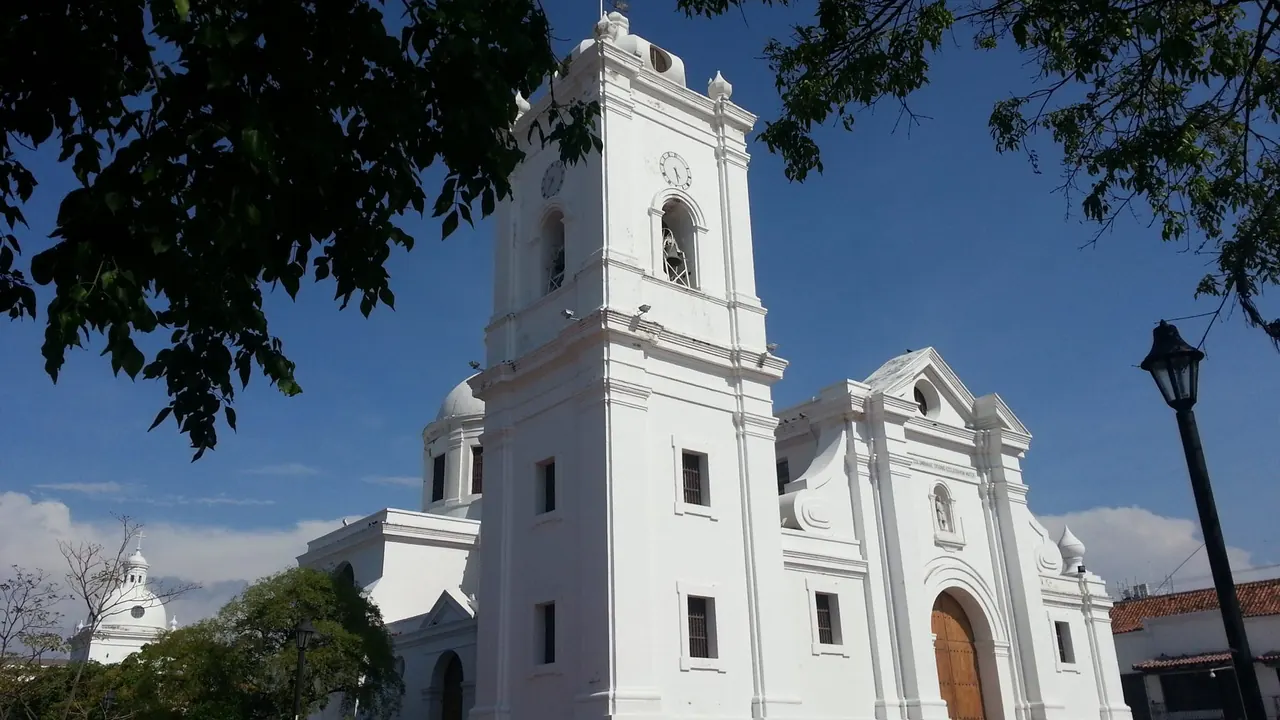
The cathedral of Santa Marta
- Nature & outdoors84
- Affordable cities80
- Beaches70
Photo: Oliver H, CC BY-SA 3.0, cropped
Match
46
Every category weighted equally
- Beach & sun51
- Culture & arts40
- Food & nightlife42
- Family trip51
- Outdoors53
- Relax & unwind48
- Shopping & style40
- On a budget50
Santa Marta in twelve categories
Our verdict on each, scored 0 to 100 against the same fixed benchmark cities, so a score means the same thing on every page.
Beaches & swimming. Scores 70 out of 100.
Food & drink. Scores 44 out of 100.
Culture & sights. Scores 34 out of 100.
Nightlife. Scores 50 out of 100.
Nature & outdoors. Scores 84 out of 100.
Day trips. Scores 38 out of 100.
Good for families. Scores 40 out of 100.
Getting around. Scores 38 out of 100.
Shopping & style. Scores 27 out of 100.
Affordability. Scores 80 out of 100.
Live music & performing arts. Scores 17 out of 100.
Wellness & relaxation. Scores 30 out of 100.
Santa Marta category by category
Beaches & swimming
70The sea is warm all year, around 27°C to 29°C, and beach time is a large part of most stays. The bay in front of the old town is a working harbour shore and not much of a swimming spot. Most visitors use El Rodadero, a resort strip of grey sand and calm water south of the centre, or take a boat or taxi to the small coves around it, such as Bahía Concha, Playa Grande and Playa Blanca.
The postcard beaches are in Tayrona National Park, about an hour east: golden sand, boulders and palms at the edge of the jungle. They take effort to reach, often an hour or more on foot from the park gates. Several, Arrecifes among them, have strong currents and are not safe for swimming, so people swim in the sheltered spots such as La Piscina and Cabo San Juan. From December to March the trade winds blow hard and the sea gets rougher.
Food & drink
44Eating here means Colombian Caribbean cooking: whole fried fish with coconut rice and patacones, seafood soups, arepas de huevo from street fryers and tropical fruit juices squeezed to order. Set lunches in local eateries are plain and filling. In the evening the restaurants around Parque de los Novios and the streets of the historic centre offer a modest spread of grilled seafood, pizza and a few more ambitious kitchens.
Coffee from the Sierra Nevada is grown within sight of the city, and some cafés serve it with care. Beyond that the range is narrow, fine dining is scarce and the beachfront places at El Rodadero cater mainly to beachfront visitors. Visitors eat well and cheaply, but few would choose Santa Marta for its food.
Culture & sights
34Founded in 1525, Santa Marta is the oldest surviving Spanish city in Colombia. Its historic centre is a grid of low colonial and republican buildings around a whitewashed cathedral, where Rodrigo de Bastidas, the city's founder, is said to be buried. The Casa de la Aduana houses a gold museum covering the Tairona people of the Sierra Nevada, and the Quinta de San Pedro Alejandrino on the edge of town is the hacienda where Simón Bolívar died in 1830, set in shady gardens.
That is most of the list. The old centre is pleasant to walk but uneven, with many buildings plainly kept, and a visitor will see its sights in a day. The famous Tairona heritage, including the Lost City, lies deep in the mountains and needs a trek of several days.
Nightlife
50Evenings start late and outdoors. The streets around Parque de los Novios and Carrera 3 in the historic centre fill with bars, rooftop terraces and tables spilling onto the pavement. At El Rodadero the beachfront draws a busier crowd of Colombian vacationers to dance bars playing vallenato, reggaeton and champeta, the Afro-Caribbean dance music of the coast.
The fishing village of Taganga, a short ride over the hill, has long been the backpacker party spot, with hostel bars and beach parties. Weekends and the peak seasons around Christmas and Easter are far livelier than weeknights in low season. It is a fun place to go out, but the scene is small and nobody travels here for it.
Nature & outdoors
84Santa Marta sits at the foot of the Sierra Nevada de Santa Marta, the highest coastal mountain range in the world, whose snow peaks rise to over 5,700m within sight of the Caribbean on clear mornings. Tayrona National Park, about an hour east, is a strip of rainforest coast with jungle trails, giant boulders and monkeys in the trees. Up the mountain, the village of Minca sits in green cloud forest among coffee farms, waterfalls and some of the richest birdwatching in the Americas, with dozens of species found nowhere else.
The multi-day trek to the Lost City through the jungle starts from the city. Taganga is a base for snorkelling and diving, and the dry season from December to April is the best time for walking.
Day trips
38Most excursions from Santa Marta head into landscape rather than to other places. The towns within reach are modest. Aracataca, Gabriel García Márquez's birthplace and the model for Macondo, is about an hour and a half south, with his childhood home kept as a museum. Barranquilla, a large port city known for one of the biggest carnivals in Latin America, is about two hours west along the coast.
Closer in, Minca makes an easy half day up into the hills, and Palomino, a laid-back beach village where a river meets the sea, is about two hours east. Taganga is a fishing village just over the hill. Cartagena is the obvious draw on this coast, but it is too far for a comfortable day trip and better as a separate stop.
Good for families
40Colombian families vacation here in large numbers, and children are welcome everywhere. El Rodadero is the easiest base with children, with a calm, shallow bay, beachfront hotels and boats out to a small aquarium and sea museum. Sheltered coves such as Bahía Concha work for a family beach day.
It is harder work beyond that. There are few attractions made for children, the heat is intense, pavements are uneven and traffic is chaotic. Tayrona's best beaches require long, hot walks, and many of its shores have dangerous currents. Families with older children who enjoy walking and wildlife will get the most out of it.
Getting around
38The historic centre is small and flat enough to walk, though the midday heat and crowded, uneven pavements make it tiring. Everything else depends on the road. Local buses, often small and crowded, run to El Rodadero, Taganga and along the coast to Tayrona and Palomino, and taxis are plentiful and used for most short journeys.
There is no rail system or metro, and traffic jams at the edges of the city. Minca is reached by shared jeep, taxi or mototaxi up a winding mountain road. Many visitors join tours or hire drivers for the parks and the mountains. A car is not needed, but expect to rely on taxis rather than walking.
Shopping & style
27The shopping worth seeking out is craft from the Sierra Nevada and the Guajira coast: hand-woven Arhuaco mochilas in natural wool colours, bright Wayuu bags and hammocks, and coffee from the mountain farms. They are sold in small shops in the historic centre and by vendors along the waterfront.
Beyond that there are a couple of standard shopping malls and beach stalls selling swimwear and souvenirs. There are no fashion streets, design boutiques or markets that would make a shopping day, so plan to buy crafts and coffee here and not much else.
Affordability
80Day-to-day costs are low. Simple guesthouses and hostels, set lunches in local eateries, street food, buses and short taxi rides all cost a fraction of what they would in Europe or North America. Even comfortable boutique hotels in the historic centre are reasonably priced for much of the year.
The bigger costs are the excursions. Entry to Tayrona carries a separate rate for foreign visitors, and guided treks to the Lost City are a significant expense. During the Colombian peak seasons around Christmas, New Year and Easter, beach hotels fill up and prices climb noticeably.
Live music & performing arts
17Formal performing arts are scarce. The city's historic theatre hosts occasional concerts and shows, but there is no regular season to plan a trip around. Music here is mostly informal: vallenato accordion bands and champeta played in bars and at street parties, and drumming and dance groups performing in the squares of the historic centre on busy evenings. Lovers of the coast's music will enjoy hearing it in its home region, especially around the carnival season, but there is little else to attend.
Wellness & relaxation
30Santa Marta has no bathing tradition, and spa options are limited to hotel spas and massage offered on the beach. The city itself is hot, loud and full of traffic, not a place to slow down.
The calm lies just outside it. Up in Minca, eco-lodges in the cool cloud forest offer hammocks, river pools and quiet mornings with birdsong. Along the coast towards Palomino, small yoga retreats and beach cabins invite a slower pace. Visitors who want rest tend to spend a few nights in those places rather than in town.
When should you go?
Pick a month to see what it is like. The climate figures are measured averages, not a forecast.
Santa Marta in July
Daytime high, °C
Rainfall in the month, mm
The whole year
Shaded against this city’s own year: the deepest cell is its best month for that figure and the palest its weakest.
Temperature and rainfall are climate normals, averaged over the years shown. Santa Marta: 1991-2020 normals, Santa Marta / Simon Bolivar (11.9 km from centre).
Before you go
| Measure | Santa Marta |
|---|---|
| Official language | Spanish |
| Currency | Colombian Peso (COP) |
| Sockets | AB110 V, 60 Hz |
| Driving side | Right |
| Time zone | UTC-5 |
| Emergency number | 123 |
| Elevation | 8 m |
| Main airport | Simón Bolívar International Airport (SMR)13 km from centre6 non-stop destinations |
| Public holidays this year | 19 days |
By the numbers
| Measure | Santa Marta |
|---|---|
| City population | 505,915 |
| People per km² | 1,723 |
| Museums within 10 km | 3 |
| UNESCO World Heritage sites within 50 km | 0 |
| Swim season, months above 21 °C | 12 months |
Compare Santa Marta with
Every comparison with a written verdict behind it.