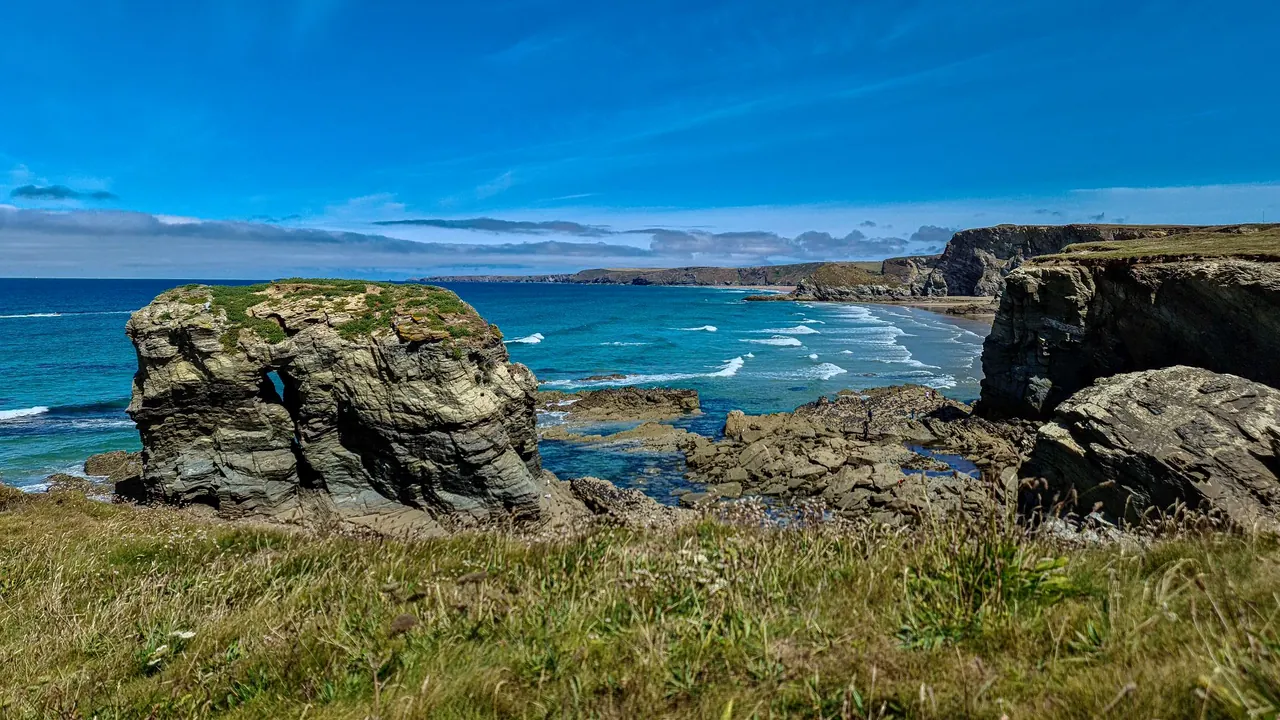
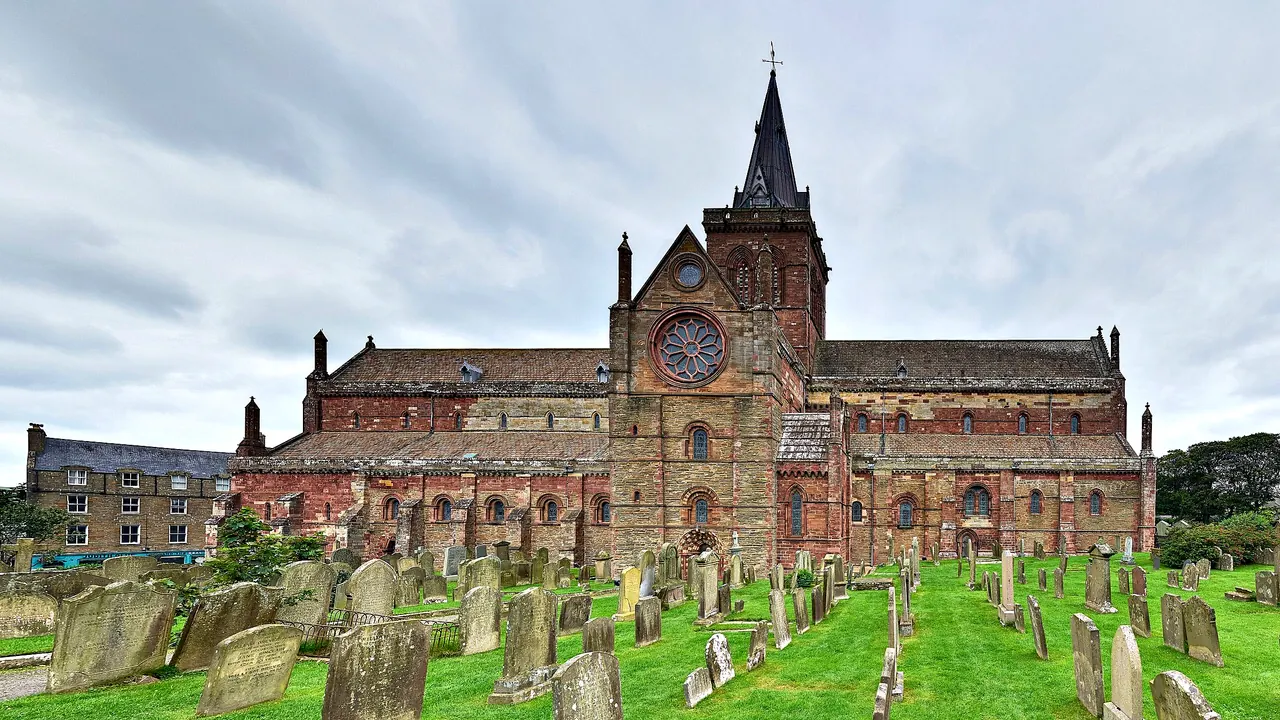
Photos: Cornwall by Howard Senton, Pexels License; Orkney by Virtual-Pano, CC BY-SA 4.0, cropped.
Cornwall or Orkney?
Our verdict in twelve categories, each scored against the same fixed benchmark cities, and the climate month by month, so you can choose for your trip.
Choose Cornwall for
- beaches
- families
- wellness
Cornwall is the choice for a classic summer by the sea. It has far more and better beaches, from the surf strands of the north coast to the sheltered coves around Falmouth, and it adds the South West Coast Path, harbour seafood and plenty to keep children busy. It suits families, surfers and anyone who wants coastal walking with a pub or spa hotel at the end of the day, as long as they can accept summer traffic and high-season prices.
Choose Orkney for
- culture and sights
- getting around
- prices
Orkney rewards a different traveller: someone who comes for the past and doesn't mind the wind. Skara Brae, Maeshowe and the Ring of Brodgar make it one of the great prehistoric landscapes in Europe, and St Magnus Cathedral gives Kirkwall a real centre. Expect quiet roads, seabird cliffs and long light evenings rather than beach days or anything laid on for entertainment. It is a trip for curious adults and outdoor-minded families who are happy to plan around ferries and weather.
Scoreboard
Twelve categories on one fixed scale from 0 to 100. The shaded stretch is the gap between the two.
Your match
Pick a travel style or drag the sliders, and both match scores follow your weighting.
Wins on beaches and families with your weighting.
Wins on culture and sights and getting around with your weighting.
What matters to you?
Category by category
What the scores mean for a trip.
Beaches & swimming
Cornwall wins this easily. In one county it has the open surf beaches of Newquay and Polzeath, the turquoise water at Porthcurno and Kynance Cove, and calm coves near Fowey. The Atlantic stays cool, but from June to September you can spend whole days on the sand.
Orkney's shell-sand bays at Waulkmill and on Sanday can look just as striking, and you will often have one to yourself. The sea there is several degrees colder, though, and the wind is rarely absent, so these are beaches for walking and watching seals, not for swimming.
Food & drink
Both live off their own seas, but Cornwall has far more places to eat that catch. Newlyn's boats supply crab, hake and mackerel to harbour counters and to serious seafood rooms in Padstow, St Ives and Porthleven, and pasties, cream teas and Camel Valley sparkling wine are found everywhere.
Orkney's produce is excellent, from hand-dived scallops and grass-fed beef to Kirkwall's two whisky distilleries. Outside Kirkwall and Stromness, though, there are very few kitchens, so you are more likely to cook these yourself than order them.
Culture & sights
Orkney has the deeper heritage. Skara Brae, Maeshowe and the stone circles of Brodgar and Stenness form a Neolithic landscape few places in Europe can match. Kirkwall adds St Magnus Cathedral and the Earl's Palace, and the Italian Chapel and Scapa Flow bring the story into the twentieth century.
Cornwall offers a broader but looser mix: St Michael's Mount, Tintagel, the mining engine houses around Botallack and the Eden Project. Its stronger suit is modern art, since Tate St Ives and the Hepworth garden have no equivalent on Orkney beyond the Pier Arts Centre.
Nightlife
Neither is a place for late nights, but Cornwall at least has somewhere to go. Newquay fills its bars and a few clubs with surfers and stag groups through the summer, and Falmouth's students keep a smaller scene going.
Orkney's evenings end in a Kirkwall or Stromness pub, perhaps with a fiddle session. With no clubs at all, the best outing on a midsummer night may be a walk in the late light.
Nature & outdoors
Cornwall has the bigger outdoor offer. The coast path runs around Penwith's granite cliffs and across the Lizard, Bodmin Moor adds inland walking, and Newquay, Bude and Sennen give Britain its most reliable surf, with kayaking and sailing on the Fal as well.
Orkney is lower and treeless, but its edges are dramatic. There is the Old Man of Hoy, there are seabird cliffs at Marwick Head and Noup Head, and there are puffins in early summer. It also has something Cornwall cannot match: the scuttled German fleet in Scapa Flow, one of Europe's best-known wreck dives.
Day trips
Cornwall gives you more outings for less effort: St Ives, Mousehole, Port Isaac, Fowey and the Falmouth ferry to St Mawes, with the Isles of Scilly and Plymouth further afield. They are similar in kind, but they are easy to string together.
On Orkney, a day out means an island ferry or a small plane, to Rousay's cairns, Westray's bays or the very short flight to Papa Westray. Each trip is memorable, but it has to be fitted around timetables and weather, and most islands fill only a day.
Good for families
Cornwall is built for children in a way Orkney is not. It has lifeguarded beaches for bodyboarding, sheltered coves such as Gyllyngvase, rock pools, the easy Camel Trail, and for rain the Eden Project, Gweek's seal sanctuary and Newquay's zoo. The cost is the crowds and traffic of the school summer break.
Orkney is calm and safe, and seals, puffins and the replica house at Skara Brae delight children. Beyond Kirkwall's pool, though, nothing is aimed at them, and a run of wet days can be hard going.
Getting around
Orkney is the easier place to drive. Its Mainland roads are quiet, and the main towns and Neolithic sites are within half an hour of each other, with the Churchill Barriers carrying the road south. The harder part is reaching the outer islands, where ferries and planes can be cancelled in bad weather.
Cornwall's narrow, high-hedged lanes and summer queues make driving a chore, and parking in St Ives or Port Isaac is scarce. In its favour, the branch lines to St Ives, Falmouth, Newquay and Looe make a car-free stay possible, which Orkney's thin bus service does not.
Shopping & style
Both are about crafts, but Cornwall has more of them and more variety. St Ives has a dense run of galleries and potteries, Penzance's Chapel Street has antiques and makers, Newquay has surf gear and Truro has a proper high street.
Orkney's shops are fewer but distinctive. Silver jewellery on Albert Street draws on Norse and Neolithic designs, and there is knitwear and the straw-backed Orkney chair. Whisky and cheese are its best things to take home.
Affordability
Neither is cheap, and Orkney comes out a little kinder once you are there. Most of its sights, from the stone circles to the cliffs, are free, and self-catering with local produce keeps daily costs down. Against that, the flight or ferry, a hire car and island crossings add up.
Cornwall's summer cottage prices, parking charges and attraction tickets make the peak season costly, especially for families. Spring and autumn are noticeably cheaper.
Live music & performing arts
Cornwall has more going on across the summer. The Minack Theatre stages plays and concerts on a cliff above Porthcurno, Truro's Hall for Cornwall takes touring shows, and pub folk sessions, male voice choirs and Padstow's May Day add local colour.
Orkney's live culture comes in a few weeks: the St Magnus International Festival at midsummer and the folk festival in Stromness in late spring. Outside those, there is little beyond fiddle sessions in pubs, so it is worth timing a trip around them.
Wellness & relaxation
Cornwall is better for pampering. It has spa hotels above Watergate Bay, Carbis Bay and St Mawes, and wood-fired beach saunas paired with cold sea swims, though summer crowds wear the calm thin.
Orkney has no spas to speak of, only a few hotel treatments and Kirkwall's pool. What it gives instead is stillness: empty roads and light evenings that suit a book and a walk better than a massage.
When should you go?
Pick your month. The climate figures are measured averages, not a forecast.
Cornwall in July
Orkney in July
Daytime high, °C
Rainfall in the month, mm
Where the figures come from
Cornwall has no rain gauge within 25 km of the centre, so its rainfall comes from a gridded climate dataset read at the destination rather than from a gauge further away.
Cornwall's sunshine is measured 28 km from the centre, at Camborne.
Temperature and rainfall are climate normals, averaged over the years shown. Cornwall: 1991-2020 normals, Saint Mawgan (5.7 km from centre). Orkney: 1991-2020 normals, Kirkwall Airport (4.9 km from centre).
Both are at their best from May to September, but Cornwall is the milder of the two. Around its main resorts, summer highs reach about 19°C and the Atlantic warms to 17°C by August. That is enough for brief swims or bodyboarding in a wetsuit. Where most visitors to Orkney stay, July and August peak a few degrees lower and the sea barely reaches 13°C, so a dip there is a quick, bracing one. Late spring is the sunniest time in both places. Cornwall keeps a clear lead through the summer, with around 190 hours of sun in July against fewer than 120 on Orkney.
Rain follows the same pattern in both: it is lightest from April to July and heaviest from October to December, when the days turn short and grey. Winter is cool in Cornwall and a few degrees colder on Orkney, with far less daylight and sunshine. Orkney's compensation comes at midsummer, when it barely gets dark and evening walks are a pleasure. For walking out of season, Cornwall's milder spring and autumn are the better bet.
Which traveller are you?
On a beach and sun trip, choose Cornwall. Its white-sand coves in the far west and surf beaches on the north coast give proper beach days through the summer. Orkney's lovely bays are too cold and windy for more than a quick dip.
For a culture and arts trip, Orkney comes out ahead. The Neolithic sites of the West Mainland, Norse remains and a medieval cathedral make a richer whole than Cornwall's scattered castles and mining ruins, though St Ives and its Tate pull strongly.
On a family trip with children, Cornwall makes life easier. Its coast is set up for young families, with indoor places to go when it rains and cottages or caravan parks to stay in. Orkney suits families who are content to make their own fun outdoors.
Before you go
| Measure | Cornwall | Orkney |
|---|---|---|
| Official language | English | English |
| Currency | Pound Sterling (GBP) | Pound Sterling (GBP) |
| Sockets | G230 V, 50 Hz | G230 V, 50 Hz |
| Driving side | Left | Left |
| Time zone | UTC, UTC+1 in summer | UTC, UTC+1 in summer |
| Emergency number | 112 or 999 | 112 or 999 |
| Main airport | Cornwall Airport Newquay (NQY)15 non-stop destinations | Kirkwall Airport (KOI)9 non-stop destinations |
| Public holidays this year | 8 days | 10 days |
By the numbers
| Measure | Cornwall | Orkney |
|---|---|---|
| Population | 575,525 | 22,270 |
| People per km² | 162 | 22 |
| Swim season, months above 21 °C | None | None |
Where else could you go?
Every comparison below shares a destination with this one, so you can follow Cornwall or Orkney somewhere new.
- Isles of Scillyvs Cornwall
- Devonvs Cornwall
- Pembrokeshirevs Cornwall
- Jurassic Coastvs Cornwall
- Scottish Highlandsvs Orkney
- Isle of Skyevs Orkney