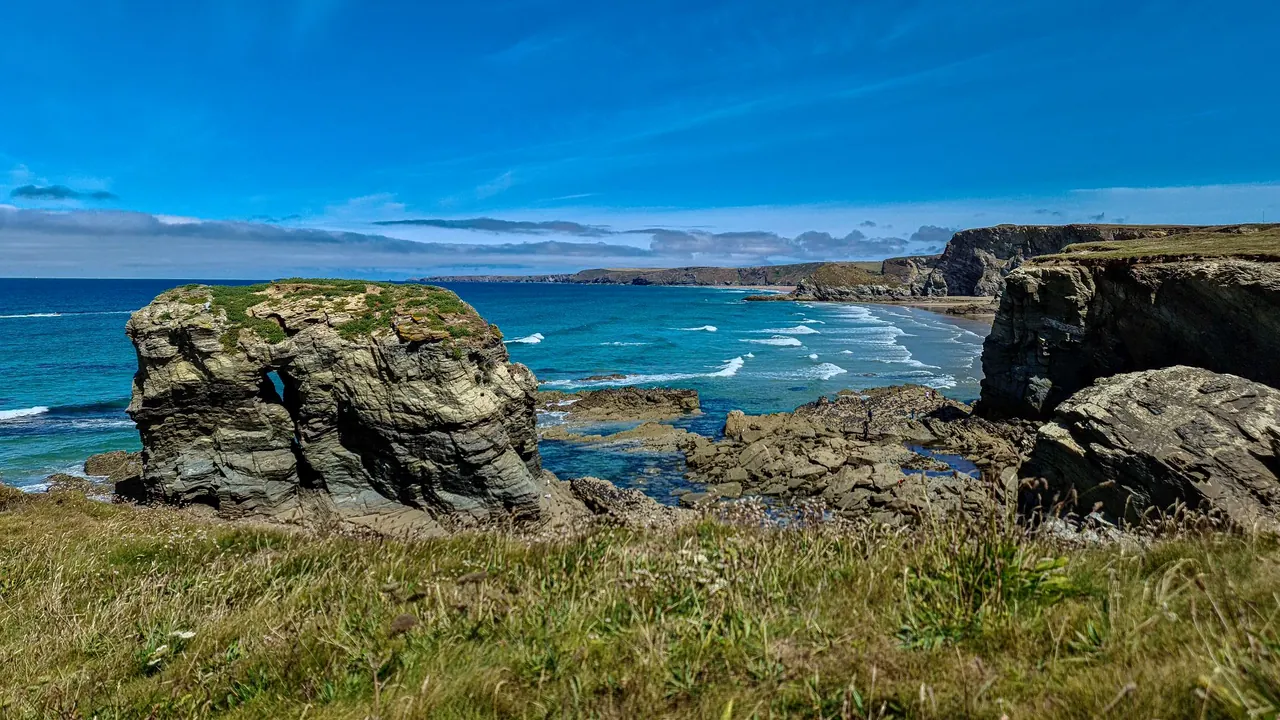
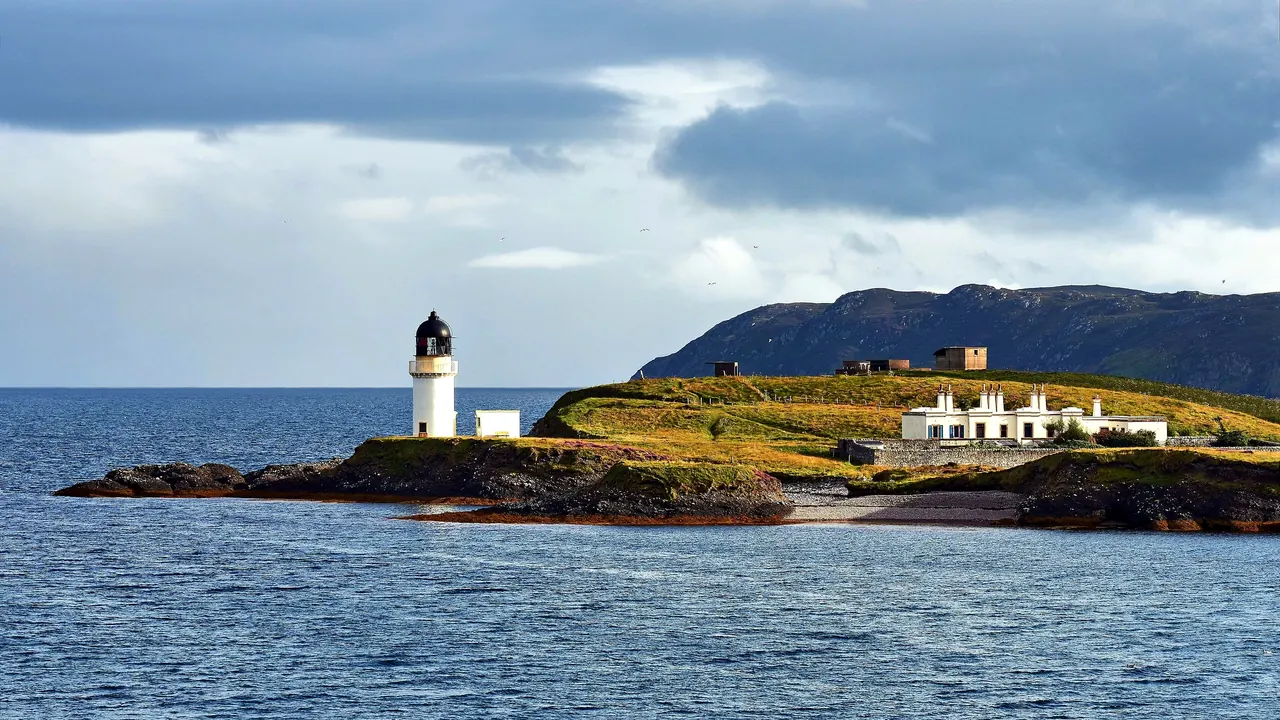
Photos: Cornwall by Howard Senton, Pexels License; Outer Hebrides by Virtual-Pano, CC BY-SA 4.0, cropped.
Cornwall or Outer Hebrides?
Our verdict in twelve categories, each scored against the same fixed benchmark cities, and the climate month by month, so you can choose for your trip.
Choose Cornwall for
- families
- beaches
- nightlife
Cornwall is the better all-round choice, and the clear one for families, beach lovers and anyone who wants a good dinner and a choice of towns. Its coast mixes surf beaches, sheltered coves, harbour towns and single sights such as St Michael's Mount and Tate St Ives, and it has the rainy-day attractions, seafood restaurants and summer evenings that the islands lack. The cost is crowds and traffic in the school summer break.
Choose Outer Hebrides for
- nature and the outdoors
- prices
The Outer Hebrides suit travellers who want emptiness above everything else. The landscape and wildlife are at least as strong as Cornwall's and far wilder: eagles over Harris, otters, machair in flower and white beaches with nobody on them, with the Calanais Stones and Gaelic island life as the culture. Come prepared for quiet evenings, few places to eat, long single-track drives and weather that runs the day.
Scoreboard
Twelve categories on one fixed scale from 0 to 100. The shaded stretch is the gap between the two.
Your match
Pick a travel style or drag the sliders, and both match scores follow your weighting.
Wins on families and beaches with your weighting.
Wins on nature and the outdoors and prices with your weighting.
What matters to you?
Category by category
What the scores mean for a trip.
Beaches & swimming
Cornwall has the stronger beach vacation by a wide margin. It offers the big surf strands of Fistral and Watergate Bay on the north coast, the white sand and clear water of Porthcurno in the far west, Kynance Cove on the Lizard and calm, sheltered coves around Falmouth and Fowey. The sea is cold, but in late summer it is warm enough for a proper swim in a wetsuit. The trade-off is that the famous beaches fill up during the school summer break.
The Hebridean strands at Luskentyre, Scarista and Vatersay can look just as tropical in sunshine, and you will often have one to yourself. But the water stays several degrees colder and the wind often cuts the day short, so these are beaches for walking and picnics, not for lying in the sun.
Food & drink
Both places land superb shellfish, but only Cornwall has the restaurants to match. Newlyn's catch feeds everything from harbour fish-and-chip counters to serious seafood dining in Padstow, Porthleven and Falmouth, and pasties, cream teas, cider and Camel Valley sparkling wine fill in the gaps.
In the Hebrides the langoustines, scallops, smoked salmon and Stornoway black pudding are excellent, but you will often be cooking them yourself. Outside Stornoway and a few places on Harris, eating out comes down to a hotel bar. Many kitchens close on Sundays and in winter, so plan to buy seafood at the pier or the smokehouse and self-cater.
Culture & sights
Cornwall has more to see and more variety: St Michael's Mount reached across the sand at low tide, Tintagel's cliff-top ruins, the mining engine houses at Botallack, Tate St Ives and the Hepworth sculpture garden, and the Eden Project's biomes. Truro's cathedral and the maritime museum at Falmouth fill a wet afternoon.
The Hebrides have fewer sights, and many are far older and starker. The Calanais Stones predate Stonehenge's great circle, and the Dun Carloway broch has stood since the Iron Age. The thatched blackhouses at Gearrannan and Arnol show how island families lived well into the twentieth century, and daily Gaelic gives the islands a culture you live alongside rather than visit. Still, the list is short and the sights lie long drives apart.
Nightlife
Neither place is for big nights out, but Cornwall at least has the option. Newquay fills with surfers, students and stag groups in summer, and Falmouth's university keeps a small scene going. The Hebrides have no clubs at all: a pint in a Stornoway pub, perhaps a traditional music session at the weekend, and Sundays on Lewis and Harris almost completely still.
Nature & outdoors
These are evenly matched, but the landscapes are very different. Cornwall's is a coast to walk: the South West Coast Path around the granite of Penwith and the Lizard heathland, with villages and cafés along the way. It adds Britain's most reliable surf at Newquay and Bude, sailing on the Fal and the easy Camel Trail, but it has no real mountains.
The Hebrides feel properly wild. The Clisham rises to 799m above North Harris, South Harris is bare gneiss, and the watery Uists bloom with machair in summer. Golden and white-tailed eagles, otters and corncrakes are easier to see here than almost anywhere in Britain, and summer boats reach the seabird cliffs of St Kilda.
Day trips
Cornwall gives more varied outings from a single base: artistic St Ives, working Newlyn, Mousehole and Port Isaac, the ferry from Falmouth to St Mawes, and Truro for an inland change. The Isles of Scilly or Plymouth's Barbican make a bigger day.
In the Hebrides a day out means following the causeways and short ferries from Berneray down to Eriskay and Barra. Each island looks different, but each trip tends to end at a village and a beach rather than a town, and only the ferry to Skye adds somewhere busier.
Good for families
Cornwall is one of Britain's classic family destinations, and the Hebrides are not. Cornwall has lifeguarded beaches, bodyboarding in the shallows, the Eden Project, Newquay's zoo and aquarium and the flat Camel Trail for bikes, though summer traffic and wet spells test everyone's patience.
Hebridean children get freedom, empty sand, seals and eagles, and not much else. The Stornoway pool is the only real wet-weather option, and long single-track drives wear on younger children.
Getting around
Both are hard work, in different ways. In Cornwall the problem is congestion: narrow, high-hedged lanes, summer queues and scarce parking in St Ives and Padstow. On the other hand, the railway to Penzance and its branch lines to St Ives, Falmouth and Newquay make a car-free stay in one town realistic.
In the Hebrides you need a car. The roads are quiet but mostly single-track, the islands stretch about 210km from end to end, vehicle ferries need booking, and buses barely run on Sundays on Lewis and Harris.
Shopping & style
Neither is a shopping trip, and both are about makers rather than brands. Cornwall has the wider spread: the galleries and potteries of St Ives, independent shops in Falmouth and Fowey, and surf gear in Newquay. The Hebrides have one outstanding thing to buy, Harris Tweed, often sold straight from the weaver's shed beside the house, plus knitwear, island gin and smoked fish.
Affordability
Cornwall's summer bill comes from demand. Cottages in the popular coastal towns command high prices over the school break and book out early, and parking charges, attraction tickets and seafood dinners keep adding up. Pubs, pasties and self-catering soften it.
In the Hebrides the cost comes from distance instead. Car hire and vehicle ferries are a large part of the budget, and shop food costs more because it is shipped in, though the beaches, walks and standing stones cost nothing. Spring and early autumn bring better rates in either place.
Live music & performing arts
Cornwall has more to offer, with one unique venue. The Minack Theatre stages summer plays in its cliff-top amphitheatre above Porthcurno, Truro's Hall for Cornwall hosts touring shows, and Padstow's May Day and the pub folk sessions keep old traditions going.
In the Hebrides, music is something you happen upon rather than book. Apart from the Hebridean Celtic Festival in July and Stornoway's small arts centre, it means a village-hall ceilidh or a Gaelic song at a local gathering.
Wellness & relaxation
Cornwall gives more ways to unwind: spa hotels above the beaches at Watergate Bay, Carbis Bay and St Mawes, and wood-fired saunas followed by a cold sea dip, best enjoyed outside the summer crowds. The Hebrides have almost no spa offer, only the pool in Stornoway and the odd treatment room. What they offer instead is stillness: empty roads, a cottage by a sea loch and long light evenings.
When should you go?
Pick your month. The climate figures are measured averages, not a forecast.
Cornwall in July
Outer Hebrides in July
Daytime high, °C
Rainfall in the month, mm
Where the figures come from
Cornwall has no rain gauge within 25 km of the centre, so its rainfall comes from a gridded climate dataset read at the destination rather than from a gauge further away.
Cornwall's sunshine is measured 28 km from the centre, at Camborne.
Temperature and rainfall are climate normals, averaged over the years shown. Cornwall: 1991-2020 normals, Saint Mawgan (5.7 km from centre). Outer Hebrides: 1991-2020 normals, Stornoway (4.1 km from centre).
Both are summer destinations, and Cornwall is the milder of the two in every month. Around its main resorts, July and August reach about 19°C and the Atlantic peaks at about 17°C in August, so June to September works for beach days, with brief swims or a wetsuit. May is the sunniest month in both places and a fine time for coastal walking before the crowds. From October the rain picks up sharply in Cornwall, and winter is damp and grey, though rarely cold.
The Outer Hebrides run a few degrees cooler, with summer highs of about 16°C and a sea that barely passes 13°C, so the beaches are for walking rather than swimming. The settled window is short: May and June are the brightest and driest, and by September the rain is building. Winter is wet and dark, with January rainfall around 144mm and little sunshine, so the islands make far less sense outside May to September than Cornwall does.
Which traveller are you?
On a family trip with children, Cornwall is the easy choice. Lifeguarded, sheltered beaches at St Ives and Falmouth, rock pools, the Eden Project and the seal sanctuary at Gweek cover sunny and wet days, while the islands offer empty sand and very little else.
For a food and nightlife trip, Cornwall wins clearly. Seafood dining rooms in Padstow, Porthleven and St Ives, harbour pubs and Newquay's late bars give real choice. In the Hebrides the produce is superb, but restaurants are few and evenings end in a hotel bar.
On an outdoors trip with wildlife in mind, the Outer Hebrides have the edge for wildness. Eagles over Harris, otters, corncrakes, the Hebridean Way and boats to St Kilda feel remoter than Cornwall's busier coast path, which offers more company, villages and surf.
Before you go
| Measure | Cornwall | Outer Hebrides |
|---|---|---|
| Official language | English | English |
| Currency | Pound Sterling (GBP) | Pound Sterling (GBP) |
| Sockets | G230 V, 50 Hz | G230 V, 50 Hz |
| Driving side | Left | Left |
| Time zone | UTC, UTC+1 in summer | UTC, UTC+1 in summer |
| Emergency number | 112 or 999 | 112 or 999 |
| Main airport | Cornwall Airport Newquay (NQY)15 non-stop destinations | Stornoway Airport (SYY)6 non-stop destinations |
| Public holidays this year | 8 days | 10 days |
By the numbers
| Measure | Cornwall | Outer Hebrides |
|---|---|---|
| Population | 575,525 | 26,720 |
| People per km² | 162 | 9 |
| Swim season, months above 21 °C | None | None |
Where else could you go?
Every comparison below shares a destination with this one, so you can follow Cornwall or Outer Hebrides somewhere new.
- Isle of Skyevs Outer Hebrides
- Isles of Scillyvs Cornwall
- Devonvs Cornwall
- Scottish Highlandsvs Outer Hebrides
- Pembrokeshirevs Cornwall
- Jurassic Coastvs Cornwall