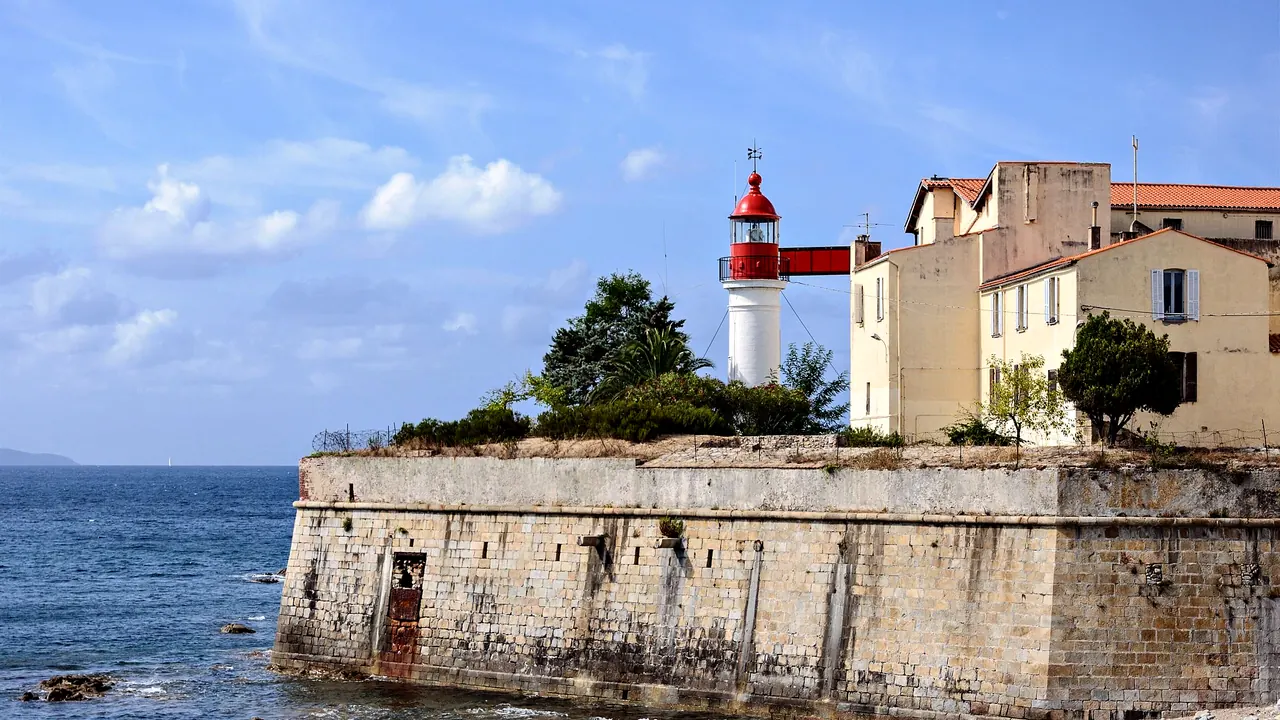
Photos: Corsica by Myrabella, CC BY-SA 3.0, cropped.
Corsica or Dordogne?
Our verdict in twelve categories, each scored against the same fixed benchmark cities, and the climate month by month, so you can choose for your trip.
Choose Corsica for
- beaches
- nature and the outdoors
- nightlife
Choose Corsica if the sea and the mountains are the point of the trip. It has pale-sand coves around Porto-Vecchio and Bonifacio, granite peaks within sight of the coast, and boat trips to the Scandola cliffs. It suits active couples, walkers and anyone who wants to swim in clear, warm sea. Expect to pay more, and to spend a lot of time on slow roads.
Choose Dordogne for
- day trips
- culture and sights
- prices
The Dordogne is for travellers who like to fill their days with sights and their evenings with good food. Painted caves in the Vézère valley, castles facing each other across the river, Sarlat's golden-stone old town and the weekly markets give it far more to see and eat. It is also easier on a family budget and easier to drive. The swimming is in rivers and pools, not the sea.
Scoreboard
Twelve categories on one fixed scale from 0 to 100. The shaded stretch is the gap between the two.
Your match
Pick a travel style or drag the sliders, and both match scores follow your weighting.
Wins on beaches and nature and the outdoors with your weighting.
Wins on day trips and culture and sights with your weighting.
What matters to you?
Category by category
What the scores mean for a trip.
Beaches & swimming
On beaches, the gap between these two is as wide as it gets. Corsica has some of the finest sand in the Mediterranean: Palombaggia, Santa Giulia and Rondinara in the far south, Saleccia and Lotu in the Agriates in the north, reached by boat or a long track, and quieter granite coves on the west coast.
The Dordogne is a long drive from the Atlantic. Swimming there means the gravel banks of the Dordogne and Vézère below villages such as La Roque-Gageac, a few lakes with sandy shores, or the pool at a rented house. It is nice on a hot afternoon, but it is not a reason to choose the region.
Food & drink
Both regions eat from the land rather than the sea, but food is a bigger part of a stay in the Dordogne. Duck and goose cooking, cèpes, walnuts and winter truffles, Sarlat's Saturday market and tastings at the Bergerac and Monbazillac estates make it worth planning a week around eating, even if the menus start to repeat after a few days.
Corsica's best food is its cured pork, such as lonzu and figatellu, brocciu cheese in everything from omelettes to fiadone, and the wines of Patrimonio. You have to look for it in inland village inns and the markets of Ajaccio and Bastia, because summer menus at the beach resorts are often ordinary.
Culture & sights
The Dordogne is much stronger for sightseeing. The painted caves and rock shelters of the Vézère valley, the prehistory museum at Les Eyzies, Sarlat's medieval centre and the castles of Beynac and Castelnaud are close enough together to see several in a day from one base.
Corsica's heritage is spread along the coast and through the hills. There are the Genoese citadels at Calvi and Bonifacio, the upper town of Corte, and Napoleon's birthplace and the Palais Fesch in Ajaccio. It makes a rewarding road trip, but the setting of each town matters more than what is inside it.
Nightlife
Neither region is a place for a night out, but Corsica at least has something in high summer: open-air clubs in the hills behind Porto-Vecchio, harbour bars in Calvi that stay open late, and a few bars in Ajaccio and Bastia all year. In the Dordogne the evening ends after dinner, and the liveliest it gets is a village night market with dancing in the square.
Nature & outdoors
Corsica is wild country on a scale the Dordogne cannot match. It has peaks above 2,700m and the GR20 trek along the island's spine, as well as the red cliffs of Piana, the needles of Bavella and the Scandola reserve. Trekking, canyoning, diving and sea kayaking are all on offer.
The Dordogne is gentler. You can paddle a canoe under limestone cliffs and castles, cycle quiet lanes and the greenway near Sarlat, or walk through oak and walnut country. It is good for easy days outdoors, but has nothing for a serious hiker.
Day trips
The Dordogne is made for touring. Almost anywhere you stay, there is another fine village within half an hour: Domme, Brantôme, and Rocamadour just beyond the region's edge. The Lot valley is close, and Saint-Émilion and Bordeaux are within reach from the Bergerac side.
Corsica's outings are fewer, and each base has its own, because the mountain roads are slow. Sartène, the hill villages of the Balagne and Cap Corse make good days out. From Bonifacio, a ferry reaches Sardinia in under an hour, which the landlocked Dordogne cannot offer.
Good for families
The Dordogne is better for families with children of school age. Castelnaud fires replica siege engines and lets children try on armour, and there are the prehistoric sites around Les Eyzies, gentle canoe trips and tree-top adventure parks. The many steps and cliff paths make it hard going with a pushchair.
Corsica is a simpler beach vacation, built around shallow, calm bays such as Santa Giulia, with campsites and pools nearby. There is little else made for children, and the twisting roads make one base with short outings the better plan.
Getting around
Both regions need a car, but driving is much easier in the Dordogne. The roads are quiet for most of the year and the main sights are rarely more than an hour apart. The only pressure comes in July and August, on the riverside road and in the car parks at Sarlat.
In Corsica, narrow mountain roads make every journey longer than the map suggests, and buses are infrequent. The narrow-gauge railway between Ajaccio, Corte, Bastia and Calvi is a scenic extra, but it does not reach the south.
Shopping & style
In both regions, shopping mostly means food, so the difference is in what you take home rather than how much there is to buy. From Corsica it is charcuterie, chestnut flour, island wines and hand-forged knives, with pottery from the Balagne and a few summer boutiques in Porto-Vecchio and Calvi. In the Dordogne you fill the car boot with foie gras, confit, walnut oil and Bergerac wine, and in summer many villages hold brocantes and antiques fairs.
Affordability
The Dordogne is the cheaper of the two. Prices are those of rural France, with lunchtime set menus, wine bought from the grower and plenty of simple gîtes, though entry fees and canoe hire add up for a family.
Corsica in July and August is expensive. Rooms in Porto-Vecchio, Bonifacio and Calvi, restaurants on the coast, car hire and the ferry all push up the bill. Inland villages, campsites and a June or September visit bring the cost down.
Live music & performing arts
Neither region has much on stage outside summer, so the difference is in what each summer brings. Corsica's own tradition is polyphonic singing, unaccompanied male voices heard in village churches, alongside jazz in Calvi and guitar evenings in the Patrimonio vineyards. The Dordogne leans towards theatre and classical music, with Sarlat's theatre festival in the squares of the old town, mime and street theatre in Périgueux, and Festival du Périgord Noir concerts in Romanesque churches.
Wellness & relaxation
Corsica slows you down with siestas through the hot afternoons and mountain villages where little happens after dark. Its thermal springs, such as Pietrapola, are small and old-fashioned, and the only proper spas are in upmarket hotels around Porto-Vecchio, Calvi and Ajaccio.
The Dordogne offers much the same kind of rest in a softer setting: a stone farmhouse with a pool, quiet riverside villages in the evening and empty lanes. It has no thermal baths at all. It is calmest in the Périgord Vert and in late spring or September, away from the August crowds around Sarlat.
When should you go?
Pick your month. The climate figures are measured averages, not a forecast.
Corsica in July
Dordogne in July
Daytime high, °C
Rainfall in the month, mm
Temperature and rainfall are climate normals, averaged over the years shown. Corsica: 1991-2020 normals, Ajaccio (5.1 km from centre). Dordogne: 1991-2020 normals, Gourdon (21.2 km from centre).
Corsica is the summer sun destination. On the coast the sea is warm enough to swim from June to October and reaches 25°C in August. July is almost dry at 9mm, and the days are long and sunny from May to September. Midsummer is hot for walking at low altitude, so May, June and late September are better for hiking. Rain comes in autumn and peaks at 115mm in November, though the winters stay mild.
The Dordogne is cooler and greener. Rain falls through the whole year, and spring is the wettest stretch. July and August reach 28°C, which is warm enough for the rivers but hot for touring castles and climbing cliff paths. May, June and September are the most comfortable months for sightseeing. Winter days are chilly, around 9°C, and less sunny than Corsica's.
Which traveller are you?
For a beach and sun trip, Corsica is the clear winner. It has pale sand and turquoise water at Palombaggia and Rondinara, a dry summer and a warm sea. In the Dordogne, swimming means a gravel river bank, a small lake or the pool at your rented house.
On a culture and arts trip, choose the Dordogne. The painted caves and the prehistory museum of the Vézère valley, Sarlat's medieval streets and a river lined with castles give you more to see, and closer together, than Corsica's citadels spread around its coast.
For an outdoors trip, Corsica is in another league. It has the GR20 and the easier Mare e Monti paths, the granite needles of Bavella, canyoning in mountain rivers and diving around the Lavezzi islands. The Dordogne offers pleasant canoeing and cycling, but no wild country.
Before you go
| Measure | Corsica | Dordogne |
|---|---|---|
| Official language | French | French |
| Currency | Euro (EUR) | Euro (EUR) |
| Sockets | CE230 V, 50 Hz | CE230 V, 50 Hz |
| Driving side | Right | Right |
| Time zone | UTC+1, UTC+2 in summer | UTC+1, UTC+2 in summer |
| Emergency number | 112 | 112 |
| Main airport | Ajaccio Napoléon Bonaparte airport (AJA)29 non-stop destinations | Bergerac Dordogne-Périgord airport (EGC)9 non-stop destinations |
| Public holidays this year | 11 days | 11 days |
By the numbers
| Measure | Corsica | Dordogne |
|---|---|---|
| Population | 355,486 | 417,614 |
| People per km² | 41 | 46 |
| Swim season, months above 21 °C | 4 months | - |
Where else could you go?
Every comparison below shares a destination with this one, so you can follow Corsica or Dordogne somewhere new.
- Sardiniavs Corsica
- French Rivieravs Corsica
- Cinque Terrevs Corsica
- Loire Valleyvs Dordogne
- Tuscanyvs Corsica
- Provencevs Dordogne