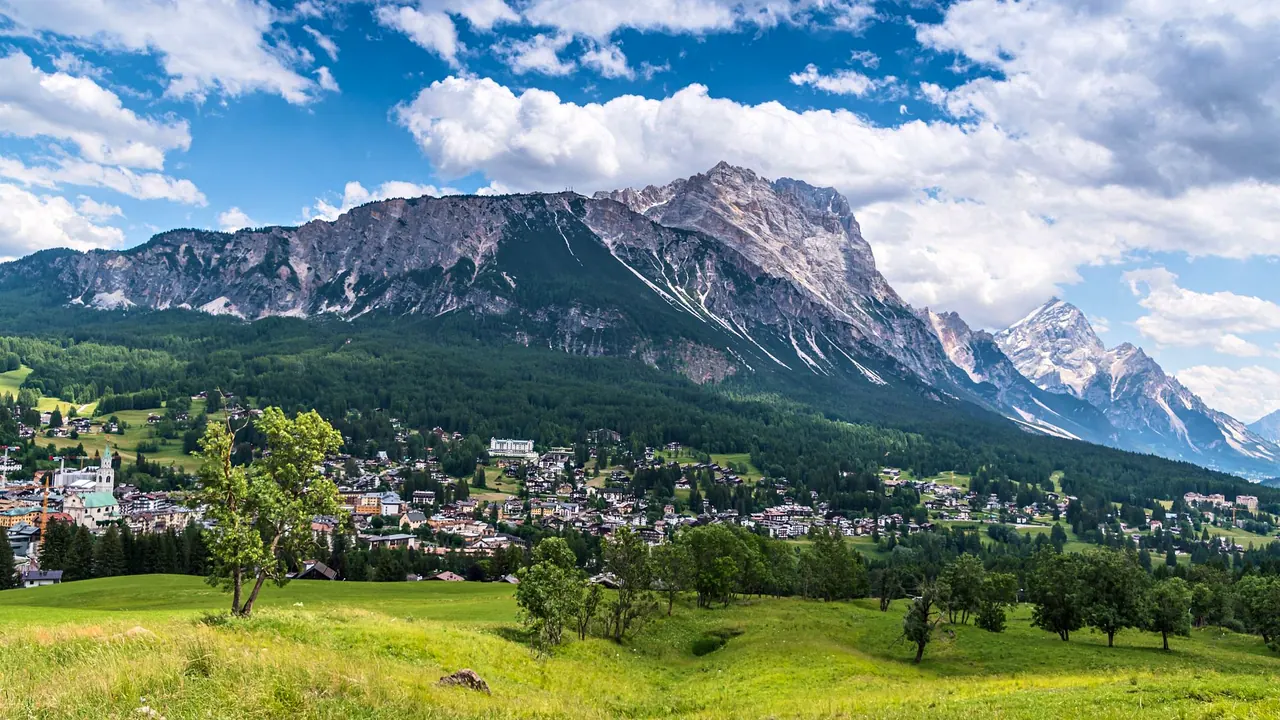
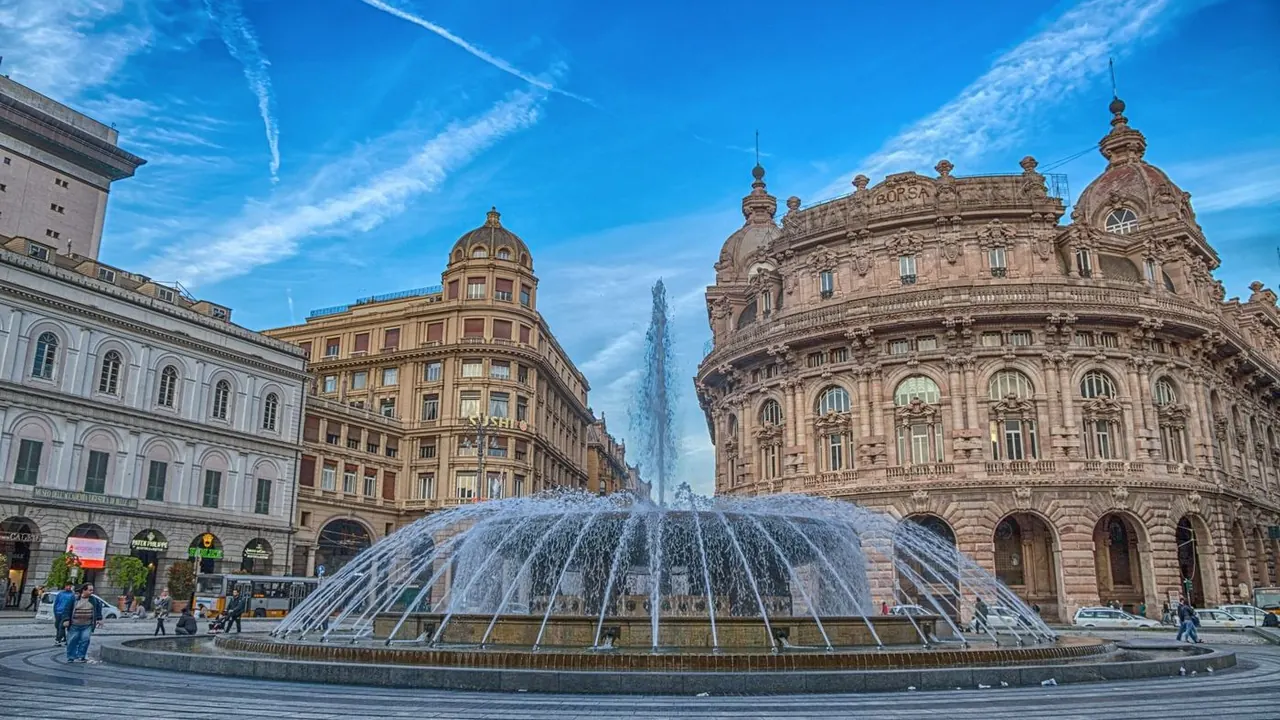
Photos: Cortina d'Ampezzo by Andreas Neubauer, Pexels License; Genoa by Faber1893, CC BY-SA 4.0, cropped.
Cortina d'Ampezzo or Genoa?
Our verdict in twelve categories, each scored against the same fixed benchmark cities, and the climate month by month, so you can choose for your trip.
Choose Cortina d'Ampezzo for
- nature and the outdoors
- wellness
Cortina is the choice when the mountains are the whole point of the trip. The Dolomites rise straight from the valley, lifts start in town, and winter brings skiing across the Dolomiti Superski network while summer opens up hut-to-hut trails and via ferrata routes. It suits skiers, hikers and climbers who are happy to pay resort prices and to spend their evenings over a long dinner rather than at a concert or in a bar.
Choose Genoa for
- beaches
- culture and sights
- prices
Genoa makes more sense for a trip with variety in it. Its medieval caruggi and palace museums give days of sightseeing, the food is some of the most distinctive in Italy, and the coastal railway puts Riviera swimming, Portofino's cliff paths and the Cinque Terre within easy reach. It also costs far less, which matters to anyone who doesn't need a ski lift outside the door.
Scoreboard
Twelve categories on one fixed scale from 0 to 100. The shaded stretch is the gap between the two.
Your match
Pick a travel style or drag the sliders, and both match scores follow your weighting.
Wins on nature and the outdoors and wellness with your weighting.
Wins on beaches and culture and sights with your weighting.
What matters to you?
Category by category
What the scores mean for a trip.
Beaches & swimming
There is no real contest here. Cortina's alpine lakes, Ghedina and Pianozes among them, are fed by snowmelt and better for walking round than swimming in, so in practice swimming means a hotel pool. The Adriatic is more than two hours' drive away.
Genoa offers a swim most summer afternoons: the pebble cove at Boccadasse, the bathing establishments built over the rocks on the Corso Italia, and the platforms below Nervi's promenade. The prettier bays at Camogli and Sestri Levante are a short train ride away, though the shores are mostly pebble or coarse sand and rented loungers take up much of the space.
Food & drink
Genoa is where you eat better, and more easily. Pesto, oily focaccia, farinata and panissa from the old-town friggitorie, pansoti in walnut sauce and seafood in the harbour trattorias make the city worth visiting for its food alone, and the Mercato Orientale shows where it all comes from.
Cortina's Ampezzan mountain cooking has real character, from beetroot casunziei to polenta with game, and its best moments come on rifugio terraces among the peaks. In the valley, though, the choice is narrow and expensive, with almost no street food, while Genoa has plenty that is cheap and very local.
Culture & sights
Genoa wins this easily. You can spend several full days on its sights: the shaded caruggi, the Rolli palaces on Via Garibaldi with their Van Dyck and Rubens canvases and painted halls, the striped Cathedral of San Lorenzo and the marble sculpture at Staglieno.
Cortina has a pleasant centre, the 1956 Olympic ice stadium and the Regole's small museums, led by the Rimoldi collection of twentieth-century art. Its most powerful history lies up in the mountains, in the First World War tunnels on Lagazuoi and the Cinque Torri, and seeing them is as much a hike as a visit.
Nightlife
Neither city is made for a big night out, but Genoa has more going on after dark. Students and locals keep the small bars around Piazza delle Erbe busy until late at weekends, and in summer evenings move out to the waterfront at Foce and the beach clubs along the coast.
In Cortina, evenings mean après-ski drinks, the passeggiata on the Corso Italia and long dinners. A few smart bars and clubs stay open late in the peak winter weeks, but in summer the town goes quiet early.
Nature & outdoors
Both are fine places to be outdoors, but Cortina is exceptional. The Dolomites ring the town and lifts leave from the centre. The choice runs from skiing on the Superski network to the Alta Via 1, via ferrata and climbing, and the Tre Cime di Lavaredo and Lago di Misurina are under an hour away.
Genoa's outdoors are gentler and come with the sea: the fortress trail above Righi, the Portofino promontory's cliff paths down to San Fruttuoso, the Cinque Terre by train, and boat trips into the Pelagos Sanctuary to look for whales and dolphins. They are outings to fit around a city stay rather than a mountain vacation in their own right.
Day trips
From Cortina, most outings lead into other mountain valleys. The best of them lie in South Tyrol, at San Candido and at Bolzano with the Iceman in its archaeology museum. Venice is possible but makes a long coach day, and the towns within range are pleasant rather than essential. Many are easier with a car.
Genoa is far better placed. Camogli and Santa Margherita are under an hour by train, Portofino is a short bus or boat ride on from Santa Margherita, and the Cinque Terre are about an hour and a half by rail. Milan and Turin are close enough for a museum day, and trains, buses and boats cover all of it without a car.
Good for families
Genoa has more for children who aren't skiing. At the Porto Antico there are the aquarium, a science centre and the walk-through submarine at the Galata museum, and rides on the funiculars and public lifts help in any weather. The steep, dark lanes of the old town are hard work with a pushchair, though.
Cortina suits active families well. It has ski schools, beginner slopes at Socrepes, public skating, and easy summer walks to lakes and huts, all from a small, calm centre. Beyond the outdoors there is little aimed at children, and a wet day can feel long.
Getting around
Cortina's small, flat centre takes minutes on foot. Beyond it, you depend on ski buses in winter, a limited bus service up to the passes, or a hire car. The town has had no railway since 1964, so you arrive by coach from Venice or after a long drive.
Genoa is hilly and its lanes are a maze, but funiculars, public lifts and a short metro line help. Its real advantage is the coastal railway, which reaches Nervi and the Riviera towns without a car. Buses are slow in traffic, and driving in the centre is best avoided.
Shopping & style
Cortina's shopping is one polished strip, the Corso Italia, with luxury fashion, furriers, jewellers and upmarket mountain wear, anchored by the Cooperativa, a store that has been trading since 1893. It is smart, but once you have walked its length there is little else.
Genoa has the edge overall, simply because there is more to browse. Via XX Settembre and Via Roma carry the familiar Italian labels, though with less luxury than Cortina. The real interest is in the old town, where long-established shops sell candied fruit, olive oil and pesto and small workshops make coral and ceramics, so it is the better place for food and crafts to take home.
Affordability
This is one of the widest gaps between the two. Cortina is among the most expensive places to stay in Italy. In winter and August, hotels and restaurants charge luxury-resort rates, and lift passes and equipment hire come on top. Rifugio meals and early-summer or late-September stays soften the bill only a little.
Genoa is a mid-range city that feels good value for northern Italy. Focaccia and farinata are cheap, trattoria lunches are fair, and the funiculars and buses cost little. Costs rise in the smarter Riviera resorts in summer, and loungers add up on beach days.
Live music & performing arts
Genoa gives you a proper evening out. The Teatro Carlo Felice on Piazza De Ferrari stages opera, ballet and symphony concerts, the Teatro Nazionale performs drama in Italian, and there are Paganini concerts in his own city. Small clubs keep its singer-songwriter tradition alive.
Cortina has no theatre season and no regular venue. Summer festivals bring chamber and classical concerts to churches, halls and sometimes mountain settings, but outside those weeks there is little on.
Wellness & relaxation
Cortina is the more restful of the two, thanks to its hotels and its pace. Many hotels have Alpine spas with saunas, hay baths and indoor pools. In June, September or a quiet winter week, the clear air and an afternoon on a hut terrace do the rest, though the peak weeks bring traffic and crowds.
Genoa's centre, with its port and crowded lanes, is lively rather than calm. The quiet is at the edges: the villa gardens and promenade at Nervi, or a slow lunch in a Riviera village. The thermal waters of Acqui Terme are a little over an hour away.
When should you go?
Pick your month. The climate figures are measured averages, not a forecast.
Cortina d'Ampezzo in July
Genoa in July
Daytime high, °C
Rainfall in the month, mm
Where the figures come from
Genoa has no rain gauge within 25 km of the centre, so its rainfall comes from a gridded climate dataset read at the city rather than from a gauge further away.
Genoa's sunshine is measured 80 km from the centre, at Capo Mele.
Temperature and rainfall are climate normals, averaged over the years shown. Cortina d'Ampezzo: 1991-2020 normals, Dobbiaco (22.5 km from centre). Genoa: 1991-2020 normals, Genova / Sestri (6.7 km from centre).
Cortina is really two different places across the year. From December to March it is a snow resort. Daytime highs are around 0°C in January, so walks round town are brief and the slopes are the focus. Summer is mild rather than warm, with highs near 22°C in July and August, which is ideal for hiking. It is also the wettest part of the year, and rainfall peaks at 130mm in July. June and September are still comfortable on the trails, while April, May, October and November fall between the two seasons.
Genoa runs the other way. Its mild winters suit walking the city, and from June to September it is a place to swim, with the sea reaching 25°C in August and July both the sunniest and the driest month. Autumn is the time to be wary: rain climbs sharply from September, and October is the wettest month at 212mm. Spring, from April into early June, is the best balance for sightseeing and coastal walks. In summer the two complement each other: Genoa is hot and dry by the sea, Cortina cooler and showery in the mountains.
Which traveller are you?
On an outdoors trip, Cortina is in a different league. Lifts climb from town onto the Dolomite peaks and the Tre Cime and the Fanes-Sennes-Braies park are close. Summer means hut-to-hut trekking and historic via ferrata, and winter brings the Dolomiti Superski area.
For a culture and arts trip, Genoa is the clear pick. The caruggi, the Rolli palaces on Via Garibaldi, Staglieno cemetery and an opera season at the Carlo Felice fill several days. Cortina's small museums cover a rainy afternoon at most.
On a trip on a tight budget, Genoa makes money go much further. Focaccia and farinata make cheap meals, central hotels are fairly priced for Italy and local transport is inexpensive. Cortina is among Italy's priciest resorts, and budget visitors often sleep in other valleys.
Before you go
| Measure | Cortina d'Ampezzo | Genoa |
|---|---|---|
| Official language | Italian | Italian |
| Currency | Euro (EUR) | Euro (EUR) |
| Sockets | CFL230 V, 50 Hz | CFL230 V, 50 Hz |
| Driving side | Right | Right |
| Time zone | UTC+1, UTC+2 in summer | UTC+1, UTC+2 in summer |
| Emergency number | 112 | 112 |
| Elevation | 1,224 m | 20 m |
| Main airport | Venice Marco Polo Airport (VCE)116 km from centre103 non-stop destinations | Genoa Cristoforo Colombo Airport (GOA)7 km from centre25 non-stop destinations |
| Public holidays this year | 13 days | 13 days |
By the numbers
| Measure | Cortina d'Ampezzo | Genoa |
|---|---|---|
| City population | 5,546 | 558,745 |
| People per km² | 22 | 2,325 |
| Museums within 10 km | 3 | 51 |
| UNESCO World Heritage sites within 50 km | 1 | 1 |
| Swim season, months above 21 °C | - | 4 months |
Where else could you go?
Every comparison below shares a destination with this one, so you can follow Cortina d'Ampezzo or Genoa somewhere new.
- Portofinovs Genoa
- La Speziavs Genoa
- Innsbruckvs Cortina d'Ampezzo
- Milanvs Genoa
- Venicevs Cortina d'Ampezzo
- Turinvs Genoa