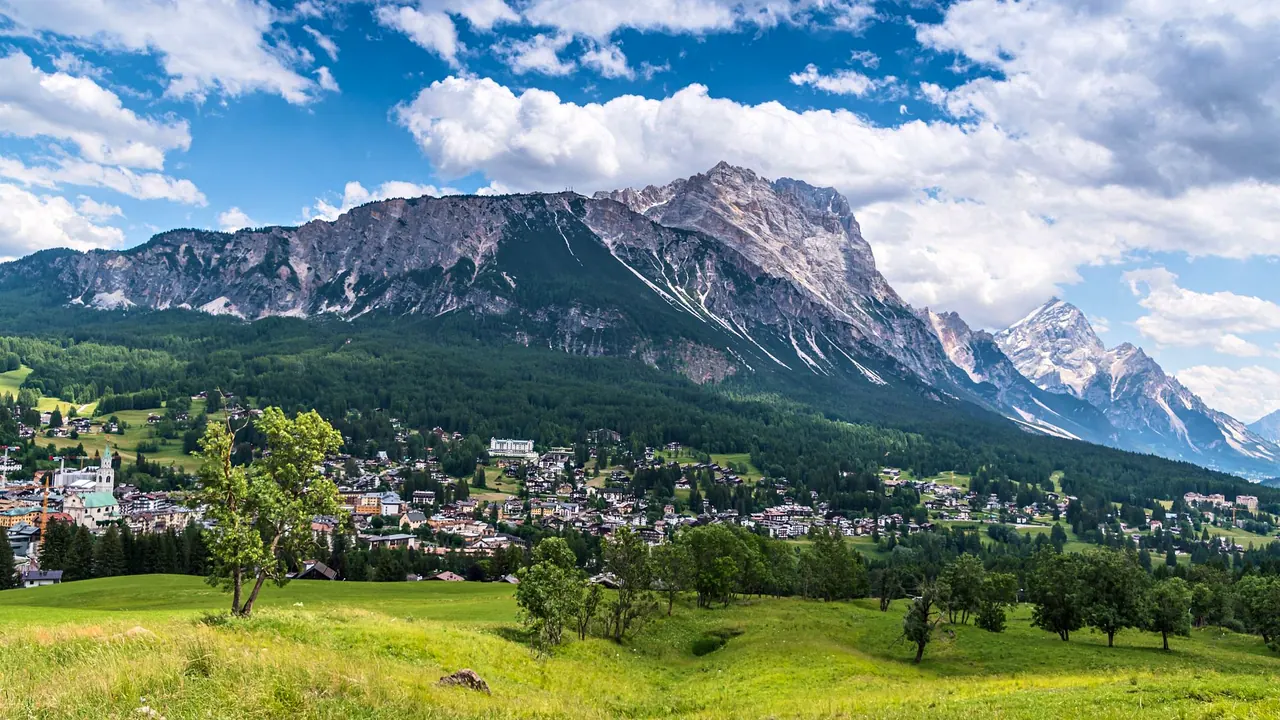
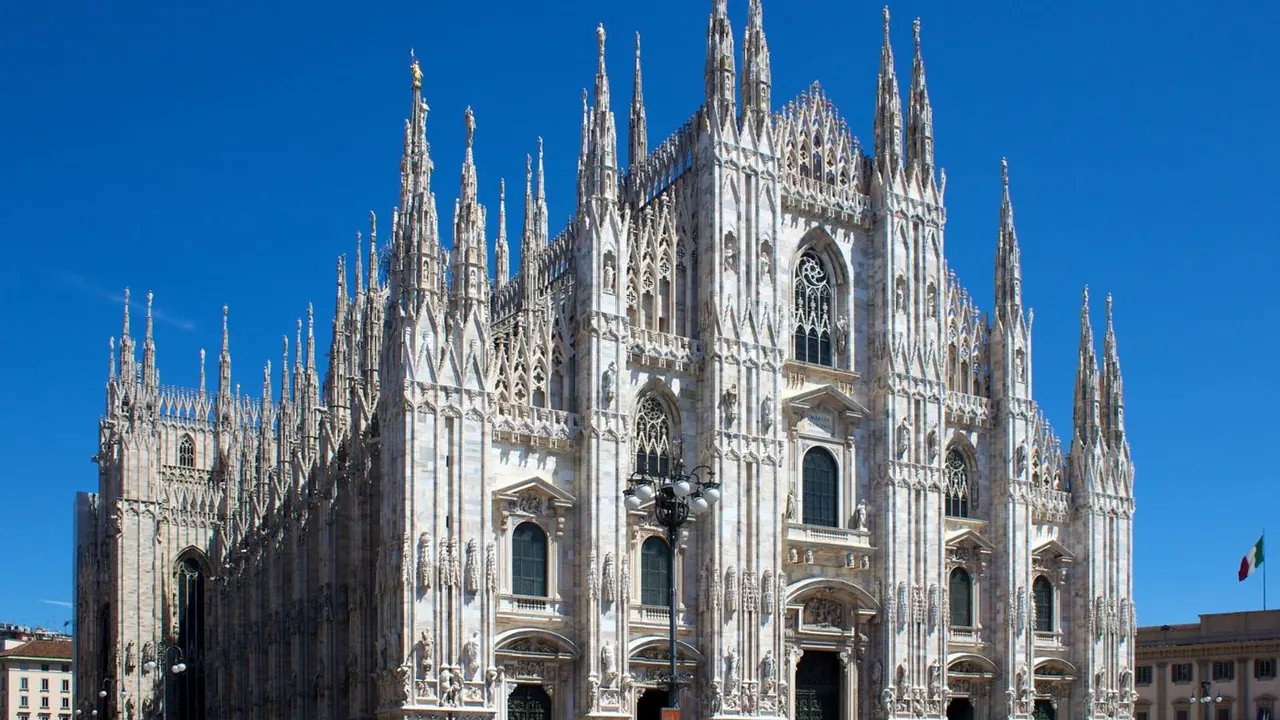
Photos: Cortina d'Ampezzo by Andreas Neubauer, Pexels License; Milan by Jiuguang Wang, CC BY-SA 3.0, cropped.
Cortina d'Ampezzo or Milan?
Our verdict in twelve categories, each scored against the same fixed benchmark cities, and the climate month by month, so you can choose for your trip.
Choose Cortina d'Ampezzo for
- nature and the outdoors
- wellness
Cortina d'Ampezzo is the choice for a trip built around mountains. The Dolomites rise straight from the town and lifts carry you onto the peaks. Winter brings skiing across the Dolomiti Superski area, and summer brings hut-to-hut hiking and via ferrata. Evenings mean a long dinner and an early night, and the bill is high, but nothing near Milan matches the setting.
Choose Milan for
- live music and the arts
- culture and sights
- shopping
Milan suits travellers who want a city with depth: the Duomo and the Last Supper, a night at La Scala, aperitivo along the Navigli and the fashion houses of the Quadrilatero. Fast trains make it a base for Verona, Bergamo and the lakes. It also costs less than Cortina, though it is far from cheap.
Scoreboard
Twelve categories on one fixed scale from 0 to 100. The shaded stretch is the gap between the two.
Your match
Pick a travel style or drag the sliders, and both match scores follow your weighting.
Wins on nature and the outdoors and wellness with your weighting.
Wins on live music and the arts and culture and sights with your weighting.
What matters to you?
Category by category
What the scores mean for a trip.
Beaches & swimming
Neither city is a beach destination, but Milan comes closer. Cortina's lakes, Ghedina and Pianozes, are for walking round, because snowmelt keeps them cold. Swimming there mostly means a hotel pool, and the Adriatic is more than two hours away.
From Milan, Lake Como and Lake Maggiore are about an hour by train, with pebbly lidos and water around 23°C in August. On hot days in town, the Idroscalo and the open-air pools serve as well.
Food & drink
Milan is much the stronger place to eat. As well as saffron risotto and ossobuco, it brings together cooking from all over Italy and adds a serious tier of fine dining. Its aperitivo ritual in Brera, Isola and along the Navigli is a meal in itself.
Cortina's cooking has a narrower range but its own character: casunziei with poppy seeds, polenta with game, and often the best meal of the day on a rifugio terrace among the peaks. Expect little variety, almost nothing international and few cheap options.
Culture & sights
Milan's sights are of real rank: the Duomo with its rooftop among the spires, Leonardo's Last Supper, the Brera gallery and Michelangelo's Rondanini Pietà in the Castello Sforzesco. You could build a culture trip around them alone.
Cortina has a pretty centre with its tall bell tower and the 1956 Olympic ice stadium. The Rimoldi art collection is the best of its small museums, which are enough for a wet afternoon. Its most moving history lies outdoors, in the First World War tunnels on Lagazuoi and the Cinque Torri.
Nightlife
In Cortina the evening means après-ski, a walk along the Corso Italia and a long dinner, and only in the peak winter weeks do a few bars and a club stay open late. Milan offers real nights out: canal-side bars on the Navigli, the gay scene around Porta Venezia, dressy clubs near Corso Como and warehouse nights further out, all stylish rather than wild.
Nature & outdoors
Nature is where Cortina leaves Milan far behind. Pale Dolomite walls ring the Ampezzo valley: the Tofane, Cristallo and the Cinque Torri towers. The Fanes-Sennes-Braies nature park begins at the edge of town, and the Tre Cime and Lago di Misurina are under an hour away. Winter opens up the whole Dolomiti Superski area and the Sella Ronda, while summer brings the Alta Via 1, paragliding and mountain biking.
Milan itself sits on the flat, hazy Po plain, with Parco Sempione, the Giardini Pubblici and towpaths that lead cyclists out into the rice fields. The lakes and the Grigne ridges above Lecco are about an hour north and suit sailors and walkers, but proper skiing in the Valtellina or the Aosta valley is a full day out. A snow trip from Milan takes real effort, whereas Cortina sits inside its ski area.
Day trips
Cortina's outings mostly head into the mountains, because few towns lie close. The best of them are in South Tyrol to the north. San Candido and Dobbiaco are under an hour away, Brunico has its castle and the Messner Mountain Museum, and Bolzano, with the Iceman and its arcaded streets, is about two hours by road. Venice is possible, but at around two and a half hours by coach each way it makes a long day.
Milan is the far stronger base. Turin's Egyptian Museum and Verona's Roman arena are around an hour away by high-speed train, and Bergamo's walled upper town is about as close. Closer still are the Certosa di Pavia and Vigevano's Renaissance square, while Mantua, Cremona's violin workshops, the Borromean Islands and Lugano across the Swiss border give you enough for a week of different days.
Good for families
Both work for families, but in different ways. Cortina is about the outdoors: ski schools and beginner slopes at Socrepes, skating at the Olympic stadium, easy lake walks and a forest rope park, all around a small, calm centre. Rainy days, though, can drag.
Milan has more under a roof. The science and technology museum with its submarine and the aquarium by Parco Sempione are there for wet days, and Leolandia and Gardaland suit older children. Summer heat is hard on little ones, and the main sights appeal mostly to adults.
Getting around
Milan needs no car. Five metro lines and trams cover the city, and direct trains from Centrale, Garibaldi and Cadorna run to the lakes and nearby towns. The only real nuisances are hot platforms in summer and the long ride in from Malpensa.
Cortina's centre takes minutes to cross on foot, and ski buses work well in winter, but the town has had no railway since 1964. You arrive by coach from Venice or by car, buses to the passes are sparse, and most visitors exploring the Dolomites hire a car.
Shopping & style
In Milan, shopping is a reason to go. It has the flagships of the Quadrilatero della Moda, the old shops of the Galleria and La Rinascente beside the Duomo, plus design showrooms, boutiques in Brera and antique markets on the Navigli.
Cortina has one polished street, the Corso Italia, lined with luxury fashion, furriers and mountain wear. Its anchor is the Cooperativa di Cortina, founded in 1893. Local wood carving and filigree make good browsing, but the choice does not stretch beyond an afternoon.
Affordability
Neither is a budget destination, but Cortina is harder on the wallet. In the winter peak and in August, rates reach luxury-resort levels, and lift passes and equipment hire add more. Lunches at the rifugi and the quieter weeks of June and late September help, but many budget travellers sleep in cheaper valleys nearby.
Milan is expensive by Italian standards, yet there are more ways to save. Public transport is fairly priced, aperitivo snacks can stand in for a light supper, and office-worker lunch menus are good value. Staying near a metro stop outside the centre also helps, as does avoiding the trade-fair weeks.
Live music & performing arts
Milan has La Scala, whose season of opera, ballet and concerts opens each December on the feast of Sant'Ambrogio. Around it are the Piccolo Teatro, a symphony orchestra at the Auditorium, jazz rooms and big summer concerts at San Siro.
Cortina has no theatre season and no regular venue. Its live music comes from summer chamber festivals in churches, and sometimes out in the mountains, plus the odd concert around Christmas and New Year.
Wellness & relaxation
The two are close here, but you find calm in different places. In Cortina it comes from Alpine hotel spas with saunas and hay baths, clear air and a quiet hut terrace in June or September, though the peak weeks bring traffic and crowds.
Milan has a thermal spa complex with outdoor pools, and in summer the 1930s Bagni Misteriosi. Still, the city is busy and work-focused, and most visitors looking for real rest take the train to the lakes.
When should you go?
Pick your month. The climate figures are measured averages, not a forecast.
Cortina d'Ampezzo in July
Milan in July
Daytime high, °C
Rainfall in the month, mm
Where the figures come from
Milan's sunshine is measured 41 km from the centre, at Novara / Cameri.
Temperature and rainfall are climate normals, averaged over the years shown. Cortina d'Ampezzo: 1991-2020 normals, Dobbiaco (22.5 km from centre). Milan: 1991-2020 (rainfall 1971-2000) normals, Milano / Linate (8 km from centre).
Cortina has two main seasons. December and January are the cold heart of winter, with daytime highs around 0°C and little rain or snow by volume. February and March turn steadily milder, with March reaching about 8°C, so the ski season continues into softer days. Summer peaks at a fresh 22°C in July and August, good for hiking without heat, but these are also the wettest months, with about 130mm in July. June is nearly as warm and a little drier. September is noticeably cooler but drier again, which makes it a good month for crisp hiking days. April, May, October and November fall awkwardly between skiing and hiking.
Milan's year runs almost the other way. July and August reach 30°C on the plain. These are the sunniest months, but they are heavy for walking the streets. October and November bring the most rain, November and December the least sunshine, and winter is cool and grey. April, May and September are the comfortable months for sightseeing. When Milan is at its hottest, Cortina's valley is the cooler escape.
Which traveller are you?
On an outdoors trip, Cortina is the clear choice. Lifts rise straight from town into the Dolomites, with skiing in winter and hut-to-hut hiking, via ferrata and climbing in summer. From Milan, every mountain or lake day starts with a train.
For a culture and arts trip, Milan wins easily. The Last Supper, the Duomo, the Brera gallery and an evening at La Scala outweigh anything Cortina offers, where the small museums and First World War sites fill a day at most.
On a food and nightlife trip, Milan again comes out ahead. Aperitivo in Brera and Isola, cooking from every Italian region, and bars and clubs from the Navigli to Corso Como offer far more than Cortina's rifugio lunches and quiet evenings.
Before you go
| Measure | Cortina d'Ampezzo | Milan |
|---|---|---|
| Official language | Italian | Italian |
| Currency | Euro (EUR) | Euro (EUR) |
| Sockets | CFL230 V, 50 Hz | CFL230 V, 50 Hz |
| Driving side | Right | Right |
| Time zone | UTC+1, UTC+2 in summer | UTC+1, UTC+2 in summer |
| Emergency number | 112 | 112 |
| Elevation | 1,224 m | 138 m |
| Main airport | Venice Marco Polo Airport (VCE)116 km from centre103 non-stop destinations | Milan Malpensa International Airport (MXP)40 km from centre208 non-stop destinations |
| Public holidays this year | 13 days | 13 days |
By the numbers
| Measure | Cortina d'Ampezzo | Milan |
|---|---|---|
| City population | 5,546 | 1,354,196 |
| People per km² | 22 | 7,453 |
| Museums within 10 km | 3 | 88 |
| UNESCO World Heritage sites within 50 km | 1 | 4 |
Where else could you go?
Every comparison below shares a destination with this one, so you can follow Cortina d'Ampezzo or Milan somewhere new.
- Comovs Milan
- Innsbruckvs Cortina d'Ampezzo
- Genoavs Milan
- Venicevs Cortina d'Ampezzo
- Turinvs Milan
- Portofinovs Milan