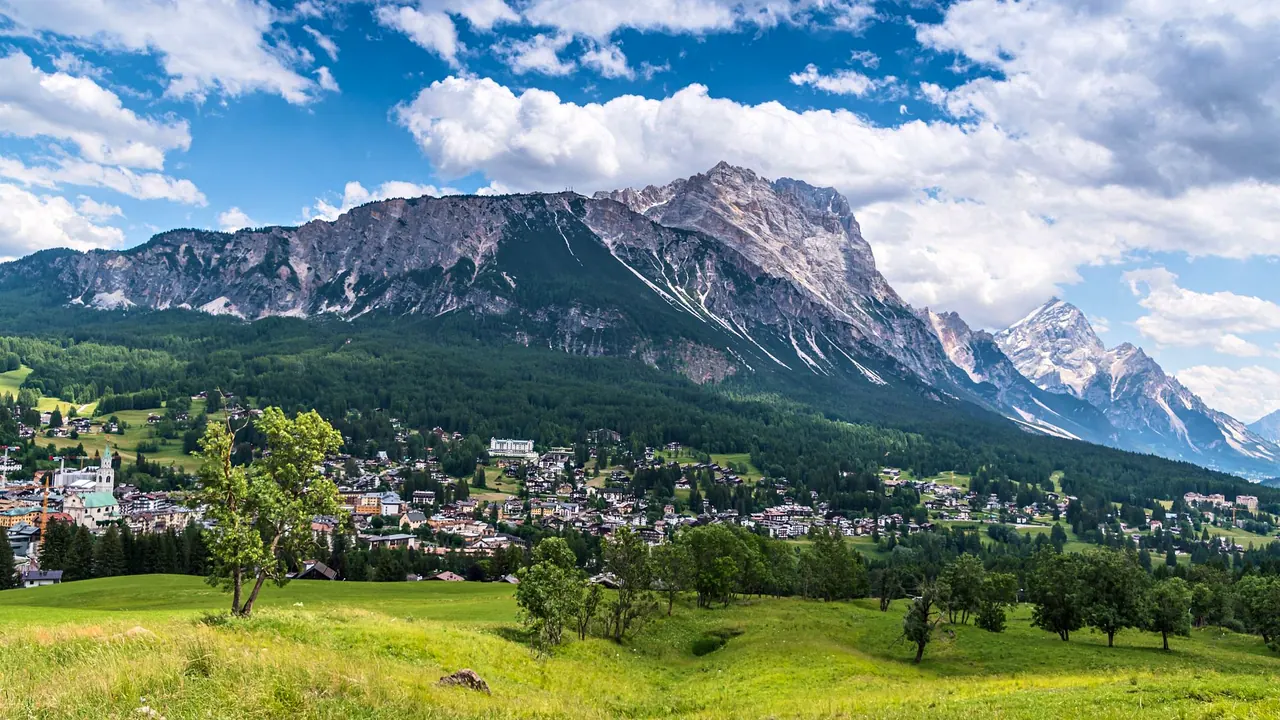
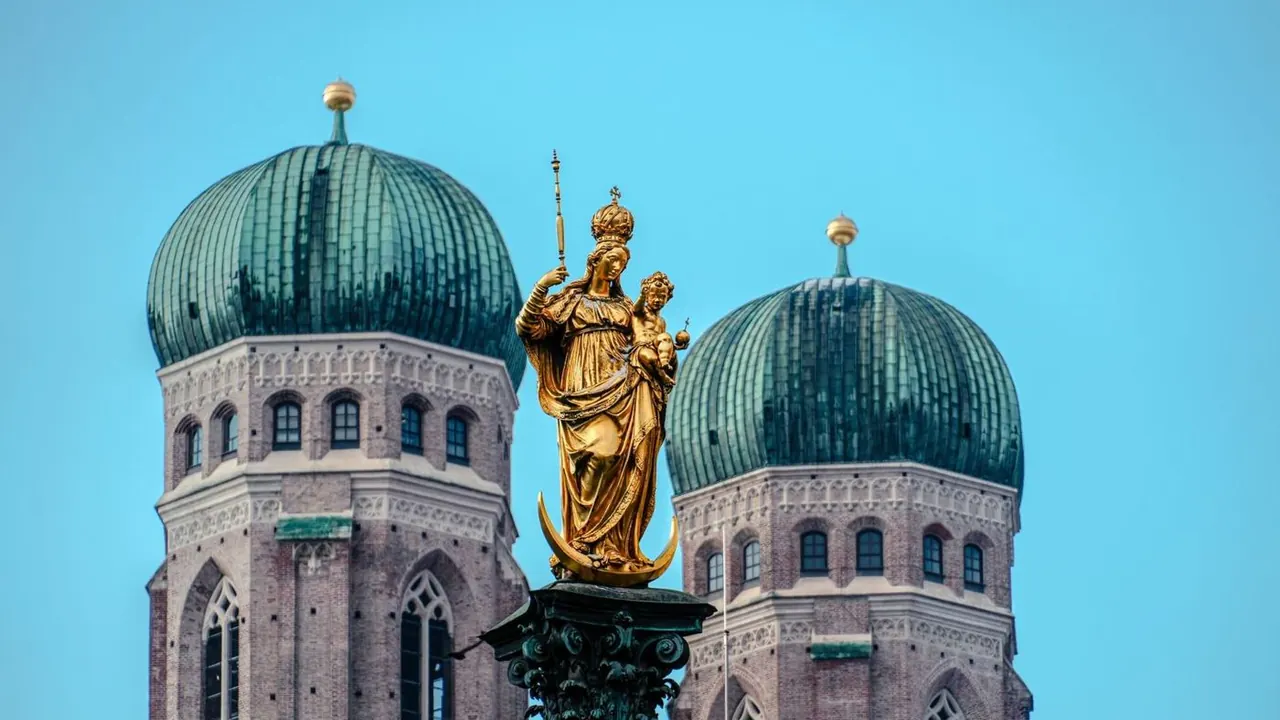
Photos: Cortina d'Ampezzo by Andreas Neubauer, Pexels License; Munich by 0xd1ma, Pexels License.
Cortina d'Ampezzo or Munich?
Our verdict in twelve categories, each scored against the same fixed benchmark cities, and the climate month by month, so you can choose for your trip.
Choose Cortina d'Ampezzo for
- nature and the outdoors
Cortina d'Ampezzo is for travellers who measure a trip in summits, ski runs and hut lunches. The Dolomites rise straight from the town, lifts carry you onto the peaks and the Tre Cime are close by, so walkers, climbers and skiers get one of the finest mountain settings in Europe. In return you accept a small resort with few sights, quiet evenings, awkward transport and some of Italy's highest prices.
Choose Munich for
- live music and the arts
- culture and sights
- day trips
Munich suits almost everyone who wants a city as well as scenery. It has great art collections, a world-class opera house, beer gardens and an easy transport network, and fast trains reach Salzburg, Nuremberg and the royal castles. Families, culture lovers and anyone without a car will find it far easier going, with the Alps still close enough for a day in the mountains.
Scoreboard
Twelve categories on one fixed scale from 0 to 100. The shaded stretch is the gap between the two.
Your match
Pick a travel style or drag the sliders, and both match scores follow your weighting.
Wins on nature and the outdoors with your weighting.
Wins on live music and the arts and culture and sights with your weighting.
What matters to you?
Category by category
What the scores mean for a trip.
Beaches & swimming
Neither is a beach destination, but Munich at least has proper summer swimming. Cortina's lakes, such as Ghedina and Pianozes, are snowmelt-cold and better walked round than swum in, so a hotel pool does most of the work.
Munich has the gravel banks of the Isar at the Flaucher and, a short S-Bahn ride out, the Starnberger See and Ammersee with lawns and jetties. The water is fresh rather than warm, but a lake afternoon fits easily into a summer city trip.
Food & drink
Cortina's cooking is good mountain food with a Venetian touch: casunziei with poppy seeds, polenta with game, and long lunches on rifugio terraces. The range is narrow, though, and almost everything is pricey.
Munich offers more ways to eat. There are beer halls and chestnut-shaded beer gardens with roast pork and white sausage, the Viktualienmarkt for snacking, a serious coffee-and-cake habit, starred restaurants and solid Italian and Turkish cooking.
Culture & sights
This is one of the widest gaps between the two. Cortina has a pleasant centre with its basilica bell tower and painted houses, plus three small museums led by the Rimoldi art collection, enough for a rainy afternoon. Its most moving heritage is the First World War front on Lagazuoi and the Cinque Torri, and that takes a mountain day.
Munich is built on royal collections: old masters in the Alte Pinakothek, Blue Rider painting at the Lenbachhaus, the Wittelsbach Residenz, Nymphenburg Palace and the vast Deutsches Museum. You could spend a week on its museums and not finish.
Nightlife
Cortina's evenings are après-ski drinks, a stroll along the Corso Italia and a long dinner, with a few smart bars staying open late only in peak winter weeks.
Munich gives you real choice. You can make a night of it in a beer hall, find cocktail and gay bars around Gärtnerplatz and the Glockenbachviertel, or go to techno clubs that run till morning at weekends. It is orderly rather than wild, but late September brings the Oktoberfest tents.
Nature & outdoors
Both put you near the Alps, but Cortina puts you inside them. The pale Dolomite walls ring the town, lifts start from the streets, and the Tre Cime, Lago di Misurina and the Fanes-Sennes-Braies park are all close. This is hut-to-hut hiking, via ferrata and big-mountain skiing without a commute.
Munich's mountains begin about an hour away by train, at Garmisch, the Zugspitze or Tegernsee, so they make good day outings rather than the setting of the stay. In town, the English Garden, the Eisbach surfers and the Isar cycle paths add green space Cortina has no need for.
Day trips
From Cortina, outings are mostly into the mountains or north to South Tyrol: San Candido, Brunico with Messner's museum, and Bolzano's Iceman about two hours away. Venice is a long coach day each way.
Munich is a far stronger base. Augsburg, Nuremberg, Regensburg and Salzburg all lie within an hour or two by train, and Neuschwanstein, Herrenchiemsee and the painted villages of Oberammergau add the classic castle and alpine days.
Good for families
Cortina works for families who ski or walk. There are ski schools and nursery slopes at Socrepes, skating at the Olympic stadium and gentle trails to huts. Beyond the outdoors there is little for children, and wet days drag.
Munich covers both kinds of day. It has Hellabrunn zoo along the Isar, hands-on halls at the Deutsches Museum, Sea Life in the Olympic Park, beer gardens with playgrounds and Legoland within reach, all on transport that takes pushchairs.
Getting around
Cortina's centre is a few minutes' walk across, but the town has had no railway since 1964. Arrival means a coach from Venice or a long drive, and buses to the passes are sparse, so most visitors end up hiring a car.
Munich needs no car at all. A walkable old town, one integrated U-Bahn, S-Bahn and tram network, flat cycling routes and regional trains to the lakes and mountains make it one of the easiest cities to move around.
Shopping & style
Cortina's shopping is one short, polished street, the Corso Italia, with furriers, jewellers and upmarket ski wear, anchored by the old Cooperativa store and a few wood-carving and filigree shops.
Munich has more range. You will find luxury houses on Maximilianstrasse, department stores along Kaufingerstrasse, the historic Dallmayr food hall, independent boutiques in Glockenbach and Schwabing, and tailors selling dirndls and lederhosen as the souvenir with real local character.
Affordability
Neither is cheap, but Cortina is the harder one on the wallet. Hotels and restaurants in peak winter and August run at luxury-resort level, and lift passes and hire add up. Rifugio meals and the shoulder months of June and late September help, but many budget visitors sleep in cheaper valleys.
Munich's hotels are dear too, especially around the Oktoberfest and trade fairs. Still, a picnic in a beer garden, free parks and lakes, token Sunday museum entry and fairly priced transport keep daily costs in check.
Live music & performing arts
Cortina offers summer chamber and classical concerts in churches and mountain settings, plus the odd festive concert, and little else.
Munich is one of Europe's great music cities. The Bavarian State Opera plays the National Theatre most of the year, three orchestras of real standing fill the Herkulessaal and Prinzregententheater, and the rococo Cuvilliés Theatre, the Gärtnerplatztheater and jazz clubs fill out the evenings.
Wellness & relaxation
Cortina's wellness lives in its hotels, with alpine spas, hay baths and post-ski massages. Its real calm comes from the setting itself in June, September and quiet winter weeks, rather than from any bathing culture.
Munich has an actual bathing tradition. There is the Art Nouveau Müller'sches Volksbad, there are textile-free public saunas with infusion rituals, and the huge Erding thermal complex and the spa towns of Bad Tölz and Bad Reichenhall are within easy reach.
When should you go?
Pick your month. The climate figures are measured averages, not a forecast.
Cortina d'Ampezzo in July
Munich in July
Daytime high, °C
Rainfall in the month, mm
Temperature and rainfall are climate normals, averaged over the years shown. Cortina d'Ampezzo: 1991-2020 normals, Dobbiaco (22.5 km from centre). Munich: 1991-2020 normals, München (1.9 km from centre).
Cortina is two places across the year. In winter, highs hover around 0°C and the valley is a ski resort, with its driest weather in January and February. Summer highs reach only about 22°C, good for hiking but never beach weather. June to August is also the wettest stretch, peaking at 130mm in July, so afternoon storms in the mountains are part of any summer plan. June opens the high trails but is nearly as wet as August. September is the best balance, still mild and noticeably drier, while spring and late autumn are cool and in-between.
Munich runs a few degrees warmer all year. Summer highs of about 25°C and the most sunshine, around 242 hours in July, make June to August the season for beer gardens and lake swims, though rain from May to August is heavy here too. Spring and autumn are comfortable for walking the city, and winter is cold and often grey, with highs of only a few degrees.
Which traveller are you?
On an outdoors trip, Cortina is the clear choice. Lifts rise from town onto the Tofane and Cinque Torri, the Alta Via 1 and old via ferrata routes start nearby, and in winter the Dolomiti Superski area lies on the doorstep.
For a culture and arts trip, Munich is in another league. The Alte Pinakothek and the rest of the Kunstareal, the Residenz and the Deutsches Museum fill days, and evenings can go to the Bavarian State Opera or one of three major orchestras.
On a family trip with children, Munich is easier. Hellabrunn zoo, the Deutsches Museum's hands-on halls, playgrounds in beer gardens and pushchair-friendly transport cover rainy and sunny days alike. Cortina suits only families who ski or hike.
Before you go
| Measure | Cortina d'Ampezzo | Munich |
|---|---|---|
| Official language | Italian | German |
| Currency | Euro (EUR) | Euro (EUR) |
| Sockets | CFL230 V, 50 Hz | CF230 V, 50 Hz |
| Driving side | Right | Right |
| Time zone | UTC+1, UTC+2 in summer | UTC+1, UTC+2 in summer |
| Emergency number | 112 | 112 |
| Elevation | 1,224 m | 519 m |
| Main airport | Venice Marco Polo Airport (VCE)116 km from centre103 non-stop destinations | Munich Airport (MUC)29 km from centre210 non-stop destinations |
| Public holidays this year | 13 days | 12 days |
By the numbers
| Measure | Cortina d'Ampezzo | Munich |
|---|---|---|
| City population | 5,546 | 1,505,036 |
| People per km² | 22 | 4,844 |
| Museums within 10 km | 3 | 75 |
| UNESCO World Heritage sites within 50 km | 1 | 1 |
Where else could you go?
Every comparison below shares a destination with this one, so you can follow Cortina d'Ampezzo or Munich somewhere new.
- Innsbruckvs Munich
- Innsbruckvs Cortina d'Ampezzo
- Salzburgvs Munich
- Venicevs Cortina d'Ampezzo
- Nurembergvs Munich
- Veronavs Cortina d'Ampezzo