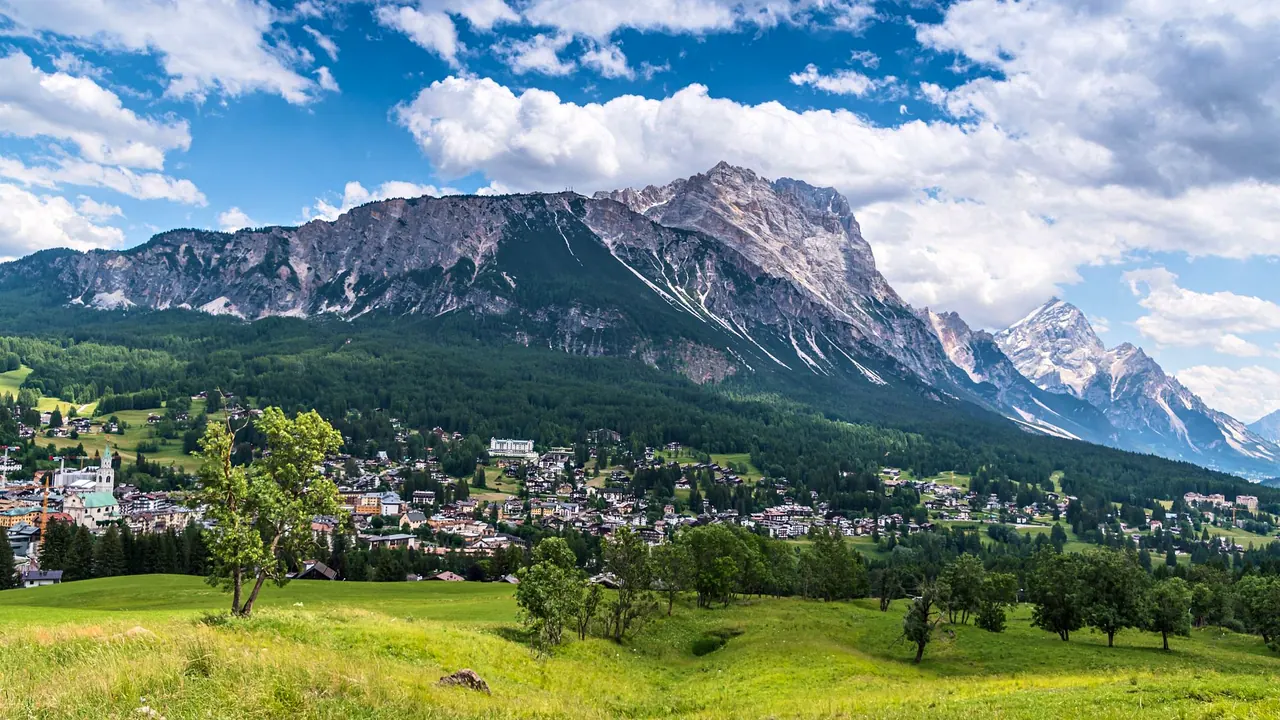
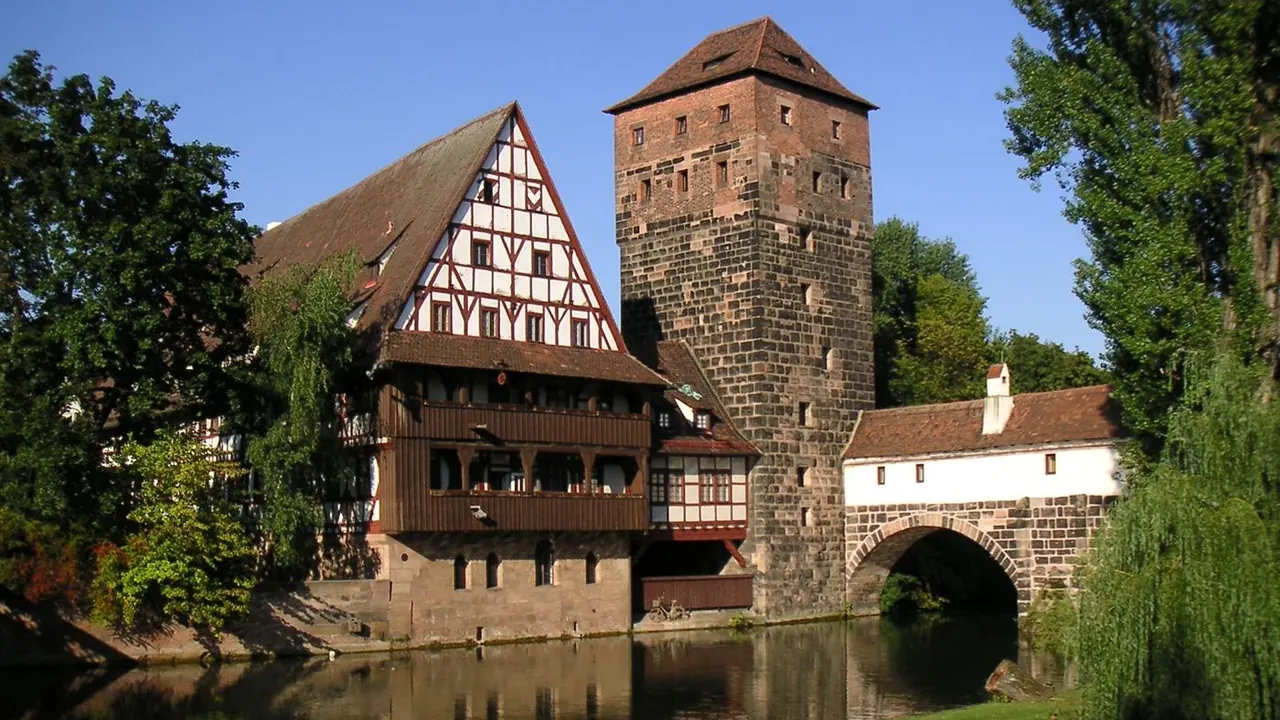
Photos: Cortina d'Ampezzo by Andreas Neubauer, Pexels License; Nuremberg by Horst Gutmann, CC BY 2.0, cropped.
Cortina d'Ampezzo or Nuremberg?
Our verdict in twelve categories, each scored against the same fixed benchmark cities, and the climate month by month, so you can choose for your trip.
Choose Cortina d'Ampezzo for
- nature and the outdoors
Cortina d'Ampezzo is the choice when the mountains are the whole point. The Dolomites rise in a ring around the valley and lifts run straight from town onto the peaks, so skiers, hikers and via ferrata climbers have world-class terrain on the doorstep. Visitors who pick it accept high prices, quiet evenings and few sights, and they get a luxurious, slow-paced mountain resort in return.
Choose Nuremberg for
- culture and sights
- live music and the arts
- prices
Nuremberg suits travellers who want a city with more to it. There is a walled medieval old town under an imperial castle, a major national museum and the sobering sites of the twentieth century, and fast trains run out to Bamberg, Regensburg and Würzburg. It costs far less, works without a car and offers more for families and for evenings out, though its countryside is gentle rather than dramatic.
Scoreboard
Twelve categories on one fixed scale from 0 to 100. The shaded stretch is the gap between the two.
Your match
Pick a travel style or drag the sliders, and both match scores follow your weighting.
Wins on nature and the outdoors with your weighting.
Wins on culture and sights and live music and the arts with your weighting.
What matters to you?
Category by category
What the scores mean for a trip.
Beaches & swimming
Neither city is a swimming destination, but Nuremberg has the better summer fallback. The Franconian Lake District is about an hour south, with grassy shores, small sandy strips around the Brombachsee and water that can reach 23°C in a warm spell.
Cortina's lakes, Ghedina and Pianozes, are fed by snowmelt and are for walking round rather than swimming in. A dip there is a test of nerve, so in practice swimming means the hotel pool.
Food & drink
Both cities serve hearty regional food, but Nuremberg offers more. Its strengths are beechwood-grilled bratwurst, Schäufele and Lebkuchen, and above all beer, from the old-town taverns to the riverside beer gardens pouring Kellerbier from small Franconian breweries.
Cortina's best moments are casunziei and polenta with game, ideally on a rifugio terrace among the peaks. In the valley the choice is narrow and costly, with little casual or cheap eating.
Culture & sights
There is a wide gap here. Nuremberg has an old town ringed by medieval walls and topped by the Kaiserburg, plus St Sebaldus, St Lorenz, Dürer's house and a national museum big enough to fill a whole day. The Rally Grounds documentation centre and Courtroom 600 add history that few cities can match.
Cortina has a pleasant centre with its basilica bell tower and the 1956 Olympic ice stadium, plus the Rimoldi art collection. Its most striking heritage is the First World War tunnels on Lagazuoi and the Cinque Torri, which take a day in the mountains to reach.
Nightlife
Nuremberg makes for the better night out, mostly in bars: taverns inside the walls, students on the riverbanks in summer and small alternative venues in Gostenhof. Cortina's evenings are après-ski drinks, a stroll along the Corso Italia and a long dinner. A few late, glamorous spots open only in the peak winter weeks, and the town is quiet by late evening for most of the year.
Nature & outdoors
Cortina is among the finest mountain bases anywhere. The Tofane, Cristallo and Cinque Torri rise straight above town, the Tre Cime and Lago di Misurina are close and the Fanes-Sennes-Braies park begins at the valley's edge. Skiing, long-distance trails, via ferrata and paragliding are all on hand.
Nuremberg's outdoors is gentler. The Reichswald forest starts at the edge of town, Franconian Switzerland's limestone towers and climbing crags are an hour away and there are riverside cycle paths, which is good walking and cycling country without any drama.
Day trips
Nuremberg is the far better base for excursions, and the train does the work. Bamberg is under an hour away, Regensburg and Würzburg about an hour each, and Rothenburg, Bayreuth and Munich are all in reach.
From Cortina most outings head into the mountains. San Candido, Brunico and Bolzano with its Iceman make good drives north into South Tyrol, while Venice is a long day by coach.
Good for families
Nuremberg gives children more to do whatever the weather. There is the Toy Museum, full-size locomotives at the railway museum, a large zoo set in old quarries and a play park in Zirndorf. In Advent a separate children's market adds carousels and a little steam train.
Cortina works well for families who ski or hike, with beginner slopes at Socrepes, public skating and gentle walks to the huts. There is little built for children beyond the outdoors, though, so wet days drag and the costs mount.
Getting around
Nuremberg is far easier. The walled centre is about 1.5km across and fully walkable, the station sits by the southern gate and one ticket covers the U-Bahn, trams and S-Bahn out to the zoo, Fürth and Erlangen.
Cortina's centre is small enough to cross in minutes, and ski buses link the slopes in winter. It has had no railway since 1964, though, and buses to the passes are infrequent, so many visitors end up hiring a car.
Shopping & style
Neither city is a big shopping destination, and they appeal to different buyers. Cortina's Corso Italia is a single polished street of luxury fashion, furriers and upmarket ski wear, anchored by the old Cooperativa store. Nuremberg's high streets are mostly chain stores, and the things worth buying are Lebkuchen tins, wooden toys and Handwerkerhof crafts, with the Christkindlesmarkt as the highlight in Advent.
Affordability
Nuremberg is much easier on the wallet. Filling tavern meals, cheap local beer and inexpensive transport keep daily costs moderate, and only the trade fair weeks and Advent push hotel prices up.
Cortina charges luxury-resort rates in the winter peak and in August, and lift passes and equipment hire add to the bill. The rifugi and the shoulder seasons soften the cost a little, but many budget visitors stay in neighbouring valleys and drive in.
Live music & performing arts
Nuremberg has a real season. The Staatstheater stages opera, ballet and drama in its Art Nouveau house, two orchestras perform, and summer brings a big open-air concert in the Luitpoldhain and the free Bardentreffen. Cortina has no theatre or regular venue. Its music comes from summer chamber festivals in churches and the occasional mountain setting, with a few concerts around New Year.
Wellness & relaxation
The two are about even, but they relax you in different ways. In Cortina wellness happens in the hotel, with Alpine spas, hay baths and a massage after the slopes, plus the calm of a hut terrace in June or September. Nuremberg relies on public facilities in the German style, with the thermal spa and sauna gardens in Fürth, mixed nude saunas and floating in Bad Windsheim's saline pools.
When should you go?
Pick your month. The climate figures are measured averages, not a forecast.
Cortina d'Ampezzo in July
Nuremberg in July
Daytime high, °C
Rainfall in the month, mm
Temperature and rainfall are climate normals, averaged over the years shown. Cortina d'Ampezzo: 1991-2020 normals, Dobbiaco (22.5 km from centre). Nuremberg: 1991-2020 normals, Nuernberg (5.5 km from centre).
Cortina's year falls into two clear seasons. Winter is cold and dry, with daytime highs around 0°C in January and little rain or snow from December to March, which suits a ski trip. Summer is mild enough for hiking, with highs of about 22°C, but it is also the wettest part of the year. July brings around 130mm of rain, so plan for wet spells on the trails. June is quieter but still wet. September is cooler and noticeably drier, which makes it the more dependable month for long walks. April, May, October and November fall between the two seasons and are neither reliably wintry nor warm.
Nuremberg is warmer than Cortina all year, and its rain is spread more evenly. From May to September it is warm enough for beer gardens and the Franconian lakes, with highs of about 25°C in July and August and the longest sunny days. Rain is moderate in every month and seldom heavy. From November to February the days are short, grey and cold for walking the streets, with highs around 4°C. For city walking in summer, Nuremberg is the better choice, while Cortina is at its best in its cold, dry winter.
Which traveller are you?
On an outdoors trip, Cortina is in a different league. It has the Dolomiti Superski slopes in winter, then the Alta Via 1, hut-to-hut hiking and historic via ferrata routes in summer. Nuremberg's forests and Franconian Switzerland are pleasant, but they are tame by comparison.
For a culture and arts trip, Nuremberg wins easily. The Kaiserburg, the Gothic churches and the Germanisches Nationalmuseum fill several days, Courtroom 600 and the Rally Grounds add weight, and the Staatstheater stages opera. Cortina's three small museums last a rainy afternoon.
On a trip with a tight budget, Nuremberg is the sensible choice. Tavern meals and local beer are cheap, one transport ticket covers the region and ordinary weeks are fairly priced. Cortina's hotels, restaurants and lift passes rank among Italy's most expensive.
Before you go
| Measure | Cortina d'Ampezzo | Nuremberg |
|---|---|---|
| Official language | Italian | German |
| Currency | Euro (EUR) | Euro (EUR) |
| Sockets | CFL230 V, 50 Hz | CF230 V, 50 Hz |
| Driving side | Right | Right |
| Time zone | UTC+1, UTC+2 in summer | UTC+1, UTC+2 in summer |
| Emergency number | 112 | 112 |
| Elevation | 1,224 m | 209 m |
| Main airport | Venice Marco Polo Airport (VCE)116 km from centre103 non-stop destinations | Nuremberg Airport (NUE)5 km from centre56 non-stop destinations |
| Public holidays this year | 13 days | 12 days |
By the numbers
| Measure | Cortina d'Ampezzo | Nuremberg |
|---|---|---|
| City population | 5,546 | 531,159 |
| People per km² | 22 | 2,848 |
| Museums within 10 km | 3 | 50 |
| UNESCO World Heritage sites within 50 km | 1 | 1 |
Where else could you go?
Every comparison below shares a destination with this one, so you can follow Cortina d'Ampezzo or Nuremberg somewhere new.
- Innsbruckvs Cortina d'Ampezzo
- Venicevs Cortina d'Ampezzo
- Munichvs Nuremberg
- Veronavs Cortina d'Ampezzo
- Bledvs Cortina d'Ampezzo
- Salzburgvs Cortina d'Ampezzo