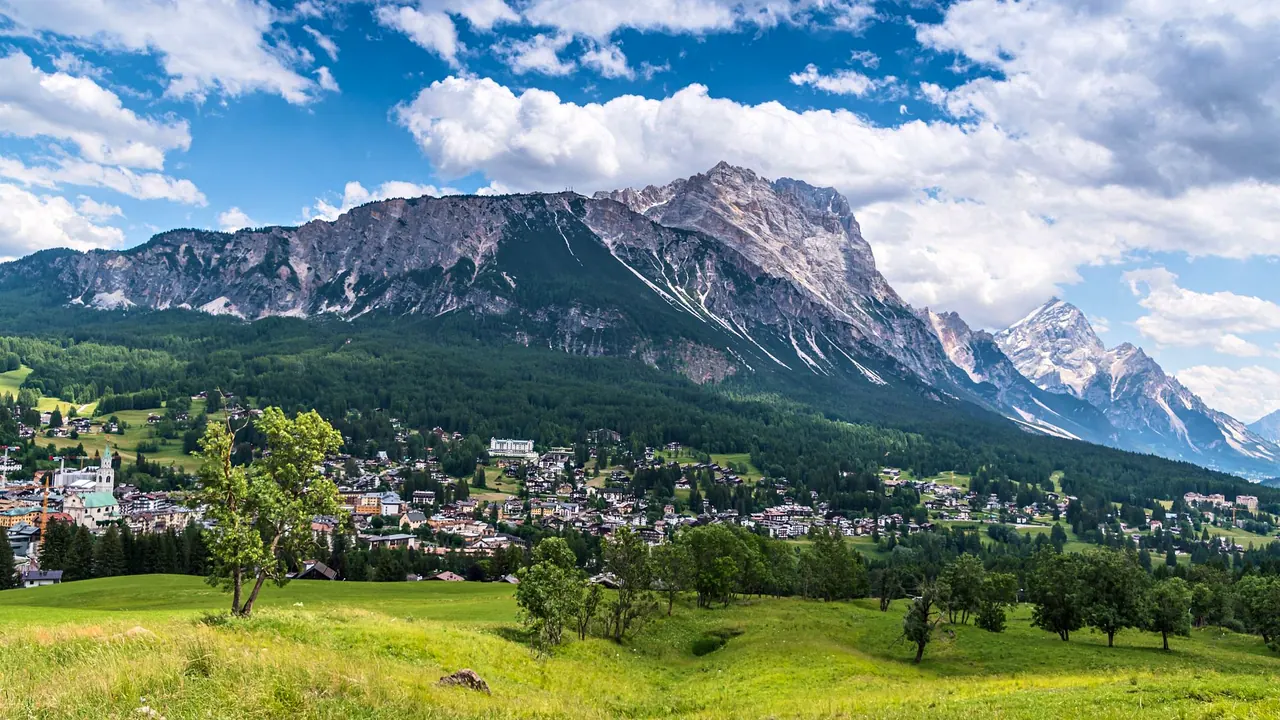
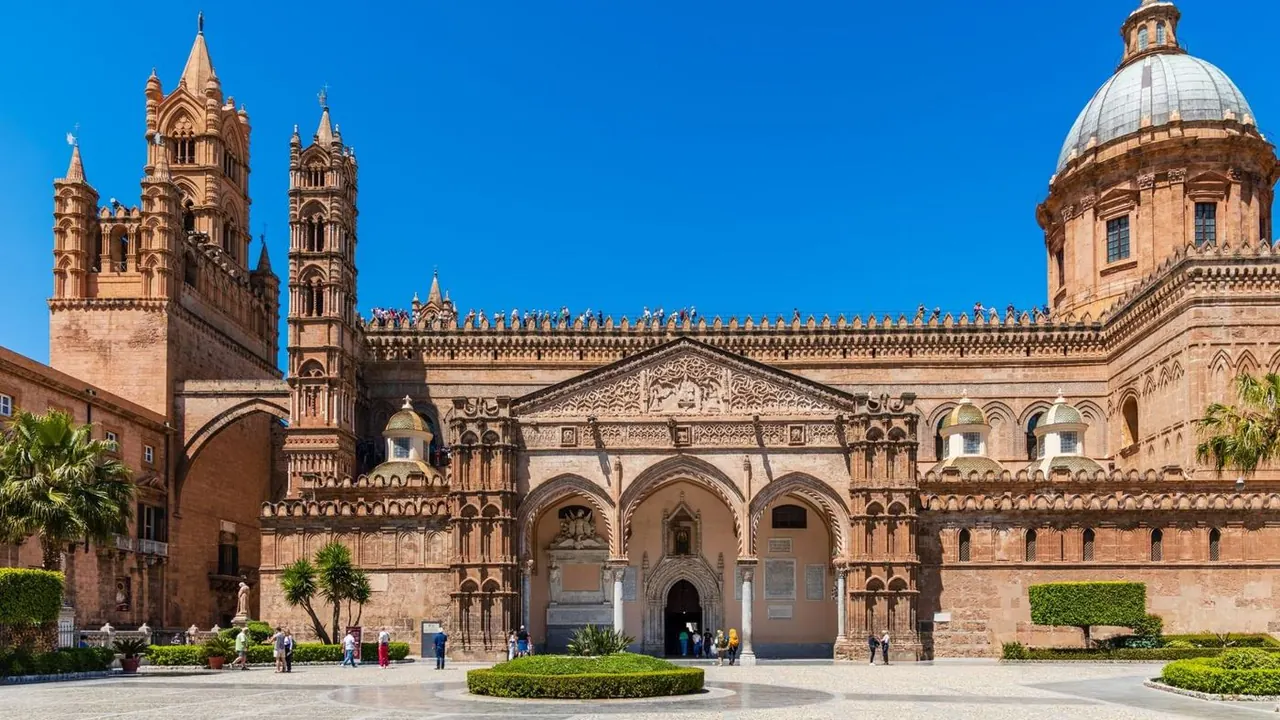
Photos: Cortina d'Ampezzo by Andreas Neubauer, Pexels License; Palermo by Antonino Giangrasso, Pexels License.
Cortina d'Ampezzo or Palermo?
Our verdict in twelve categories, each scored against the same fixed benchmark cities, and the climate month by month, so you can choose for your trip.
Choose Cortina d'Ampezzo for
- nature and the outdoors
- wellness
- families
Cortina d'Ampezzo is the choice when the mountains are the whole point. The pale Dolomites ring the town, lifts climb straight onto the peaks, and the seasons bring the Dolomiti Superski area in winter and hut-to-hut trails and via ferrata in summer. It suits skiers, hikers and couples who want a polished, calm resort with spa hotels, and who can accept a steep bill and quiet evenings.
Choose Palermo for
- beaches
- culture and sights
- prices
Travellers who want a city to explore rather than a landscape will do better in Palermo. Arab-Norman mosaics, market street food, a working opera house and a warm sea at Mondello give it far more to do by day and by night, and Monreale, Cefalù and Segesta are all within easy reach. It also costs much less, though the trade-off is noise, traffic and a hot summer.
Scoreboard
Twelve categories on one fixed scale from 0 to 100. The shaded stretch is the gap between the two.
Your match
Pick a travel style or drag the sliders, and both match scores follow your weighting.
Wins on nature and the outdoors and wellness with your weighting.
Wins on beaches and culture and sights with your weighting.
What matters to you?
Category by category
What the scores mean for a trip.
Beaches & swimming
Swimming in Cortina comes down to a hotel pool or a bracing dip in snowmelt lakes such as Ghedina, and the Adriatic is more than two hours' drive away.
Palermo is in another league. Mondello's shallow, sandy bay is about half an hour by bus and the sea stays warm from June into October, while the rocks towards Capo Gallo give deeper, quieter swimming. Neither city puts the sand at the hotel door, but only Palermo works as a beach trip at all.
Food & drink
Cortina eats well for a small town: Ampezzan casunziei with poppy seeds, polenta with game, and long lunches on rifugio terraces among the peaks. But the choice is narrow, almost all sit-down and rarely cheap.
Palermo is the stronger food destination by some distance. You can make a day of grazing through Ballarò and the Capo on panelle, arancine and sfincione, then try the sweet-and-sour dishes that show the city's Arab past, and finish with cannoli or brioche with granita.
Culture & sights
Cortina's sights are pleasant rather than compelling: the basilica's tall bell tower, painted houses, the 1956 Olympic ice stadium and the Rimoldi art collection. Its most striking heritage, the First World War tunnels on Lagazuoi, is really a mountain outing.
Palermo can fill a week. The Palatine Chapel, the cathedral and San Giovanni degli Eremiti form a UNESCO-listed Arab-Norman route, Serpotta's stucco oratories add the baroque, and Palazzo Abatellis and the Salinas museum hold serious collections.
Nightlife
In Cortina the evening is après-ski, a stroll along the Corso Italia and a long dinner, with a few smart late bars only in the peak winter weeks. In summer the town is asleep by late evening.
Palermo has much more going on after dark, almost all of it outdoors. The Vucciria turns into a drinking spot with grills and music, the Kalsa's wine bars fill up after dinner, and on warm nights people stay out well past midnight. Proper clubs are few, though, and summer dancing moves to the beach at Mondello.
Nature & outdoors
This is Cortina's great strength. The Tofane, Cristallo and Cinque Torri rise around the valley with lifts straight from town, the Tre Cime and Lago di Misurina are under an hour away, and the same slopes carry skiing in winter and via ferrata, climbing and hut hiking in summer.
Palermo's appeal is the mix of mountain and sea: the climb up Monte Pellegrino, snorkelling at Capo Gallo, the coastal trail of the Zingaro reserve and the beech woods of the Madonie. It is lovely, but smaller in scale, too hot at midday in summer and mostly needs a car.
Day trips
Palermo has far richer surroundings. Monreale's mosaics are half an hour away, Cefalù is an hour by train, and Segesta, Erice and Agrigento's Valley of the Temples put some of the Mediterranean's great ancient sites within a day.
From Cortina most outings are simply more mountains. The best towns lie in South Tyrol, from San Candido to Bolzano with its Iceman, and Venice is possible but makes a long day by coach.
Good for families
Cortina has a slight edge for families, but only for active ones. Ski schools, the beginner slopes at Socrepes, public skating and a forest rope park keep children busy, and the small centre is calm, though wet days drag and the costs add up.
Palermo welcomes children warmly, with late family dinners, gelato, puppet shows and Mondello's shallow bay. Daily life is harder work there: narrow lanes without pavements, uneven stone for pushchairs and heat from June to September.
Getting around
Getting around is about equally easy in both, and in both places the centre is walkable and a car helps beyond it. Cortina's centre takes minutes to cross and winter ski buses link it to the lifts, but there has been no railway since 1964 and buses to the passes are sparse.
Palermo's sights line up along Via Maqueda and Corso Vittorio Emanuele, though side lanes mean dodging scooters. City buses are slow, yet regional trains do reach Cefalù and Bagheria, which gives you a few car-free outings that Cortina lacks.
Shopping & style
The shopping is about as good in each, but very different in kind. Cortina concentrates everything on the Corso Italia: luxury fashion, jewellers, furriers, upmarket ski wear and the old Cooperativa department store. Palermo has fashion on Via Libertà, but its better finds are things to take home, such as capers and pistachio pesto from the markets, painted ceramics, handmade marionettes and the flea market near the cathedral.
Affordability
Cortina is one of the costliest places to stay in Italy, with luxury-resort prices in winter and August plus lift passes and equipment hire. Rifugio meals and the shoulder months soften this only a little.
Palermo is far kinder to the wallet. A market crawl of street food makes a full meal, trattorie and local wine are cheap by northern standards, and old-centre guesthouses are fairly priced. Only seaside rooms in high summer, fish restaurants and a hire car push the bill up.
Live music & performing arts
The two are not close for live performance. A winter visitor to Cortina finds little beyond a concert or two around Christmas and New Year, and an evening out there means dinner, not a show. Summer is better, when the chamber and classical festivals bring music into churches and sometimes onto the mountainsides. That makes a good end to a day of hiking, but it is a short festival season rather than a year-round programme.
In Palermo there is something to see in most months. Through the cooler part of the year the Teatro Massimo and the Politeama, a short walk apart, offer a choice of opera, ballet or an orchestral concert, and an hour at the Opera dei Pupi fits easily before a late dinner. In summer much of the programme moves into cloisters and squares. Even then, when both cities are playing outdoors, Palermo has far more on any given night.
Wellness & relaxation
Cortina makes it easier to unwind. Many hotels have Alpine spas with saunas and hay baths, and in June, September or quiet winter weeks the clear air and an afternoon on a hut terrace are restful in themselves.
Palermo's scooters and market noise work against rest, and wellness there means hotel spas or a train out to the thermal waters at Termini Imerese. Its calm moments are the cloisters, the Orto Botanico and the evening walk along the Foro Italico.
When should you go?
Pick your month. The climate figures are measured averages, not a forecast.
Cortina d'Ampezzo in July
Palermo in July
Daytime high, °C
Rainfall in the month, mm
Where the figures come from
Palermo's sunshine is measured 67 km from the centre, at Ustica.
Temperature and rainfall are climate normals, averaged over the years shown. Cortina d'Ampezzo: 1991-2020 normals, Dobbiaco (22.5 km from centre). Palermo: 1991-2020 normals, Palermo / Punta Raisi (24.1 km from centre).
Cortina has two distinct seasons. From June to September daytime highs reach about 22°C, ideal for hiking and the high trails, although summer is also the wettest part of the year, peaking at 130mm in July. From December to February the valley sits close to freezing by day, which is weather for skiing rather than strolling. Spring and late autumn fall in between and are quieter.
Palermo runs almost the other way. Its winters are mild enough for sightseeing, and spring and autumn are the best seasons for walking the old streets. July and August are hot, close to 30°C, but nearly rainless and very sunny, and the sea warms to 27°C, so swimming works from June into October. Rain comes back in autumn, around 95mm in October. Palermo is the warmer choice while Cortina is frozen or between seasons, and Cortina's cool summer is the escape from Palermo's heat.
Which traveller are you?
For an outdoors trip, Cortina d'Ampezzo is the obvious pick. Lifts rise from town into the Dolomites, the Tre Cime and the Alta Via 1 are close by, and winter adds the huge Dolomiti Superski area. Palermo's hills are fine, but hotter and harder to reach.
On a culture and arts trip, Palermo wins easily. The Palatine Chapel's mosaics, the Arab-Norman churches, the Salinas museum and an evening at the Teatro Massimo or a puppet show fill several days. Cortina's three small museums fill a rainy afternoon.
For a beach and sun trip, choose Palermo. Mondello's pale sand and shallow, warm water are a short bus ride from the centre, and the summers are long, dry and sunny. Cortina has cold alpine lakes and hotel pools, and nothing more.
Before you go
| Measure | Cortina d'Ampezzo | Palermo |
|---|---|---|
| Official language | Italian | Italian |
| Currency | Euro (EUR) | Euro (EUR) |
| Sockets | CFL230 V, 50 Hz | CFL230 V, 50 Hz |
| Driving side | Right | Right |
| Time zone | UTC+1, UTC+2 in summer | UTC+1, UTC+2 in summer |
| Emergency number | 112 | 112 |
| Elevation | 1,224 m | 14 m |
| Main airport | Venice Marco Polo Airport (VCE)116 km from centre103 non-stop destinations | Falcone–Borsellino Airport (PMO)25 km from centre106 non-stop destinations |
| Public holidays this year | 13 days | 13 days |
By the numbers
| Measure | Cortina d'Ampezzo | Palermo |
|---|---|---|
| City population | 5,546 | 630,167 |
| People per km² | 22 | 3,924 |
| Museums within 10 km | 3 | 42 |
| UNESCO World Heritage sites within 50 km | 1 | 1 |
| Swim season, months above 21 °C | - | 5 months |
Where else could you go?
Every comparison below shares a destination with this one, so you can follow Cortina d'Ampezzo or Palermo somewhere new.
- Innsbruckvs Cortina d'Ampezzo
- Venicevs Cortina d'Ampezzo
- Veronavs Cortina d'Ampezzo
- Bledvs Cortina d'Ampezzo
- Salzburgvs Cortina d'Ampezzo
- Triestevs Cortina d'Ampezzo