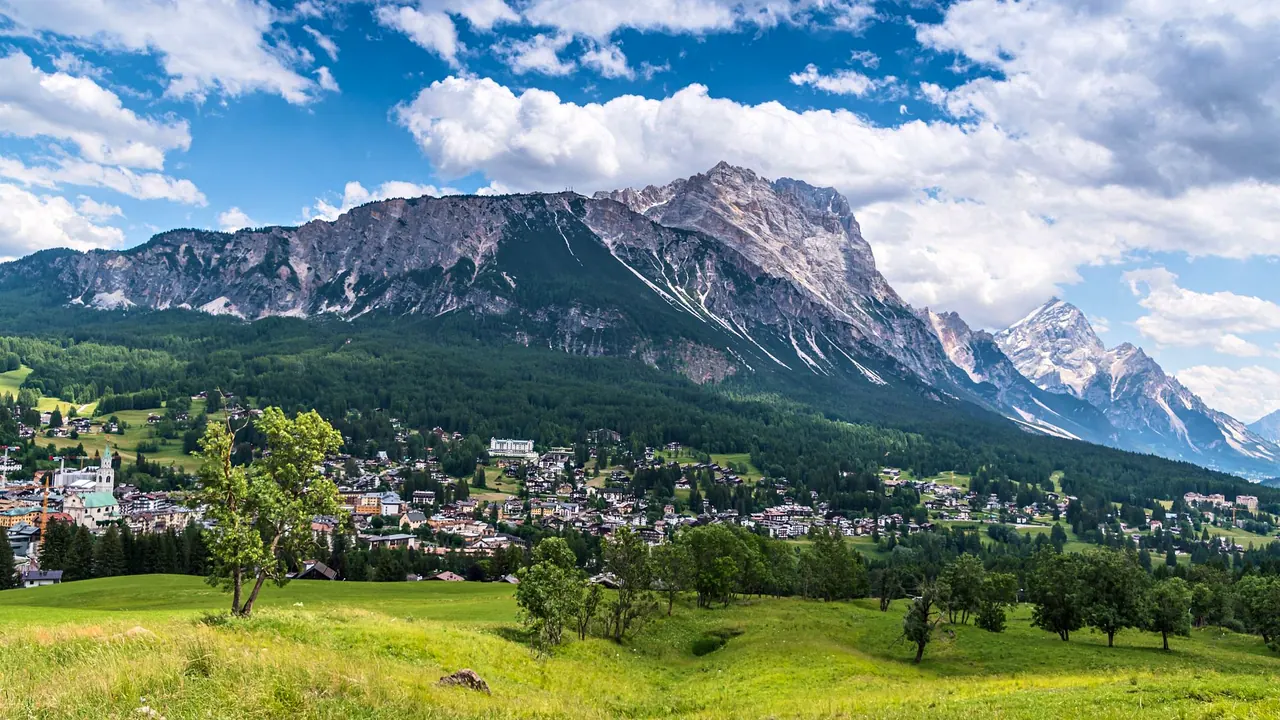
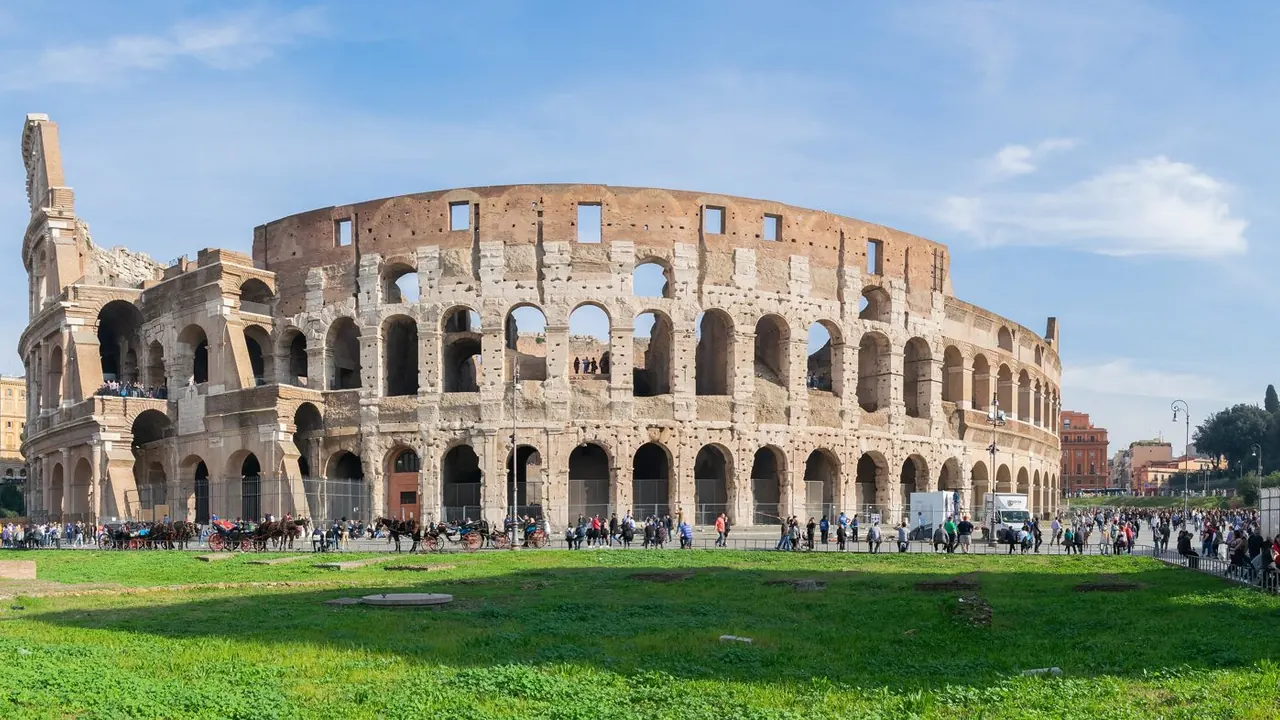
Photos: Cortina d'Ampezzo by Andreas Neubauer, Pexels License; Rome by Tournasol7, CC BY-SA 4.0, cropped.
Cortina d'Ampezzo or Rome?
Our verdict in twelve categories, each scored against the same fixed benchmark cities, and the climate month by month, so you can choose for your trip.
Choose Cortina d'Ampezzo for
- nature and the outdoors
- wellness
Cortina d'Ampezzo is for travellers who want the mountains to be the whole point. The Dolomites rise straight out of the town, lifts run from the centre onto the peaks, and in winter the slopes link into one of the largest ski areas in the Alps. Hikers, climbers and skiers get a setting few places can match. In return they accept a small, quiet, very expensive resort with little to see or do once they come down from the mountains.
Choose Rome for
- culture and sights
- live music and the arts
- day trips
Rome is a city to spend days walking through and to eat your way across. Ancient ruins, great museums, Baroque churches and Roman trattorias fill a week without trying, the evenings are lived outdoors in the piazzas, and day trips to Tivoli, Orvieto, Florence or Naples are all easy. It suits anyone who wants history, art and food, and it costs noticeably less than Cortina, though the open country it offers is gentle next to the Dolomites.
Scoreboard
Twelve categories on one fixed scale from 0 to 100. The shaded stretch is the gap between the two.
Your match
Pick a travel style or drag the sliders, and both match scores follow your weighting.
Wins on nature and the outdoors and wellness with your weighting.
Wins on culture and sights and live music and the arts with your weighting.
What matters to you?
Category by category
What the scores mean for a trip.
Beaches & swimming
Cortina has no sea within easy reach, as the Adriatic is more than two hours' drive away. The small lakes in the valley are there to look at more than to swim in, and they are chilled by snowmelt even in July. After a hike, your swim is far more likely to be indoors.
Rome has the beach that Cortina lacks, though not a fine one. Ostia's dark volcanic sand is half an hour away by suburban train, the sea is warm enough for bathing in July and August, and Fregene is a calmer choice. It makes a day at the seaside rather than a beach vacation. For clear water you have to go further, to Sperlonga or Sabaudia.
Food & drink
Cortina eats well for a small resort: casunziei with poppy seeds, polenta with game, barley soup, and long lunches on rifugio terraces among the peaks. The choice is narrow and rarely cheap, though, with almost no street food or anything international.
Rome has a whole cuisine of its own and many more places to eat it. There are the four classic pastas, Jewish-style artichokes in the Ghetto, offal in Testaccio, and pizza al taglio and supplì on the street. The best meals come from neighbourhood trattorias in Trastevere and Monti rather than the menus beside the big sights.
Culture & sights
On sights, the two are hardly comparable. Rome has the Colosseum and Forum, the Pantheon, the Vatican Museums and Sistine Chapel, early Christian mosaics and the Baroque city of Bernini and Borromini, more than any visitor can see in a week.
Cortina offers a pleasant centre with its basilica and painted houses, the 1956 Olympic ice stadium, and three small museums led by the Rimoldi art collection. Its most striking history is the First World War front line on Lagazuoi and the Cinque Torri, which takes a day in the mountains to reach.
Nightlife
Rome has far more going on after dark, almost all of it outdoors. Aperitivo leads to crowded lanes in Trastevere, small cocktail bars in Monti, cheap student drinking in San Lorenzo and an arty crowd in Pigneto, with the clubs further out in Testaccio and Ostiense.
Cortina's evening is après-ski, a stroll along the Corso Italia and a long dinner. A few smart bars and clubs stay open late in the peak winter weeks, but for most of the year the town is asleep by late evening.
Nature & outdoors
This is where Cortina leaves Rome far behind. The pale Dolomite peaks surround the Ampezzo valley, lifts climb from the town onto them, and the Tre Cime di Lavaredo, Lago di Misurina and the Fanes-Sennes-Braies park are all close by. Summer brings via ferrata, climbing and hut-to-hut trails, and winter brings one of the great ski circuits of Europe.
Rome's outdoors is gentler and mostly needs a short journey. There are the villa parks, a bike ride along the Appian Way past tombs and aqueducts, and the crater lakes of the Alban Hills, with the Apennines about ninety minutes away.
Day trips
Rome is one of the best bases in Italy for day trips. Ostia Antica, Hadrian's Villa and the gardens at Tivoli are close, as are the Etruscan tombs of Tarquinia and the hilltop towns of Orvieto and Civita di Bagnoregio. High-speed trains put Florence and Naples within about ninety minutes.
From Cortina most outings go up into the mountains rather than to other towns. South Tyrol is the best direction, with Brunico's castle and Bolzano's Iceman, while Venice takes a long day of coach travel each way.
Good for families
Both work for families, but for different families. Cortina suits children who ski or hike, with ski schools at Socrepes, public skating, lake walks and a rope park, all in a safe, calm small town. On rainy days, though, there is little for young children to do.
Rome has the Bioparco zoo and boating in Villa Borghese, a children's museum, gladiators, catacombs and daily gelato. Queues, summer heat, cobbles and traffic make the sightseeing hard work for younger children.
Getting around
Both centres are best seen on foot, and Rome's is simply richer to walk, from the Colosseum past the Pantheon to Trastevere. Its metro barely reaches the historic core and buses crawl, but trains link the city easily to the rest of Italy.
Cortina's compact centre takes minutes to cross. Beyond it the town has had no railway since 1964, so you arrive by coach or car, buses to the passes and the Tre Cime are infrequent, and most visitors end up hiring a car.
Shopping & style
Both cities do luxury, but Rome has far more of it and much else besides. Via Condotti and the streets below the Spanish Steps hold the big fashion houses, Monti has independent and vintage boutiques, Via Margutta has artisan workshops, and Porta Portese holds a sprawling Sunday flea market.
Cortina has one polished street, the Corso Italia, with furriers, jewellers and smart mountain wear, plus the old Cooperativa store and local wood carving and filigree. Once you have walked its length, you have seen the shopping.
Affordability
Neither is cheap, but Cortina is the harder one on a budget. Hotels and restaurants charge luxury-resort rates in winter and August, lift passes and equipment hire add more, and many budget travellers stay in cheaper valleys and drive in. Only the rifugio meals and the shoulder months ease the cost.
Rome's main expense is a room in the historic centre, plus entry to the major museums. Day to day it is much kinder: espresso at the bar, pizza al taglio, free water from the street fountains and churches full of art that cost nothing to enter.
Live music & performing arts
Rome has a proper year-round programme. There is opera and ballet at the Teatro dell'Opera in winter, then outdoors at the Baths of Caracalla in summer, the Santa Cecilia orchestra at Renzo Piano's Auditorium, jazz clubs and frequent concerts in churches.
Cortina has no theatre season or regular venue. Its music comes in summer, with chamber and classical concerts in churches and sometimes in the mountains, and there is very little at other times of year.
Wellness & relaxation
In Cortina, you relax in the hotel. Alpine spas with saunas, steam rooms and hay baths suit tired legs after a day of skiing or a walk to a mountain hut. Outside the peak weeks, the valley's clear air and slow pace add to the effect, while Rome only offers calm in pockets.
Rome's advantage is real thermal water close by. There are the sulphur pools at Bagni di Tivoli and the open-air hot springs around Viterbo, and Cortina has nothing like them. The centre itself is loud, so in town the calm comes from long lunches, the villa gardens and the Aventine.
When should you go?
Pick your month. The climate figures are measured averages, not a forecast.
Cortina d'Ampezzo in July
Rome in July
Daytime high, °C
Rainfall in the month, mm
Where the figures come from
Rome's sunshine is measured 31 km from the centre, at Vigna Di Valle.
Temperature and rainfall are climate normals, averaged over the years shown. Cortina d'Ampezzo: 1991-2020 normals, Dobbiaco (22.5 km from centre). Rome: 1991-2020 normals, Roma / Ciampino (15.1 km from centre).
Cortina has two seasons with quieter months in between. From June to September the valley reaches about 22°C, which is ideal for hiking. This is also the wettest stretch, with about 130mm of rain in July, so start mountain days early. December to February is dry and freezing, good for skiing and little else. April, May, October and November fall between the two seasons and are less rewarding.
Rome's best months come at different times. April, May, late September and October are best for walking, warm and bright without the summer heat. July and August reach about 31°C, too hot for sightseeing at midday, but they are the sunniest months and the sea at Ostia warms to about 25°C. The rain builds from October through to December. Winter is still mild, with January highs around 12°C while Cortina sits at freezing.
Which traveller are you?
For an outdoors trip, Cortina is the clear choice. The Tofane, Cristallo and Cinque Torri ring the town, with the Alta Via 1, historic via ferrata routes and hut-to-hut walking in summer and the Dolomiti Superski slopes in winter. Rome's villa parks and the Appian Way are gentle by comparison.
On a culture and arts trip, Rome wins easily. The Colosseum, the Vatican Museums, the Borghese Gallery and Caravaggios in side chapels fill days, and in the evenings there is opera at the Baths of Caracalla. Cortina's three small museums last one rainy afternoon.
For a food and nightlife trip, choose Rome. Carbonara in Testaccio, supplì and pizza al taglio on the street, then aperitivo and late wine bars in Trastevere or Monti. Cortina offers good mountain cooking and après-ski, but it goes quiet by late evening.
Before you go
| Measure | Cortina d'Ampezzo | Rome |
|---|---|---|
| Official language | Italian | Italian |
| Currency | Euro (EUR) | Euro (EUR) |
| Sockets | CFL230 V, 50 Hz | CFL230 V, 50 Hz |
| Driving side | Right | Right |
| Time zone | UTC+1, UTC+2 in summer | UTC+1, UTC+2 in summer |
| Emergency number | 112 | 112 |
| Elevation | 1,224 m | 21 m |
| Main airport | Venice Marco Polo Airport (VCE)116 km from centre103 non-stop destinations | Rome–Fiumicino Leonardo da Vinci International Airport (FCO)23 km from centre242 non-stop destinations |
| Public holidays this year | 13 days | 13 days |
By the numbers
| Measure | Cortina d'Ampezzo | Rome |
|---|---|---|
| City population | 5,546 | 2,748,109 |
| People per km² | 22 | 2,135 |
| Museums within 10 km | 3 | 178 |
| UNESCO World Heritage sites within 50 km | 1 | 8 |
| Swim season, months above 21 °C | - | 5 months |
Where else could you go?
Every comparison below shares a destination with this one, so you can follow Cortina d'Ampezzo or Rome somewhere new.
- Innsbruckvs Cortina d'Ampezzo
- Venicevs Cortina d'Ampezzo
- Veronavs Cortina d'Ampezzo
- Bledvs Cortina d'Ampezzo
- Salzburgvs Cortina d'Ampezzo
- Triestevs Cortina d'Ampezzo